
Greetings Worksheets
About These 15 Worksheets
Greetings are some of the very first words children use to connect with the people around them. Simple phrases like “hello,” “good morning,” and “how are you?” may seem small, but they play a huge role in helping students build friendships, show kindness, and communicate confidently. This collection of Greetings Worksheets introduces learners to polite conversational phrases through fun, interactive activities that feel friendly and approachable. Along the way, students begin to understand that greetings are more than just words-they are little social bridges that help people connect every day.
These worksheets help students become comfortable using greetings in both spoken and written communication. Learners practice matching greetings to situations, completing speech bubbles, sorting formal and informal phrases, tracing words, and even participating in real conversations with classmates. The activities build vocabulary, strengthen social awareness, and encourage thoughtful communication in a variety of settings. Whether students are practicing at school, at home, or during small-group activities, the worksheets keep learning active, practical, and encouraging.
Beyond language development, these worksheets also help students understand the social and cultural importance of polite interaction. Greetings can change depending on the time of day, the relationship between speakers, and the setting, and students begin to notice these differences through everyday examples. The activities encourage empathy, respect, and positive social habits while helping learners feel more confident participating in conversations. By the end of the collection, students may find themselves happily greeting everyone from classmates to grocery store cashiers like tiny conversation professionals in training.
About Each Worksheet
Greeting Match
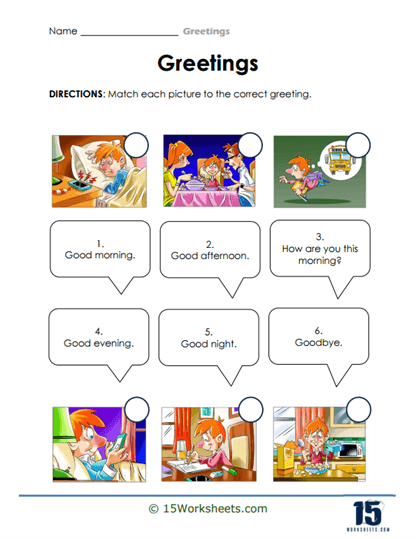
Greeting Match helps students connect common greetings with pictures that show different social situations and times of day. Learners study visual clues while matching phrases like good morning, goodbye, and good evening to the correct images. The activity makes polite communication feel simple and approachable by linking vocabulary to familiar daily routines. It works well for early learners, small groups, or independent practice at home or in the classroom. By the end, students may start proudly identifying greetings everywhere they go.
Morning Mix
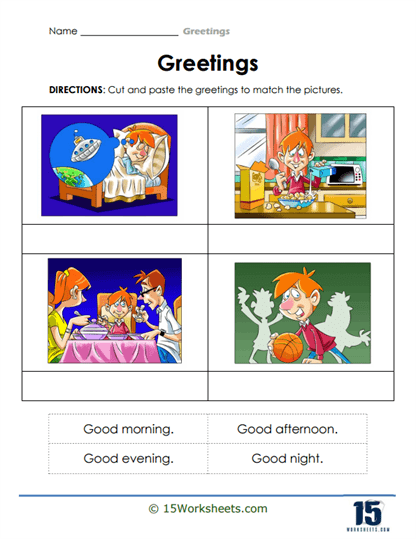
Morning Mix asks students to cut and paste greetings into the correct picture boxes based on different times of day. Learners carefully examine each scene to decide whether phrases like good afternoon or good night fit best. The activity helps students understand that greetings can change depending on the situation and timing. The hands-on format keeps students engaged while also supporting fine motor skill development. It’s a cheerful way to turn everyday greetings into a fun language puzzle.
Speech Start
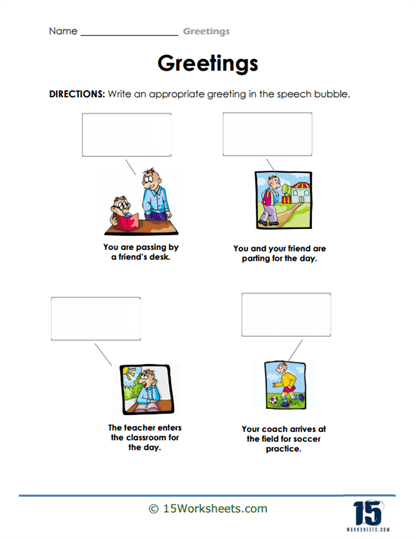
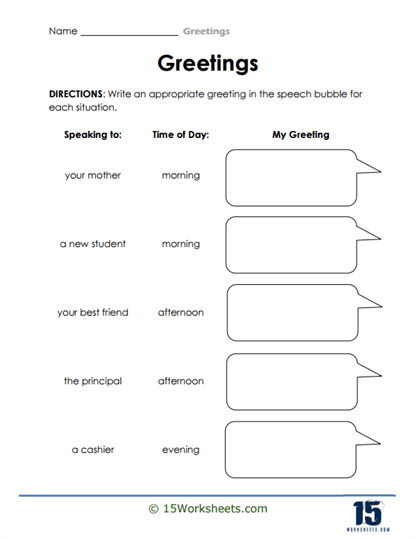
Speech Start encourages students to fill speech bubbles with appropriate greetings for different social situations. Learners think about how people might greet one another at school, sports practice, or when leaving for the day. The worksheet helps students practice polite conversational choices while also encouraging creativity. It’s a great activity for classroom discussions, role-playing, or partner work at home. Students often enjoy imagining the conversations and creating friendly responses for each character.
Daytime Connections
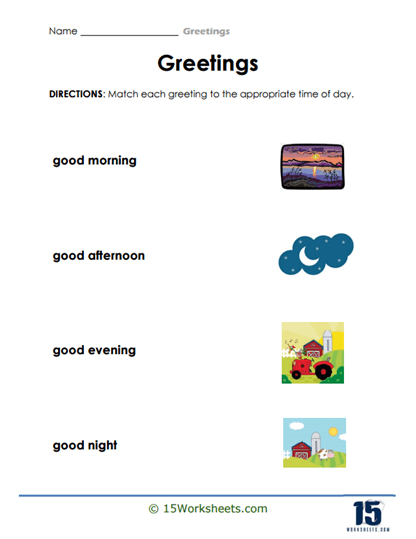
Daytime Connections teaches students how greetings relate to different parts of the day through a picture-matching activity. Learners connect phrases like good morning and good night with the images that best match each greeting. The worksheet helps students recognize visual clues connected to daily routines and social situations. It works especially well for reinforcing time-of-day vocabulary alongside communication skills. Students may quickly realize that greeting someone at bedtime with “good morning” creates some very funny mental pictures.
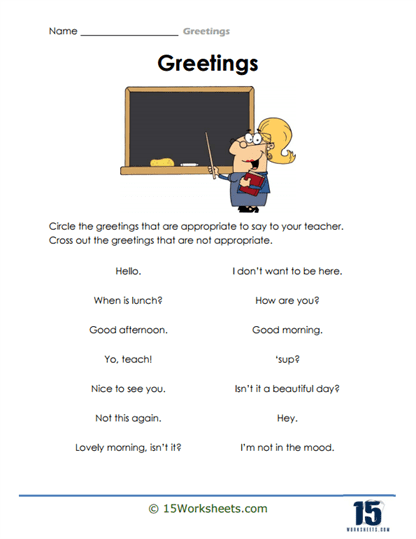
Polite Phrases
Polite Phrases asks students to decide which greetings are respectful enough to use with a teacher and which are not. Learners evaluate different phrases while thinking about tone, audience, and appropriate classroom behavior. The activity introduces the idea that communication changes depending on who you are speaking to. It’s a helpful worksheet for building social awareness and encouraging respectful interaction at school. Students often enjoy debating which greetings sound formal, silly, or extra polite.
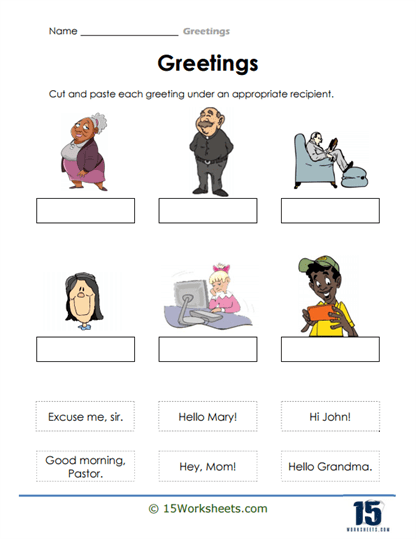
Friendly Faces
Friendly Faces gives students practice matching greetings with different people shown in pictures, including friends, family members, and community workers. Learners think carefully about how greetings can change depending on the relationship between speakers. The activity helps students understand the difference between familiar and respectful language in everyday communication. Teachers and parents can use it to spark conversations about kindness and social manners too. By the end, students become more confident choosing greetings that fit different situations naturally.
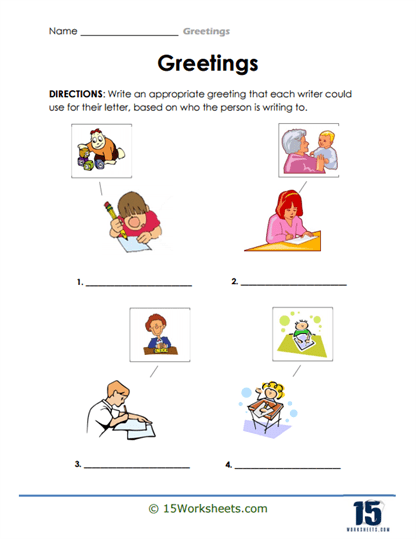
Letter Greetings
Letter Greetings teaches students how to begin letters politely based on who they are writing to. Learners study different relationships and decide how someone might greet a friend, teacher, or family member in writing. The worksheet introduces both formal and informal greeting styles while building writing confidence. It works nicely as part of language arts lessons or creative writing activities at home. Students may even feel inspired to write real letters once they finish practicing their greetings.
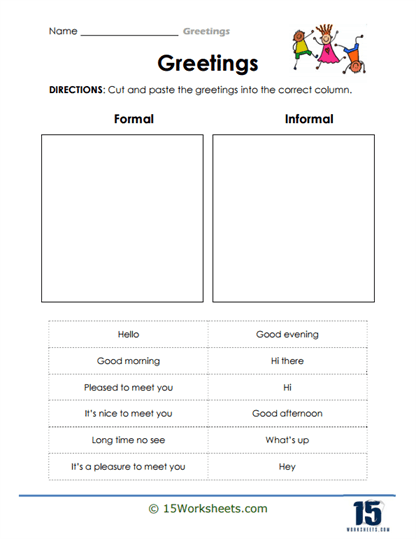
Formal Friends
Formal Friends helps students sort greetings into formal and informal categories through a cut-and-paste activity. Learners analyze tone and context while deciding which greetings belong in professional situations and which fit casual conversations with friends. The worksheet makes social communication easier to understand by showing how word choice changes across settings. It’s a practical activity that encourages respectful speaking habits and stronger conversational awareness. Students often have fun deciding which greetings sound extra fancy and which sound super casual.
Social Smiles
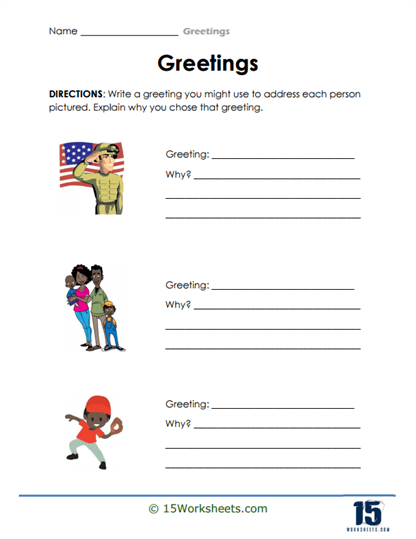
Social Smiles encourages students to write greetings for different people and explain why they selected each phrase. Learners examine pictures and think carefully about polite and friendly ways to address others. The worksheet combines writing practice with social reasoning, helping students explain their choices clearly. It’s a thoughtful activity that supports empathy and respectful communication in everyday interactions. Students may discover there’s more strategy behind greetings than they first expected.
Response Roundup
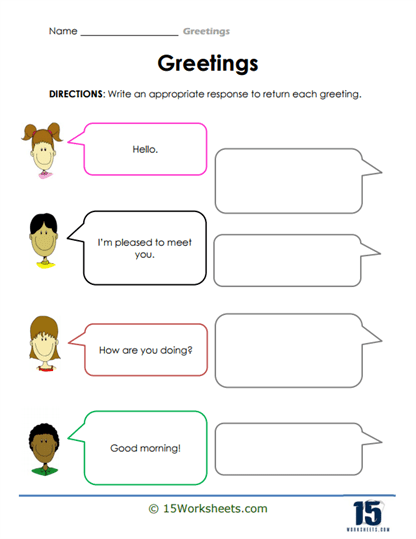
Response Roundup gives students practice responding to common greetings shown in speech bubbles. Learners reply to phrases such as hello, good morning, and how are you doing while building conversational flow and confidence. The activity introduces turn-taking and helps students understand how conversations naturally move back and forth. It’s especially useful for speaking practice, classroom role-play, or social skills support. Students often enjoy pretending they are part of the conversations while writing their responses.
Situation Salutes
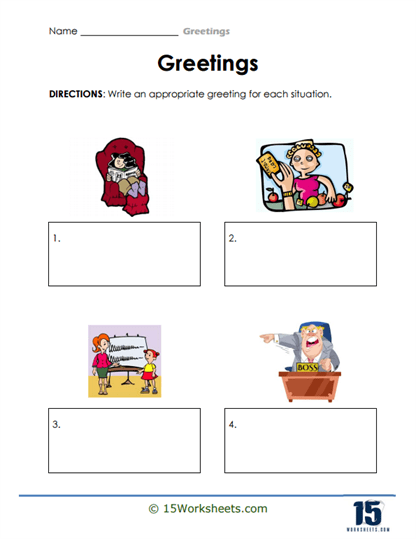
Situation Salutes challenges students to create greetings for different social and workplace situations shown in illustrations. Learners think about how they would greet people in each environment while choosing polite and appropriate language. The worksheet encourages thoughtful communication and stronger awareness of social context. It works well for group discussions, independent writing, or classroom communication lessons. Students may realize that greeting a principal is usually a little different from greeting a best friend at recess.
Polite Popups
Polite Popups asks students to fill speech bubbles with different polite greetings they could use in daily conversations. Learners brainstorm respectful and friendly phrases while practicing conversational creativity. The activity helps students expand their greeting vocabulary beyond just a few common expressions. It’s a flexible worksheet that can easily fit into speaking practice, writing lessons, or social-emotional learning activities. Students often surprise themselves with how many cheerful greetings they can invent.
Greeting Guide
Greeting Guide encourages students to write greetings for specific people and times of day using speech bubbles. Learners think about how they would greet classmates, teachers, family members, and community workers in different situations. The worksheet helps students combine social awareness with practical communication skills. It works especially well for helping learners practice respectful interaction in meaningful everyday scenarios. Students may even begin paying closer attention to how people greet one another outside the classroom too.
Tracing Talk
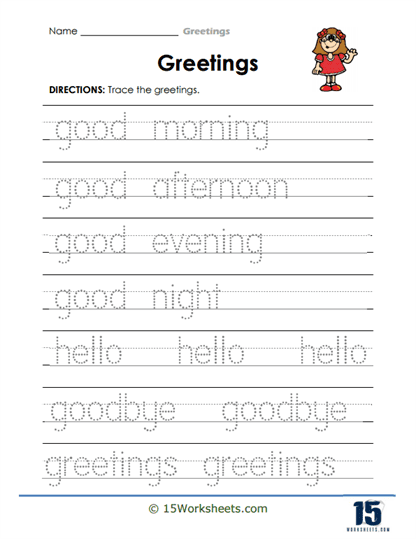
Tracing Talk combines handwriting practice with greeting vocabulary by asking students to trace common words and phrases. Learners carefully trace greetings such as hello, goodbye, and good morning while improving letter formation and spelling recognition. The activity gives early writers extra practice while reinforcing familiar conversational language. It’s a calm and supportive worksheet that works nicely for independent work or early literacy centers. Students often enjoy seeing their tracing become neater and more confident with each line.
Classmate Chats
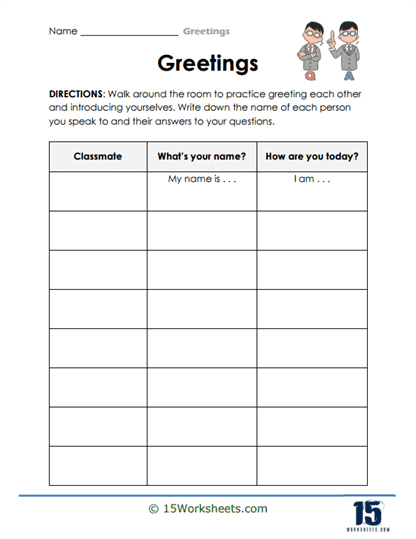
Classmate Chats gets students moving around the classroom to greet classmates and practice simple conversations together. Learners ask questions, introduce themselves, and record responses while building speaking and listening confidence. The activity encourages active participation and helps students feel more comfortable interacting with peers. It’s a wonderful community-building exercise that supports collaboration and positive classroom relationships. By the end, the room usually feels a little friendlier and a lot more talkative.
What Are Greetings?
Greetings are the words and phrases people use when they meet, leave, or begin conversations with one another. Simple expressions like “hello,” “good morning,” and “how are you?” help people communicate politely and make social interactions feel friendly and welcoming. Even though greetings may seem tiny, they are often the very first step in starting conversations and building relationships. Imagine how strange it would feel if people just silently walked past each other all day like confused penguins at a bus stop. Greetings help make everyday interactions feel warm, respectful, and connected.
People use greetings in homes, schools, workplaces, stores, and just about every social setting imaginable. Different greetings may be used depending on the time of day, the relationship between speakers, or the level of formality in the situation. For example, a student might greet a teacher differently than they would greet a close friend at recess. Learning greetings helps students understand social expectations and become more confident when speaking with others. These communication habits also encourage kindness, respect, and positive relationships in everyday life.
Practicing greetings supports important learning goals connected to reading, writing, speaking, and listening. Students strengthen vocabulary skills, improve sentence formation, and become more comfortable participating in conversations with confidence. Greeting activities also help learners develop social awareness by thinking about audience, tone, and polite interaction. Most importantly, greetings remind students that communication is about more than just words-it’s about making people feel acknowledged, respected, and included. A simple “hello” can sometimes be the beginning of a wonderful conversation.