
Word Walls Worksheets
About Our Word Walls Worksheets
Word walls are one of those classroom tools that keep helping students long after they’re first introduced. They give students a place to collect, organize, review, and use new vocabulary in meaningful ways. These Word Walls Worksheets help students interact with words instead of simply memorizing them, encouraging them to read, write, sort, and apply vocabulary in creative ways. Whether students are learning new sight words, spelling words, or academic vocabulary, these activities make word study more engaging and effective.
This collection includes alphabet-based word walls, vocabulary journals, word hunts, sentence-writing activities, word family sorts, creative writing challenges, and personal vocabulary organizers. Students will practice spelling, alphabetical order, phonics, sentence construction, word classification, and vocabulary retention through a variety of hands-on activities. The worksheets encourage students to revisit words multiple times, helping them build stronger connections and improve long-term recall. With so many different approaches, there’s something here for every type of learner.
One of the biggest benefits of word walls is that they help students take ownership of their vocabulary growth. Instead of words appearing once and then disappearing, they become part of an ongoing learning resource students can return to again and again. These worksheets encourage active participation, creativity, and confidence with language. Over time, students develop stronger reading, writing, and communication skills simply by spending more time interacting with words.
About Each Worksheet
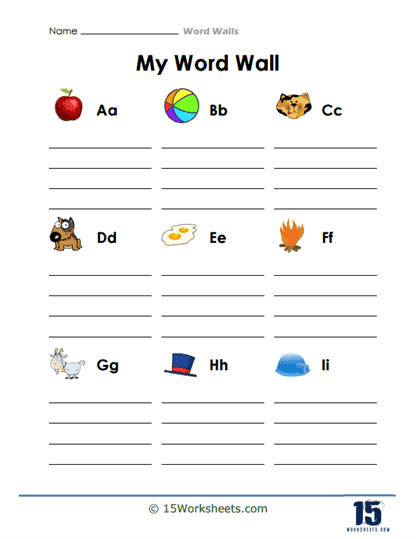
Apple To Igloo
Students build their own word wall using letters A through I as starting points. The colorful pictures help spark ideas as students think of new words that belong under each letter. It’s a fun way to combine alphabet practice with vocabulary building.
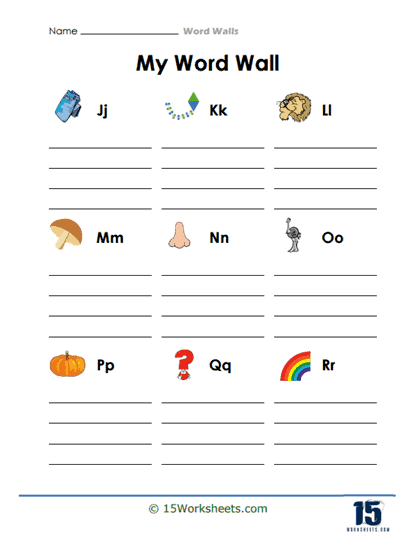
Jeans To Rainbow
This worksheet continues the alphabet adventure with letters J through R. Students use the picture clues to brainstorm and record words that begin with each letter. It helps strengthen letter-sound connections while expanding vocabulary.
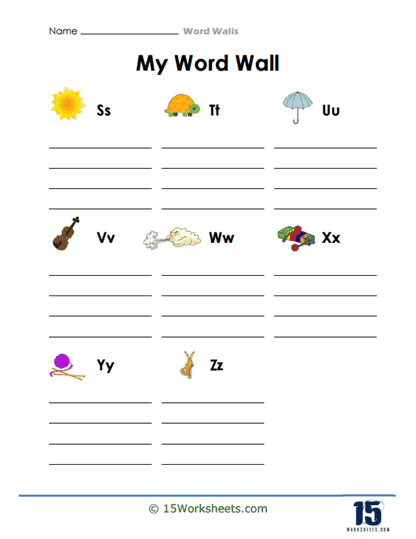
Sun To Zebra
Students complete the final section of the alphabet by working with letters S through Z. The bright illustrations make the activity approachable while encouraging students to think of even more words. It’s a great way to finish building a personal word collection.
Word Wall Quiz
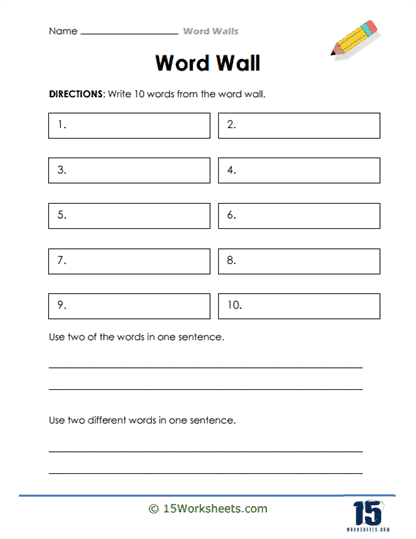
This worksheet challenges students to see how many word wall words they can remember without looking. It turns vocabulary review into a quick memory challenge that helps reinforce learning. Teachers can also use it as an easy progress check.
Writing Sentences
Students choose words from their word wall and use them to create original sentences. Instead of simply recognizing vocabulary, they put the words to work in meaningful contexts. It’s excellent practice for both writing and comprehension.
Use All The Words
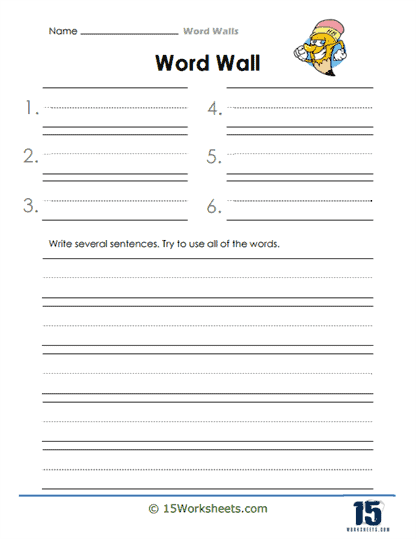
Students select several vocabulary words and challenge themselves to use every one of them in a short piece of writing. The task encourages creativity while reinforcing word meanings. Sometimes the funniest sentences end up being the most memorable.
Weekly Challenge
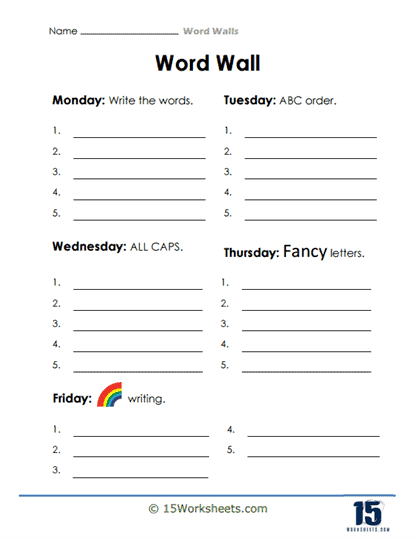
This worksheet gives students a different vocabulary task for each day of the week. From alphabetizing words to creating fancy lettering, the activities keep practice fresh and interesting. It turns word study into a fun weekly routine.
Sort Into Word Families
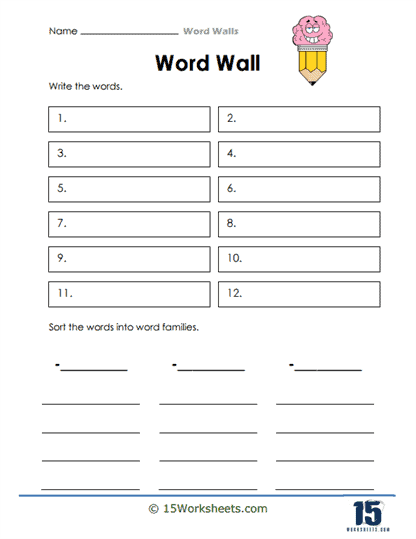
Students organize their vocabulary words into groups that share similar spelling patterns or sounds. The sorting process helps reinforce phonics skills and word recognition. It’s a great activity for helping students see patterns in language.
Write It Three Times
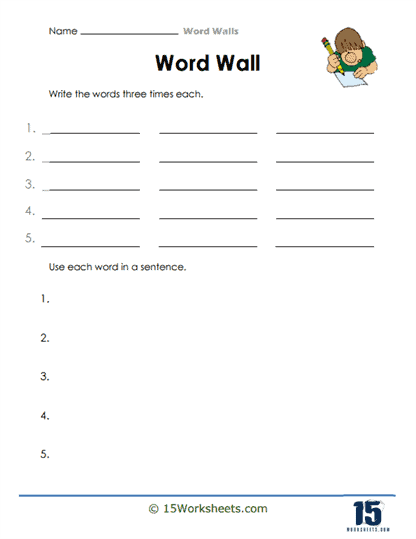
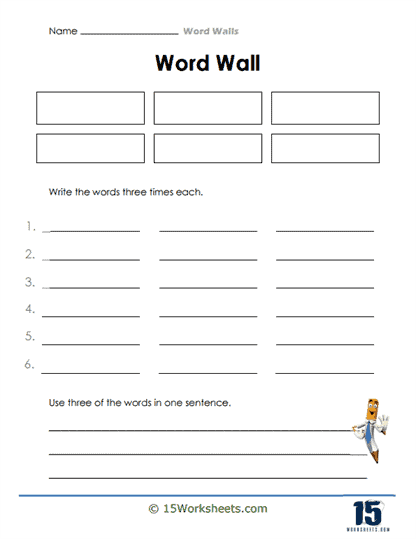
Students practice spelling words by writing each one three times before using it in a sentence. The repetition helps strengthen memory while the sentence-writing portion reinforces understanding. It’s simple, effective, and easy to use with any vocabulary list.
Vocabulary Trials
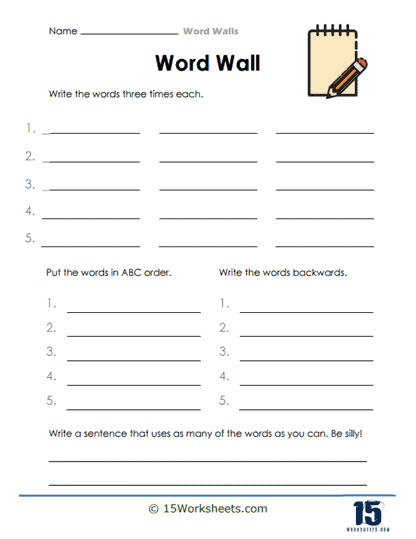
This worksheet mixes several vocabulary challenges into one activity. Students write words repeatedly, alphabetize them, write them backward, and then create a sentence using as many as possible. The variety keeps learning active and engaging.
Word Wall Hunt
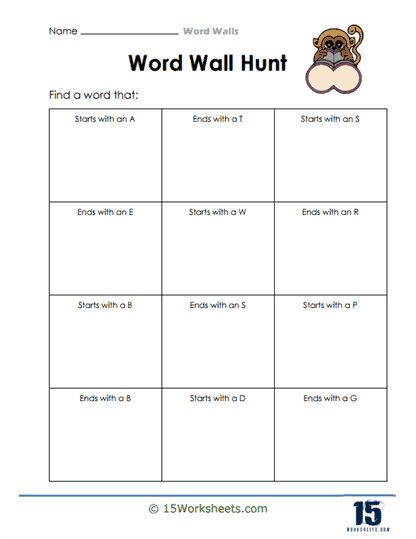
Students search their word wall for words that meet specific criteria, such as starting or ending with certain letters. The scavenger-hunt format makes vocabulary review feel more like a game. It’s a great way to encourage careful observation.
My Word Wall
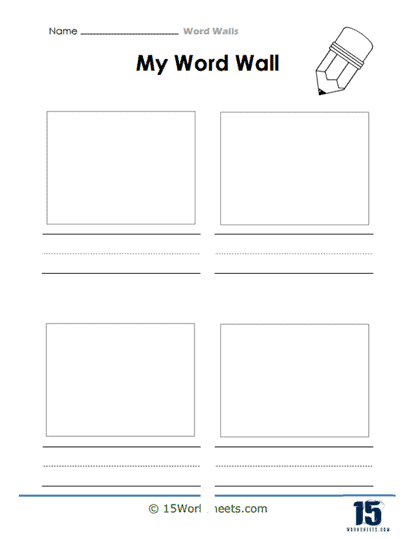
This blank template gives students a chance to create a personalized vocabulary collection. They can add important words, definitions, examples, or anything else that helps them learn. It encourages independence and ownership of learning.
In Three’s
Students choose vocabulary words, practice spelling them several times, and then use some of them in a sentence. The combination of repetition and application helps strengthen retention. It’s a well-rounded vocabulary exercise.
Painting Pictures
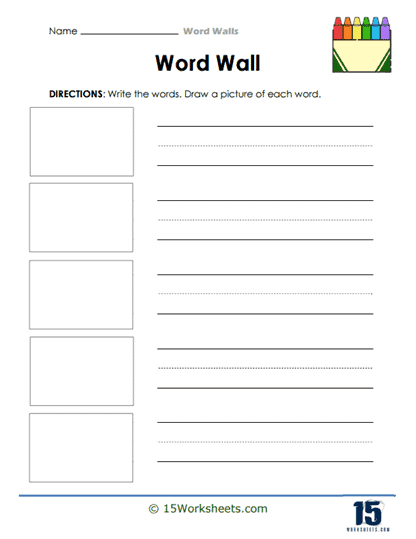
This activity asks students to pair words with their own illustrations. Drawing helps students connect meanings to images, making vocabulary easier to remember. It’s especially helpful for visual learners who enjoy creative activities.
A New Word
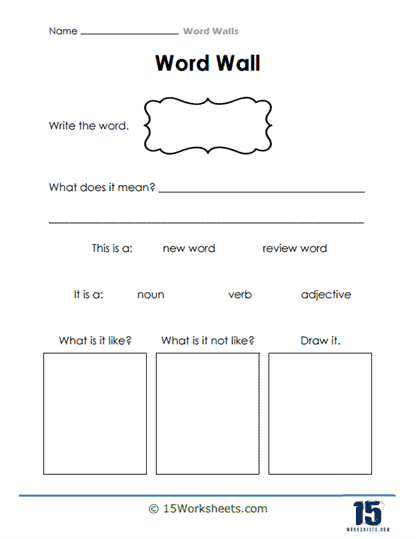
Students explore a new vocabulary word by defining it, classifying its part of speech, comparing it to other concepts, and drawing a picture. The worksheet encourages deeper thinking than simple memorization. It helps students truly understand and connect with new vocabulary.
What Are Word Walls?
Word walls are collections of words displayed in a classroom or learning space for students to reference and use. The words are often organized alphabetically or grouped by categories, themes, spelling patterns, or subject areas. Teachers use word walls to help students become familiar with important vocabulary and encourage them to use those words in reading, writing, and speaking. They serve as an ongoing learning resource that students can access whenever needed.
Word walls are especially effective because they keep vocabulary visible and accessible. Instead of learning a word once and moving on, students encounter it repeatedly throughout the school year. This repeated exposure helps strengthen spelling, pronunciation, recognition, and understanding. Many word walls also encourage students to actively contribute words, making learning more personal and engaging.
Using word walls helps students build vocabulary, improve spelling, strengthen reading fluency, and become more confident writers. They support language development by helping learners recognize patterns, remember new words, and apply vocabulary in meaningful ways. Word walls can be adapted for all grade levels and subjects, making them a versatile educational tool. When students regularly interact with word walls, they develop stronger literacy skills and a greater appreciation for language.