
Multisyllabic Words Worksheets

About Our Multisyllabic Words Worksheets
Multisyllabic words might look big and tricky at first, but they’re really just words broken into smaller, manageable parts. These worksheets help students learn how to hear, count, and split those parts-called syllables-in a fun and approachable way. With activities that include clapping, circling, and sorting, learners get to explore words in a hands-on way. It turns what could feel overwhelming into something simple and even enjoyable!
This collection is designed to build skills step by step, starting with basic syllable counting and moving into more advanced word division. Some worksheets focus on listening and identifying syllables, while others guide students to apply rules and patterns. The variety helps students practice the same concept in different ways, which makes learning stick. As they progress, students become more confident in reading and breaking down longer words.
Beyond phonics, these worksheets support real-world reading and communication skills. Students learn how to approach unfamiliar words without feeling stuck or frustrated. This boosts reading fluency, spelling accuracy, and overall confidence. Whether they’re reading a book, writing a story, or learning new vocabulary, these skills make a big difference.
About Each Worksheet
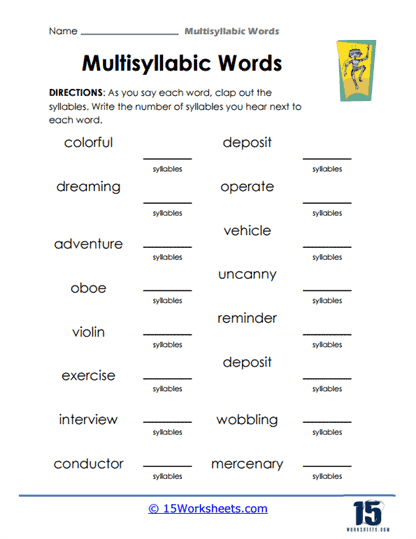
Clap Count
This worksheet gets students moving while they learn! They clap out syllables as they say each word and then write the number they hear. It’s a fun mix of sound and movement that makes learning stick. Students enjoy the rhythm while building important phonics skills. A great activity for active learners who like hands-on practice!
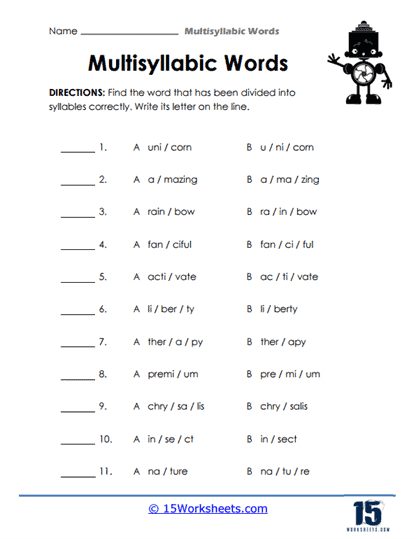
Correct Split
This worksheet turns students into syllable experts! They choose the correctly divided version of each word from two options. It’s like a mini challenge for each question. Students must think carefully and compare before deciding. A great way to sharpen accuracy and attention to detail!
First Syllable
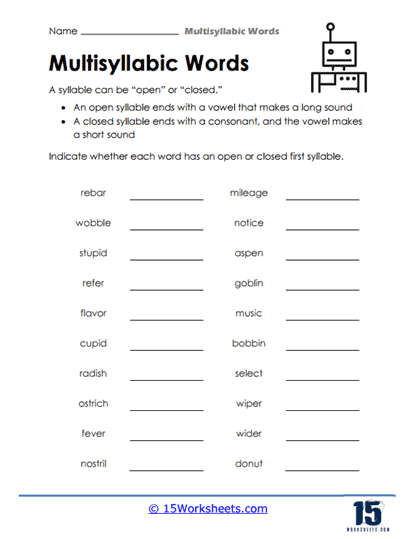
This worksheet focuses on how words begin. Students decide whether each word starts with an open or closed syllable. It helps them understand vowel sounds in a deeper way. The repeated practice builds confidence quickly. A helpful step toward mastering word patterns!
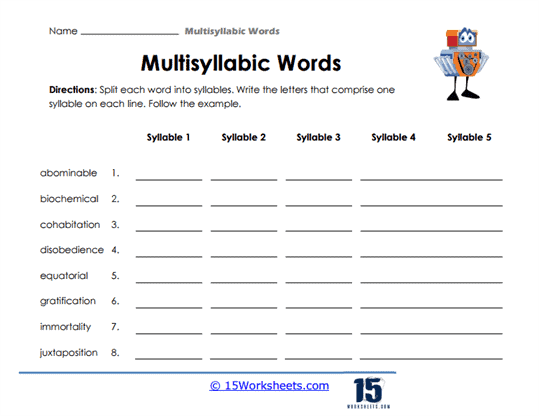
Long Split
This worksheet takes things up a level with longer, more complex words. Students break each word into multiple syllables across columns. It feels like solving a word puzzle! The structure helps keep everything organized and clear. A great challenge for growing readers!
Open Closed
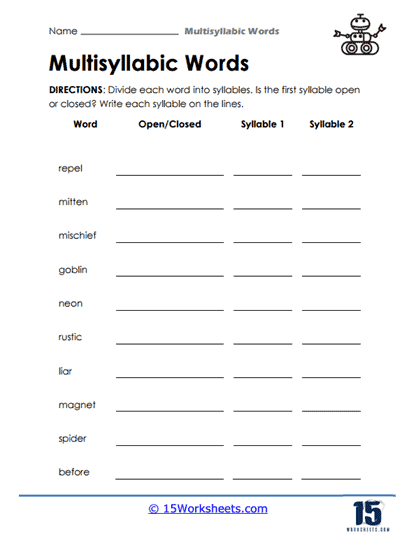
This worksheet combines syllable division with classification. Students split each word and then decide if the first syllable is open or closed. It encourages careful thinking and rule application. The dual task keeps learners engaged and focused. A strong activity for building phonics mastery!
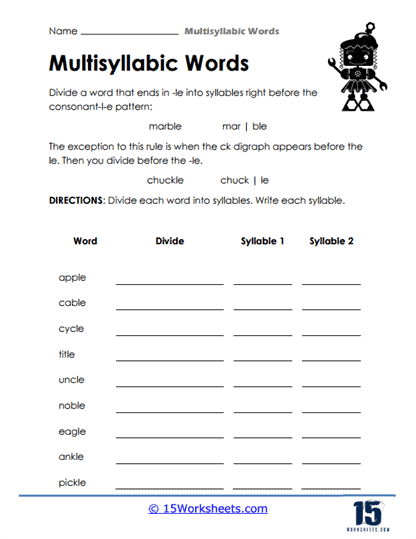
Rule Breaker
This worksheet zooms in on special syllable rules like tricky -le endings. Students learn where to split words using clear patterns and examples. It’s a bit like cracking a secret code in words! The guided format helps make tough rules easier to understand. A great tool for boosting spelling and decoding skills!
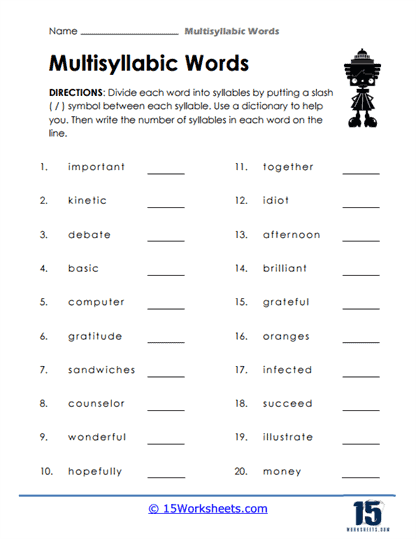
Slash Divide
This worksheet teaches students to divide words using slash marks. They also count the syllables after splitting them. It combines two important skills in one activity. Students can even use a dictionary for extra support. A great way to encourage independent learning!
Syllable Builder
This worksheet helps students organize syllables like building blocks. They split words and write each part in its own column. It makes word structure easy to see and understand. The format encourages neat and thoughtful work. A perfect activity for reinforcing patterns!
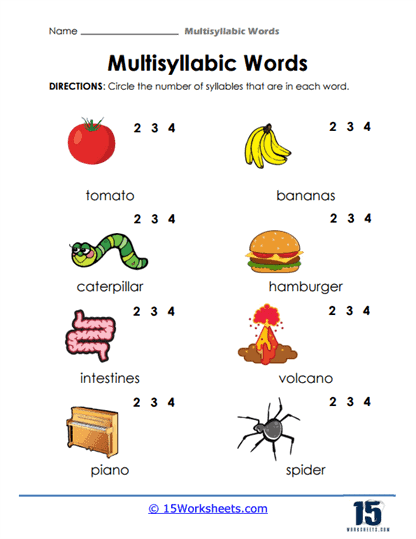
Syllable Circle
This worksheet uses pictures to make learning more fun and visual! Students look at each word and circle the number of syllables they hear. The images help connect meaning and sound. It’s a great starting point for younger learners. A fun and simple way to build confidence!
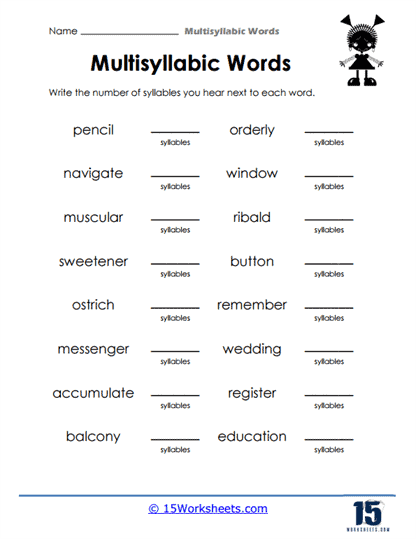
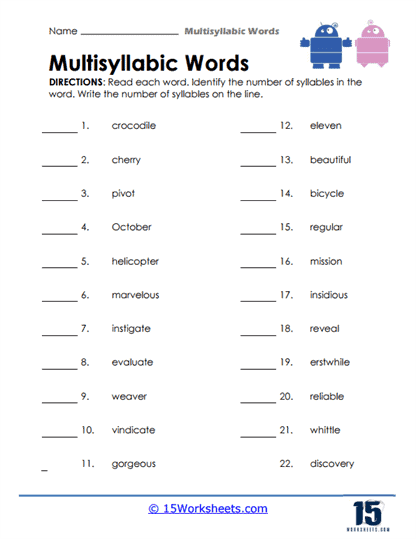
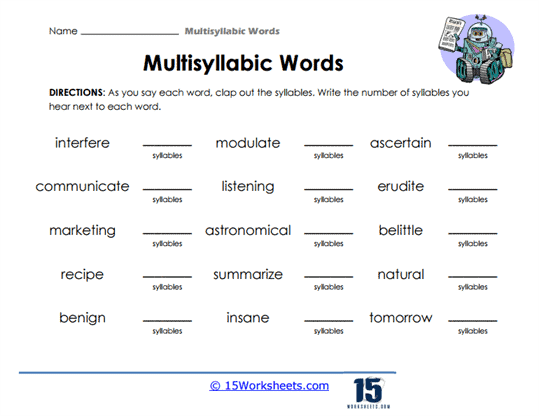
Syllable Count
This worksheet gives students plenty of practice counting syllables. They read each word and write the number of parts. The variety of words keeps things interesting. It’s straightforward but very effective. A great daily practice activity!
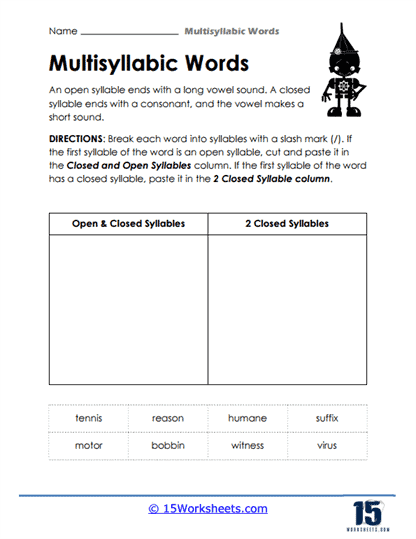
Syllable Split
This worksheet adds a sorting twist to syllable practice! Students divide words and sort them based on open or closed syllables. It combines phonics rules with organization. The activity encourages careful analysis of each word. A strong step toward advanced phonics skills!
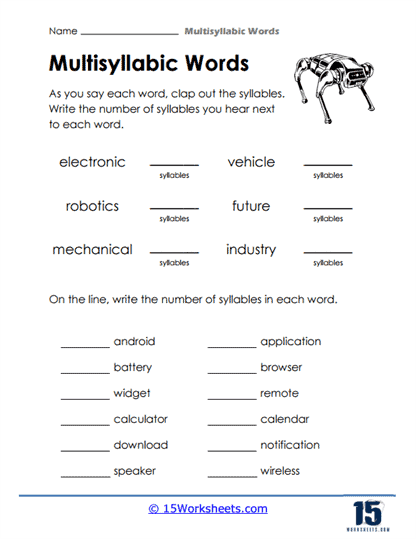
Tech Syllables
This worksheet introduces modern, tech-related vocabulary! Students count syllables in words like “robotics” and “application.” It helps expand vocabulary while practicing phonics. The real-world words make it feel relevant and interesting. A great blend of language and modern learning!
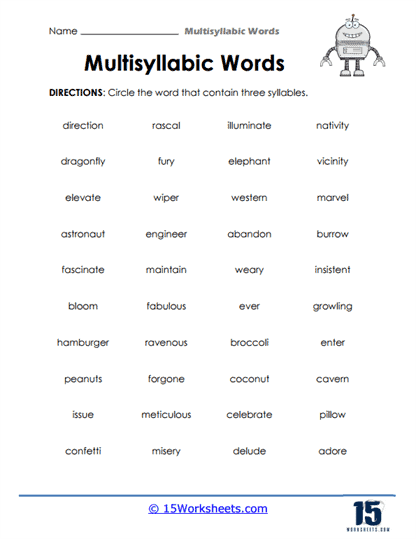
Triple Hunt
This worksheet turns learning into a search game! Students look for the word with three syllables in each row. They must compare options carefully to find the correct one. It builds listening and decision-making skills. A fun challenge that keeps students engaged!
Word Beats
This worksheet helps students hear the rhythm in words. They say each word and count how many syllables it has. It feels a bit like tapping out a beat in music! The mix of easy and tricky words keeps learners on their toes. A fun way to build fluency and confidence!
What are Multisyllabic Words?
Multisyllabic words are simply words that have more than one syllable, or “beat.” For example, a word like “banana” has three parts: ba-na-na. Instead of trying to read the whole word at once, students can break it into smaller chunks. This makes reading easier and less overwhelming. Once you know how to spot the parts, big words don’t feel so big anymore!
These words matter because they show up everywhere-especially as students start reading more advanced books. Being able to break them apart helps with pronunciation, spelling, and understanding meaning. It’s like having a strategy for solving tricky words instead of guessing. This skill builds confidence and helps students become smoother, more fluent readers. Over time, they start recognizing patterns automatically.
Learning multisyllabic words also supports writing and communication. Students can use bigger, more interesting words in their sentences. They also become better at decoding unfamiliar vocabulary when reading. This connects directly to stronger comprehension and clearer expression. In the end, mastering multisyllabic words helps students grow into confident, capable readers and writers!