
Hobbies Worksheets
All About These 15 Worksheets
These worksheets make learning about hobbies feel personal, fun, and meaningful-they give students space to see, name, draw, and talk about what they love. Through a blend of matching, drawing, writing, and talking, learners explore hobbies while practicing vocabulary, reading, writing, and even a bit of counting. Each worksheet offers a fresh way to connect language with interests, whether students are cutting and pasting, illustrating, or chatting with classmates. The result is engaging, self-reflective learning that feels much more like sharing passions than doing schoolwork.
The set also supports a range of skills and learning styles. Visual learners get to draw and match images; writers craft sentences about their interests; social learners interact with peers in “Find Someone” or “Talking About It.” By weaving in personal expression, fine motor practice, vocabulary building, and even math (hello, Numbers 1 to 8!), the lessons feel rich and well-balanced. It’s a toolkit for getting curious and talking about what makes each student tick.
Most importantly, these worksheets celebrate individuality. Encouraging students to reflect on what they enjoy, share it, and express it creatively fosters confidence. It helps them feel seen and heard. Whether it’s sketching a favorite hobby or describing why they love it, kids begin to use language to connect with their own lives-and with others.
Have a Look Inside Each Worksheet
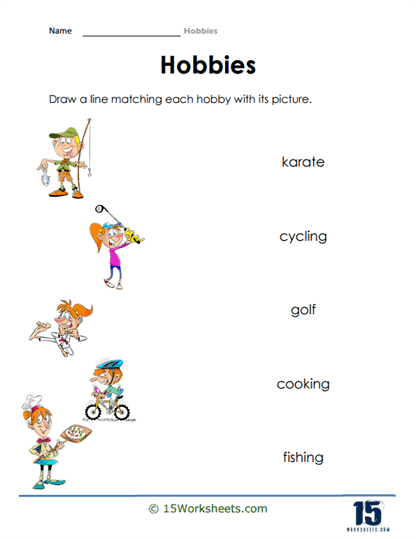
Picture-Word Match
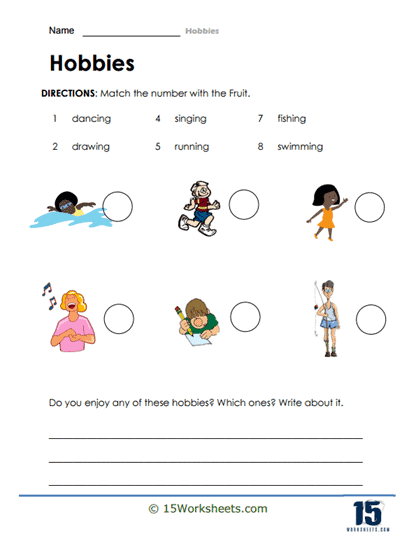
Kids match pictures of hobbies to the correct words. It sharpens their recognition and vocabulary with a visual twist. The format feels like a fun game where images come to life through words. It’s a great way to link what they see with how it’s named.
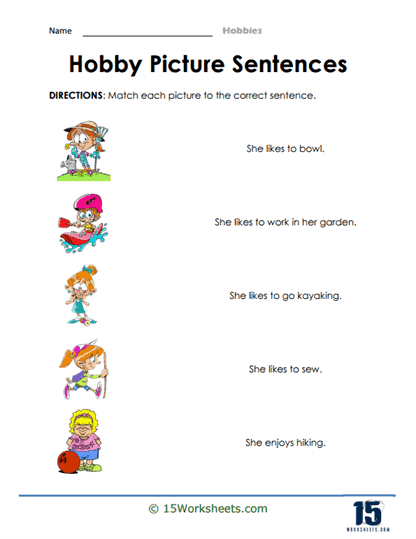
Matching The Sentences
Learners connect sentences to the right hobby images or names. This builds reading comprehension and context awareness. It’s like a sentence puzzle that brings hobbies into clearer focus. The activity is simple but satisfying.
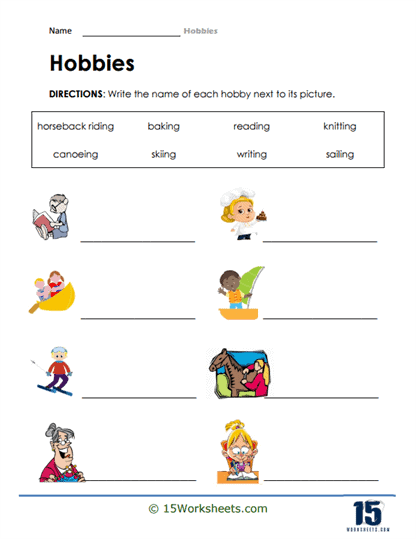
Hobby Names
Students name each hobby shown using words or labels. It helps reinforce spelling and word recall tied to their interests. Writing out hobby names makes the connection between activity and language stronger. It’s an invite to think about what they love doing.
Cut And Paste
Kids cut out hobby pictures or words and paste them into matching categories or names. This hands-on task blends fine motor skills with language learning. The tactile element makes the matching feel active and fun. It’s creative and kinetic.
Numbers 1 to 8
Learners number hobby pictures in sequence or match numbers to images. It brings in a dash of counting practice alongside hobby vocab. It turns simple numbering into language learning support. It’s a subtle way to mix math and words.
What Is A Hobby?
Students answer prompts or discuss what qualifies as a hobby. It encourages thinking about personal interests and how to describe them. It’s reflective and connects learning with self-awareness. It plants the seed for expressive writing.
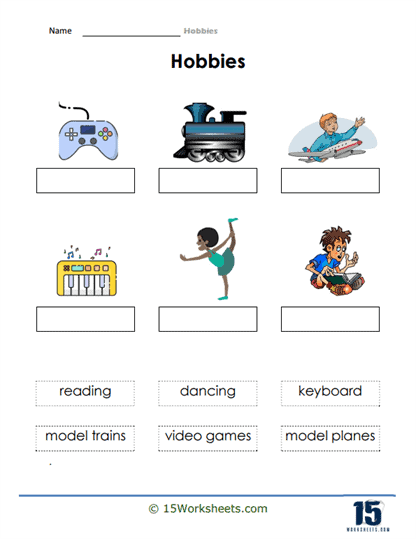
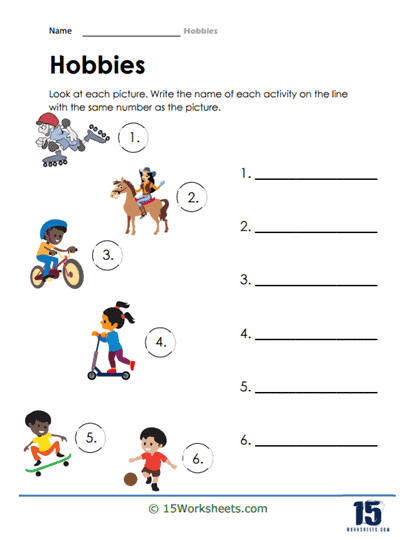
Identify The Activity
Children look at pictures and label the hobby or action being shown. It boosts their observation and vocabulary skills simultaneously. It’s like decoding a mini-story in each image. It keeps learning grounded in real-life scenes.
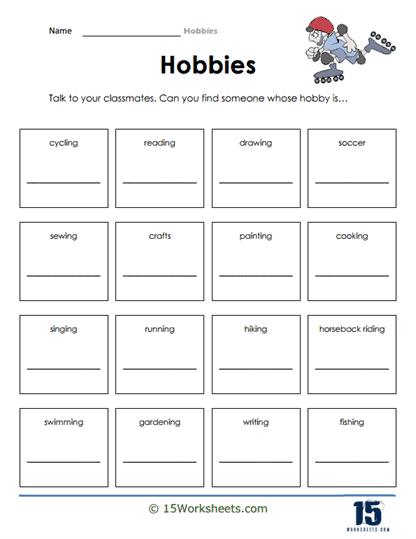
Find Someone
Learners find classmates who share the same hobby or match hobby descriptions. This promotes speaking and social interaction. It’s a lively way to combine language with peer engagement. It fosters connection through shared interests.
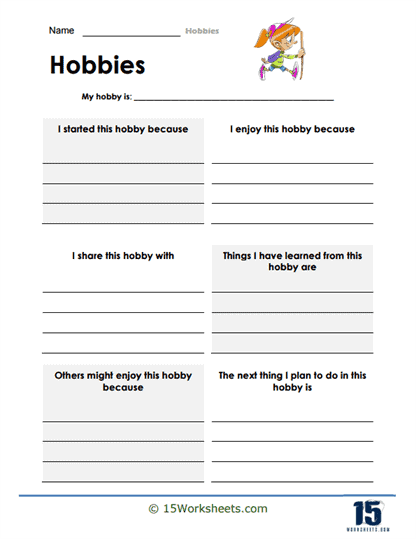
All About My Hobby
Students write about their own hobby-what it is, why they enjoy it. It invites personal expression and descriptive language use. The activity helps them reflect and articulate their passions. It feels both meaningful and empowering.
Drawing My Favorites
Kids draw their favorite hobby in action. It combines creativity with language practice-labeling their art or writing a short caption. It engages imagination while reinforcing the concept. It’s expressive and visually lively.
Picturing My Hobby
Students illustrate and perhaps describe their hobby using a prompt or drawing box. It’s similar to “Drawing My Favorites,” with room for both art and words. It helps them visualize and communicate personal interests. The dual focus is creative and reflective.
Collecting
Learners explore hobbies involving collecting-like stamps, coins, or cards-and perhaps sort or name them. It highlights a specific type of pastime while building vocabulary. This gives context to the idea of “collection” as a hobby. It taps into classification and interest.
Illustrate These 4
Kids are given four hobby prompts or words and asked to illustrate each one. It encourages interpretation and artistic creativity. It’s quick yet expressive-kids bring words to life with their drawings. It’s concise and creative.
Talking About It
Students discuss or write about hobbies, maybe describing why they like them or how they do them. This builds communicative skills and uses vocabulary in context. It turns thinking into sharing. It highlights the power of conversation around interests.
Draw And Write
Learners draw a hobby scene and write a few sentences about it. The dual task fosters both artistic and writing skills. It ties description to creation. It’s a complete, expressive activity that puts words and images together.
What are the Most Common American Hobbies?
Most kids have no idea what they are interested in, but you can help your child pick up a hobby by introducing them to different activities and building their interest. Hobbies are supposed to be relaxing and fun, so make sure your child enjoys himself and does what he loves!
Hobbies encourage emotional, social, and physical growth. They ensure that children do not get bored, and they have something to turn to that will distract them and make them happy in times of stress. Moreover, hobbies help kids express their creativity and try a bunch of new ideas.
1. Sports and Fitness
According to a report from the Sports & Fitness Industry Association (SFIA), in 2020, around 52.9% of the U.S. population aged 6 and older participated in some form of sports, fitness, or outdoor activities at least once in the year. This percentage equates to over 170 million Americans.
This number includes individuals who participate in team sports, individual sports, fitness activities, and other outdoor recreational activities. It’s important to note that these statistics can fluctuate over time due to various factors, such as demographic changes, cultural shifts, and economic conditions.
2. Photography
Photography is one of those hobbies that your child can continue even after he grows up. Children start by taking pictures of animals, family, friends, and nature as they polish their skills. If you find that your child has a knack for photography, you could enroll them in a beginner photography course.
Photography is a wonderful hobby that could turn into a job later- your child could grow up to become a food photographer or professional photographer and even sell their artwork to other people or at auctions!
3. Painting
Most young American children love painting. This could include finger painting, painting on canvases, and water coloring. Young kids use painting as a means to express their creativity as they learn how colors interact with each other and start to notice different textures.
All forms of color are a great way to relieve stress. Depending on where you live, you can easily find summer camps and art classes that teach children different painting methods with different mediums. It doesn’t matter if your kid’s drawings do not make sense to you yet- keep encouraging them to do what they love, and they might surprise you.
4. Sewing
A sewing machine is a staple in most American households. Grandmothers often teach their grandkids how to sew and recognize how great an activity this is. If you start from a young age, most children can learn how to sew before they are ten years old.
You can help them sew blankets and baby gifts and teach them how to mend broken buttons or torn clothes. Sewing is a skill that your child will never regret learning. Not only is this an inexpensive hobby, but it will also allow your kid to express their creativity as they merge colors and fabrics to create something absolutely unique each time they sew.
5. Origami
Origami is a common hobby that most kids pick up at home or school. It is inexpensive and only requires some paper and creativity. You will find an abundance of beginner origami lessons online that you can watch with your kid.
The best part is that numerous creations can result from origami, giving children a way to express things they are inspired by or how they feel. Moreover, origami also helps improve visualization skills as children learn how to understand, characterize, and construct their shapes and figures based on how they view the world around them.
6. Gardening
Gardening is a wonderful hobby that your child will hold on to for the rest of their life if you keep encouraging them. All you have to do is start by taking your kid’s advice on what to plant and where to plant it in the garden. Prep the soil with them and allow your child to plant the seed in the ground themselves.
Over time, they will see the fruits of their labor, which will help blossom their interest. Experiment with different fruits and vegetables so your child can have a broad knowledge of gardening.