
Degrees of Comparison Worksheets
About Our Degrees of Comparison Worksheets
Learning about degrees of comparison is like unlocking a superpower for describing the world! These worksheets introduce students to how adjectives can change to compare things-whether something is bigger, smaller, faster, or the very best. With fun themes like animals, cities, and even cupcakes, kids get to explore grammar in a way that feels more like play than work. It’s a great way to build confidence while learning how language works.
This collection is designed to help students move step-by-step from simple understanding to confident usage. Some worksheets focus on recognizing comparatives and superlatives, while others challenge students to write their own sentences or fix mistakes. The variety keeps things fresh and helps learners practice the same skill in different ways. Over time, students become more comfortable choosing the right words naturally.
Beyond grammar, these worksheets connect to real-life thinking and communication. Kids learn how to describe differences, compare choices, and express opinions clearly-skills they use every day. Whether they’re talking about their favorite snack or writing a story, these activities help them sound more precise and expressive. It’s grammar with a purpose-and a little fun along the way!
About Each Worksheet
Adjective Table
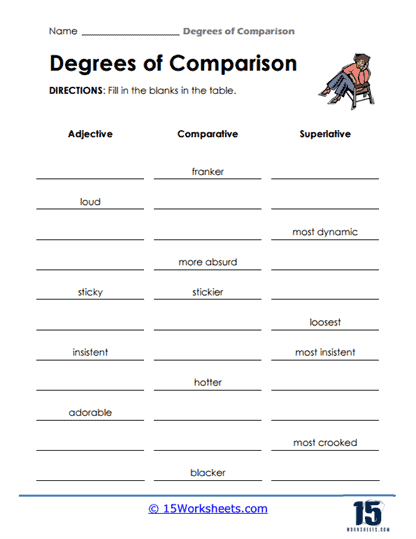
This worksheet gives students a handy table to complete with missing comparative and superlative forms. It’s like a puzzle where each word needs the correct upgrade! Students practice spotting patterns and figuring out how adjectives change. The structured format makes it easy to follow and perfect for focused practice. It’s a great quick activity for building grammar confidence step by step!
Animal Comparisons
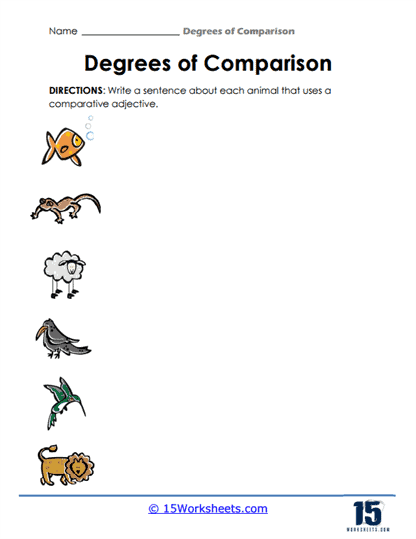
Get ready to compare some amazing animals! In this worksheet, students write sentences comparing creatures based on size, speed, or other traits. The animal images spark creativity and make the task more exciting. Students practice using comparative adjectives while thinking about real-world differences. It’s perfect for classroom discussions or fun writing time at home!
City Comparisons
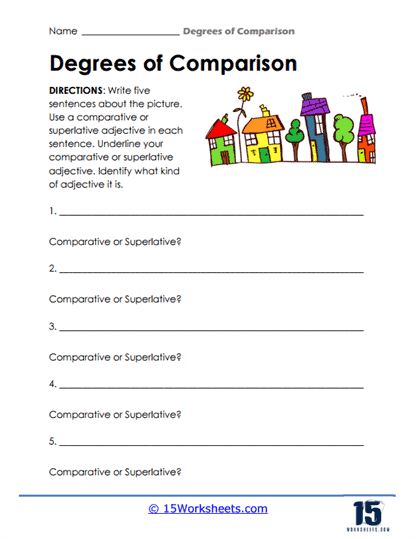
This worksheet brings grammar into the city skyline! Students write sentences about buildings and decide whether they are using comparative or superlative adjectives. They also underline and classify each adjective, adding a detective-style twist. It’s a mix of writing and analysis that keeps learners engaged. A great choice for sharpening both grammar and attention to detail!
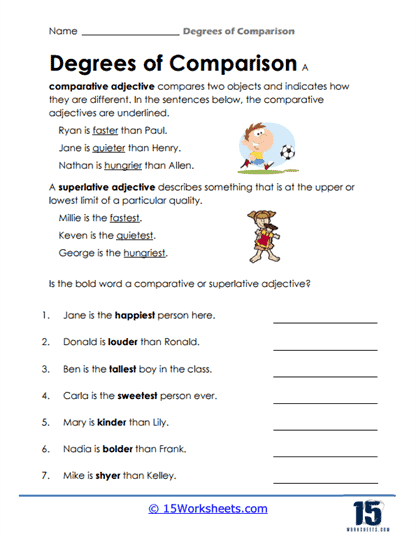
Comparison Basics
This worksheet is the perfect starting point for understanding comparisons. Students learn what comparative and superlative adjectives are with clear examples. Then, they identify which type is used in different sentences. It’s simple, clear, and builds a strong foundation. A great “first step” activity before diving into more advanced practice!
Comparison Fill-Ins
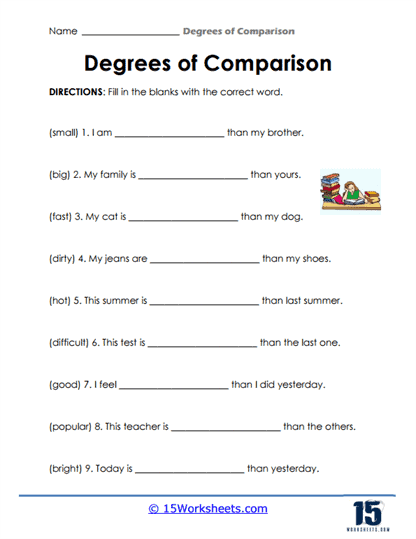
Time to fill in the blanks and make sentences shine! Students choose the correct comparative form of adjectives based on context clues. It’s a mix of reading and grammar that helps everything click together. The sentences guide students toward the right answers without feeling overwhelming. A fun and effective way to practice using comparisons correctly!
Costume Comparisons
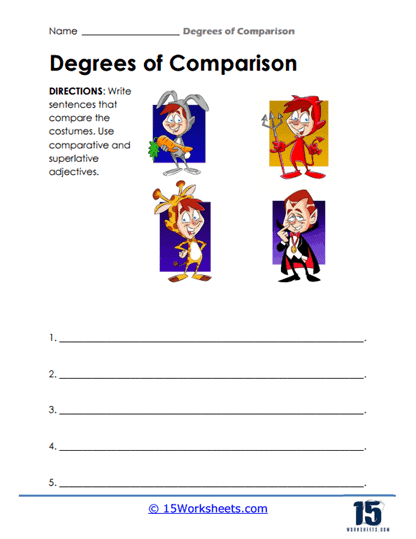
This worksheet adds a playful twist with fun costume characters! Students compare them using both comparative and superlative adjectives. The imaginative visuals make writing more exciting and less intimidating. It encourages creative thinking while reinforcing grammar rules. Perfect for students who love storytelling and a little dress-up fun!
Form Builder
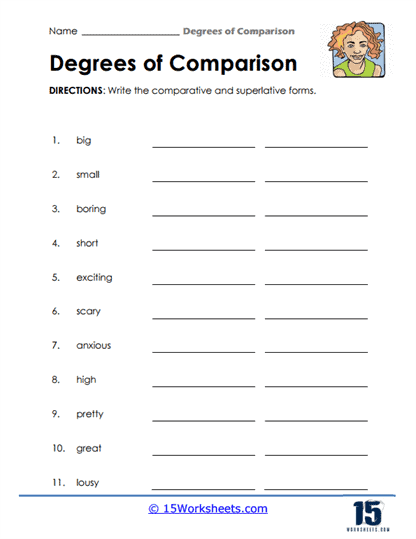
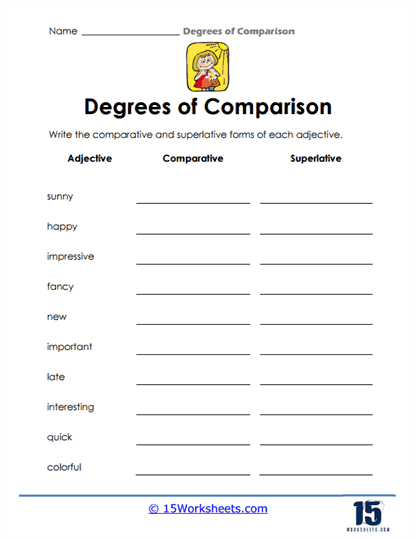
This worksheet is all about building strong grammar skills from the ground up. Students take base adjectives and turn them into comparative and superlative forms. The repetition helps reinforce patterns and improve accuracy. It’s simple but powerful practice that really sticks. A great go-to for mastering adjective transformations!
Form Finder
Students become grammar detectives in this worksheet! They write both comparative and superlative forms for a variety of adjectives. The mix of easy and tricky words keeps things interesting. It helps students recognize patterns and apply rules confidently. A perfect activity for sharpening spelling and grammar skills together!
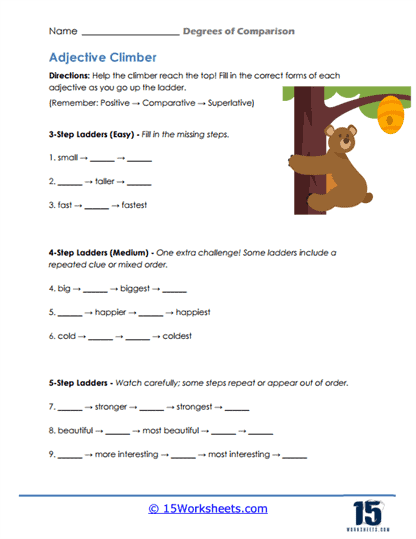
Ladder Logic
Climb your way to grammar success with this fun ladder-themed worksheet! Students complete adjective “ladders” from positive to comparative to superlative. The visual format makes learning feel like a game. It also helps students see how words change step by step. Great for visual learners who enjoy interactive challenges!
Opposite Comparisons
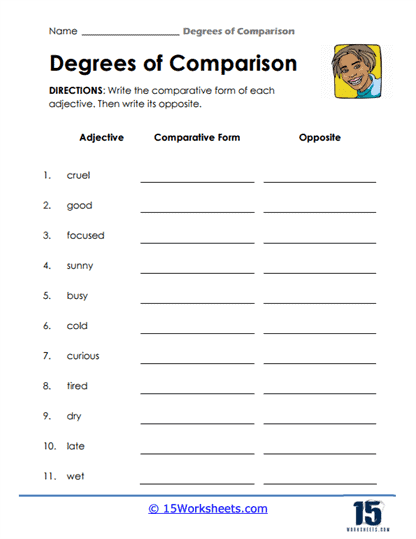
This worksheet doubles the learning fun by adding opposites into the mix! Students write comparative forms and then find their opposites. It encourages deeper thinking about word meaning and relationships. The activity strengthens both vocabulary and grammar skills. A fun twist that keeps students thinking in new ways!
Opposite Superlatives
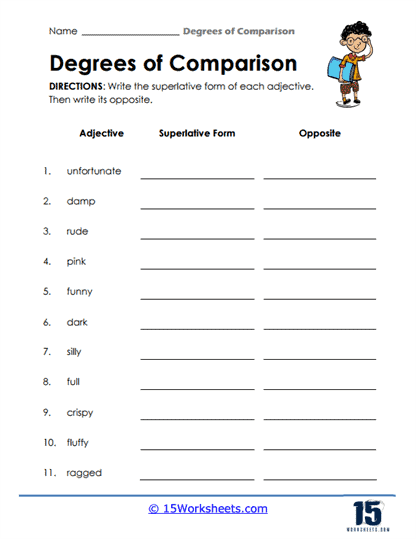
This worksheet takes superlatives to the next level-by flipping them! Students write the superlative form of adjectives and then come up with the opposite. It’s a great way to explore meaning while practicing grammar. The challenge keeps students engaged and curious. A perfect blend of vocabulary building and grammar practice!
People Comparisons
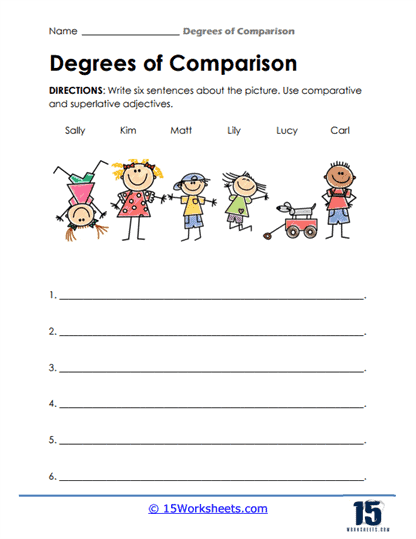
This worksheet brings comparisons to life with a group of kids to observe! Students write sentences comparing people using what they see. It encourages careful observation and creative thinking. The activity feels relatable and engaging for learners. A great way to connect grammar to real-life situations!
Sentence Rewrites
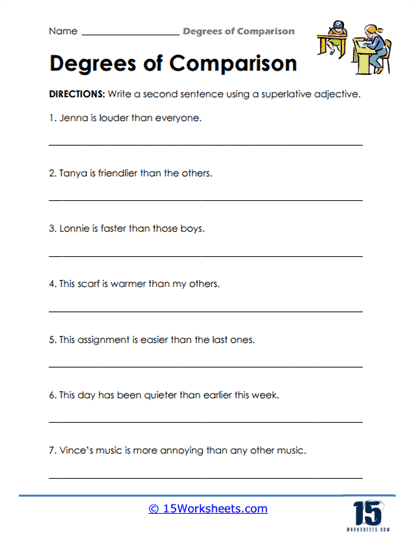
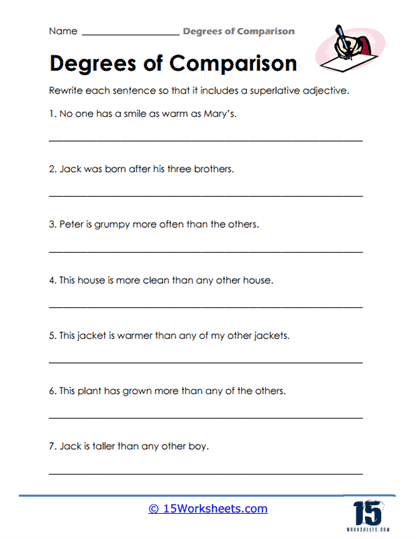
Time to give sentences a makeover! Students rewrite sentences to include superlative adjectives. This requires understanding both meaning and structure. It’s a great exercise in editing and improving writing. Perfect for building strong revision skills with a grammar twist!
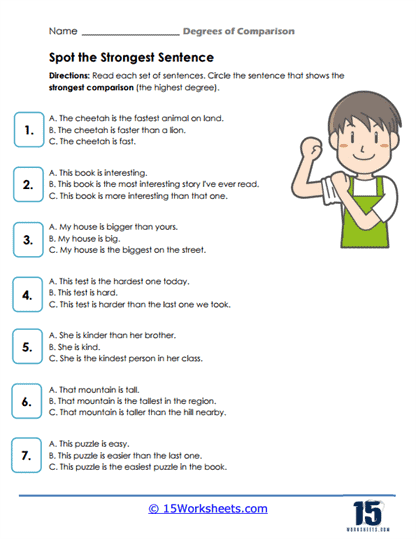
Strongest Choice
This worksheet challenges students to pick the strongest comparison. They read sets of sentences and choose the one with the highest degree. It’s like a mini competition between sentences! The activity sharpens reading comprehension and decision-making. A fun way to think critically about word choice!
Superlative Practice
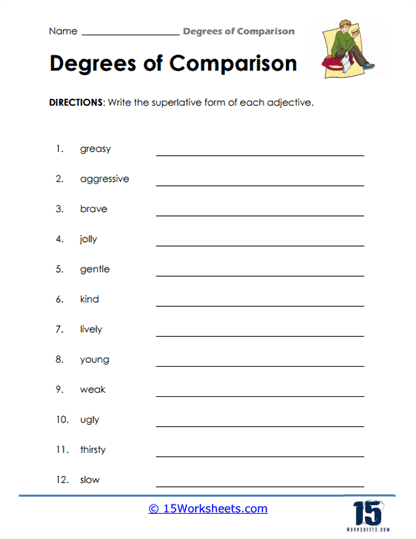
This worksheet zooms in on superlatives for focused practice. Students write the superlative form of different adjectives. It’s straightforward but super effective for building accuracy. The repetition helps the rules stick. A great quick practice for boosting confidence!
Superlative Switch
Switch it up with this sentence transformation activity! Students rewrite comparative sentences into superlative ones. It helps them understand how meaning changes between forms. The task encourages careful thinking and editing. A fun way to level up grammar skills!
Sweet Comparisons
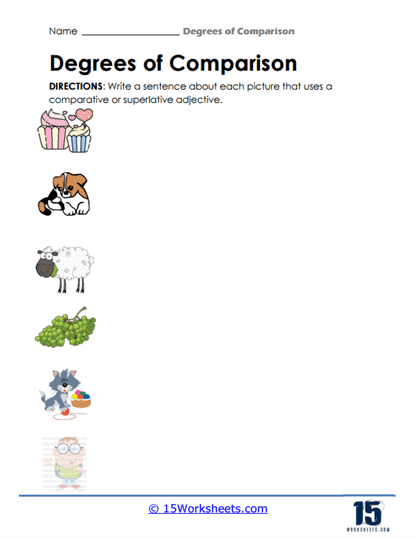
This worksheet is as fun as it sounds-sweet treats and clever comparisons! Students write sentences based on pictures like cupcakes and other objects. It blends visual learning with grammar practice beautifully. The activity feels playful while still being educational. A perfect mix of creativity and learning!
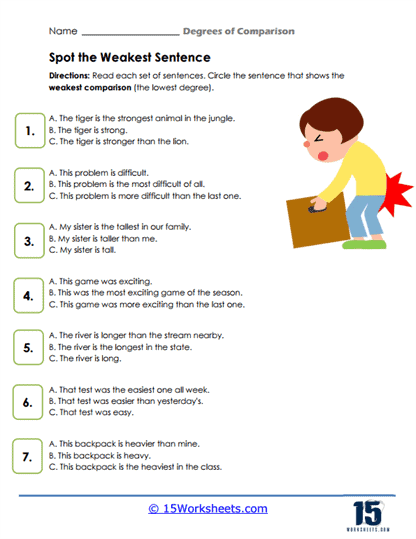
Weakest Choice
This worksheet flips the script by asking for the weakest comparison. Students read sentence groups and pick the one with the lowest degree. It helps them understand subtle differences in meaning. The challenge builds strong analytical skills. A great way to deepen understanding of comparisons!
What are Degrees of Comparison?
Degrees of comparison might sound fancy, but it’s really just about describing things in a smarter way! It’s how we show differences-like saying one thing is taller, faster, or the fastest of all. There are three main levels: positive (just describing), comparative (comparing two things), and superlative (the top level). Once students get the hang of it, they start noticing it everywhere. It’s like unlocking a secret code in everyday language!
This concept matters because it helps us communicate clearly and precisely. Imagine trying to explain which cookie is best without using comparisons-pretty tricky, right? Degrees of comparison let us share opinions, describe differences, and make choices easier. They show up in conversations, stories, and even advertisements. It’s a small grammar skill with a big impact!
Learning degrees of comparison also supports bigger reading and writing goals. It helps students write more detailed sentences and understand what they read more clearly. They can compare characters, describe settings, and express ideas with confidence. Over time, this leads to stronger communication skills in both school and everyday life. And honestly, it just makes language more fun to use!