
Two Syllable Words Worksheets
About These 15 Worksheets
Learning about syllables is one of those reading skills that suddenly makes big words feel much less scary. When students understand how words break into smaller sound parts, reading becomes smoother, spelling feels easier, and pronunciation starts making a whole lot more sense. This collection of Two Syllable Words Worksheets introduces learners to the rhythm and structure of language through playful activities that focus on breaking words into manageable chunks. From clapping syllables to sorting words and building vocabulary, students get plenty of hands-on practice while strengthening important phonics skills.
These worksheets help students become more confident readers by teaching them how to hear, count, divide, and blend syllables in everyday vocabulary words. Learners practice identifying two-syllable words through matching games, coloring activities, cut-and-paste exercises, tracing, sorting, and word-building challenges. The activities are designed to keep students active and engaged while reinforcing decoding and pronunciation strategies in a variety of ways. Whether students are practicing independently, in literacy centers, or with support from teachers and parents, the collection turns syllable practice into something much more exciting than simply counting beats on fingers all afternoon.
Beyond reading practice, these worksheets also help students understand how spoken language naturally works in everyday communication. Learners begin noticing the rhythm of words in conversations, stories, songs, and classroom discussions while building stronger awareness of sound patterns in language. These phonics experiences support broader literacy development by improving spelling, vocabulary recognition, and reading fluency over time. By the end of the collection, students may find themselves happily clapping out syllables to random words they hear during the day like tiny language scientists on a mission.
About Each Worksheet
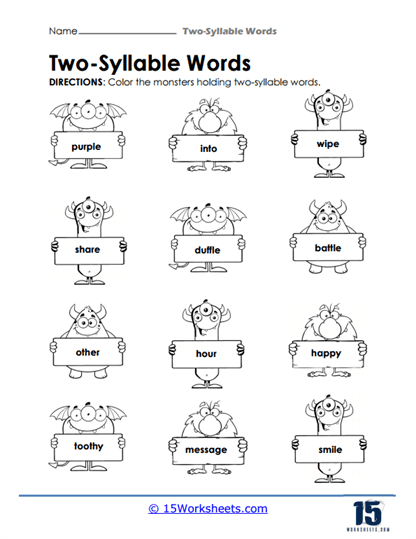
Monster Syllables
Monster Syllables helps students identify two-syllable words by coloring only the monsters holding the correct vocabulary words. Learners carefully read, clap, or sound out each word before deciding which monsters belong in the two-syllable club. The playful monster theme keeps students engaged while strengthening important phonics and decoding skills. It’s a fun activity for literacy centers, independent work, or extra reading practice at home. Students often enjoy discovering that even silly-looking monsters can teach serious reading skills.
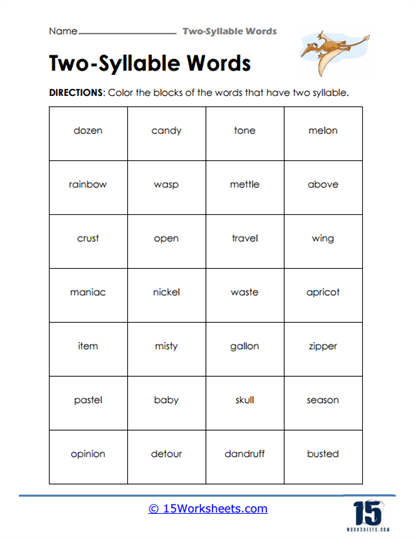
Syllable Squares
Syllable Squares asks students to search through a word grid and color only the words that contain two syllables. Learners carefully examine each word and practice sounding it out to determine the correct syllable count. The activity strengthens close reading skills while reinforcing understanding of spoken language patterns. It works especially well for helping students recognize differences between shorter and longer word structures. Students may feel a little like word detectives as they hunt for hidden syllable treasures.
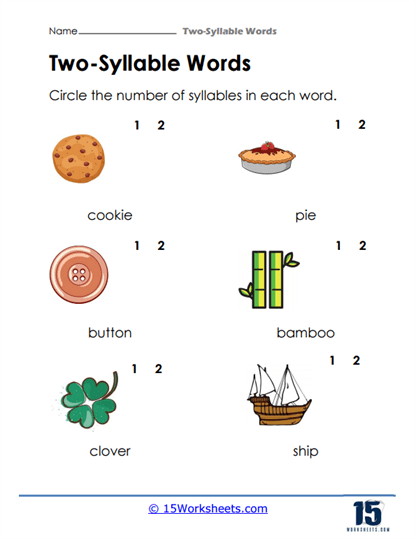
Syllable Counts
Syllable Counts encourages students to identify whether pictured vocabulary words contain one syllable or two syllables. Learners study images like bamboo, cookies, and clovers while circling the correct answer for each word. The worksheet combines visual learning with phonics practice to make syllable counting feel approachable and engaging. It’s a wonderful activity for early readers building confidence with spoken sound patterns. Students often enjoy clapping out the syllables while comparing answers with classmates or family members.
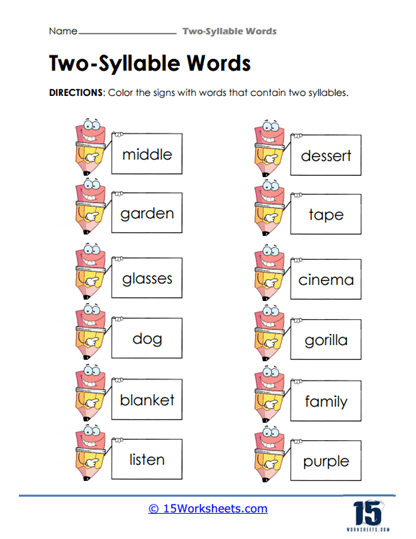
Pencil Patterns
Pencil Patterns asks students to color only the signs containing two-syllable words from a list of vocabulary choices. Learners practice reading words aloud and listening carefully for syllable breaks before making each decision. The activity encourages strong listening and pronunciation habits while reinforcing phonics concepts. It’s a simple but effective way to help students notice sound patterns hidden inside familiar words. Students may start hearing syllables everywhere once they get the rhythm of the activity.
Syllable Sorters
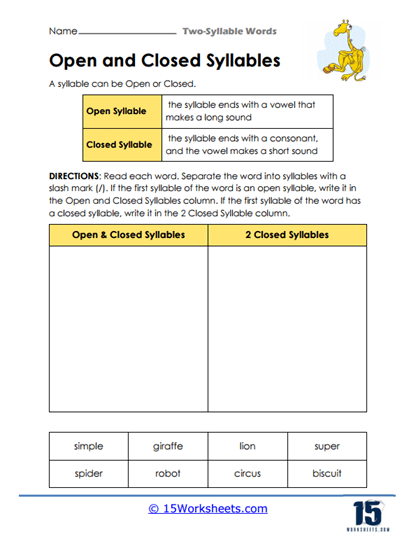
Syllable Sorters introduces students to open and closed syllables while helping them categorize words based on syllable patterns. Learners divide words into parts and decide where each word belongs according to its sound structure. The worksheet deepens understanding of how vowels and consonants affect pronunciation and spelling. It works especially well for students ready to move beyond basic syllable counting into more advanced phonics skills. Students often feel proud when they realize they can analyze words like real reading experts.
Pair Picks
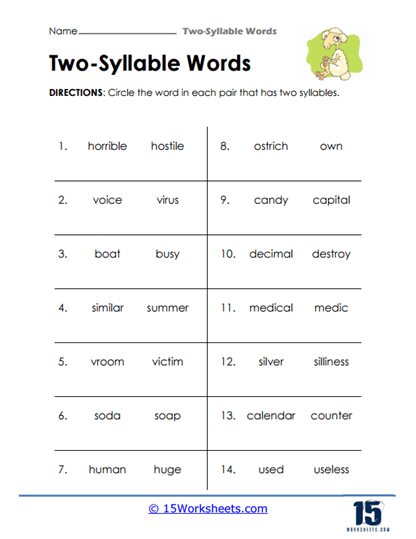
Pair Picks challenges students to compare two words and circle the one that contains two syllables. Learners sound out each pair carefully while practicing listening and pronunciation skills. The activity encourages close attention to word structure and helps strengthen phonics awareness in a clear, manageable format. It’s a helpful worksheet for reinforcing syllable counting through repeated comparison practice. Students usually enjoy the quick decision-making challenge that comes with each word pair.
Build-a-Word
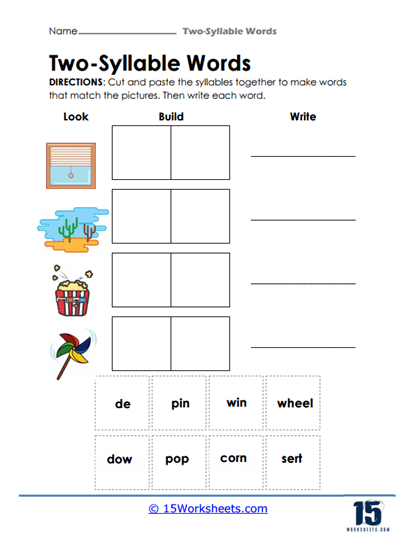
Build-a-Word asks students to combine syllable pieces to create complete vocabulary words that match pictures. Learners blend sound chunks together before writing the finished word on the provided lines. The activity makes word-building feel interactive and hands-on while strengthening understanding of how syllables form meaningful language. It’s an excellent activity for practicing spelling, decoding, and vocabulary recognition all at once. Students often feel like little puzzle masters while putting the syllables together correctly.
Picture Syllables
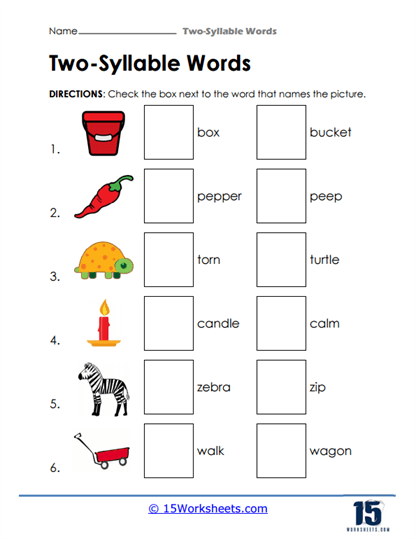
Picture Syllables encourages students to choose the correct two-syllable word that matches each picture shown. Learners compare word choices while sounding them out and connecting spoken sounds with visual clues. The worksheet combines vocabulary recognition with phonics practice in an engaging and approachable way. It works nicely for literacy centers, classroom review, or independent learning sessions. Students may be surprised by how quickly pictures can help unlock tricky vocabulary words.
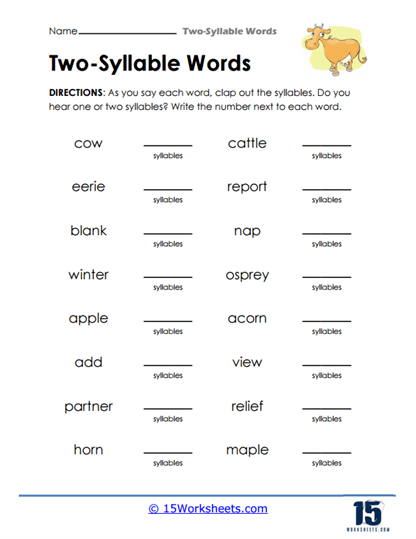
Clap Counts
Clap Counts asks students to say vocabulary words aloud, clap the syllables, and write the correct number beside each word. Learners actively participate while listening carefully to the natural rhythm of spoken language. The activity turns phonics practice into a movement-based experience that keeps students focused and engaged. It’s especially useful for helping learners physically feel how words break into sound parts. Students often find themselves clapping syllables long after the worksheet is finished.
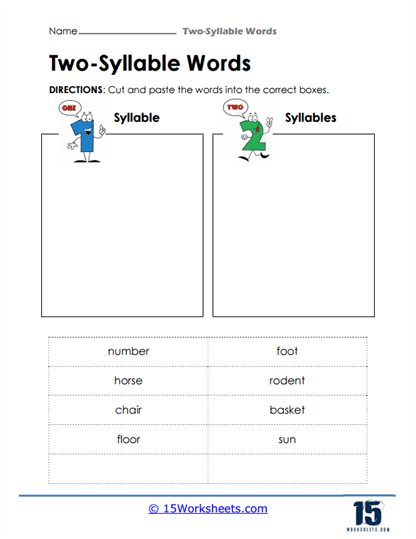
Syllable Boxes
Syllable Boxes asks students to sort words into categories based on whether they contain one syllable or two syllables. Learners cut and paste vocabulary words into the correct boxes after sounding them out carefully. The hands-on format strengthens syllable recognition while supporting fine motor development and active learning. It’s a great activity for combining movement, categorization, and phonics review into one lesson. Students usually enjoy the puzzle-like process of sorting each word correctly.
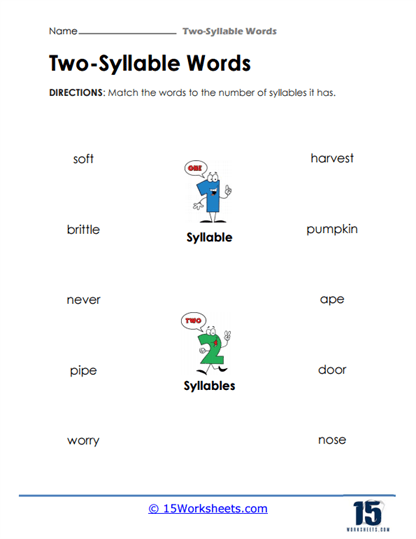
Word Matchups
Word Matchups encourages students to connect vocabulary words with the correct syllable category through matching practice. Learners determine whether words contain one syllable or two while strengthening understanding of spoken word structure. The activity reinforces phonological awareness and encourages careful reading habits. It’s a helpful worksheet for improving decoding confidence and strengthening vocabulary analysis skills. Students often appreciate the clear and organized format that makes syllable practice feel manageable.
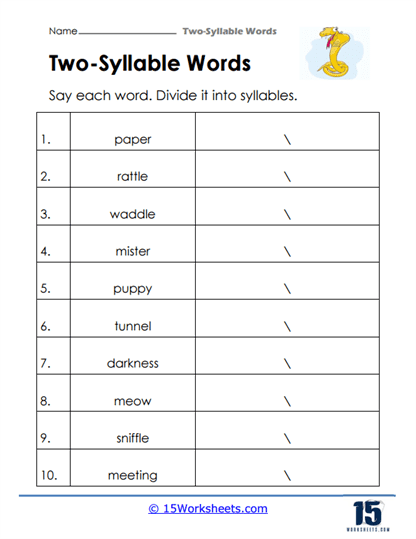
Divide and Say
Divide and Say asks students to separate vocabulary words into syllables by drawing lines between sound parts. Learners say each word aloud before deciding where the natural syllable break belongs. The worksheet helps students understand how longer words are organized and pronounced in spoken language. It works especially well for strengthening decoding strategies and smoother reading fluency. Students may feel like language engineers carefully taking words apart piece by piece.
Syllable Partners
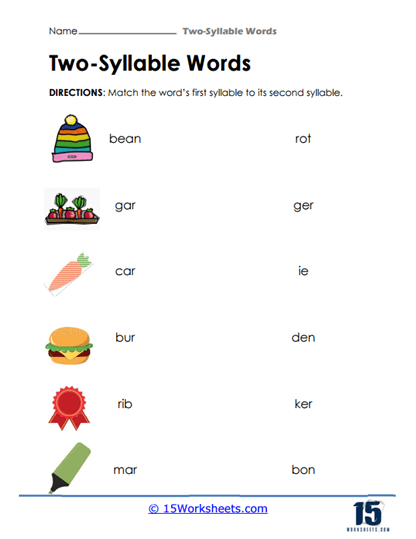
Syllable Partners challenges students to match beginning syllables with the correct ending syllables to form complete words. Learners practice blending sound parts together while recognizing common word patterns. The activity strengthens understanding of word formation and supports smoother pronunciation skills. It’s an engaging way to combine matching practice with hands-on phonics learning. Students often enjoy seeing how quickly random syllable pieces can transform into real words.
Ribbit Reading
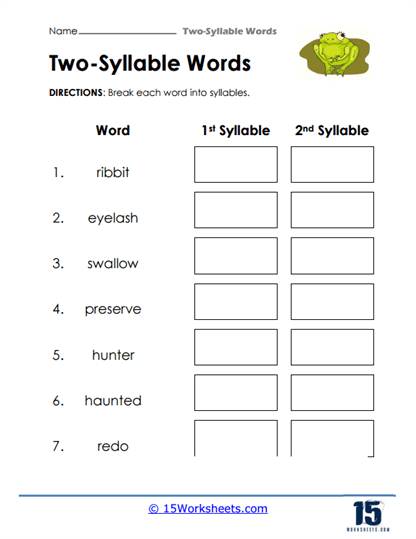
Ribbit Reading encourages students to divide vocabulary words into first and second syllables by writing each part separately. Learners carefully analyze words like preserve and haunted while practicing sound segmentation skills. The worksheet reinforces understanding of syllable structure in a clear and organized format. It’s a helpful activity for improving spelling awareness, decoding confidence, and pronunciation accuracy. Students may even start reading longer words more bravely once they realize syllables make them easier to manage.
Split Sounds
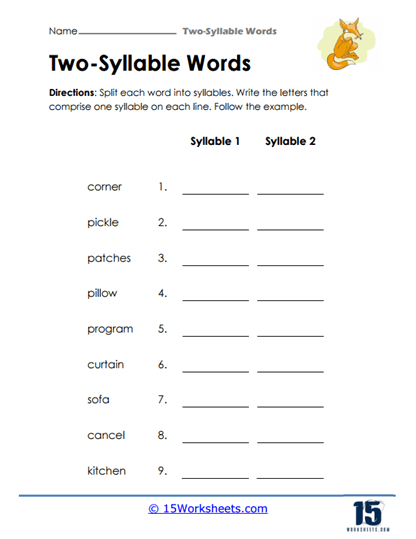
Split Sounds asks students to separate vocabulary words into their two syllables and write each sound chunk into different columns. Learners examine words carefully and think about how spoken language naturally divides into parts. The structured format encourages careful attention to pronunciation and spelling patterns while reinforcing phonics understanding. It works especially well for building confidence with unfamiliar vocabulary and word analysis strategies. Students often enjoy the satisfying feeling of neatly organizing each word into its correct sound groups.
What are Two Syllable Words?
Two-syllable words are words that contain two separate sound parts, or beats, when spoken aloud. Words like “rabbit,” “paper,” “sunset,” and “music” all have two syllables because the voice naturally breaks them into two chunks when pronounced. Students can often hear syllables by clapping, tapping, or slowly saying the word aloud. Once learners understand syllables, larger words start feeling much easier to read and spell. Suddenly, words stop looking like giant confusing letter blobs and start becoming manageable sound pieces.
Learning about two-syllable words helps students become stronger readers because it improves decoding and pronunciation skills. When students can break words into smaller sound parts, they are better able to read unfamiliar vocabulary smoothly and confidently. Syllable awareness also supports spelling because learners begin recognizing patterns within words instead of memorizing every word individually. These skills appear constantly in reading, speaking, writing, and listening activities throughout school. Understanding syllables gives students an important foundation for tackling longer and more advanced words later on.
Studying two-syllable words also supports broader literacy goals connected to reading fluency, vocabulary growth, and phonological awareness. Students practice hearing sound patterns, separating words into meaningful parts, and blending sounds together naturally. These activities strengthen comprehension because fluent readers spend less time struggling with pronunciation and more time understanding meaning. Most importantly, syllable practice helps students build confidence with language by showing them that even long words can be broken down into simpler pieces. And honestly, clapping syllables is one of the few school activities where making extra noise is actually encouraged.