
Rooms of the House Worksheets
About These 15 Worksheets
Homes are full of interesting spaces where people cook, sleep, relax, work, and spend time together every single day. From cozy bedrooms to busy kitchens, each room in a house has its own special purpose and vocabulary. This collection of Rooms of the House Worksheets helps students learn the names of common household spaces while building confidence with everyday language. Along the way, learners begin connecting words to the real places they see and use in their own homes.
These worksheets make learning home vocabulary interactive through matching activities, tracing practice, labeling tasks, drawing exercises, and creative writing prompts. Students practice identifying rooms, connecting objects to their correct spaces, and describing activities that happen throughout the house. The activities are designed to keep learners engaged while strengthening reading, writing, observation, and communication skills. Whether students are working independently, with partners, or at home with family support, the collection helps make vocabulary learning feel familiar and fun.
Beyond simple word recognition, these worksheets also encourage students to think about how homes are organized and how people use different spaces in daily life. Learners explore routines connected to cooking, sleeping, studying, and relaxing while building stronger understanding of household environments. The activities support real-world communication by helping students describe their surroundings more clearly and confidently. By the end of the collection, students may start sounding like tiny home tour guides proudly pointing out every room in the house.
About Each Worksheet
Cozy Corners
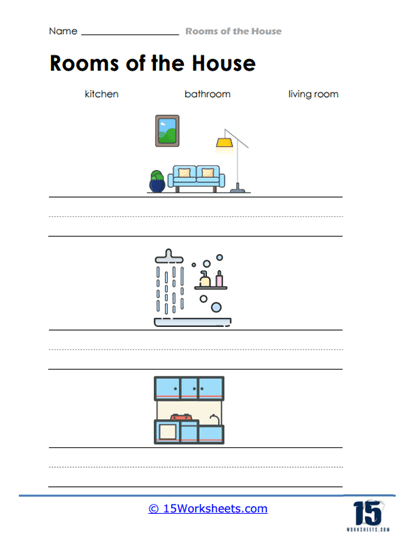
Cozy Corners introduces students to common rooms in a house by showing simple pictures connected to everyday home vocabulary. Learners identify spaces such as the kitchen, bathroom, and living room while studying visual clues and familiar objects. The activity helps students connect household items with the rooms where they belong in real life. It works especially well for beginner vocabulary practice, small groups, or early language lessons at home. Students often enjoy recognizing rooms that look just like parts of their own homes.
Room Riddles
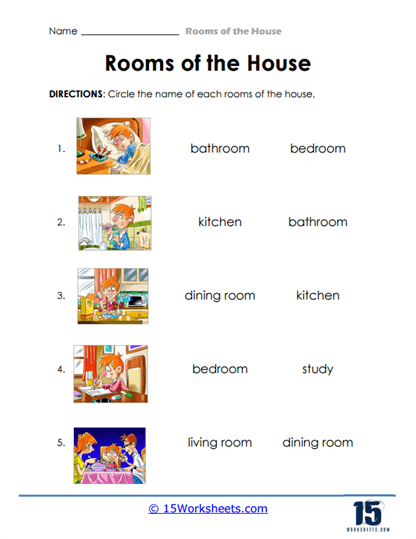
Room Riddles asks students to circle the correct room name that matches each household picture. Learners compare choices like bedroom, bathroom, and kitchen while carefully analyzing visual scenes for clues. The worksheet encourages observation and decision-making in a simple, approachable format. It’s a helpful activity for building confidence with reading and home-related vocabulary at the same time. Students may feel like mini detectives solving house-themed picture puzzles as they work through each page.
House Hunt
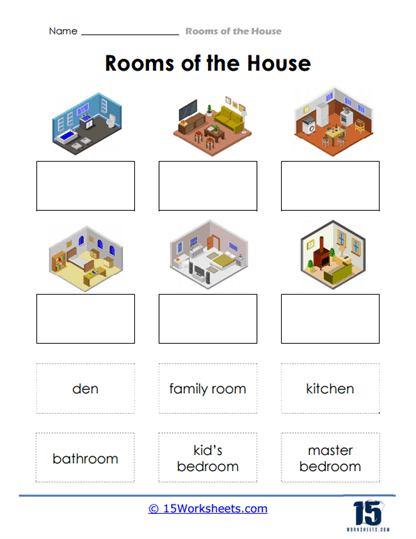
House Hunt helps students identify and label different rooms inside a house using picture prompts and vocabulary choices. Learners explore spaces such as the den, bedroom, kitchen, and bathroom while strengthening their understanding of household organization. The activity encourages careful visual analysis and introduces students to a wider range of room vocabulary. It fits nicely into classroom vocabulary units or independent practice at home. Students often enjoy spotting tiny room details that help reveal each answer.
Drawing Dwellings
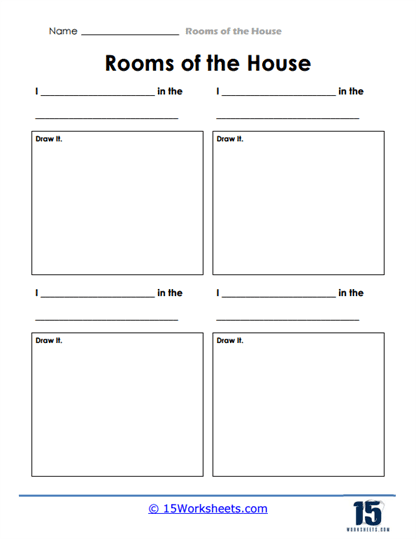
Drawing Dwellings combines creativity and vocabulary practice by asking students to draw and label different rooms in a house. Learners complete sentence prompts while illustrating activities and objects connected to each space. The worksheet encourages students to think about what belongs in different rooms and why. It’s a wonderful activity for combining artistic expression with language development and personal experiences. Students usually love turning their ideas into colorful house scenes filled with familiar details.
Household Helpers
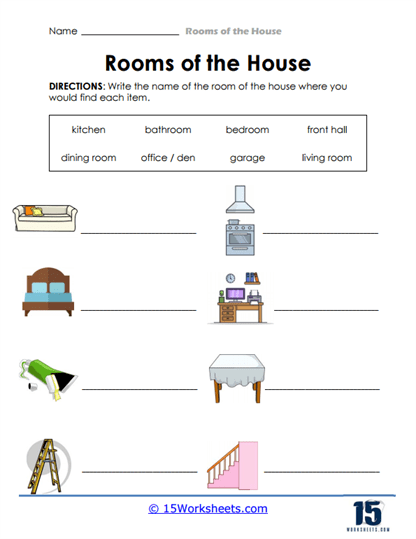
Household Helpers asks students to match household objects and furniture with the rooms where they belong. Learners connect items like beds, stoves, and office desks to spaces such as the bedroom, kitchen, and study. The activity helps students understand the functions of different rooms while building stronger vocabulary connections. It works well for reinforcing categorization skills and everyday language practice. Students may suddenly realize just how many clues household objects give about each room.
Favorite Spaces
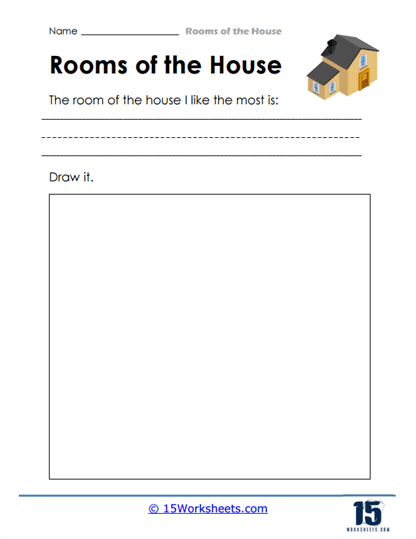
Favorite Spaces invites students to write about their favorite room in the house and explain why they enjoy it. Learners combine writing and drawing while sharing personal experiences connected to home life. The worksheet makes vocabulary learning feel meaningful by encouraging students to connect language to their own memories and routines. It’s perfect for creative writing practice, classroom sharing, or family discussions at home. Students often become very enthusiastic when describing cozy bedrooms, busy kitchens, or game-filled living rooms.
Room Review
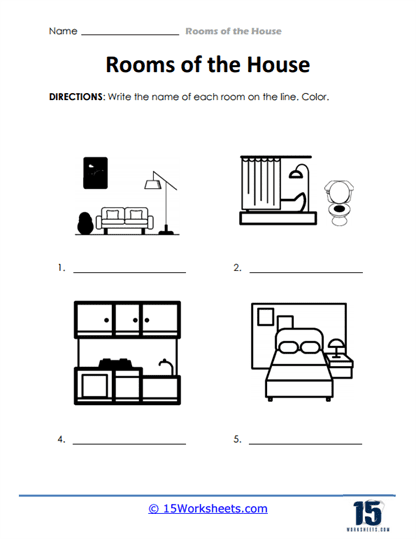
Room Review asks students to identify, label, and color pictures of common household rooms. Learners study visual clues while writing the correct names for spaces like the kitchen, bathroom, and bedroom. The coloring component keeps the activity interactive while reinforcing vocabulary through repeated exposure. It’s a relaxing and engaging worksheet that supports both language practice and fine motor development. Students usually enjoy turning ordinary household scenes into bright and colorful learning pages.
Match Manor
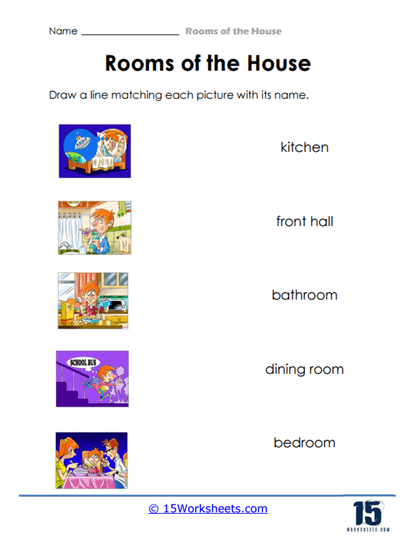
Match Manor encourages students to draw lines connecting room pictures with the correct vocabulary words. Learners identify spaces such as the dining room, kitchen, and bathroom by carefully comparing visual details. The activity strengthens vocabulary recognition while also supporting concentration and logical thinking. It works well for review sessions, literacy centers, or independent practice activities. Students may be surprised by how quickly they become experts at spotting household clues.
Home Habits
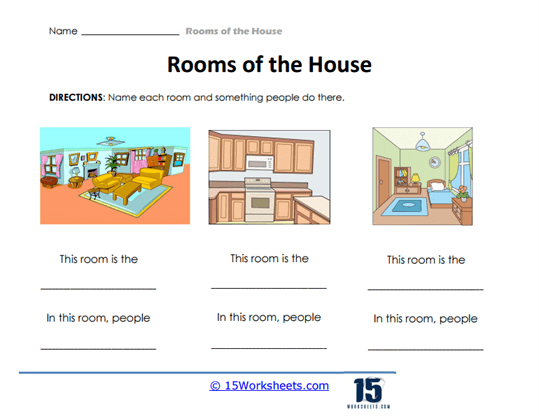
Home Habits asks students to identify rooms in a house and describe activities people commonly do there. Learners write room names and related actions like cooking, sleeping, or studying while connecting vocabulary to daily routines. The worksheet helps students understand how rooms are tied to real-life behaviors and responsibilities. It’s a practical activity that encourages thoughtful language use and stronger sentence-building skills. Students often enjoy comparing how their own household routines match the worksheet examples.
Traceable Homes
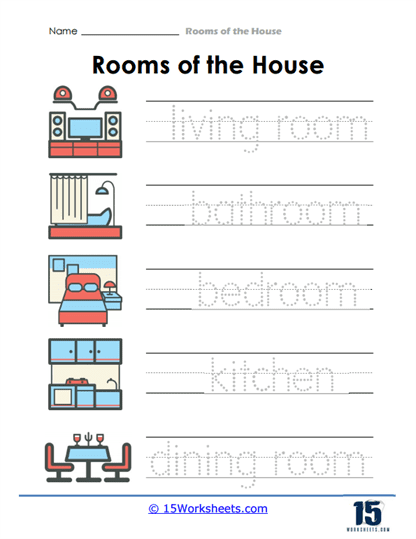
Traceable Homes gives students handwriting practice while reinforcing room vocabulary through tracing activities. Learners carefully trace words such as kitchen, bathroom, and living room while studying matching pictures. The worksheet combines spelling, vocabulary, and fine motor practice into one calm and supportive activity. It works especially well for younger learners building confidence with letter formation and word recognition. Students often take pride in seeing their tracing improve line by line.
Label Lodge
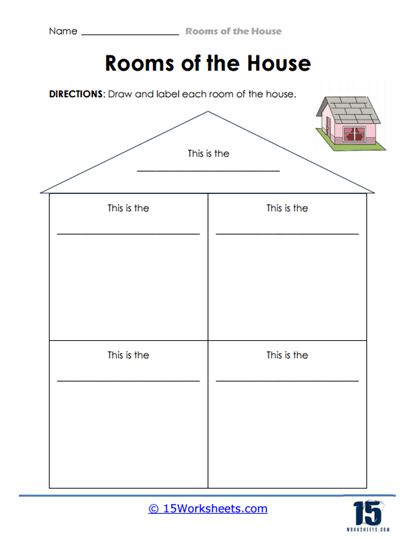
Label Lodge encourages students to design and label rooms inside a house outline using their imagination and vocabulary knowledge. Learners think carefully about where rooms belong and how homes are organized while creating their own layouts. The worksheet combines creativity with practical language learning in a hands-on format. It’s an excellent activity for encouraging independent thinking and spatial reasoning skills. Students usually enjoy becoming little architects while building their dream home designs.
Picture Places
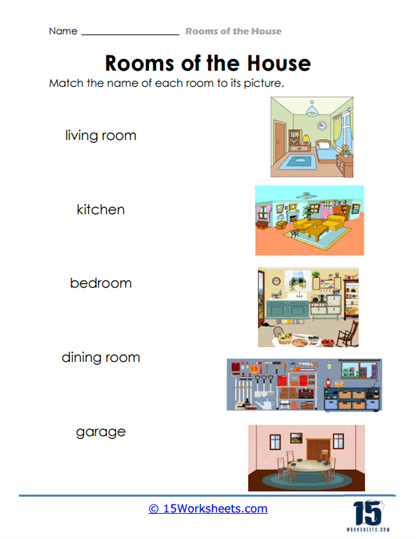
Picture Places asks students to match room names with detailed pictures of household spaces like garages, kitchens, and living rooms. Learners study visual features carefully while connecting each image to the correct vocabulary word. The activity strengthens observation and reading skills while reinforcing understanding of room functions. It’s a simple but effective way to build confidence with household language in meaningful contexts. Students often enjoy spotting familiar household details hidden inside the pictures.
House Explorer
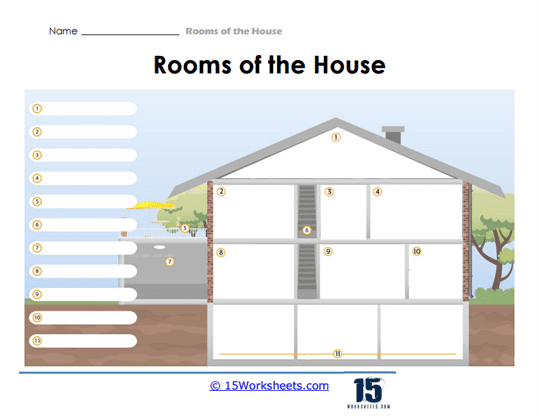
House Explorer presents students with a large house diagram that they must label using room vocabulary. Learners analyze the structure of the home while thinking carefully about where each room belongs. The activity helps students visualize how homes are organized and how spaces connect together. It works especially well for encouraging spatial thinking and practical vocabulary application. Students may feel like explorers mapping out an exciting house adventure as they complete the diagram.
Paste Places
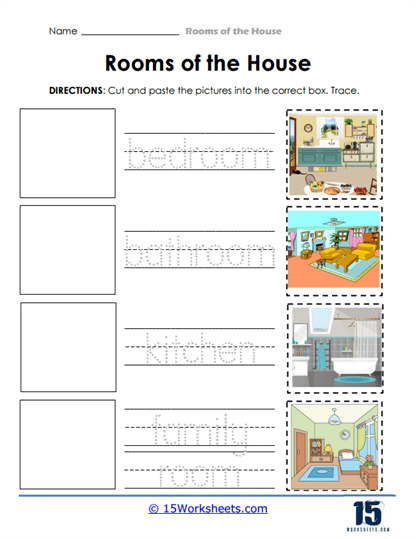
Paste Places combines cutting, pasting, matching, and tracing activities into one interactive vocabulary worksheet. Learners place pictures of rooms like the bedroom, kitchen, and bathroom into the correct spaces while tracing matching words. The hands-on format keeps students active and engaged while reinforcing room recognition through multiple learning styles. It’s a fantastic activity for combining language practice with coordination and fine motor skill development. Students often enjoy the puzzle-like feeling of assembling all the correct pieces together.
Definition Dwellings
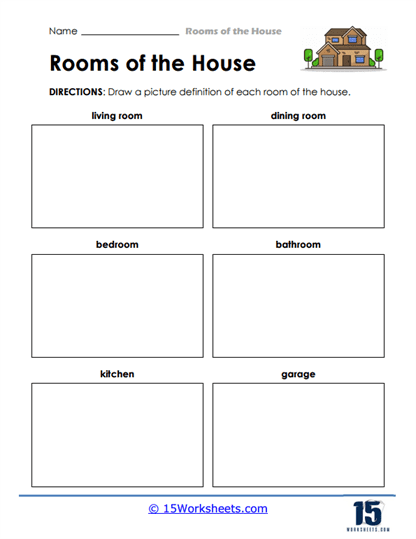
Definition Dwellings encourages students to draw their own versions of different rooms in a house while thinking about what belongs inside each one. Learners use creativity and imagination to design spaces like garages, kitchens, and living rooms based on their own experiences. The worksheet reinforces household vocabulary while helping students connect words with visual details and practical functions. It’s a great blend of artistic expression, descriptive thinking, and language development. Students usually have fun adding personal touches that make every house design completely unique.
A Look At Rooms of the House
Rooms of the house are the different spaces inside a home that people use for daily activities like cooking, sleeping, eating, relaxing, and working. Common rooms include the kitchen, bedroom, bathroom, living room, dining room, and many others depending on the size and style of the home. Each room has its own purpose, furniture, and vocabulary that help people describe what happens there. Without room names, giving directions in a house would become very confusing very quickly. Imagine someone yelling, “Meet me in the room with the chair next to the thing by the other thing!” and nobody knowing where to go.
Learning the names of rooms helps students better understand their environment and communicate clearly about everyday life. Children use room vocabulary constantly when talking about routines, chores, family activities, and favorite spaces around the house. Knowing these words also supports listening and reading comprehension because household vocabulary appears often in stories, conversations, and classroom lessons. As students learn more about homes, they begin connecting objects, activities, and routines with specific spaces. This helps make language more practical, organized, and meaningful.
Studying rooms of the house also supports broader learning goals in reading, writing, speaking, and observation. Students practice describing spaces, labeling pictures, building sentences, and explaining activities connected to different rooms. These activities strengthen vocabulary retention while encouraging learners to think carefully about organization and daily routines. Most importantly, room vocabulary helps students communicate confidently about one of the most familiar places in their lives: home. And honestly, being able to correctly identify the kitchen is always useful when snacks are involved.