
Kitchen Utensils Worksheets
About Our Kitchen Utensils Worksheets
The kitchen is full of tools that help us cook, bake, prepare meals, and stay organized. From simple items like spoons and spatulas to appliances and specialty gadgets, kitchen utensils make everyday tasks easier and more efficient. These worksheets help students become familiar with common kitchen tools while building vocabulary, observation, and identification skills. Along the way, they’ll learn the names of items they may already see at home but have never formally identified.
This collection includes matching activities, labeling exercises, tracing practice, drawing tasks, multiple-choice questions, observation challenges, and real-world thinking activities. Students will identify kitchen utensils by sight, connect pictures to words, practice spelling kitchen vocabulary, and explore how different tools are used. The variety of activities keeps learning interesting while helping students build confidence with practical, everyday vocabulary. These worksheets are especially helpful for young learners and English language learners who benefit from visual learning opportunities.
One of the best things about learning kitchen utensil vocabulary is that students can immediately connect it to real life. They may recognize items they see while helping cook meals, setting the table, or baking with family members. These worksheets encourage students to pay closer attention to the tools around them and understand their purposes. By combining language learning with everyday experiences, the activities make vocabulary practice both useful and memorable.
About Each Worksheet
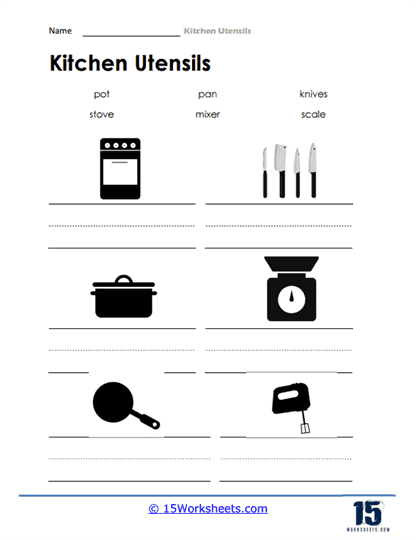
Black And White
Students match kitchen utensil names with simple black-and-white illustrations. The clean design keeps the focus on recognizing and learning common kitchen tools. It’s a great introductory activity for building kitchen vocabulary.
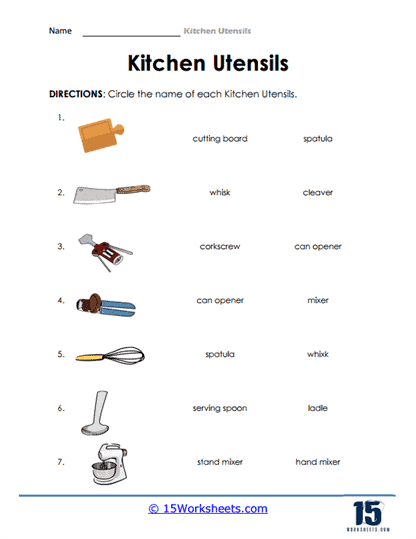
Circle The Name
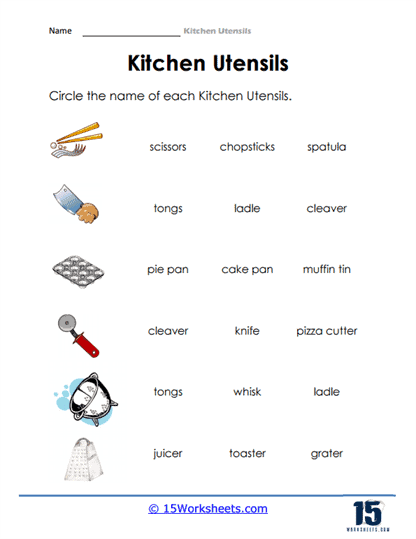
This worksheet asks students to choose the correct name for each kitchen utensil from several options. The colorful pictures make identification easier while encouraging careful reading. It turns vocabulary practice into a fun guessing game.
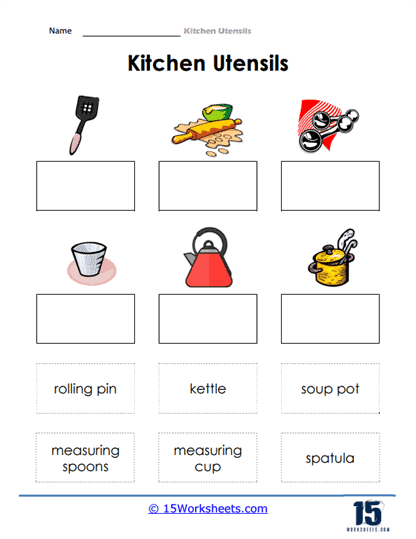
Cut And Paste
Students pair kitchen utensil names with matching illustrations through a hands-on matching activity. The cutting and sorting element adds movement and engagement to the lesson. It’s a wonderful way to reinforce vocabulary while keeping students actively involved.
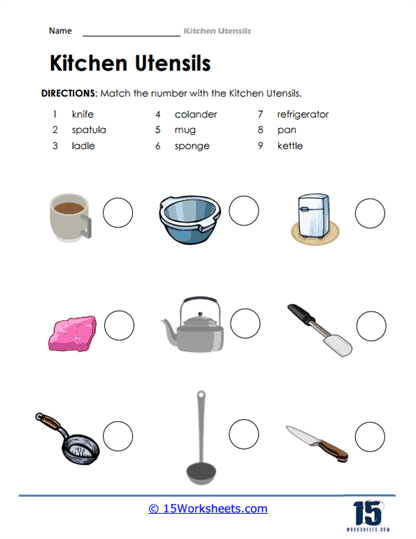
Match The Number
Students connect numbered kitchen utensil names to their matching pictures. The activity encourages attention to detail while strengthening word-picture associations. It’s simple, organized, and easy to follow.
The Word Box
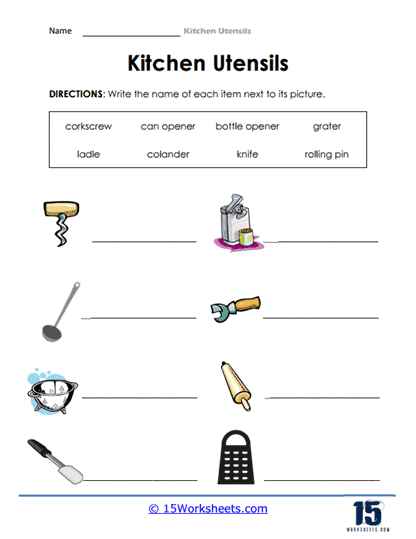
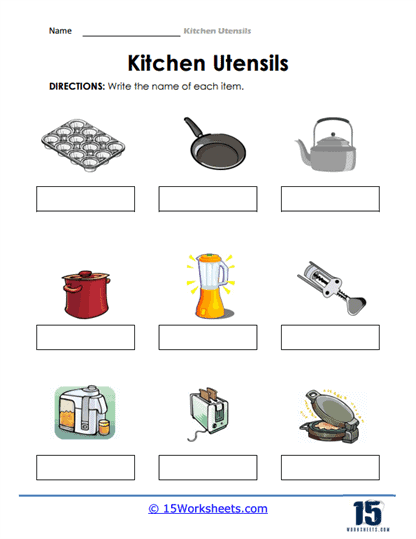
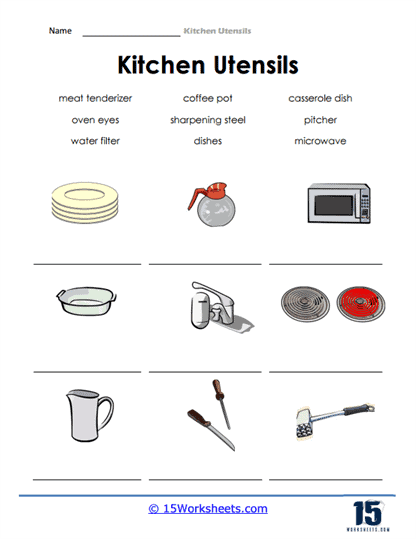
This worksheet challenges students to identify a variety of kitchen tools and write the correct name beside each picture. Some of the utensils may be less familiar, encouraging students to expand their vocabulary. It’s excellent practice for recognition and spelling.
On The Line
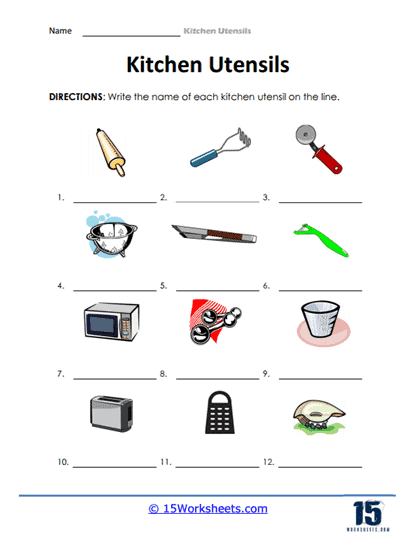
Students examine a collection of kitchen utensils and appliances and write the correct name for each one. The numbered format keeps the activity organized and approachable. It’s a great way to review a wide range of kitchen vocabulary.
Connecting Lines
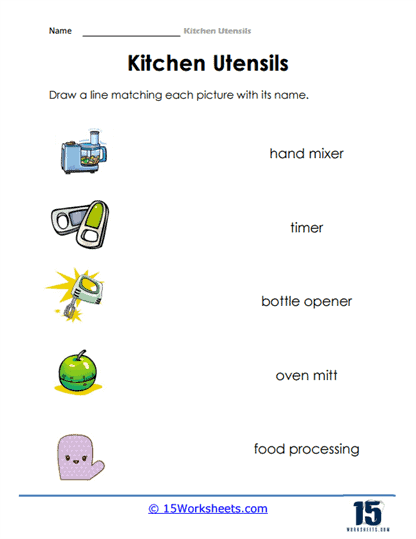
This matching activity asks students to draw lines between kitchen items and their names. The straightforward format makes it ideal for younger learners. It’s a quick and effective vocabulary-building exercise.
Observe Each Picture
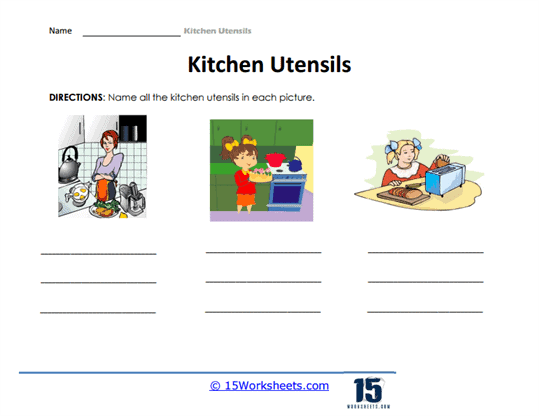
Students carefully study cooking scenes and identify as many kitchen utensils as they can find. The activity feels a little like a scavenger hunt because some items are hidden within larger illustrations. It’s perfect for developing observation skills and vocabulary at the same time.
Identify The Items
Students write the names of kitchen utensils and appliances shown in individual picture boxes. The clear visuals help reinforce recognition and recall. It’s a simple but valuable practice activity.
Multiple Choice
This worksheet presents several kitchen tools along with multiple possible names for each one. Students must carefully examine the images before choosing the correct answer. The close answer choices encourage critical thinking and attention to detail.
What Is This?
Students match a provided word bank with illustrations of different kitchen utensils. The activity helps learners connect written vocabulary with visual representations. It’s a great way to strengthen both recognition and spelling skills.
My First House
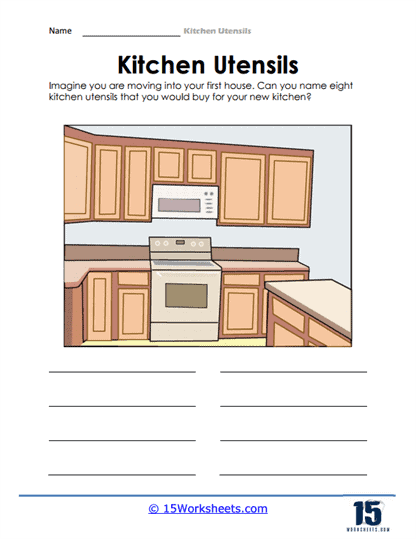
Students imagine moving into their own home and decide which kitchen utensils they would want to buy first. The activity encourages practical thinking while allowing students to explain their choices. It’s a fun worksheet that connects learning to real life.
Tracing Practice
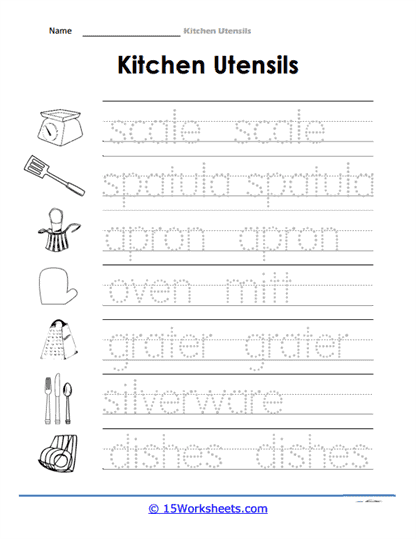
Students trace the names of various kitchen utensils while looking at matching illustrations. The activity combines vocabulary learning with handwriting practice. It’s especially helpful for young learners developing fine motor skills.
Drawing Activity
Instead of identifying utensils from pictures, students create the pictures themselves. They draw kitchen items such as pots, pans, whisks, and measuring spoons based on the names provided. It’s a creative way to reinforce vocabulary and visual understanding.
A Kitchen Utensil I Use
This worksheet encourages students to think about a kitchen utensil they use or see regularly. They write its name and create their own drawing of it. The personal connection helps make the learning experience more meaningful and memorable.
What Are Kitchen Utensils?
Kitchen utensils are tools and equipment used to prepare, cook, serve, and store food. They include everyday items such as spoons, spatulas, whisks, knives, measuring cups, mixing bowls, and many other helpful tools. Some kitchen utensils are used for simple tasks like stirring or serving food, while others are designed for specific jobs such as opening cans or measuring ingredients. Together, they help make cooking safer, easier, and more efficient.
People use kitchen utensils in homes, restaurants, bakeries, schools, and many other places where food is prepared. Learning the names and functions of these tools helps students become more familiar with everyday life skills and practical vocabulary. It also helps them better understand recipes, cooking instructions, and food preparation activities. Many students are surprised by how many different utensils can be found in a typical kitchen.
Studying kitchen utensils supports vocabulary development, observation skills, and real-world knowledge. Students learn to connect words with objects they encounter regularly, making the learning more meaningful and relevant. These activities also encourage communication, spelling practice, and visual recognition skills. Understanding common kitchen utensils is a useful life skill that students can carry with them long after the worksheet is complete.