
Word Relationships Worksheets
About Our Word Relationship Worksheets
Words don’t exist all by themselves-they connect, relate, and interact in all kinds of interesting ways! These worksheets introduce students to how words are linked through meaning, sound, and function. From synonyms and antonyms to homophones and analogies, learners explore how language works behind the scenes. It’s like discovering the hidden connections that make communication clearer and more powerful.
This collection helps students move from simple recognition to deeper understanding of word relationships. Some worksheets focus on identifying connections, while others ask students to explain, compare, or create their own examples. The mix of activities keeps things engaging and encourages flexible thinking. As students practice, they become more confident in spotting patterns and making sense of vocabulary.
Beyond vocabulary building, these worksheets support strong reading and writing skills. Understanding word relationships helps students figure out meanings, improve word choice, and think more critically. These are skills they use every time they read a story, write a sentence, or have a conversation. It’s learning that sticks-and makes language a lot more interesting!
About Each Worksheet
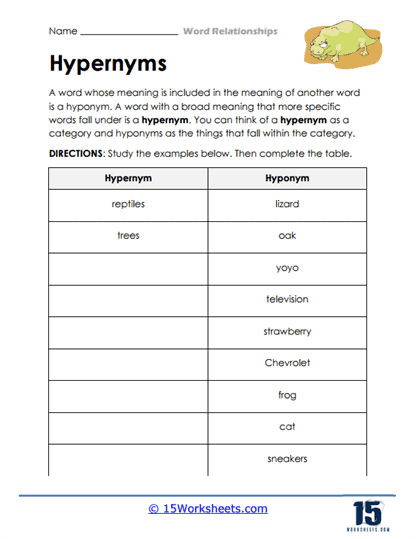
Category Builder
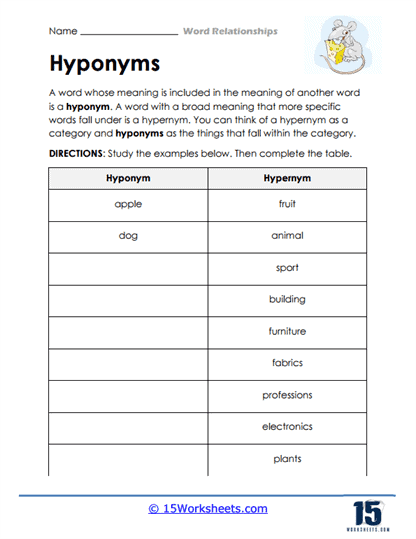
This worksheet helps students organize words into bigger and smaller groups. They match specific items to broader categories like a sorting game. It builds understanding of how words are connected in levels. Students get to see how vocabulary fits together. A great activity for clear and organized thinking!
Category Match
This worksheet focuses on matching general categories with specific examples. Students connect big ideas to smaller details. It’s like linking a tree to its leaves! The format makes relationships easy to see. A helpful activity for understanding word hierarchy!
Context Clues
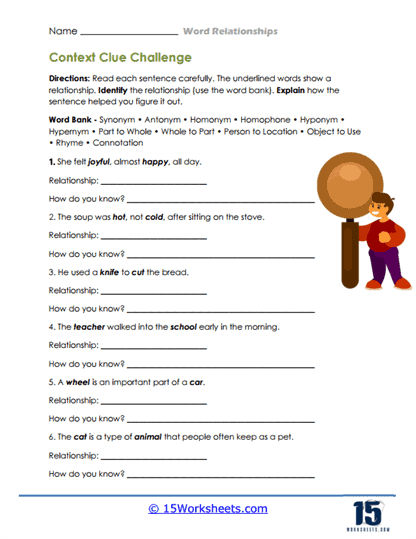
This worksheet turns students into reading detectives! They use sentence clues to figure out word relationships. Then, they explain how they know their answer. It builds both comprehension and reasoning skills. A great way to connect grammar with real reading!
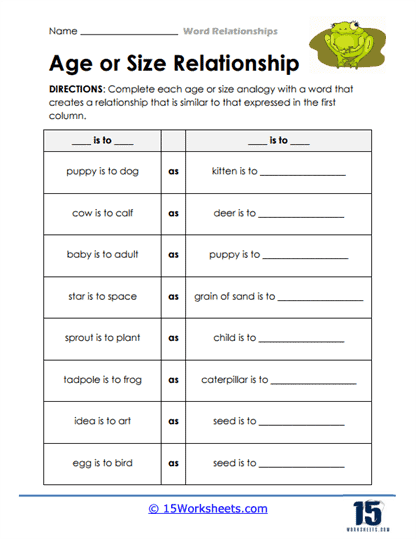
Growth Match
This worksheet explores how things change over time or size. Students complete analogies based on growth and comparison. It’s like tracking how something develops! The activity encourages logical thinking. A fun way to explore relationships in everyday life!
Homonym Match
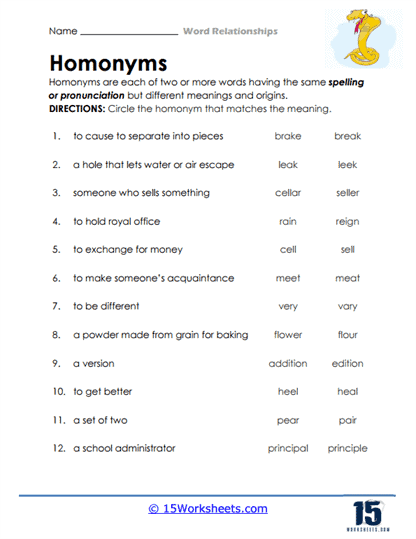
This worksheet focuses on tricky word pairs that sound or look alike. Students choose the correct word based on meaning. It helps clear up common confusion. The task builds careful reading skills. A great way to improve accuracy in writing!
Odd Out
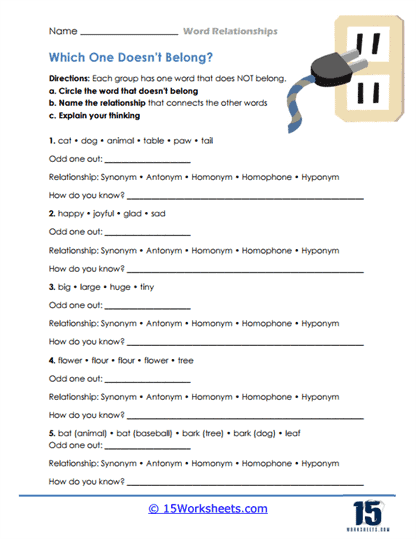
This worksheet challenges students to find the word that doesn’t belong. Then, they explain the relationship between the others. It’s like solving a mini puzzle in each row! The activity builds reasoning and comparison skills. A fun and thoughtful challenge!
Opposite Finder
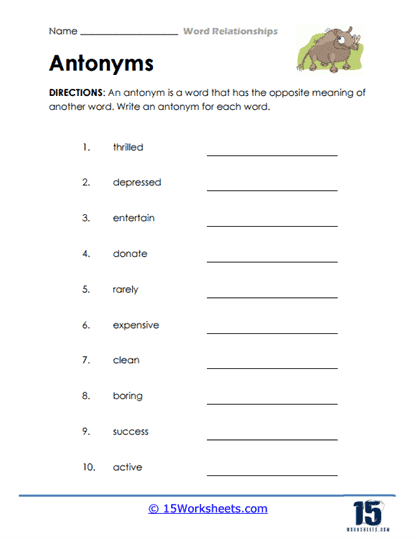
This worksheet asks students to think of antonyms for given words. It’s all about finding opposites! Students rely on their vocabulary knowledge to respond. The task encourages independent thinking. A classic and effective vocabulary builder!
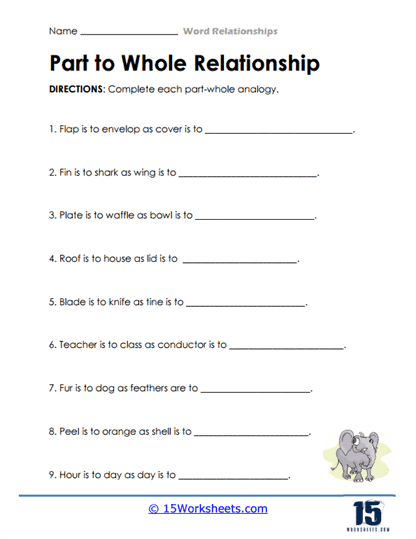
Part Puzzle
This worksheet focuses on part-to-whole relationships. Students complete analogies that show how pieces connect to a larger object. It’s like putting together a puzzle! The activity builds logical thinking skills. A great way to explore how things fit together!
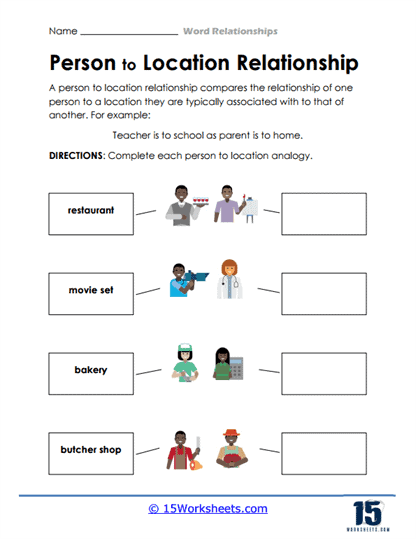
Place Match
This worksheet connects people with places they belong. Students match roles to locations using real-world knowledge. It makes vocabulary feel practical and meaningful. The visual clues add extra support. A fun way to link language to everyday life!
Relationship Chart
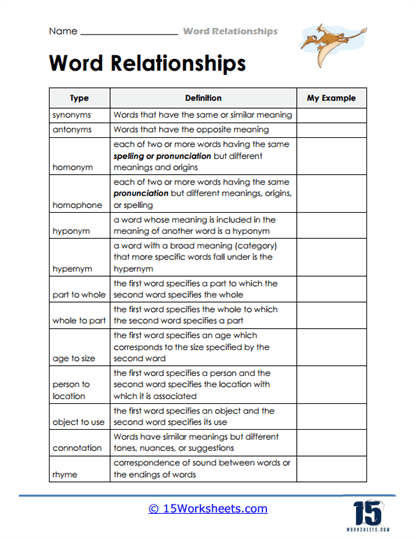
This worksheet gives a big-picture view of many word relationships. Students learn about synonyms, antonyms, homophones, and more. Then, they add their own examples. It’s like creating a mini reference chart! A great activity for organizing knowledge!
Relationship Detective
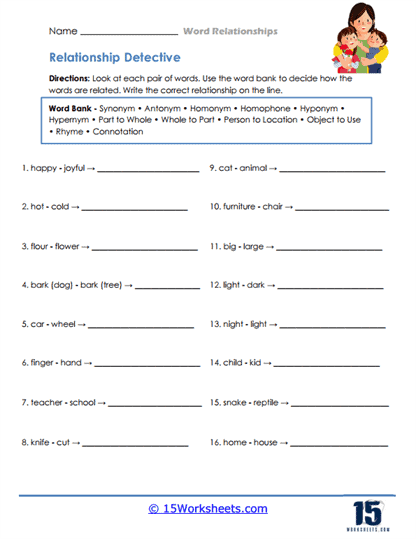
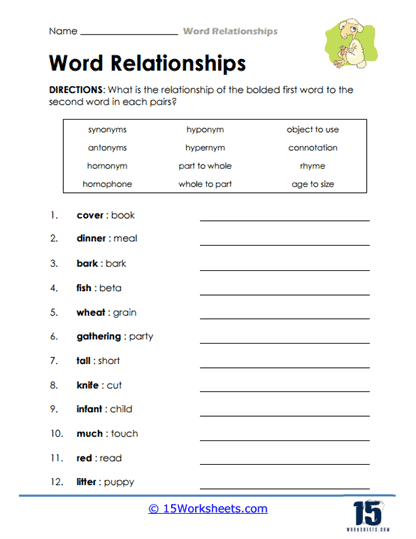
This worksheet invites students to solve word relationship mysteries! They use a word bank to identify different types of connections. It requires careful thinking and comparison. Each pair is like a clue to solve. A fun and engaging challenge!
Relationship Mix
This worksheet blends many relationship types into one activity. Students must identify the correct connection for each pair. It keeps them thinking and switching between concepts. The variety makes it exciting and challenging. A great review worksheet!
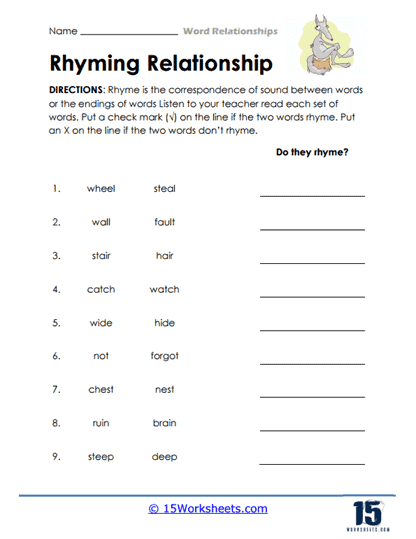
Rhyme Check
This worksheet focuses on sound patterns in words. Students decide whether pairs of words rhyme. It builds listening and pronunciation skills. The task is quick and engaging. A great phonics-based activity!
Sound Twins
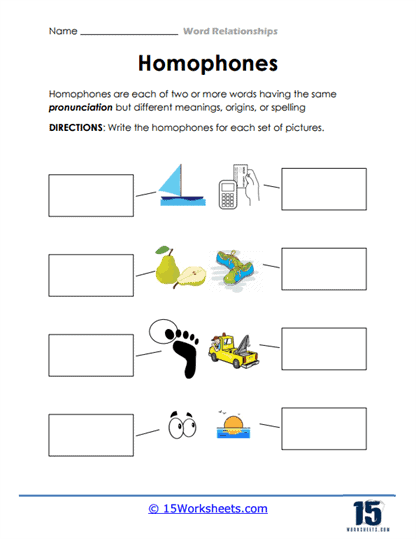
This worksheet uses pictures to explore homophones. Students identify words that sound the same but mean different things. The visuals make it fun and easy to understand. It connects sound with meaning. A perfect activity for visual learners!
Synonym Check
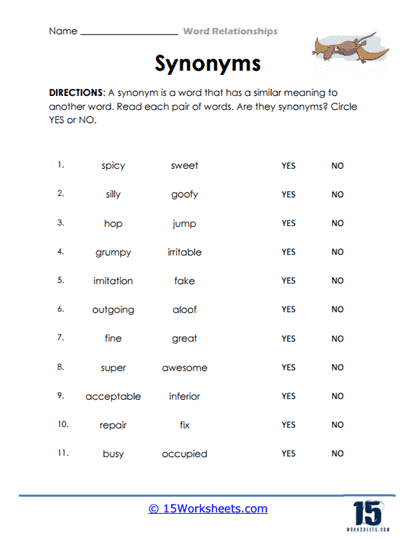
This worksheet asks students to decide if word pairs have similar meanings. They simply circle yes or no. It’s straightforward but builds important vocabulary skills. Students learn to spot subtle differences. A great quick-check activity!
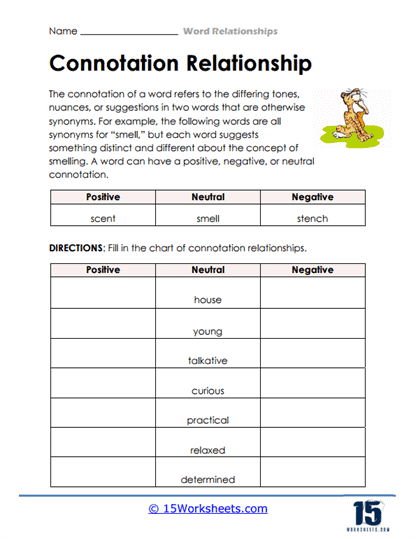
Tone Chart
This worksheet explores how words can feel positive, neutral, or negative. Students sort words based on their tone. It helps them understand connotation. The chart makes everything clear and organized. A great activity for thoughtful word choice!
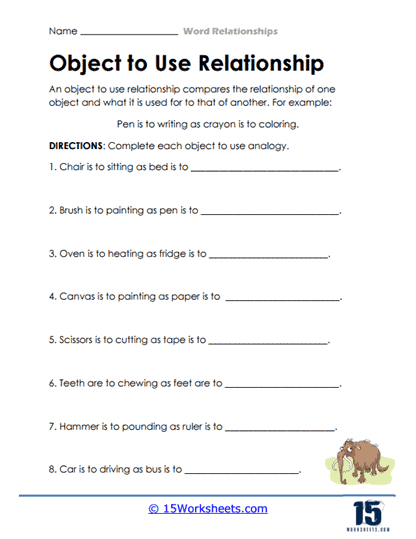
Use Match
This worksheet connects objects to their purpose. Students complete analogies based on how things are used. It builds practical vocabulary skills. The activity encourages real-world thinking. A fun and useful learning experience!
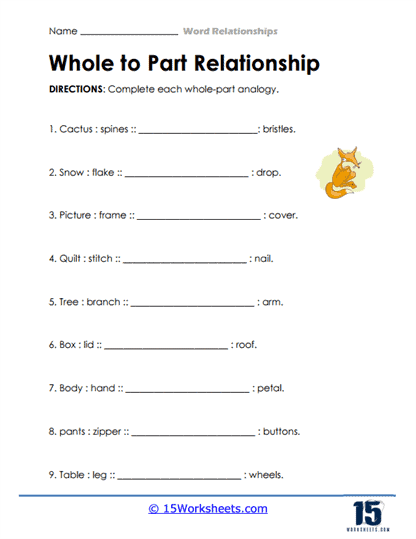
Whole Puzzle
This worksheet flips the thinking from part-to-whole to whole-to-part. Students match larger objects to their pieces. It challenges them to think in reverse. The analogy format keeps things interesting. A great way to stretch thinking skills!
What are Word Relationship Worksheets?
Word relationships are all about how words connect to each other in meaning, sound, or use. For example, some words are opposites (like hot and cold), while others mean almost the same thing (like big and large). Some words sound alike but have different meanings, like “pair” and “pear.” Once students start learning these connections, language becomes much more interesting. It’s like seeing how words are part of a big network!
These relationships matter because they help students understand what they read and choose better words when they write. If you know synonyms, you can make your writing more exciting. If you know antonyms, you can show contrast clearly. Understanding these connections also helps with spelling and pronunciation. It’s a key skill for becoming a confident reader and writer.
Learning word relationships also builds strong thinking skills. Students learn to compare, classify, and analyze words in different ways. This helps them solve problems and understand language more deeply. Over time, they become more flexible and creative with words. And that makes reading, writing, and even speaking a whole lot easier-and more fun!