
SAT Vocabulary Words Worksheets
All About These 15 Worksheets
Big words don’t have to be scary. These worksheets take intimidating SAT vocabulary and break it down into approachable, bite-sized practice. From matching definitions to filling in the blanks in sentences, students get a mix of activities that make words stick instead of slipping out of memory. It’s like giving students a word gym membership-reps and variety build strength.
The collection is designed to cover vocabulary from multiple angles: definition, context, roots, synonyms, and even categorization. By practicing in so many ways, students learn not just what the word means but also how to use it in real-world contexts. The worksheets help them avoid the trap of memorizing a list without really understanding it. Instead, they gain flexible word knowledge they can carry into reading, writing, and test day.
Best of all, these worksheets show how learning SAT vocabulary connects to more than just the exam. Knowing precise words builds sharper essays, clearer arguments, and stronger communication skills. And once kids see that using words like “cogent” or “meticulous” actually makes them sound sharper, they’re much more motivated to keep practicing. These worksheets make vocabulary growth both practical and empowering.
Have a Look Inside Each Worksheet
Dictionary Definitions
Students read SAT-level vocabulary words and write their definitions. This builds clarity in meaning and strengthens understanding of precise language. It’s a solid start for mastering high-frequency test words.
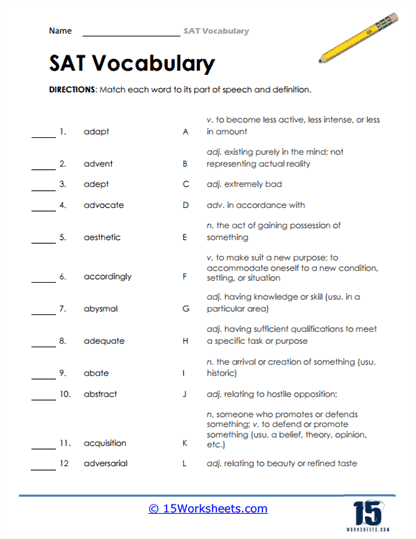
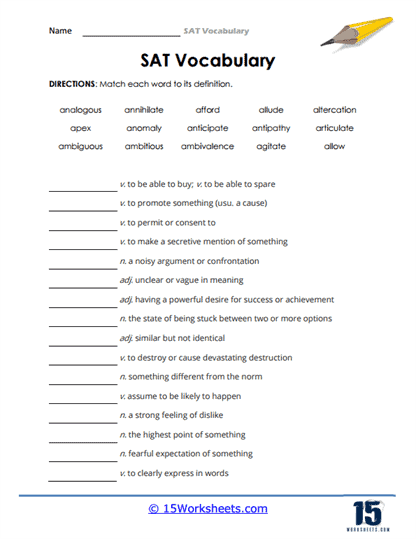
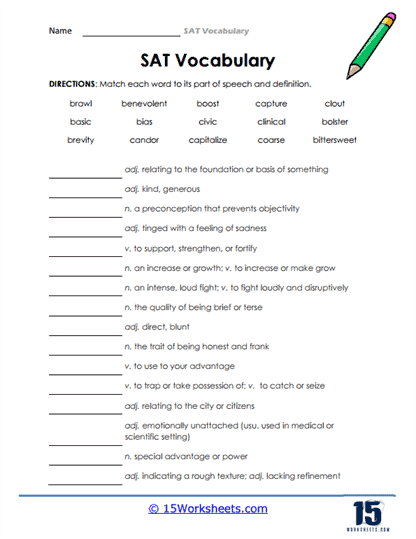
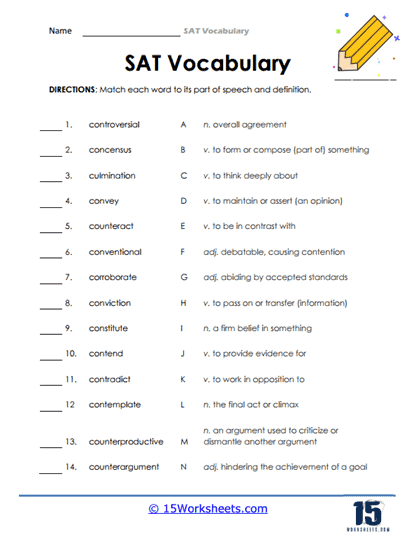
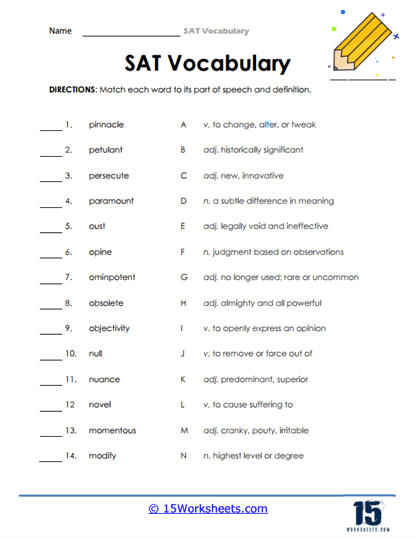
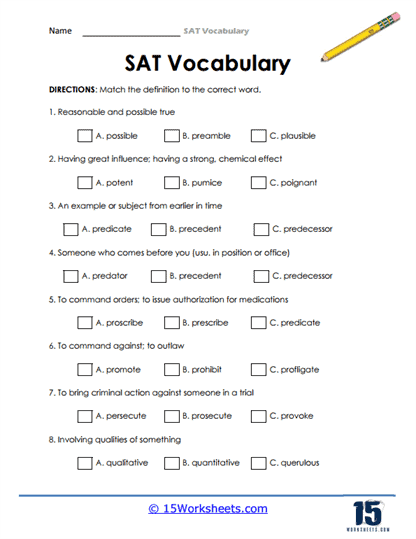
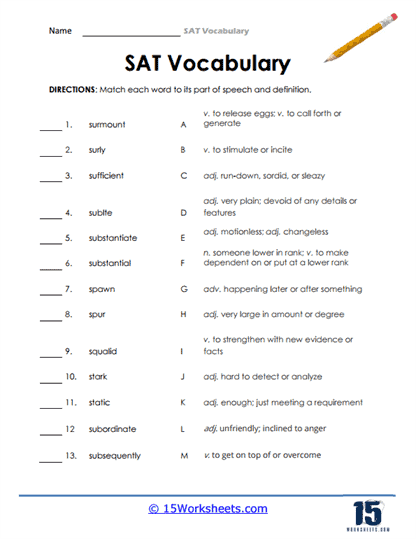
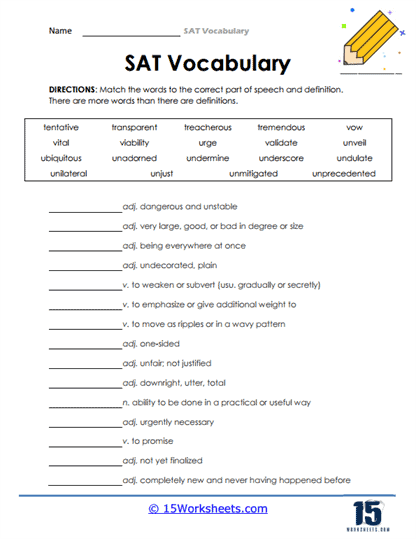
Word-Meaning Match
Students pair each vocabulary word with the correct definition. They reinforce recognition and solidify understanding through matching. It’s a hands-on way to build verbal reasoning.
Parts And Meanings
This worksheet breaks words into parts-like prefixes, roots, or suffixes-and explores their meanings. Students learn how parts add up to word meanings. It deepens word analysis beyond surface definitions.
Used In Context
Students see vocabulary words used in sentences and circle or define them. It helps them understand how words function naturally. Learning through context improves retention.
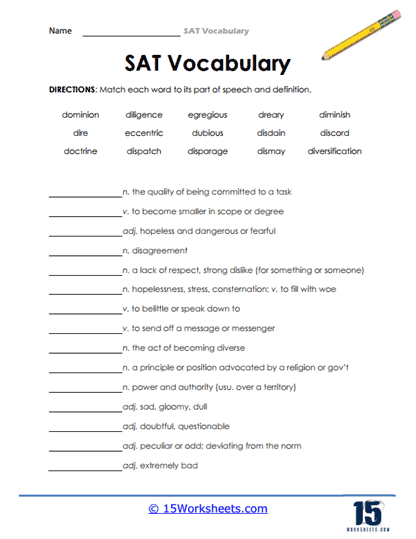
From A To N
Vocabulary words from A to N are presented, and students practice defining or using them. This alphabetical approach keeps learning organized and manageable. It helps chunk the word list into workable sections.
Letter D Words
Only D-words are featured so students can focus narrowly on one section of the alphabet. They define, use, or analyze each word. It’s targeted practice that reduces overwhelm.
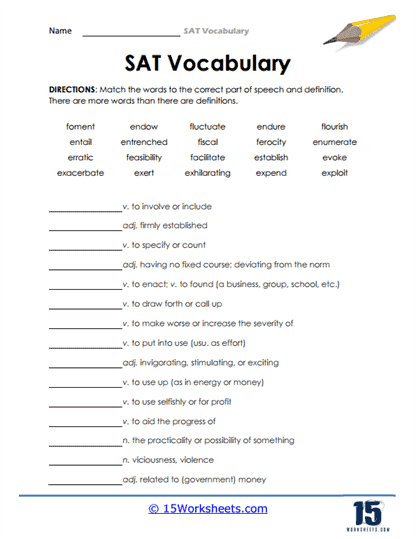
More Words
A mixed pile of SAT words is presented for definition or usage practice. It encourages flexible thinking about unfamiliar words. Mixing helps generalize vocabulary skills.
Perfect Pairs
Students find word pairings, such as synonyms or antonyms, among SAT words. This strengthens understanding of relational word relationships. It boosts vocabulary depth, not just surface knowledge.
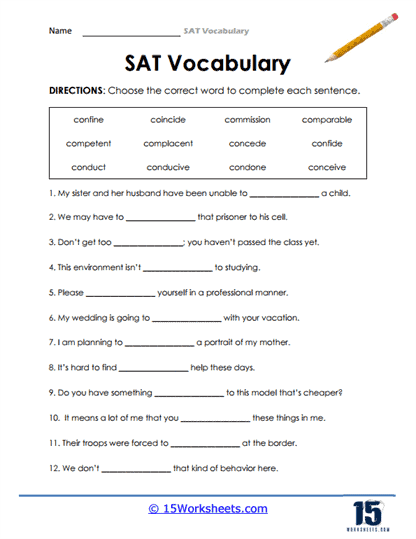
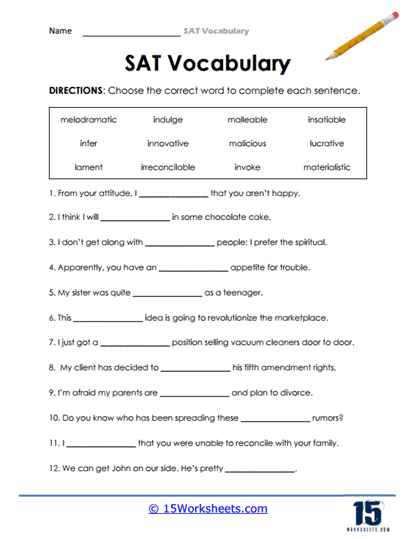
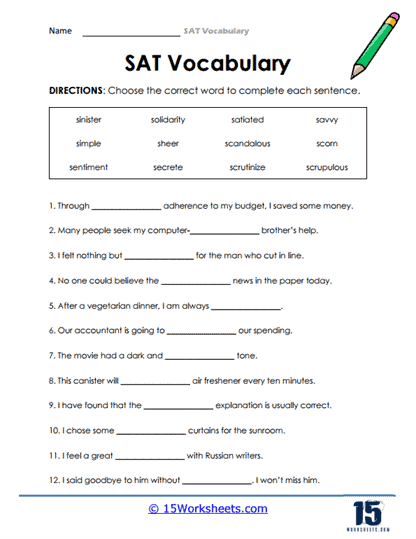
Completing Sentences
Students fill in blanks in sentences with the correct SAT vocabulary words. It tests both meaning and application. This format readies them for the fill-in style of SAT reading.
Make The Connection
Students match words to their roots or related words. It helps them see word-family connections and infer meanings. This approach grows skills for decoding new words later.
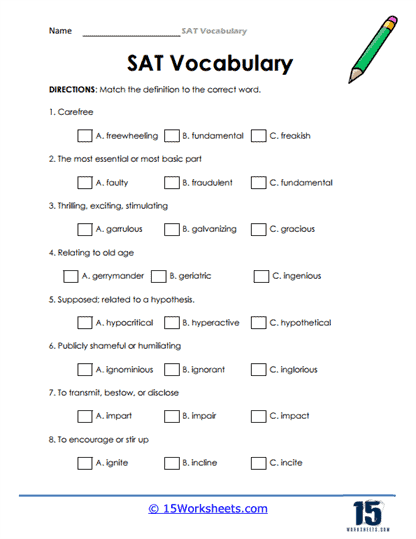
Ticking Checkboxes
Students have a list of words and check off properties like part of speech or usage. It reinforces multiple aspects of word knowledge at once. This helps organize mental word maps.
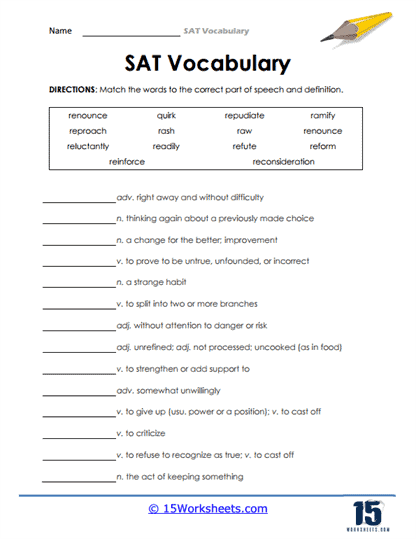
The Word Box
A box of vocabulary words is provided, and students sort or categorize them. This visual framing helps with studying and chunking. Categories can include themes or word parts.
Sentence Completion
Similar to “Completing Sentences,” learners use words to finish full sentences. It checks understanding in context. It mirrors how SAT uses words in reading comprehension.
Comprehend Accurately
Students read sentences or short passages and pick words that make the most sense. It combines reading skills with vocabulary understanding. It promotes precise thinking and inference.
What Does It Mean?
For each SAT word, students write what they think it means in their own words. This builds personal connection and deeper ownership of vocabulary. It’s reflection over rote definition recall.
How to Prepare for the Vocabulary Section of the SAT
The vocabulary section of the SAT is overwhelming for most students. They aren’t sure about how many words they should learn, which words are important, and the best way to memorize these words in the best way possible.
Now, keep in mind that there is absolutely no way that you can learn 2,000 SAT vocabulary words. There are so many words that sound pretty much the same but have different meanings, which makes it easy to get confused.
To prepare for the vocabulary section of the SAT, you need to be smart and strategic. Do not get bogged down or overwhelmed with the variety of words you will have to learn. Despite what you might read on the internet, the examiners do not expect you to know each and every word.
Here are some tips you can use to prepare yourself for the vocabulary section of the SAT exam. Remember, study smart and start your preparation beforehand so that you are not overly stressed at the end minute.
1. Get a Vocab Prep Book
To prepare for the vocabulary section of the SAT, you do not need to learn a long list of words. Instead, we recommend getting an SAT prep book to help you understand what is essential and which words require special attention.
Most SAT books also contain practical advice that will help you remember important vocabulary words. They will also make it easier for you to sift through the words, giving you strategic ways to prepare for the SAT exam without feeling like your mind will explode from the large variety of information.
2. Read
Reading is an essential part of building a good vocabulary in the long run. When preparing for the SAT exam, you cannot expect to learn hundreds of words a week before the exam. You will only feel overburdened as you confuse one word for another. Remember, information overload is real.
Instead, you should build your vocabulary over time and slowly introduce yourself to new words. This practice will also help you use the new words in your daily vocabulary in a way that you do not forget what they mean.
3. Keep a Dictionary Handy
The best way to prepare for the vocabulary section of the SAT is to keep a dictionary with you at all times. This practice will help you pay attention to the words people use, allowing you to search them up instantly.
Whenever someone uses a word you are unaware of, do not be shy to consult a dictionary and read up on the definition. List down any new word you come across in a notebook and at the end of the day, make sure to go through all the new words you have learned.
4. Use Flashcards
One way to learn SAT words is to make flashcards. To do this, you need a marker and a bundle of flashcards. Write the main word on one side of the flashcard and the meaning of the word on the other side.
Use these flashcards to revise your vocabulary when on the go, in class, or during your study time. Flashcards make it easy for you to revise your new words without shuffling the pages of a book and finding the correct page.