
Gender Words Worksheets

About Our Gender Word Worksheets
Understanding gender words is an important step in helping students make sense of how language groups and describes people, animals, and things. These worksheets introduce learners to the four main types-masculine, feminine, common, and neuter-in a clear and approachable way. With activities like sorting, matching, and rewriting, students get to explore how words are categorized while building confidence in their grammar skills. It’s a great mix of thinking, reading, and hands-on learning that keeps things interesting.
This collection is designed to guide students from basic recognition to more independent understanding. Some worksheets focus on identifying gender types, while others ask students to apply what they know by writing, explaining, or transforming sentences. The variety helps reinforce learning without feeling repetitive. As students work through the set, they begin to notice patterns and feel more comfortable using these concepts naturally.
Beyond grammar, these worksheets connect to real-world language use and communication. Students learn how word choices can reflect meaning, context, and even inclusivity. This helps them become more thoughtful readers and writers in everyday situations. Whether they’re describing people, telling stories, or editing sentences, these skills support clearer and more accurate expression.
About Each Worksheet
Bold Choices
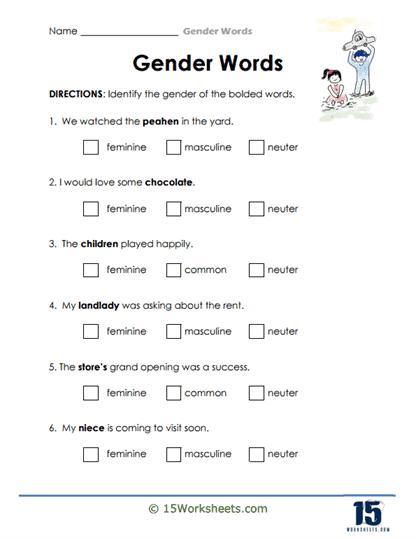
This worksheet puts students in the driver’s seat of grammar decisions! They read sentences and figure out the gender of bolded words using multiple categories. It’s a bit like solving mini language puzzles with each sentence. Students practice thinking carefully about meaning instead of guessing. A great activity for building confidence with more complex choices!
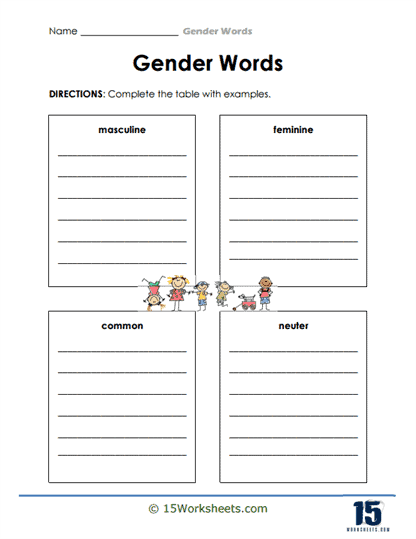
Category Builder
This worksheet lets students become the creators! They fill in a table with their own examples of masculine, feminine, common, and neuter nouns. It’s open-ended, so students get to show what they know in their own way. This encourages creativity along with grammar practice. A perfect activity for independent thinking and review!
Color Categories
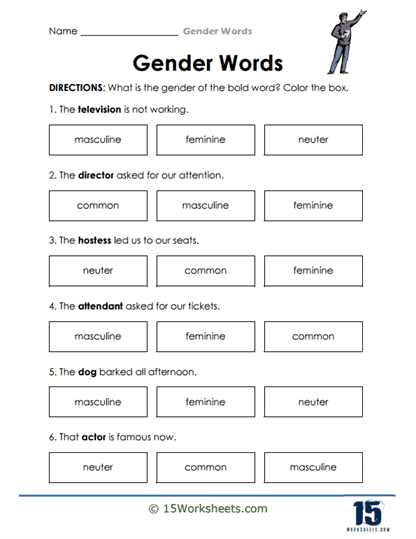
This worksheet adds a splash of color to grammar practice! Students read sentences and color the correct gender category for bolded words. The visual element keeps things fun and engaging. It also encourages careful reading before choosing an answer. A great mix of creativity and learning!
Common Neuter
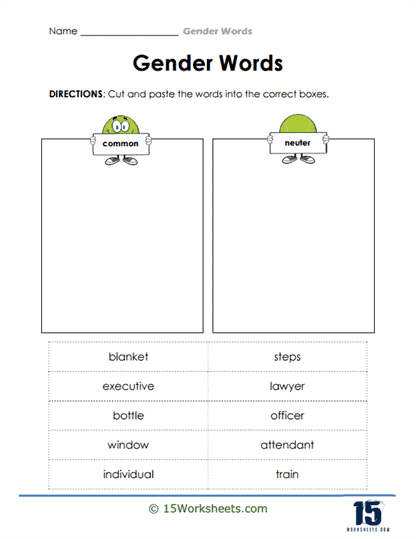
This worksheet focuses on the trickier categories-common and neuter! Students cut and paste words into the correct group based on meaning. It gets them thinking beyond obvious gender clues. The hands-on format keeps learners active and focused. A fun way to build deeper understanding of word types!
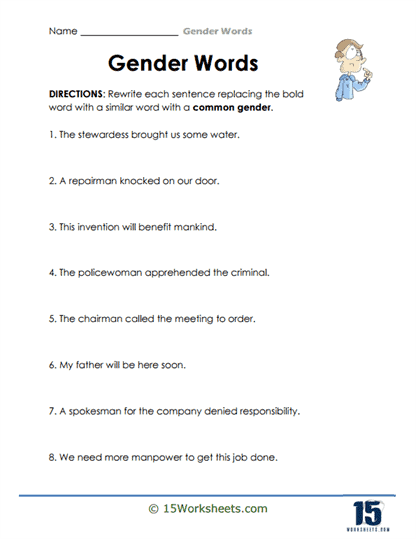
Common Switch
This worksheet challenges students to rewrite sentences using common gender words. It’s all about making language more flexible and inclusive. Students must think carefully about meaning while making changes. It builds strong editing and rewriting skills. A thoughtful activity with real-world relevance!
Fun name: Gender Labels
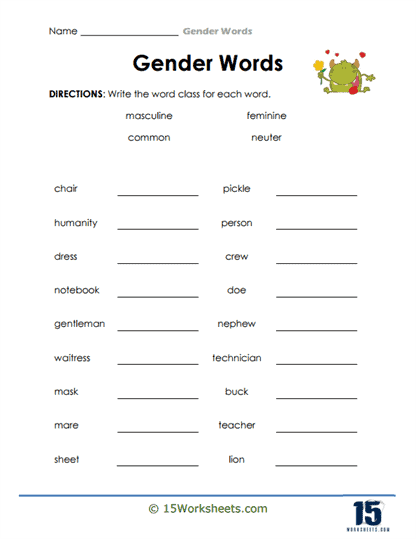
This worksheet asks students to label each word with its correct gender category. There are no hints, so it really tests their memory! Students work independently to classify a variety of nouns. It’s great for building confidence and recall skills. A solid practice page for mastering the concept!
Gender Match
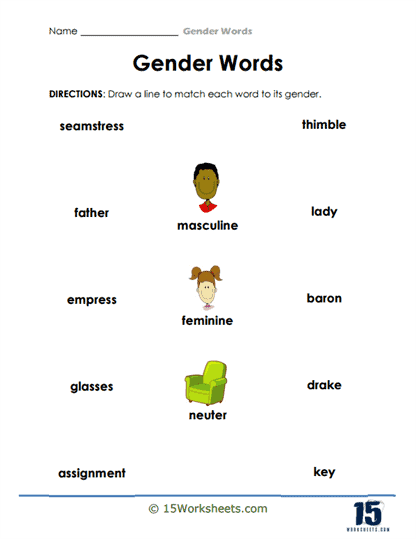
This worksheet turns grammar into a matching game! Students connect words to their correct gender labels. The layout is simple but keeps learners engaged. It’s a quick and effective way to review key ideas. Perfect for warm-ups or quick practice sessions!
Gender Sort
This worksheet helps students organize words into masculine, feminine, common, and neuter groups. It feels like sorting puzzle pieces into the right boxes! Students compare meanings and make thoughtful choices. The structured format supports clear thinking. A great foundational activity for understanding categories!
Gender Thinker
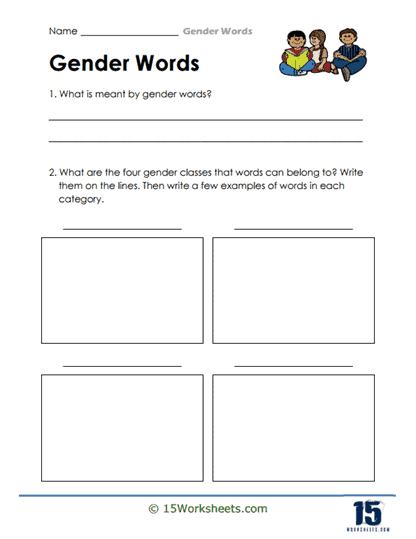
This worksheet takes things a step further by asking students to explain what gender words are. They also give examples for each category. It’s part writing, part thinking, and part reviewing. Students get to show their understanding in their own words. A great worksheet for deeper learning!
Masc Fem Cutouts
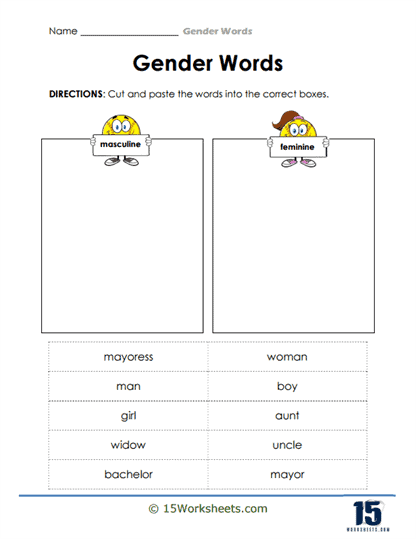
This worksheet brings hands-on fun into grammar! Students cut and paste words into masculine or feminine categories. It keeps them active while they learn. The movement helps reinforce memory and focus. A perfect activity for kinesthetic learners!
Odd One
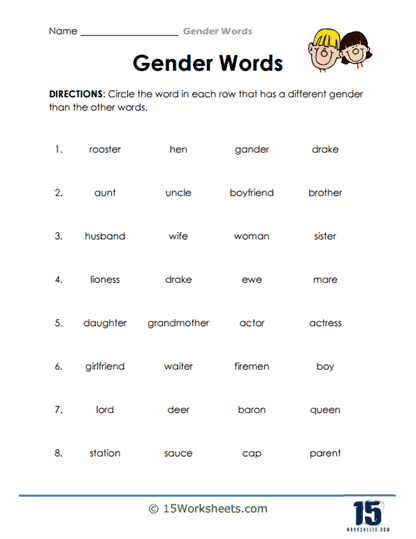
This worksheet is like a detective game! Students look at groups of words and find the one that doesn’t match the others’ gender. It encourages close reading and comparison. Each row is a mini challenge to solve. A fun way to sharpen thinking skills!
Opposite Rewrite
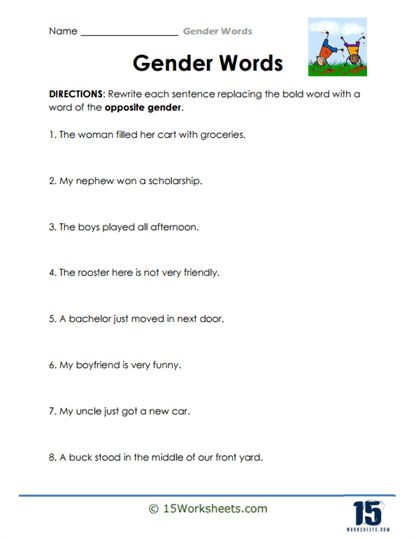
This worksheet asks students to rewrite sentences using opposite gender words. It’s a great way to practice editing and sentence transformation. Students must keep the meaning clear while making changes. It builds both grammar and writing skills. A creative and practical activity!
Pair Match
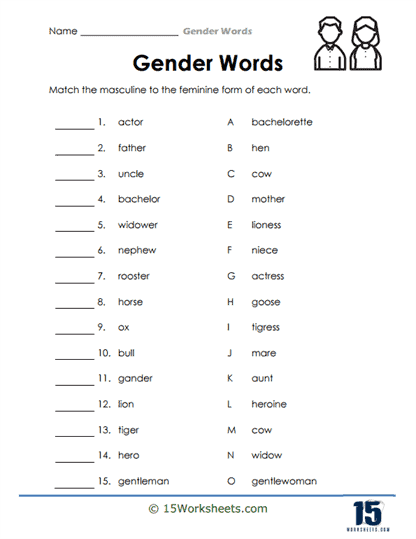
This worksheet focuses on matching masculine words with their feminine pairs. Students connect each word to its partner. It helps build strong vocabulary connections. The structured format makes it easy to follow. A great practice for learning word relationships!
Picture Genders
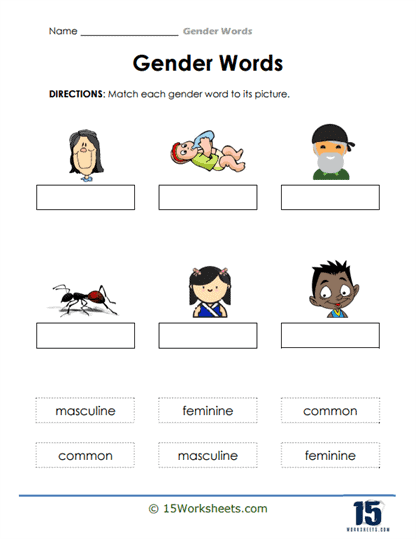
This worksheet uses images to make learning more visual and fun! Students match pictures to gender labels based on what they see. It combines observation with grammar knowledge. The visuals help make abstract ideas more concrete. A great option for visual learners!
Underline Gender
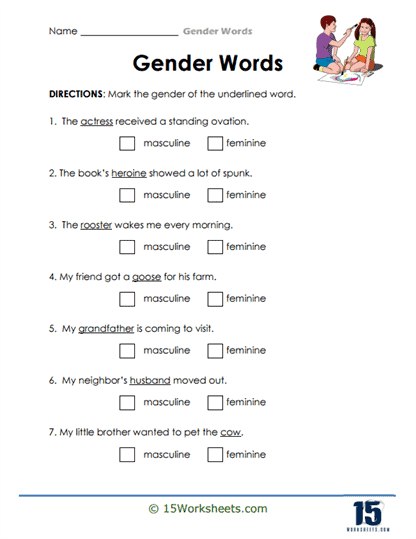
This worksheet asks students to read sentences and identify the gender of underlined words. It adds context, which makes the task more meaningful. Students must understand the sentence to choose correctly. It’s great for connecting grammar with reading skills. A simple but powerful practice!
What are Gender Vocabulary Word Worksheets?
Gender words are nouns that tell us whether something is masculine, feminine, common, or neuter. In simple terms, they help us describe whether we’re talking about a male, a female, either one, or something without gender at all. For example, “king” is masculine, “queen” is feminine, “teacher” can be common, and “book” is neuter. Once students learn these categories, they start noticing them everywhere. It’s like discovering a hidden pattern in language!
These words matter because they help us communicate clearly and correctly. They show relationships, roles, and meanings in sentences. Knowing the difference helps students choose the right words when speaking or writing. It also helps them understand what they read more easily. It’s a small concept that makes a big difference in language skills.
Learning about gender words also supports bigger goals in reading and writing. Students become better at describing people and things accurately. They also learn to adjust their language depending on context, which is an important communication skill. Over time, this leads to clearer sentences and stronger storytelling. And with a little practice, it all starts to feel natural and easy!