
Fruit Worksheets

All About These 15 Worksheets
This series of 15 worksheets focuses on helping students learn and identify different types of fruits. The exercises in these worksheets aim to teach students the names and characteristics of different fruits, leading them to appreciate their nutritional value and cultural significance.
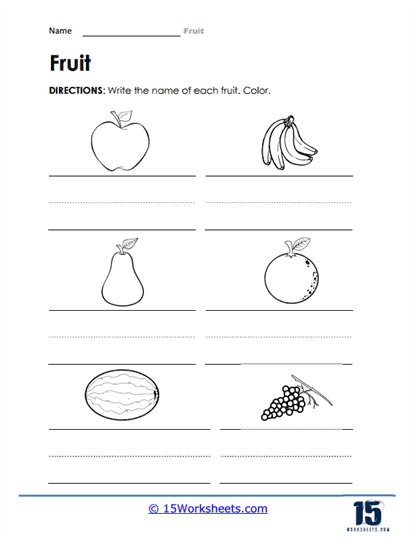
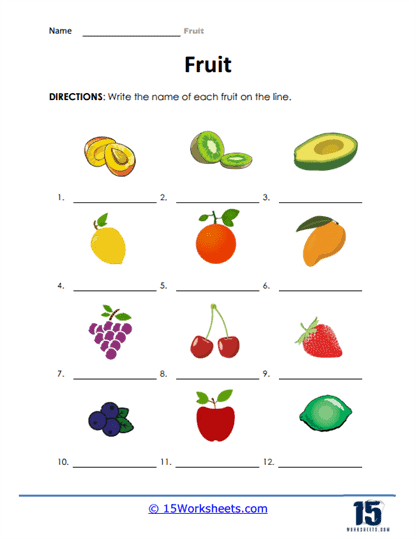
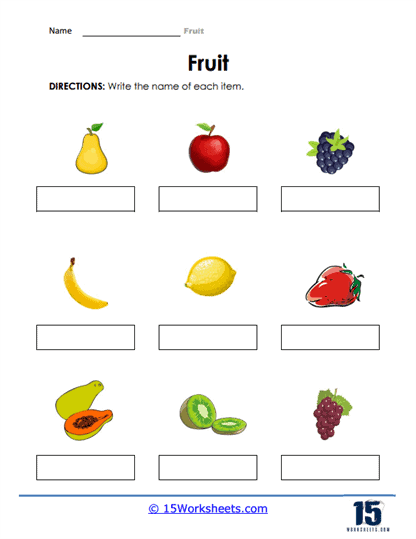
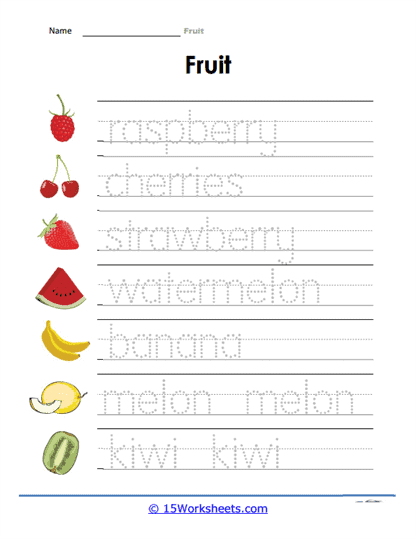
These fruit-themed worksheets invite young learners into a world where apples are not just snacks, but literary muses, and oranges become poetic subjects of deep thought. Early literacy skills are nurtured through activities that guide students to form letters, recognize vocabulary, and develop fine motor control. In Write And Color, students practice writing fruit names and then bring them to life with color, merging language and creativity in a single sweep of a crayon. Writing Names and Tracing Practice extend this experience, encouraging learners to gain confidence in spelling and handwriting by carefully copying fruit names with the precision of a tiny fruit-loving calligrapher. Each worksheet quietly reinforces the idea that language, like a good banana, should be both useful and enjoyed before it gets mushy.
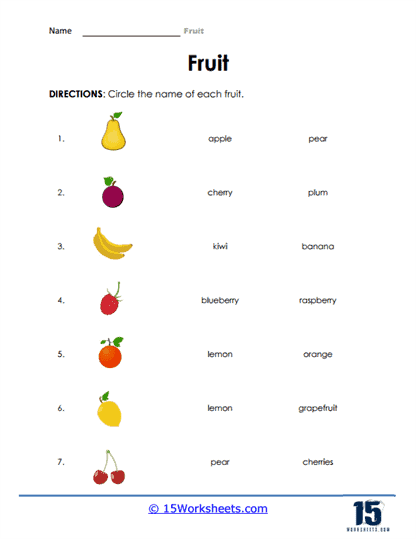
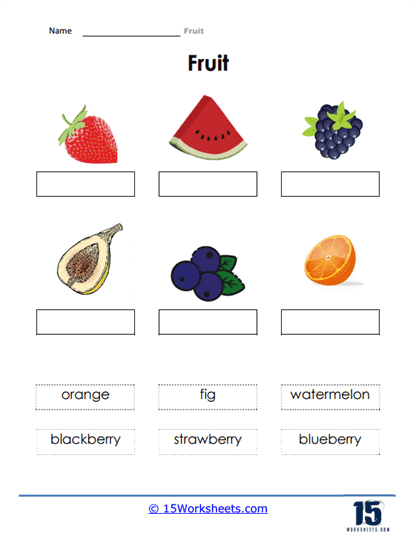
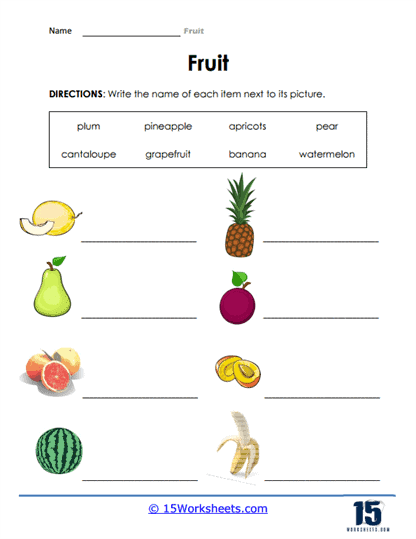
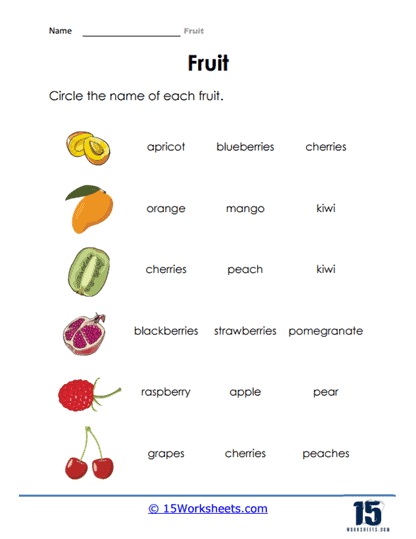
Vocabulary and reading comprehension take center stage in exercises that ask students to identify, match, and categorize. Circle The Name tests recognition in a format that makes every worksheet feel like a detective mission. What fruit is this? Is it a plum or a confused grape? The Word Box introduces a mini-treasure hunt of language, where students must match fruit names to their images, a challenge that stretches visual memory and early reading skills. With Which Fruit Is This?, students play a delightful game of picture-to-word association, a moment where decoding skills meet the universal need to know your produce. It’s playful, but beneath the surface, it’s a lesson in comprehension, inference, and the art of attention.
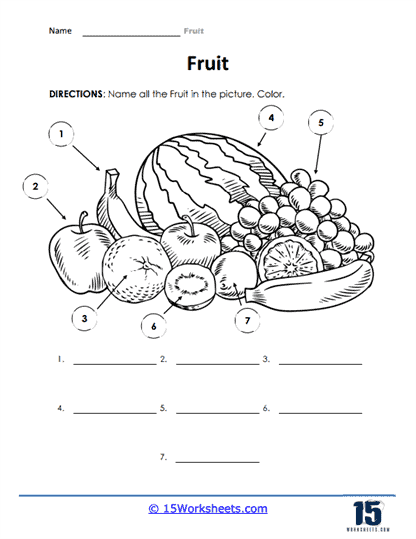
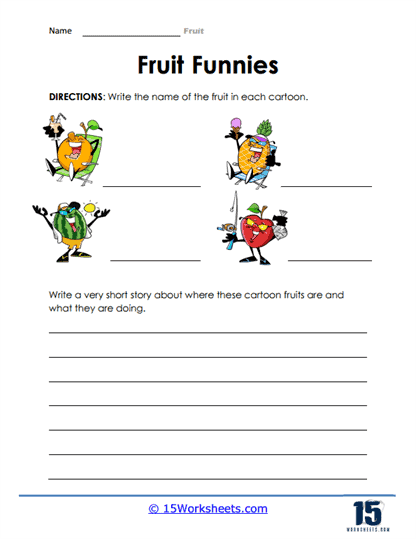
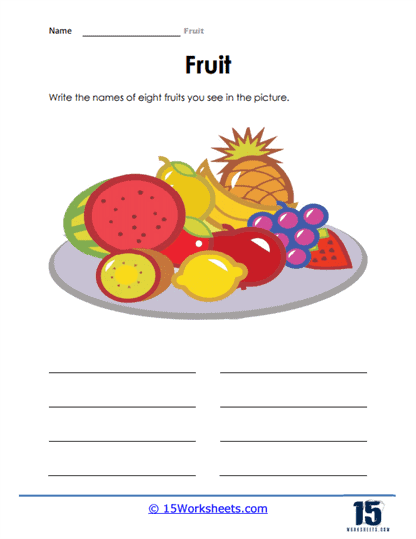
As learners deepen their engagement with language, they’re invited to explore more complex forms of expression and meaning-making. Cartoon Fruit Funnies turns ordinary fruit into characters with jokes, attitudes, and unspoken grudges, letting students read short, humorous text while interpreting tone and emotion. What Do You See? stretches this further, transforming observational drawing into narrative speculation-what is that pineapple thinking? Does the pear look nervous for a reason? In My Favorite Fruit, students reflect on their preferences and articulate why, exercising descriptive language and personal voice. And in Draw A Picture, they illustrate a scene or fruit of their choosing, translating internal images into shareable stories. These worksheets combine language arts with creativity in a way that respects the intellect of children-honoring both their imagination and their ability to express complex thoughts about something as deceptively simple as fruit.
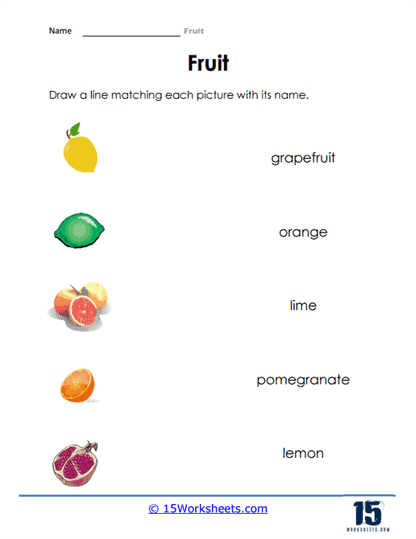
Other activities bring in foundational literacy skills through sorting, matching, and categorizing, especially where visual reasoning intersects with words. Connecting Lines has students draw connections between fruit names and images, turning a worksheet into a web of semantic understanding. Cut And Paste engages them in tactile learning, where fruit words and pictures must be physically paired, an act of reading, planning, and hand-eye coordination. Out Of The Three introduces comparative reasoning: which one of these doesn’t belong? What does it mean when one fruit is different? It’s a lesson in categorization that doubles as a philosophical inquiry into sameness and otherness among snackable beings.
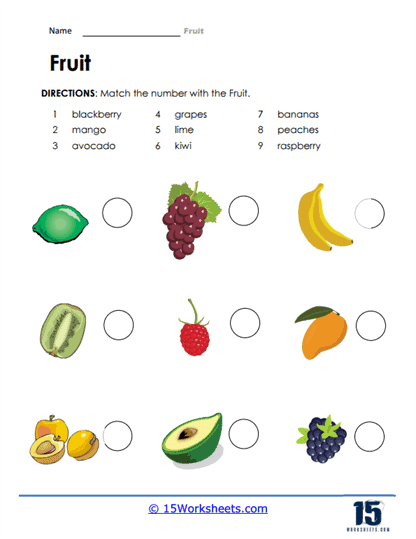
A bit of numeracy sneaks into this ELA fruit bowl, reminding us that language often shares space with logic. Match The Number asks students to count fruit illustrations and associate them with the correct numeral, reinforcing quantity vocabulary alongside visual recognition. It’s where fruit becomes math’s humble assistant, and students begin to understand that communication includes not just words, but symbols, patterns, and relationships.
Fruits in the USA?
From post-workout smoothies to fresh fruit juices, fruits can give you a refreshing taste and experience no matter what type of food they are added to. People of America love to add fruit to their diet, given that some of the most delicious fruits are grown and produced in the USA, which is why there is always fresh fruit available in supermarkets near you.
Many people strive to eat more fruit every day, as the importance of this nature’s excellent source of minerals and vitamins is evident from its benefits to your health and beauty. Besides that, fruits contain great amounts of antioxidants and flavonoids, which eliminates the risk of heart disease and cancer in people who ensure that they eat a sufficient quantity of fruits daily.
Some of the most popular fruits in the USA are:
1. Strawberries
Fresh strawberries are primarily grown in California, New York, and North Carolina.
This delicious fruit is native to North America; most kids and adults pick strawberries as their favorite fruit. A strawberry wears its seeds on the outside. It is a great source of Vitamin C and antioxidants.
Americans eat approximately 4.85 pounds of strawberries every year.
2. Grapes
With the intake of grapes, you can provide your body with lots of fiber, potassium, vitamins, and minerals. Grapes are said to have anti-aging properties and are a great fruit choice for people with diabetes.
Approximately 2/3rd of the total production of grapes in the USA is done in California. Americans love to eat grapes in a salad, smoothies, or just as raw fruit.
3. Bananas
No protein shake or energy-providing smoothie is complete without the addition of bananas. The banana trees are the tallest herbaceous plants in the world, and bananas are considered a great source of potassium and fiber. High potassium leads to excellent brain and muscle function, and it maintains a healthy balance of fluids inside the body.
Although bananas are not grown in the USA, most Americans love to eat bananas every day, providing nutrition and high energy to their bodies.
4. Pineapples
Pineapples have large amounts of Vitamin C and manganese, and even though the fruit originated in South America, the majority of
pineapples in the world are produced in Asia.
Pineapples are blended to form a juice or eaten raw, and there are many ways pineapples are incorporated in weird food combinations.
Pineapples are also sometimes grilled and put on a pizza as well.
5. Watermelons
Watermelons aid in digestion and intestinal disorders. Its high water and fiber contents are beneficial in reducing constipation and high blood pressure.
Watermelons have also been illustrated in Egyptian hieroglyphics, and almost two to three hundred varieties of watermelons are grown in the USA.
6. Blueberries
Blueberry bushes grow all over the USA, and only ten states contribute 98% of the blueberries’ production.
Blueberries have immense health benefits, from anti-inflammatory properties to promoting heart health. Blueberries are good for your body and mind. They are a rich source of potassium and magnesium, and Americans love to add blueberries to their desserts and smoothies.
7. Oranges
The top states in the USA that grow oranges are Texas, Florida, California, and Arizona.
Oranges are delicious, juicy, citrusy fruits that can be eaten raw or squeezed to make fresh orange juice. The orange flavor is so much loved by people nationwide that after chocolate, strawberry, and vanilla, orange is considered the favorite flavor in deserts and ice creams.
8. Avocadoes
California contributes to the most production of Avocadoes in the USA. Florida and Hawaii are next.
The benefits of avocadoes for hair, skin, and nails are endless. Avocado oil is extracted and used in cosmetics and hair care products. People love to eat raw avocadoes for breakfast, which are a major ingredient in guacamole preparation.
9. Raspberries
Raspberries are produced all over the USA, but major production happens in California and Oregon.
Raspberries improve skin, hair, and nails health and are rich in antioxidants, vitamin A and potassium. They are eaten raw, added to salads, smoothies, or used in cereals.