
Voiced Consonants Worksheets




About Our Voiced Consonants Worksheets
Voiced consonants might sound tricky at first, but they’re really just the sounds we make when our vocal cords buzz while forming certain letters. Think of the difference between /s/ (no buzz) and /z/ (with buzz) – that little vibration makes all the difference! For many students, these subtle differences can be confusing, which is why this collection of worksheets is designed to make voiced consonants clear, fun, and easy to practice.
By working through these activities, students gain a sharper ear for how sounds change words, spellings, and meanings. The worksheets cover everything from identifying sounds at the beginning of words to recognizing how endings like -s and -ed shift depending on whether they follow voiced or unvoiced consonants. With charts, cut-and-paste tasks, coloring, and sound-sorting games, the collection provides both structure and creativity in learning.
Beyond the mechanics of phonics, practicing voiced consonants helps learners become more confident readers, speakers, and writers. They begin to see how these small sound differences connect to real-world reading fluency, spelling accuracy, and even social communication. After all, catching the difference between “bus” and “buzz” can change a whole conversation – and these worksheets ensure students are ready for it.
About Each Worksheet
Rule Chart
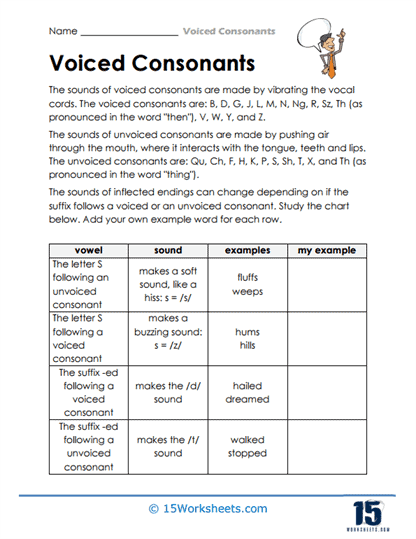
This worksheet is like a mini cheat sheet for voiced and unvoiced consonants. Students study examples of how endings like -s and -ed change with different sounds, then add their own words to the chart. It’s part practice, part reference tool, and a lot of clarity all rolled into one. The structured format helps students see patterns clearly while also encouraging them to create new examples. Think of it as a phonics roadmap they can keep coming back to!
Sound Vibes
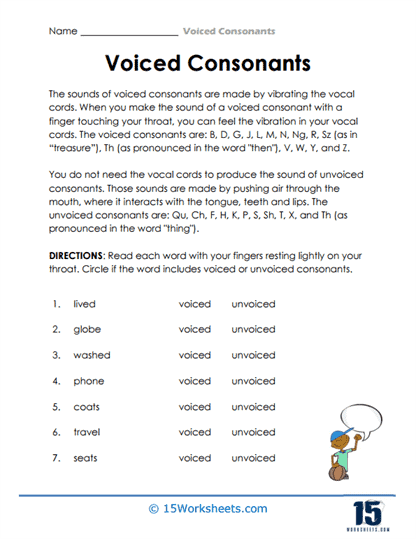
Students get hands-on with this worksheet by actually feeling their throats vibrate when saying voiced consonants. They compare voiced sounds with unvoiced ones, noticing how the buzz makes all the difference. The task keeps them engaged with both listening and physical learning. By the end, they’re decoding words more confidently and strengthening spelling too. It’s like a sound experiment they can run anytime!
Buzz Hiss
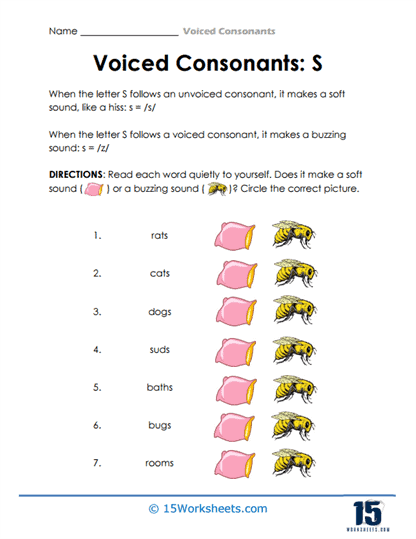
Here, kids discover why “cats” hisses but “dogs” buzzes at the end. The worksheet uses cute bee and lip visuals to help them identify whether S makes a soft or buzzing sound. Students read through words and circle their answers, keeping the learning interactive. The fun theme makes the rule stick long after the page is done. Suddenly, the difference between “hiss” and “buzz” becomes crystal clear.
Past Sound Sort
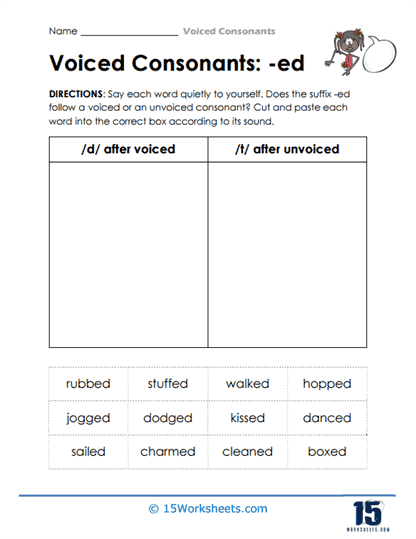
This cut-and-paste worksheet turns suffix rules into a sorting challenge. Students separate verbs into piles depending on whether -ed sounds like /t/ or /d/, based on the consonant before it. The activity is tactile, engaging, and makes grammar feel like a puzzle to solve. Along the way, they strengthen fluency and spelling accuracy. Who knew past tense endings could feel like a game?
Ending Echo
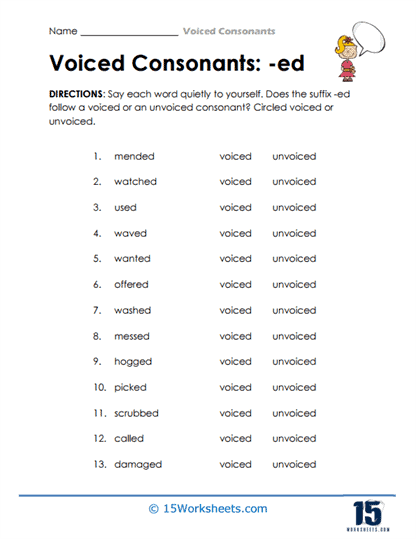
With this page, students quietly test words out loud and circle whether the -ed ending is voiced or unvoiced. It’s a quick, simple way to sharpen listening skills while reviewing a wide variety of verbs. The repetition ensures the rule sticks and supports grammar awareness. The list format makes it easy to use for practice or review. A perfect warm-up before diving into longer reading!
Start Smart
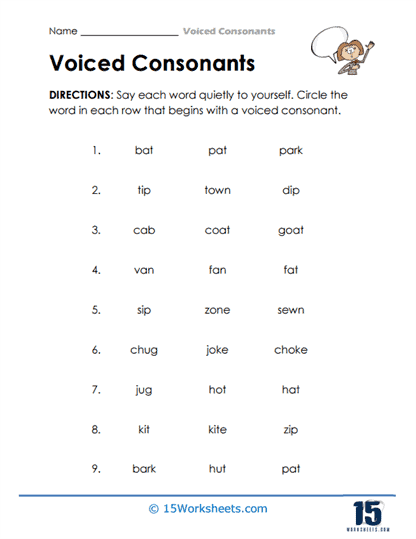
This activity puts the spotlight on beginning sounds. Students look at three words in a row and decide which one starts with a voiced consonant. It trains them to listen closely while keeping the format simple and engaging. Over time, this strengthens both vocabulary and phonics foundations. It’s like a scavenger hunt for the right sound at the very start!
Ending S Spot
Students color circles over words that feature S after a voiced consonant. The act of coloring makes the task interactive while reinforcing careful pronunciation. This simple, visual approach turns phonics into a game of spotting patterns. It builds decoding and spelling skills without feeling heavy. Plus, it adds a splash of color to sound practice!
Sound Sort Grid
This worksheet challenges students to classify -ed endings into /d/, /t/, or /id/ categories. The grid layout helps them see patterns clearly and keeps the sorting neat. By filling in the boxes, they’re practicing both phonics and grammar at once. It’s a great mix of auditory discrimination and rule-based learning. Think of it as organizing sound “families” into their right homes.
Boxed Voices
Students see sets of four letters and must color the one that’s voiced. The mix of single letters and blends keeps the challenge fresh. This recall-based task is quick but highly effective for reinforcement. It encourages fast thinking and solidifies memory of which sounds buzz. In short, it’s a speedy drill with colorful rewards!
Sound Match Chart
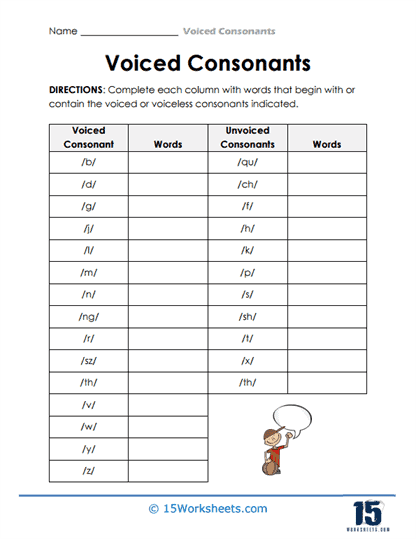
In this chart, students list words that fit under voiced or unvoiced consonants. It asks them to generate their own examples, which deepens comprehension and recall. The format is organized, but the content is flexible, making it great for reuse. It strengthens vocabulary and spelling while sharpening sound awareness. Basically, it’s a build-your-own word bank with a phonics twist!
S-End Sort
This worksheet focuses on whether final -s sounds are pronounced /s/ or /z/. Students check the correct column for each word, practicing through repetition. The activity builds fluency while making spelling rules clearer. It’s structured but quick to complete, making it perfect for class or homework. Suddenly, the “s” on words doesn’t seem so sneaky anymore!
Th Sound Hunt
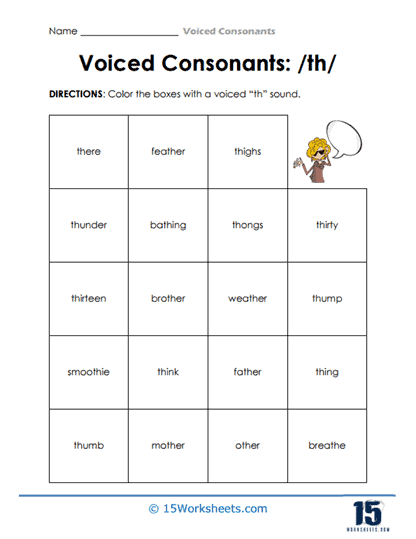
Students get to color boxes containing words with the voiced “th” sound. With both voiced and unvoiced examples, they need to listen carefully to make the right choice. The visual grid keeps things playful while reinforcing phonics accuracy. The activity builds listening, spelling, and fluency all at once. It’s like a treasure hunt for tricky sounds!
Th Check
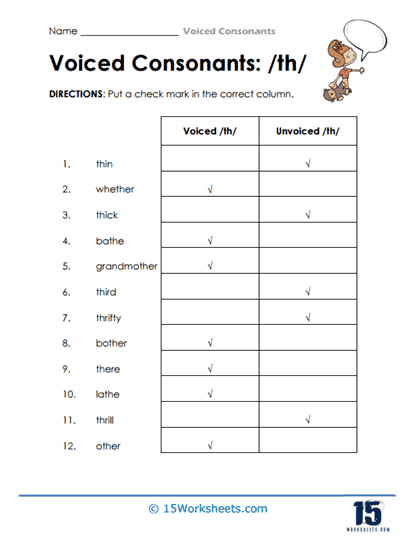
Here, students go word by word, checking whether the /th/ is voiced or unvoiced. The chart format is simple, repetitive, and effective for mastery. This structured approach gives plenty of practice without being overwhelming. It sharpens both listening and decoding skills in reading. By the end, students will feel like pros at tackling tricky “th” words.
Sound Start Sort
Students read words aloud, feel their throat for vibration, and label the start sound as V (voiced) or U (unvoiced). The activity combines physical awareness with phonics practice, making it memorable. Repetition ensures students grow more confident at sound-to-letter recognition. It also supports stronger spelling and decoding skills. A great way to warm up those vocal cords for learning!
Picture Th Sort
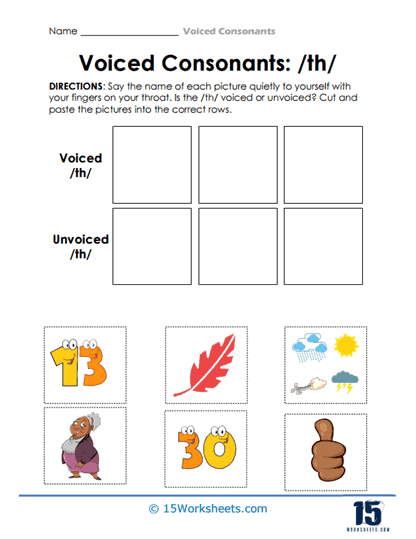
This worksheet uses pictures for sorting voiced and unvoiced /th/ words. Students cut out and categorize images, saying each word aloud as they go. The hands-on activity keeps learning interactive while building vocabulary. Associating visuals with sounds makes the rules stick more easily. It’s phonics practice disguised as a crafty game!
What Are Voiced Consonants?
Voiced consonants are the buzzing sounds our vocal cords make when we say certain letters. If you put your hand on your throat and say “zzz,” you’ll feel the vibration – that’s what makes it “voiced.” On the other hand, when you whisper “sss,” there’s no buzz at all, making it “unvoiced.” The difference is small but super important, especially when you’re learning to read, spell, and pronounce words correctly.
Understanding voiced consonants matters because they change how words sound and even how they’re spelled. Endings like -s or -ed shift depending on whether the consonant before them is voiced or not. These little details make English both fascinating and sometimes confusing! By practicing, students learn to catch the difference between pairs like “leaf” and “leave” or “bat” and “bad.”
In the bigger picture, mastering voiced consonants helps learners become stronger readers, writers, and communicators. They gain the ability to decode new words with ease, speak clearly, and write with greater accuracy. Plus, noticing sound patterns builds broader phonics skills that connect to vocabulary growth and comprehension. In short, practicing voiced consonants isn’t just about buzzing and hissing – it’s about building lifelong language confidence.