
Hard G Worksheets

All About These 15 Hard G Worksheets
Hard G can be surprisingly confusing for early readers because the letter G likes to switch personalities depending on the word. One minute it sounds strong and clear like in “goat” or “gift,” and the next minute it softens into a /j/ sound like in “giraffe.” These worksheets help students sort all that out in ways that feel much more interactive than just memorizing rules from a chart. Teachers know kids learn these sound patterns best when they can hear them, say them, sort them, and actually do something with the words. That’s why this collection leans heavily into games, hunts, matching activities, and hands-on phonics practice instead of repetitive drills.
The nice thing about this set is that the activities all approach the hard G sound from different angles, so students are not stuck doing the same task over and over again. One worksheet turns students into sound detectives, another feels like a mini maze challenge, and a few of them work almost like phonics scavenger hunts. Some activities focus more on listening skills, while others strengthen visual recognition and spelling connections. The picture support also makes a huge difference for students who still need help connecting sounds to words confidently. Honestly, once kids realize G can make two completely different sounds, they suddenly start paying much closer attention while reading.
About Each Worksheet
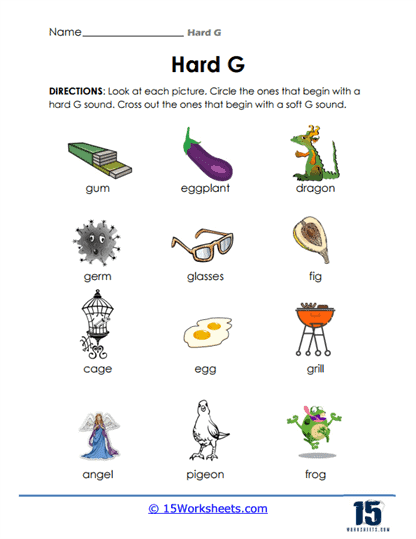
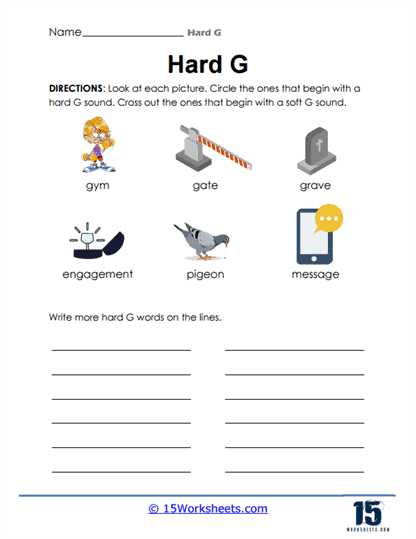
Circles And Crosses
This worksheet has students circle words with the hard G sound and cross out the ones with the soft G sound. Kids usually enjoy the “yes or no” style sorting because it feels more active than plain phonics review.
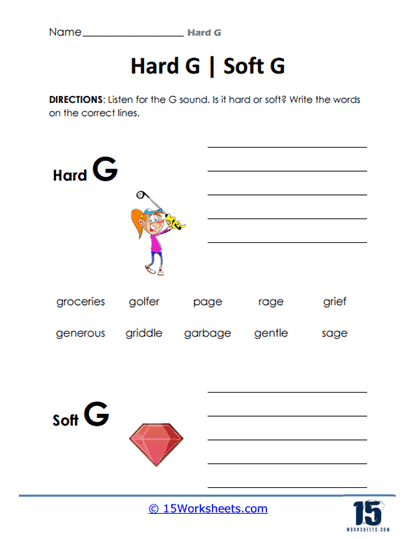
Sound Sorter
Students listen carefully to words and sort them into hard G and soft G categories. It’s excellent listening practice, especially for students who tend to rush through sound work too quickly.
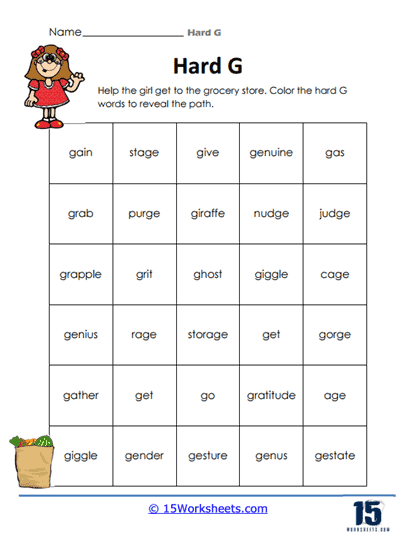
Pathway Explorer
This activity turns hard G practice into a little adventure where students color the correct tiles to reveal a path to the grocery store. Honestly, adding a mystery path somehow makes phonics feel ten times more exciting.
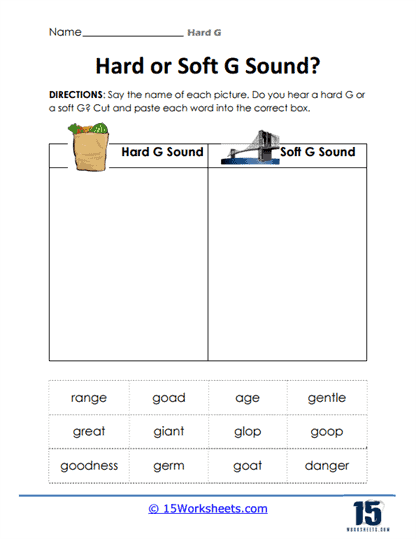
Categorization Quest
Students cut out words and glue them into hard G and soft G categories after saying each word aloud. The hands-on sorting really helps students slow down and focus on the sounds carefully.
Yes Or No
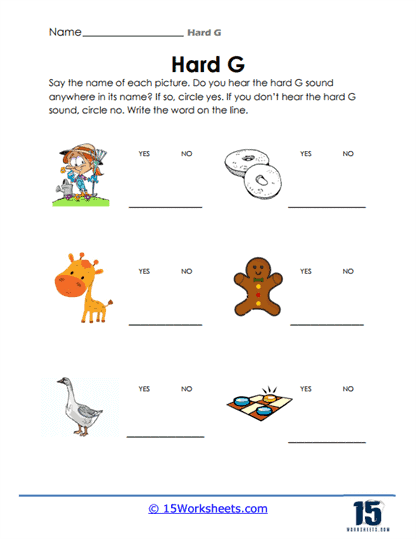
This worksheet asks students to decide whether picture words contain the hard G sound by circling “yes” or “no.” The detective-style format keeps the activity feeling light and interactive.
Hard G Hunt
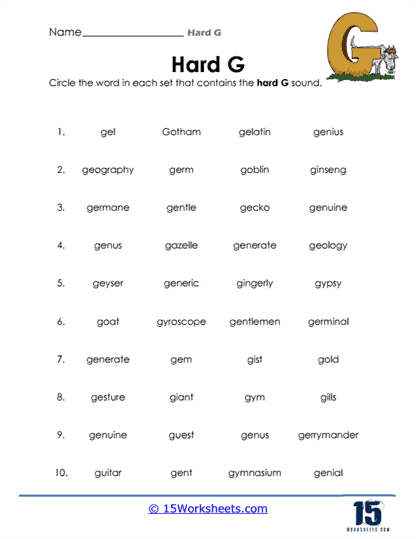
Students scan groups of words and circle the one that contains the hard G sound. It feels a little like a phonics treasure hunt where students are searching for hidden sound clues.
Great Match-Ups
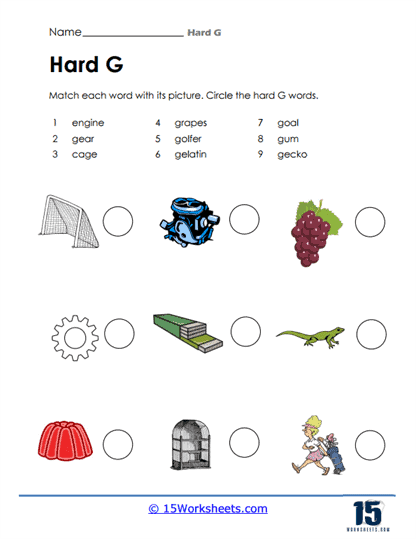
This activity has students match hard G words to the correct pictures by writing numbers inside circles. The picture matching keeps students engaged while reinforcing vocabulary and sound recognition together.
Which Do You Hear?
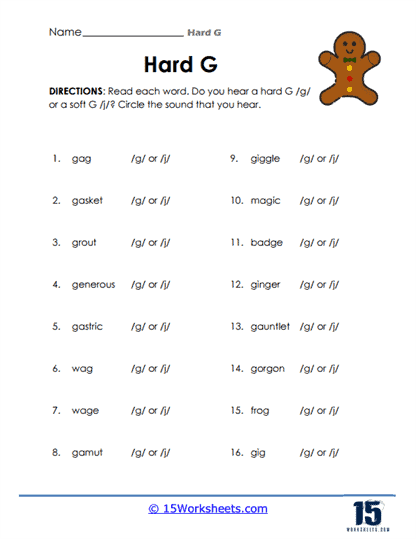
Students read words and decide whether they hear the hard /g/ sound or the soft /j/ sound. Kids quickly realize how much paying attention to tiny sound differences really matters.
Showdown Of Sounds
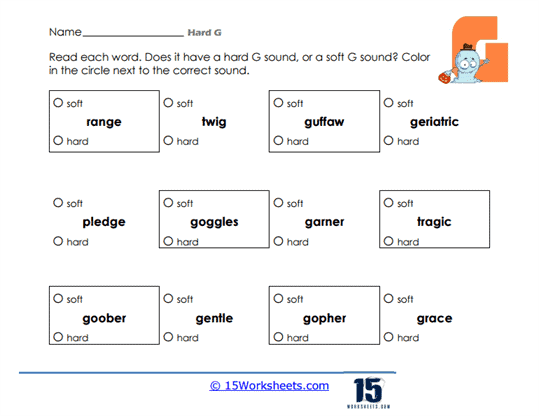
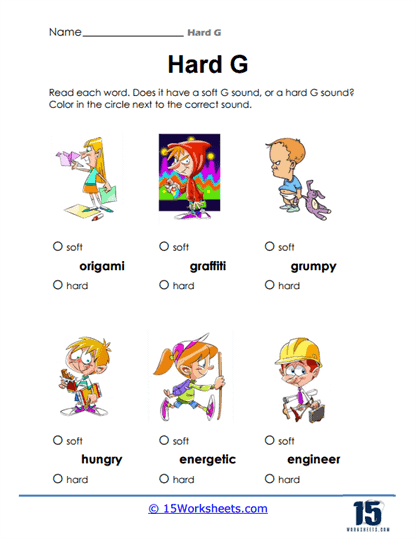
This worksheet asks students to identify hard and soft G sounds and color the matching circle beside each word. The coloring element keeps things relaxed while still giving students strong phonics practice.
Seek And Write
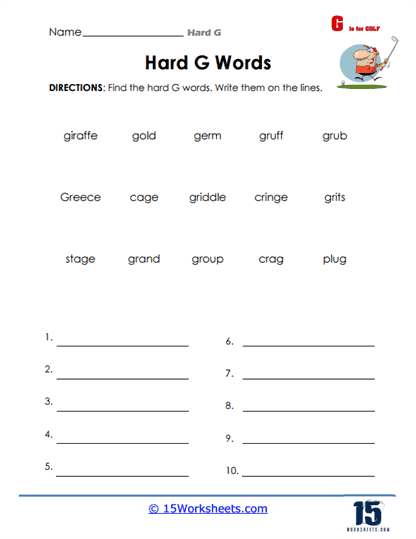
Students search through a list of words and write down only the ones that contain the hard G sound. It’s a nice mix of reading, sorting, and listening all rolled into one activity.
Word Selector
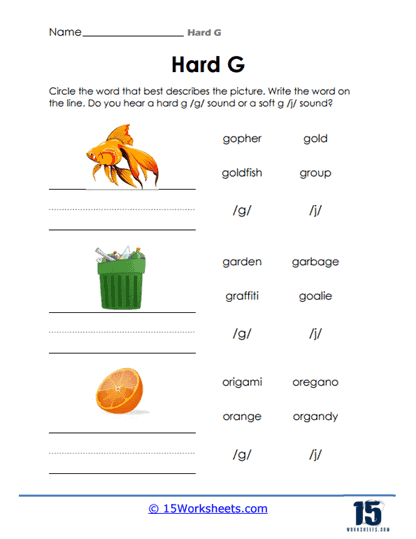
This activity gives students pictures and multiple word choices, then asks them to choose the correct word and identify its G sound. It feels part vocabulary challenge and part phonics puzzle.
Color It In
Students read words and color circles based on whether they hear a hard or soft G sound. The simple format makes this one especially helpful for quick review or independent practice.
Word Inventor
This worksheet has students identify hard G words and then brainstorm additional examples on their own. Kids usually get pretty creative once they realize how many hard G words they already know.
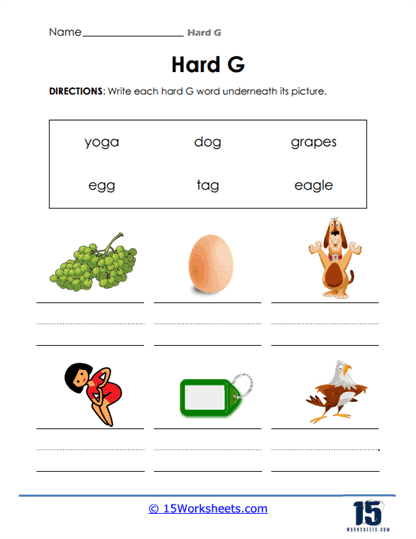
Matching The Pictures
Students match hard G words from a word bank to the correct pictures underneath. It’s straightforward, visual, and really effective for strengthening word-picture associations.
Cracking The G Code
This activity asks students to label words as “hard” or “soft” based on the G sound they hear. The “code-breaking” setup makes the whole worksheet feel much more playful than a standard sound sort.
What are Hard G Worksheets?
Hard G worksheets help students learn when the letter G makes its hard sound, like in “goat,” “gift,” or “garden.” In these words, the G says the /g/ sound instead of the softer /j/ sound heard in words like “giraffe” or “gem.” Many young readers get confused because the same letter can make two different sounds depending on the word. These worksheets give students lots of practice hearing, identifying, sorting, and reading words with the hard G sound. Basically, they help students train their ears to notice when G sounds strong and firm instead of soft.
Learning hard and soft G sounds is an important phonics skill because students encounter these words constantly while reading. Once students understand the sound patterns, decoding unfamiliar words becomes much easier and less stressful. These worksheets help students connect spoken sounds to spelling patterns while also strengthening vocabulary and pronunciation. Repeated exposure to both hard and soft G words helps build automatic recognition over time. Eventually, students stop guessing and start confidently identifying the correct sound naturally while reading.