
Spot the Difference Worksheets
About These 15 Worksheets
Spot the Difference worksheets are low-pressure, fun exercises that quietly build important skills. They help children sharpen their observation, attention to detail, and ability to compare two things carefully. By practicing finding what is different, kids also learn to notice patterns, build patience, and strengthen visual memory. These skills go beyond simple puzzles-they support reading, math, and everyday problem-solving where details matter.
The variety of themes (animals, nature, space, parties, etc.) keeps students interested and engaged. Each worksheet gives kids something familiar to look at, which makes them want to find the differences-and that motivates effort. Teachers and parents can use these worksheets for short warm-ups, observation games, or calm “quiet time” activities. Over time, students grow more confident noticing even tricky differences, which builds visual confidence.
Also, while they seem simple, these worksheets support development in other areas: motor skills (if they circle, mark or color the differences), vocabulary (discussing what’s different, naming objects), and language (describing differences). They can be part of lessons on comparing and contrasting, descriptive writing, or even art. Plus, they’re just plain fun-learning without feeling like work.
Have a Look Inside Each Worksheet
Lion Out in the Open
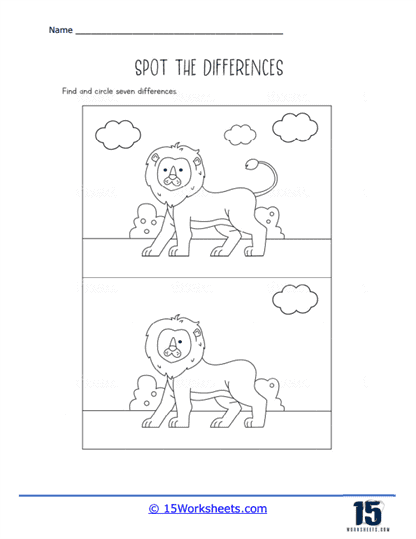
Kids will compare two similar scenes featuring a lion in its natural setting and find small differences (maybe a rock changed, a leaf missing, etc.). This develops visual observation, attention to detail, and comparison skills. It’s fun because the images are lively and children can imagine a lion’s habitat. Supports visual discrimination and concentration.
Sandcastles
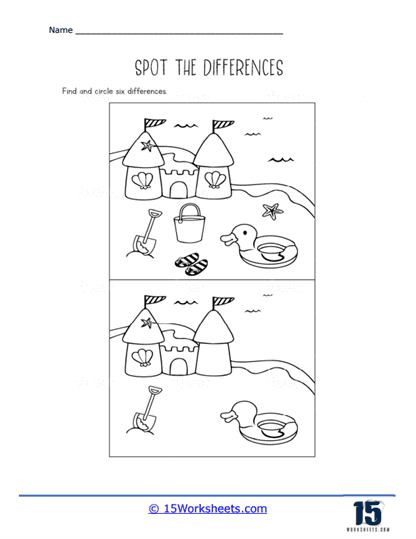
Two nearly identical beach scenes with sandcastles, umbrellas, maybe some seashells or people; kids spot what’s different. Training those visual scanning skills and noticing subtle changes. Also builds patience and perseverance because some differences are sneaky. Reinforces visual memory and fine detail noticing.
To the Moon
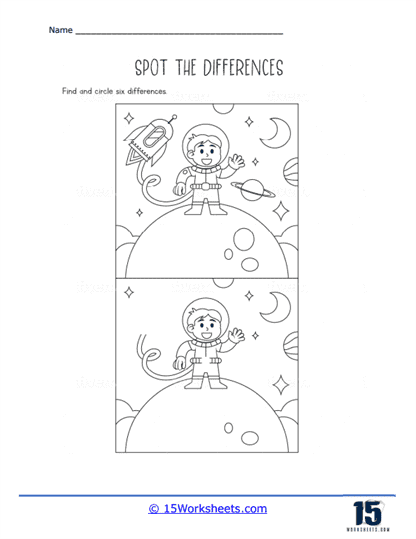
Two space or moon-themed pictures side by side; children look for objects (stars, moon phases, rockets, etc.) that differ. Helps with pattern recognition, distinguishing shapes and details. Encourages curiosity and engagement through a fun theme. Good for boosting observational and comparison skills.
Beautiful Day
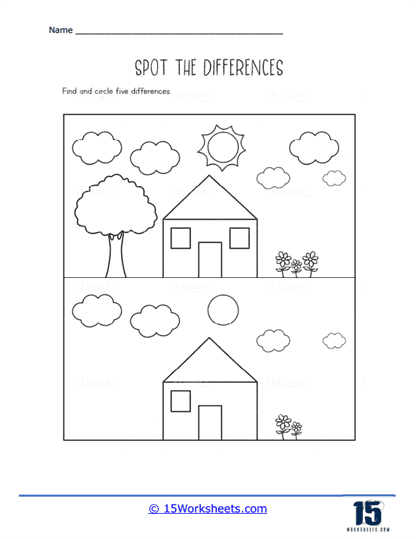
Probably two outdoor scenes-trees, flowers, skies-where small elements differ between pictures. Students spot differences in colors, positions of objects, maybe missing items. Helps with discerning small visual changes. Also calming and gentle imagery, good for lowering stress while working.
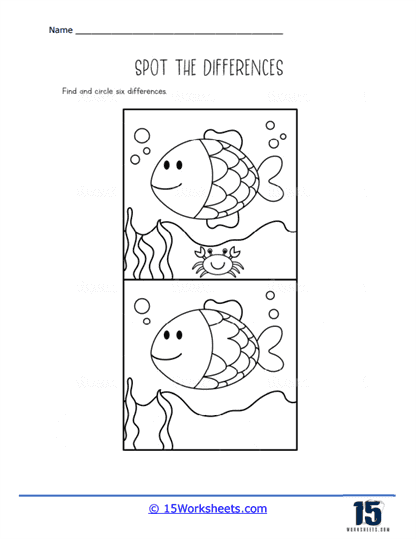
Fish Underwater
Likely two underwater scenes with fish, coral, seaweed; kids must find what’s changed between the images. Promotes noticing color, texture, and shape differences. Enhances attention to detail and visual processing. Great for children interested in aquatic life.
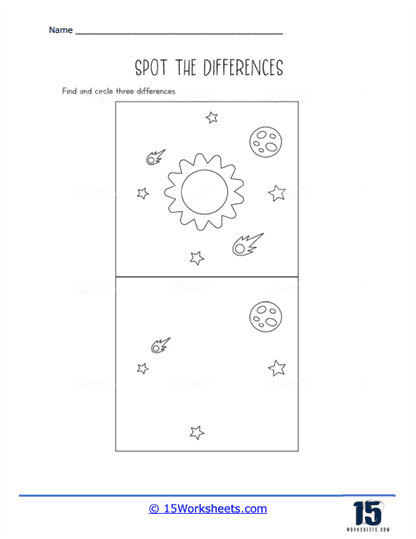
Comet Chaos
Space/sky scene with comets, stars, maybe planets; subtle differences to find. Boosts focus and visual analysis. The theme creates interest and makes children want to explore what’s different. Helps for developing concentration and visual discrimination.
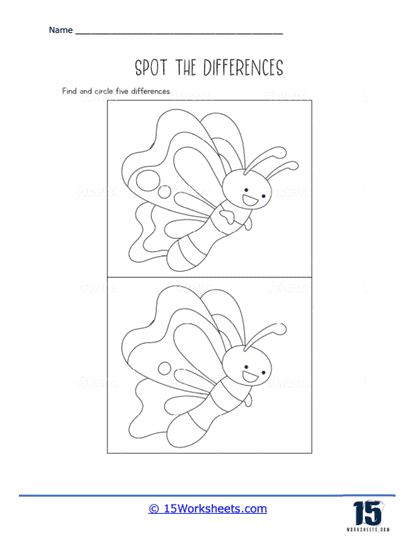
The Butterfly Affect
Butterflies, flowers, garden setting; two pictures with slight changes. Development of pattern recognition, shape and color discrimination. Encourages careful looking and comparing. Supports visual tracking and memory.
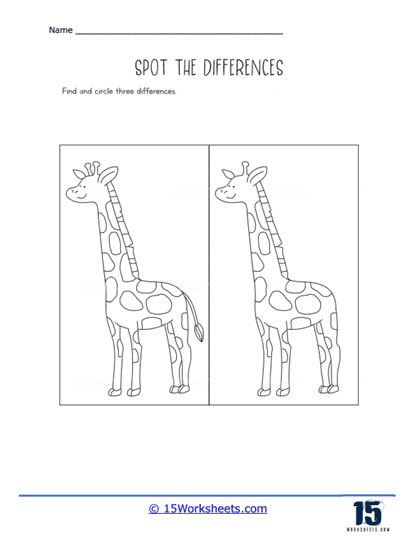
Long Neck Giraffe
Probably two versions of a giraffe scene (maybe savannah) with small differences. Kids learn to compare shapes, lengths, maybe colors. Builds understanding of detail and improves observational thinking. Nice for animal lovers.
Birthday Cup
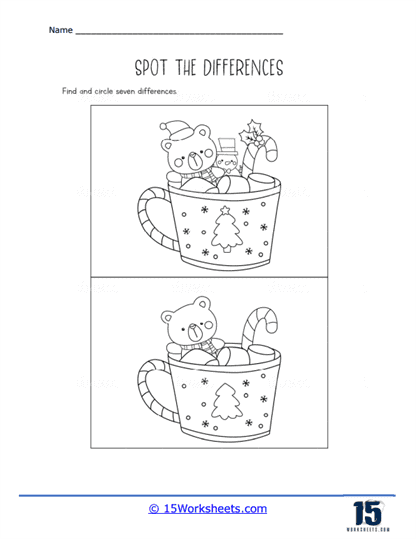
Birthday party themed images; differences may be balloons, cupcakes, gifts, etc. Kids must spot changes in objects or arrangements. Helps with noticing small positional or color differences. Adds fun birthday vibe to the learning.
Sunflower Sundays
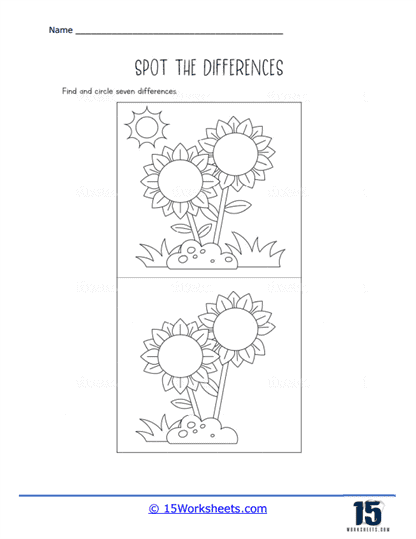
Pictures of sunflowers, maybe bees, sky, clouds; children compare two scenes and find subtle differences. Great for nature themes and color observation. Cultivates patience and focus. Supports visual discrimination through lovely, nature-based imagery.
Bear in an Airplane
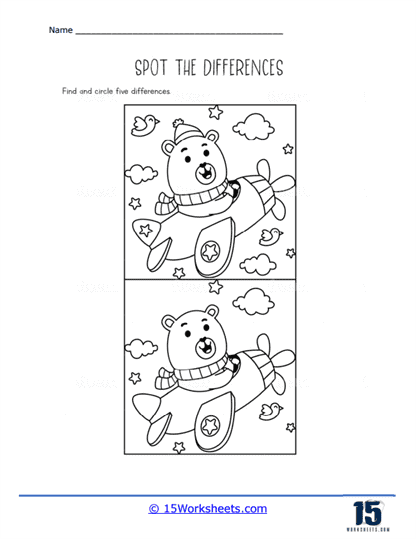
Two pictures featuring a bear flying in a plane – little differences in wings, windows, birds, clouds, etc. Encourages children to look at shapes, positioning, and small detail changes. Engaging because of whimsy. Builds observational skills.
Froggy Ideas
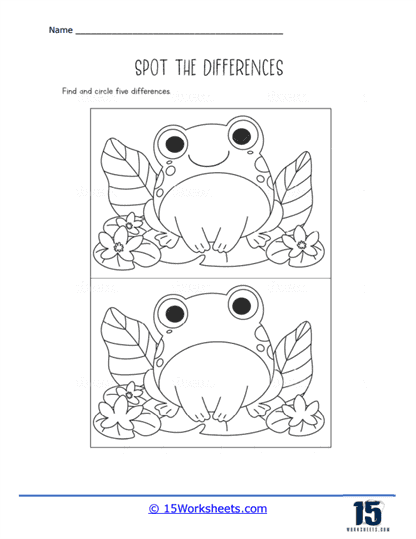
Probably two frog/pond scenes with slight variations. Kids compare and find differences in parts of the image. Boosts shape and color recognition. Encourages close looking and attention to fine detail. Fun with playful animal scene.
Dinosaur Times
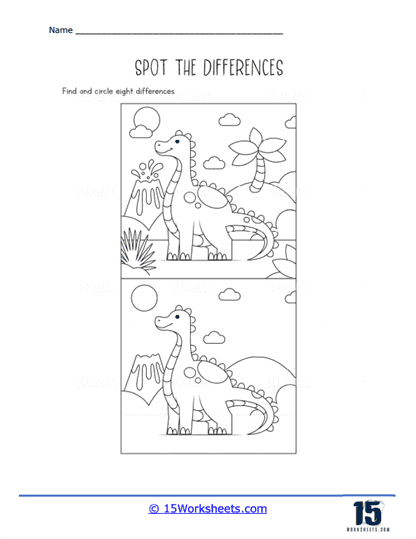
Two dinosaur-themed prehistoric scenes with slightly different items: maybe plants, rocks, dinosaur positions vary. Helps with comparing large and small shapes, noticing odd elements. Engages children who like dinosaurs; makes spotting differences fun. Builds visual discrimination.
Bear Senses
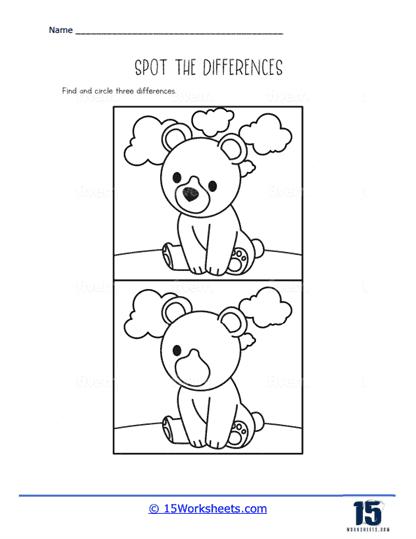
Two images involving bears, maybe using their senses-smelling flowers, seeing stars, etc-with little differences. Kids spot differences in objects, positions, possibly expressions. This enhances observation and linking visuals with thematic content. A themed way to practice visual focus.
Happy Puppy
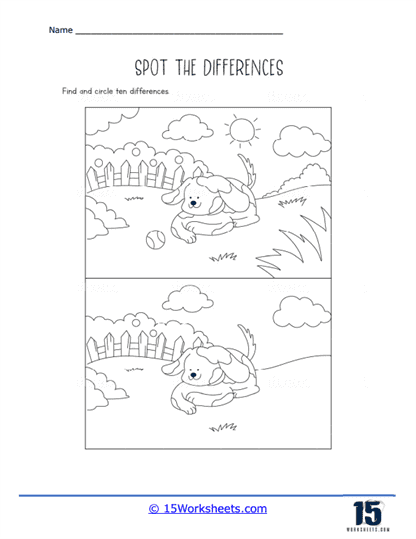
Two pictures of puppies (or a puppy) with slight changes between them: maybe in fur color, accessory, background objects. Helps with detail observation, shape/color differences, and concentration. Very appealing for young animal lovers. Helps build visual discrimination and observational confidence.
Why Spotting the Difference Matters
These worksheets may look like playful puzzles, but they quietly nurture skills that ripple across a child’s entire learning journey. By scanning two nearly identical images, students sharpen visual discrimination, the same skill that helps them distinguish letters, numbers, and symbols in reading and math. That tiny detail-one balloon here, one balloon missing there-translates into the ability to notice a missing punctuation mark or a flipped digit on a test.
They also build sustained attention and focus. In a world buzzing with distractions, learning to slow down, compare carefully, and look again trains children to persevere through challenging tasks. Each difference spotted is a small victory that rewards patience and effort-qualities essential for higher-level problem solving and critical thinking.
Perhaps most importantly, spotting the difference fosters working memory and language growth. Children hold one picture in mind while scanning another, strengthening mental flexibility and recall. When they describe what they see-“the giraffe has spots here but not there”-they’re practicing comparative language and descriptive vocabulary. In this way, these simple puzzles become bridges to reading fluency, clearer communication, and sharper thinking. What starts as a fun game becomes a foundation for lifelong learning.