
Blending Sounds Worksheets
All About These 15 Blending Sounds Worksheets
These blending sounds worksheets are the kind of phonics practice that actually gets kids talking, sounding things out, pointing at pictures, and feeling proud when the word finally clicks into place. Instead of just staring at random letters on a page, students are constantly connecting sounds, pictures, and words together in ways that feel active and hands-on. Teachers know that blending can be tricky for early readers at first, especially when students want to guess instead of slowing down and listening carefully to sounds. That’s why these activities keep the focus on hearing, building, and practicing words step by step. It’s phonics work, but with enough variety to keep students from immediately asking, “How many more do we have left?”
One thing that works really well about this collection is how many different ways students get to practice the same core skill. Some worksheets have kids coloring sounds, some involve matching pictures and words, and others turn blending into little decoding challenges where students have to “crack the code” to figure out the answer. A few even let students draw pictures after building the word, which is always a nice way to keep wiggly learners engaged a little longer. The activities feel much more like interactive language games than repetitive drills. Honestly, when kids are happily arguing over whether a picture says “cap” or “cat,” you know the phonics lesson is working.
These worksheets also help build confidence for students who are still developing early reading skills. Kids practice slowing down, listening for sounds, blending phonemes together, and recognizing how letters work as a team to create words. Teachers usually appreciate how easy these pages are to use for centers, independent work, small groups, or quick review activities. Parents tend to like them too because the instructions feel approachable instead of overly technical or overwhelming. By the end, students start realizing that reading unfamiliar words is not magic – it’s really just sound-by-sound problem solving with a little patience mixed in.
About Each Worksheet
Sound It Out
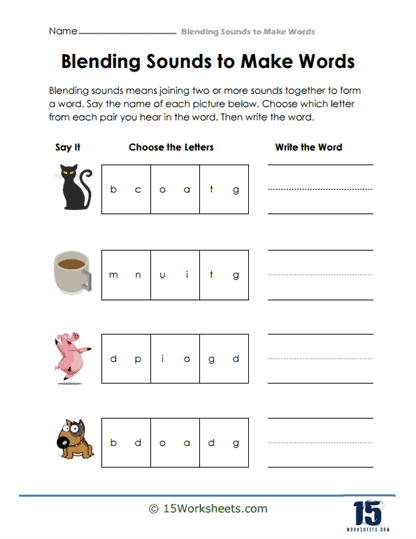
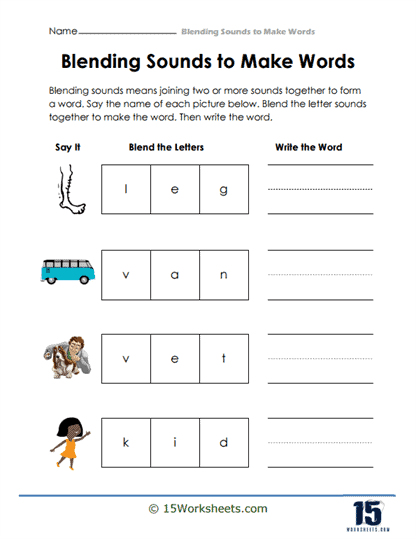
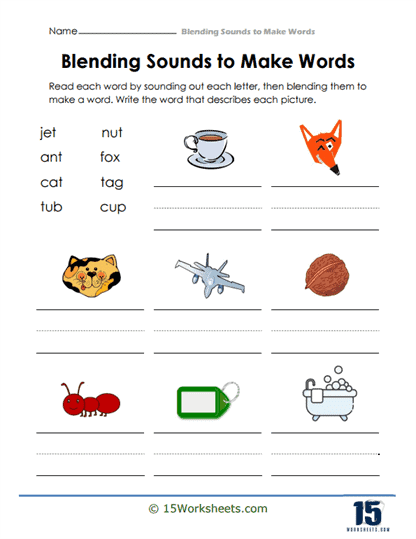
This worksheet has students look at pictures, listen for sounds, and pick the correct letters to build simple three-letter words. It feels a bit like a mini word puzzle where kids slowly realize they already know more sounds than they thought.
Say, Blend, Write
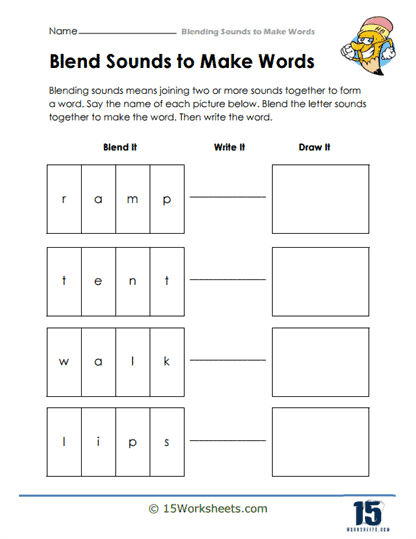
Students practice saying sounds out loud and blending them together to form words connected to pictures. The repetitive “say it, blend it, write it” rhythm works really well for kids who need lots of phonics repetition without getting bored.
Word Builder
This activity gives students several letter choices and asks them to figure out which sounds belong together to create the correct word. It’s great for helping students slow down and really listen instead of rushing to guess.
Visualize It
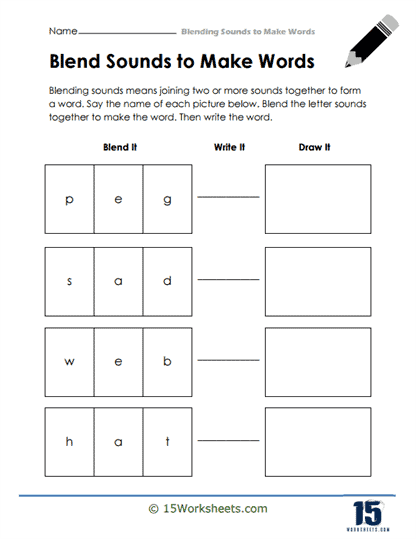
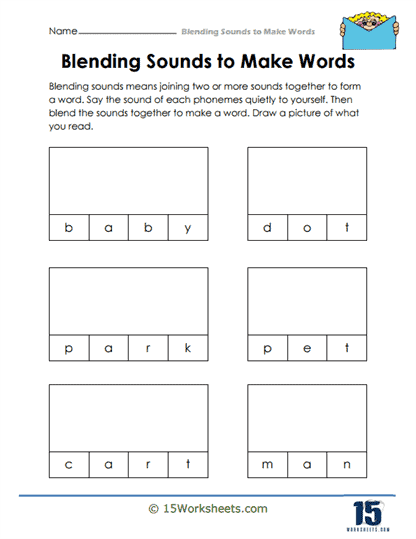
Students blend sounds to build words and then draw pictures to match what they created. The drawing section keeps things creative and gives kids a nice little confidence boost once they successfully read the word.
Joining Sounds
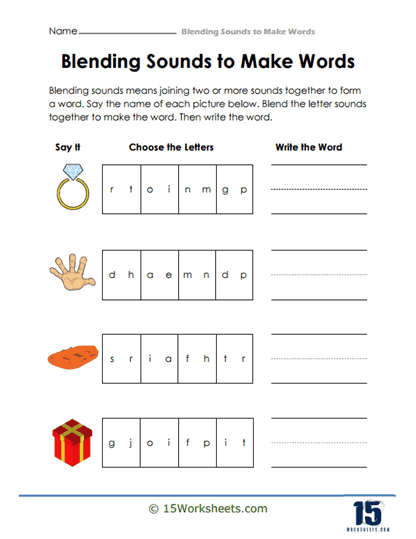
This worksheet focuses on blending four-letter words instead of shorter three-letter ones, which adds just enough challenge for growing readers. Kids usually feel pretty accomplished once they realize they can handle slightly bigger words on their own.
Filling In Phonemes
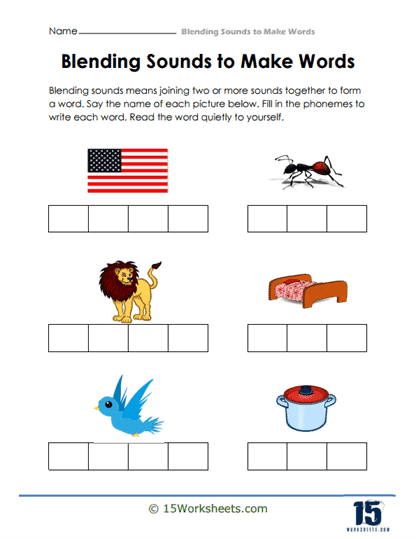
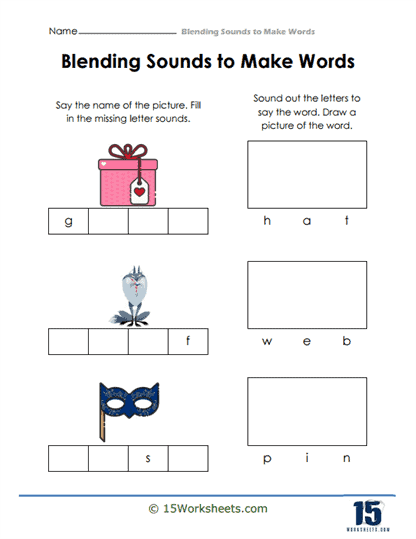
Students fill in missing sounds to complete words while practicing careful listening and phoneme recognition. It’s simple, straightforward, and really effective for reinforcing sound-by-sound reading skills.
Phonemic Awareness
This activity has students blend sounds together and then draw pictures representing the words they created. It combines reading, listening, and creativity in a way that keeps early readers actively involved.
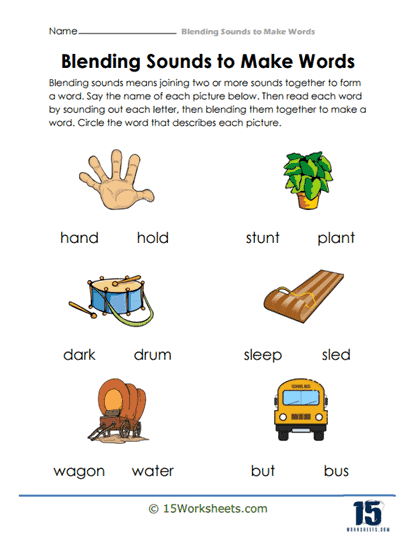
Picture-Word Linking
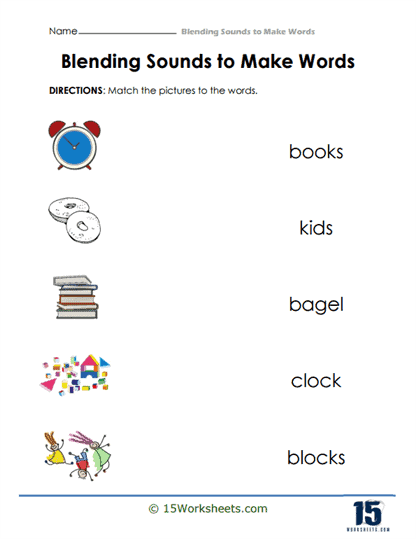
Students match pictures to words by blending sounds carefully and identifying the correct choice. It feels very hands-on and works especially well for visual learners who benefit from strong picture support.
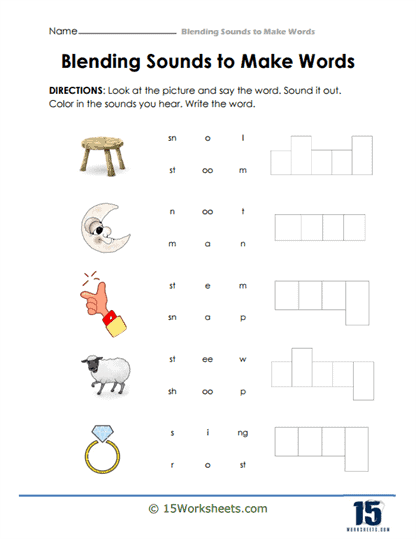
Coloring In Segments
This worksheet gets students coloring individual sounds inside words before writing the completed word themselves. Kids love the coloring aspect, and honestly, it sneaks in a ton of phonics practice without feeling too worksheet-heavy.
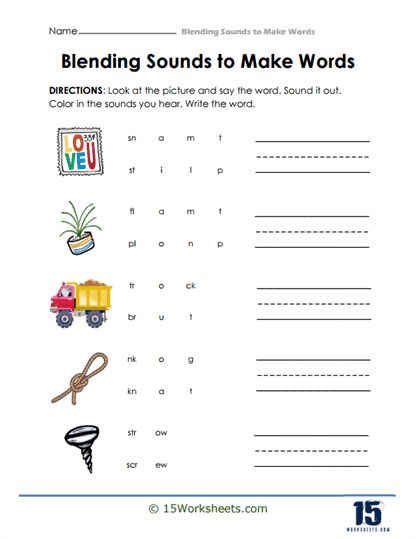
Auditory Analysis
Students study pictures, slowly sound out words, and identify the phonemes they hear before writing the completed word. It’s excellent practice for helping kids connect spoken sounds to written language more confidently.
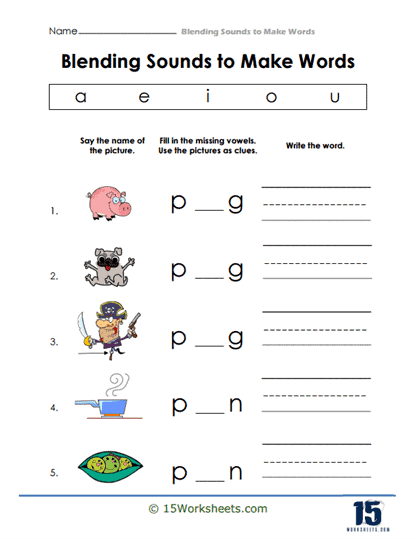
Missing Vowels
This activity focuses on vowel sounds by asking students to complete words using missing vowels as clues. Kids quickly discover vowels may be tiny, but they cause a lot of problems when they disappear.
Take Your Pick
Students sound out words and choose the correct answer from multiple options that match each picture. It turns blending practice into more of a phonics decision-making game than a standard reading drill.
Image Clues
This worksheet asks students to use pictures and phonics skills together to select and write the correct words. It’s nice practice for helping students trust the sounds they hear instead of relying only on memorization.
Connect To The Match
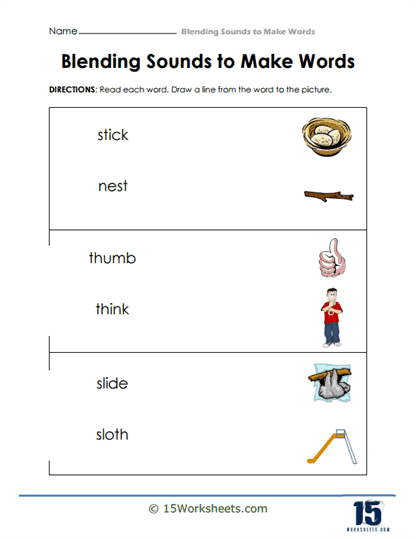
Students read words and connect them to matching pictures using lines. It’s simple in the best possible way and gives early readers lots of quick blending practice without overwhelming them.
Words Meet Art
This activity combines phonics with drawing by having students sound out words and then illustrate them afterward. Honestly, some kids get so excited about the art part they forget they’re doing reading practice the whole time.
What are Blending Sounds?
Blending sounds is the process of taking individual letter sounds and smoothly putting them together to form a complete word. For example, students might hear the sounds “c-a-t” separately and then blend them together to read the word “cat.” It’s one of the most important early reading skills because it helps students move from recognizing letters to actually reading words independently. At first, many kids say each sound slowly and separately, but over time the blending becomes faster and more automatic. Basically, blending is the bridge between knowing letters and becoming a reader.
Young readers use blending constantly when they encounter unfamiliar words. Instead of memorizing every word by sight, students learn how to break words into sounds and piece them together like little language puzzles. These worksheets help strengthen phonemic awareness, which is the ability to hear and work with individual sounds in spoken words. Once students become more confident blending sounds, reading usually starts feeling much less frustrating and much more manageable. It’s one of those foundational skills that unlocks so many other literacy skills later on.