
Fiction Vs Nonfiction Worksheets
About Our Fiction Vs Nonfiction Worksheets
Fiction and nonfiction are two of the most important types of books young readers encounter, and learning the difference between them opens the door to stronger reading skills. Fiction books tell stories that come from an author’s imagination, while nonfiction books share real facts and information about the world. Understanding these categories helps students become more thoughtful readers and more confident when choosing books. It’s a foundational literacy skill that students will use throughout their academic journey.
This collection of Fiction Vs Nonfiction Worksheets gives students plenty of opportunities to explore genre characteristics in fun and engaging ways. Through sorting activities, genre investigations, book title analysis, and evidence-based reasoning tasks, learners gradually build a deeper understanding of how different texts are organized and why authors write them. Each worksheet approaches the topic from a slightly different angle, helping students strengthen comprehension without feeling repetitive. The variety keeps learning fresh while reinforcing key concepts.
Beyond reading skills, these worksheets help students become better consumers of information in everyday life. Children regularly encounter stories, articles, websites, biographies, and informational books, and understanding the difference between factual content and imaginative storytelling is increasingly important. As students practice identifying fiction and nonfiction, they also learn how information is presented, how evidence is used, and how authors communicate ideas. That knowledge supports stronger critical thinking both inside and outside the classroom.
About Each Worksheet
Book Sorter
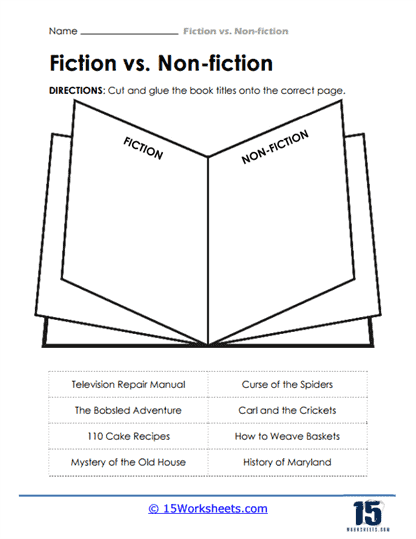
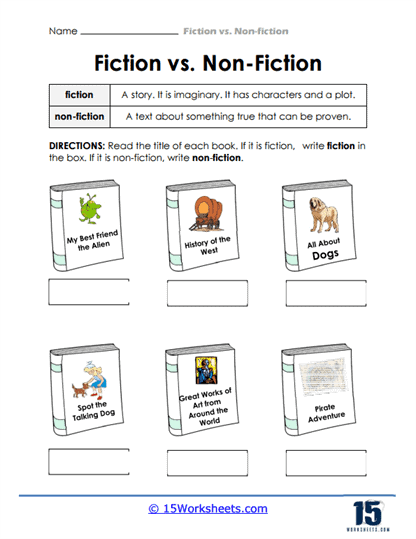
This worksheet feels a bit like being the librarian in charge of a busy bookshelf. Students study different book titles and decide whether each one belongs in the fiction or nonfiction section. Along the way, they learn to look for clues hidden in topics and wording rather than making random guesses. It’s a simple but effective way to introduce genre recognition to developing readers. Try using it as a warm-up before a library visit for some extra real-world practice.
Genre Detective
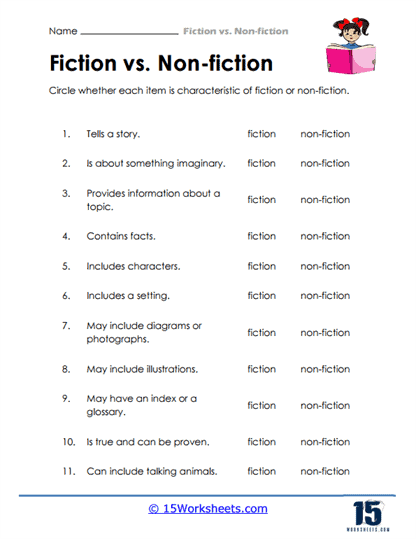
Students put on their detective hats and investigate the clues that make fiction and nonfiction different from one another. Instead of focusing on specific books, they examine characteristics like facts, settings, characters, and illustrations. The activity encourages close thinking about what makes each type of text unique. It’s a great conversation starter for small groups or literacy centers. By the end, students will feel like they’ve cracked the genre code.
Feature Finder
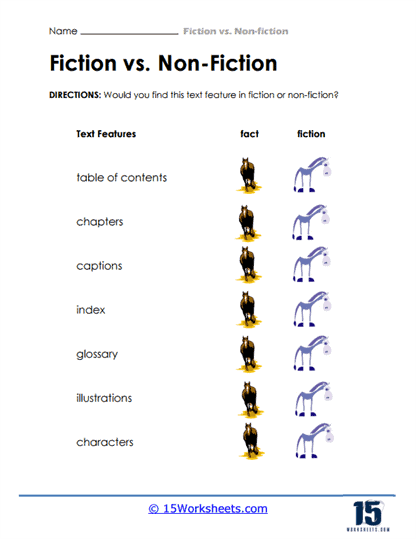
This worksheet zooms in on the special features that help readers navigate different kinds of books. Students sort elements such as glossaries, captions, tables of contents, and characters into the genre where they belong. The focus on text structure helps learners notice details they may otherwise overlook. Teachers often find this activity especially helpful before research projects or informational reading units. It’s a wonderful way to make book features feel meaningful and memorable.
Purpose Match
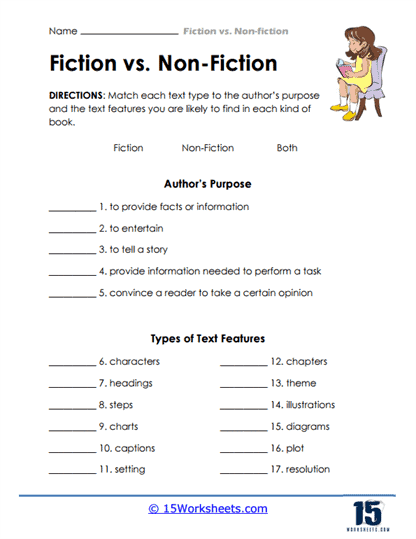
Here, students explore the reasons authors write and how those purposes connect to fiction, nonfiction, or both. They sort features and ideas while thinking about whether a text aims to inform, entertain, or sometimes do a little of both. The activity encourages students to look beyond surface details and consider a book’s bigger goal. It naturally leads to thoughtful classroom discussions about reading and writing. Students often enjoy discovering that some elements can fit more than one category.
Genre Explorer
This worksheet gives students the chance to become genre experts by explaining fiction and nonfiction in their own words. After writing their definitions, they bring their understanding to life by designing example book covers. The combination of writing and drawing keeps the activity creative while reinforcing important literacy concepts. It works equally well as an independent assignment or a review activity. The finished pages also make a colorful classroom display.
Book Judge
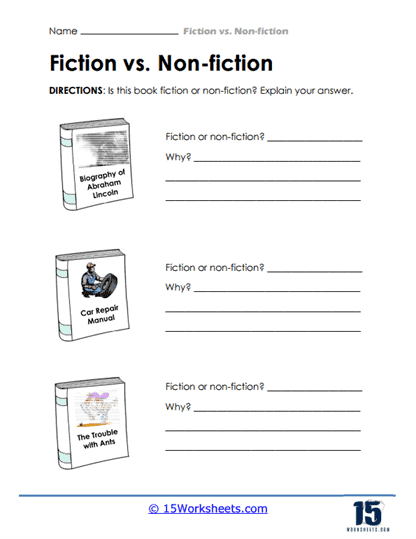
Students become literary judges in this worksheet as they examine book titles and defend their genre decisions. The focus isn’t just on choosing fiction or nonfiction-it’s on explaining why. That extra step encourages thoughtful reasoning and helps students move beyond simple recognition. Teachers will appreciate how naturally it promotes evidence-based thinking. It’s a fantastic activity for strengthening both comprehension and written responses.
Genre Sort
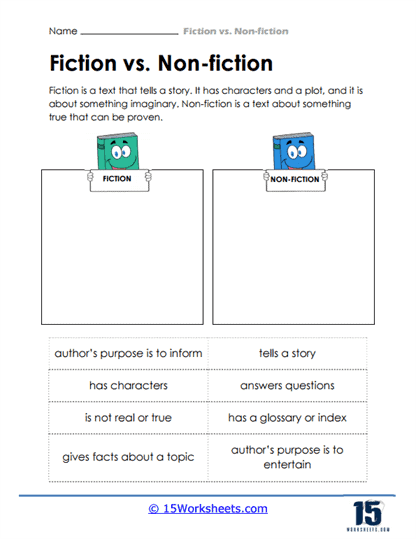
This hands-on sorting activity asks students to organize characteristics into fiction and nonfiction categories. As they sort features like storytelling, facts, glossaries, and characters, students begin seeing clear patterns between the genres. The task makes abstract reading concepts feel much more concrete. It’s especially useful for reinforcing lessons students have already learned. By the end, genre differences tend to feel much easier to remember.
Story Sleuth
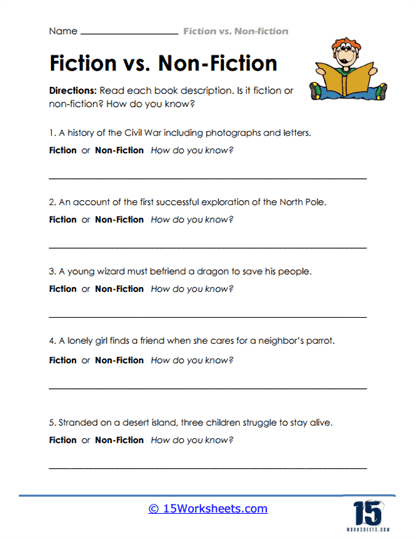
Students step into the role of reading investigators as they analyze short book descriptions. Each description contains clues that help reveal whether the text is fiction or nonfiction. Learners must make a decision and then explain the evidence that led them there. The realistic scenarios help students apply their knowledge in a meaningful context. It’s a fun challenge that feels more like solving mysteries than completing a worksheet.
Bookshelf Sort
This worksheet turns genre practice into a bookshelf-organizing adventure. Students examine book titles and decide where each one belongs based on its topic and purpose. The activity encourages careful thinking and helps students avoid relying on assumptions. It’s a straightforward task that builds confidence through repetition and practice. Many students enjoy imagining themselves arranging books in a real library.
Compare Contrast
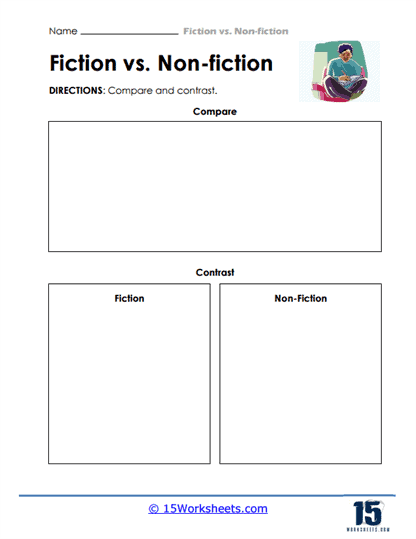
Students take a deeper dive into genre study by examining how fiction and nonfiction are alike and different. Using a structured format, they organize similarities and differences in a clear and visual way. This encourages higher-level thinking and helps learners see relationships between ideas. It’s a useful bridge between basic identification and more advanced reading analysis. The worksheet also provides excellent preparation for comparison writing activities.
Genre Classifier
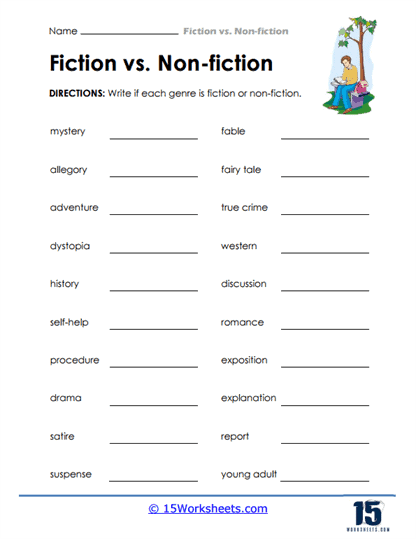
This worksheet broadens students’ understanding by introducing a variety of genre names. Learners determine whether each genre belongs under the fiction or nonfiction umbrella, helping them build a larger reading vocabulary. It’s a great reminder that fiction and nonfiction include many different subcategories. Students often discover genres they’ve never heard of before. The activity can spark curiosity about new books and reading interests.
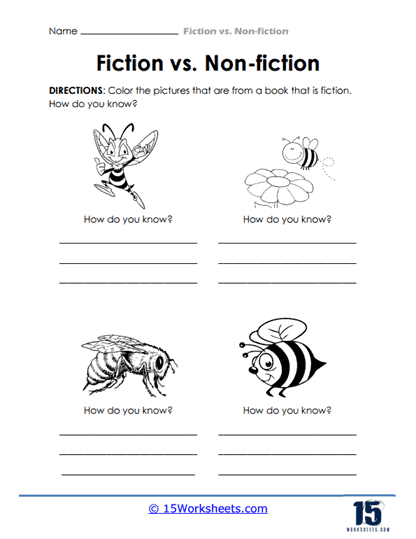
Picture Proof
Instead of focusing on words, this worksheet challenges students to use visual clues. Learners study illustrations and determine which image belongs in a fiction book because it represents something imaginary. They then explain their reasoning, adding an important layer of critical thinking. The visual approach makes the lesson especially accessible for younger learners. It’s a refreshing change of pace that still reinforces key genre concepts.
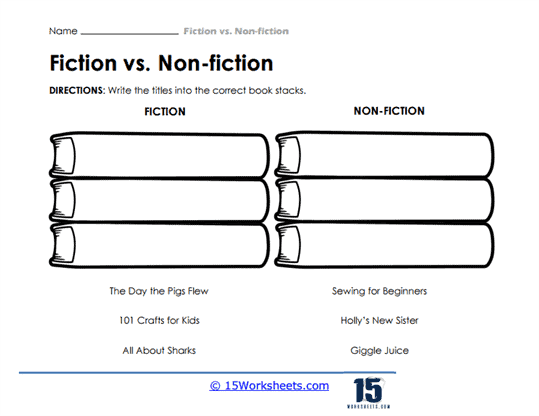
Stack Sorting
Students organize a collection of book titles into separate fiction and nonfiction stacks. While the task sounds simple, it encourages careful attention to topics, wording, and purpose. The sorting format makes genre differences easy to see at a glance. It’s a useful review activity that works well independently or with partners. Best of all, it helps build confidence through repeated exposure to genre clues.
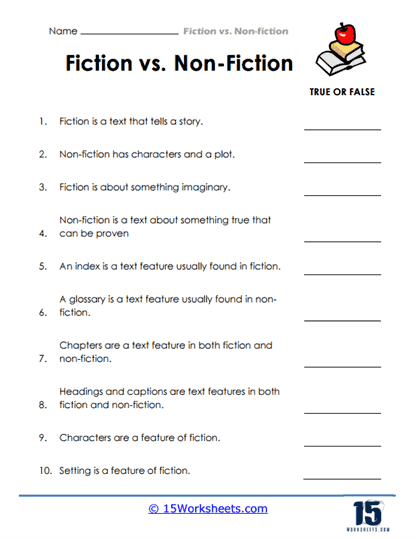
Truth Tracker
This worksheet transforms genre review into a true-or-false challenge. Students evaluate statements about fiction and nonfiction and decide whether each one is accurate. The format encourages close reading and helps uncover any misconceptions students may still have. It’s an excellent check for understanding after a genre unit. Learners often enjoy the game-like feel of testing their knowledge.
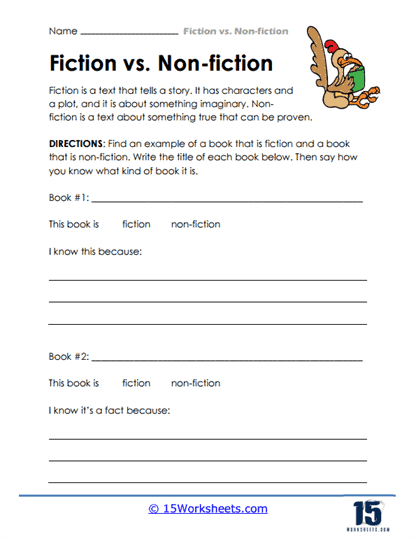
Book Evidence
This worksheet sends students into the real reading world to find examples of fiction and nonfiction books. After choosing their books, they identify the genre and explain the evidence supporting their decisions. The activity helps students transfer classroom learning to books they actually encounter. It also strengthens writing skills by requiring clear explanations and reasoning. It’s a practical and meaningful way to wrap up a study of genres.
The Genre Fiction vs. Nonfiction
Fiction and nonfiction are two main genres of writing, and the biggest difference between them is that fiction is imagined, while nonfiction is factual. Fiction includes stories that come from an author’s imagination. These texts feature invented characters, settings, and events, even if they may seem realistic. Nonfiction, on the other hand, is based on real people, real places, and true information. When readers know whether a text is fiction or nonfiction, they can better understand what kind of reading experience to expect-much like knowing whether they are about to watch a fantasy movie or a documentary.
Another key difference is their purpose. Fiction is primarily written to entertain, engage emotions, and spark imagination through storytelling. Readers might follow exciting adventures, solve mysteries, or explore imaginary worlds. Nonfiction is written to inform, explain, or teach. Readers use nonfiction texts to learn about topics, discover facts, and gain a deeper understanding of the world around them. Both genres are important, but they help readers in different ways.
Recognizing the differences between fiction and nonfiction also strengthens reading skills. Students learn to identify whether information is meant to tell a story or present facts, understand an author’s purpose, and use different strategies for each type of text. Whether reading about a magical dragon or researching ocean animals, knowing the genre helps readers approach the text with the right expectations and become more confident, thoughtful readers.