
Poetry Worksheets
All About These 15 Worksheets
Poetry can sometimes feel mysterious, like it’s speaking a secret language only poets understand. These worksheets step in as friendly guides, breaking down the parts of poetry into approachable, bite-sized activities. From definitions to rhythm games, each page takes away the intimidation factor and replaces it with curiosity and fun. Students move from learning the basics all the way to experimenting with their own verses, building confidence step by step.
This collection makes poetry less about memorizing abstract terms and more about truly feeling how words create music, emotion, and meaning. By comparing poetry with prose, diving into sonnets, and even playing around with myths about poetry, learners get a full range of practice. It’s a balanced mix of analytical thinking and creative expression, so kids aren’t just learning about poetry-they’re learning how to live it.
And beyond the worksheets themselves, this collection encourages students to connect with the cultural and real-world importance of poetry. They see how quotes can carry deep meaning, how structure shapes ideas, and how rhythm is present in songs, chants, and even daily conversations. Practicing with these worksheets makes poetry feel less like a classroom assignment and more like a living art form that students can use to express themselves.
Have a Look Inside Each Worksheet
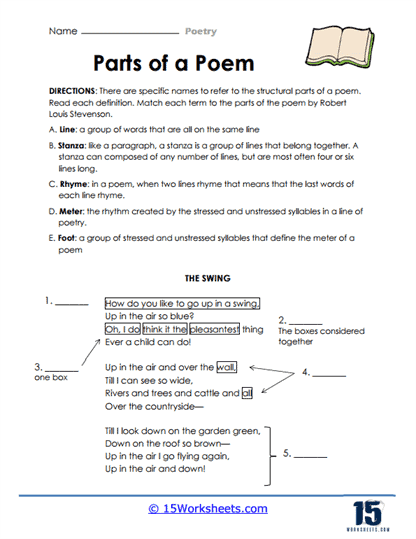
Terms and Definitions
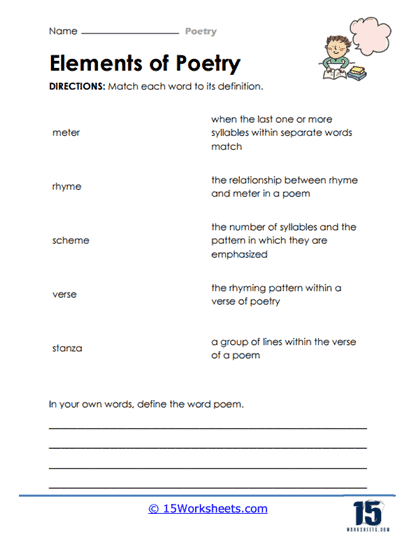
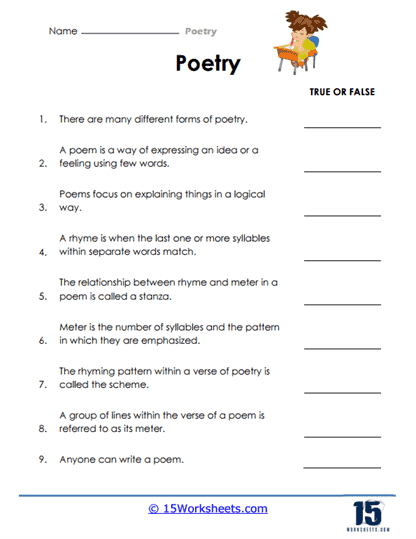
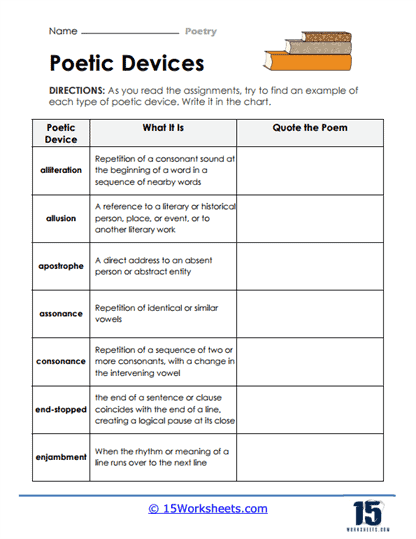
This worksheet introduces students to key poetic terminology in a clear, straightforward way. Learners get familiar with definitions of things like rhyme, meter, and imagery. It’s like learning the building blocks of a poem. This sheet helps students feel confident by demystifying the language of poetry.
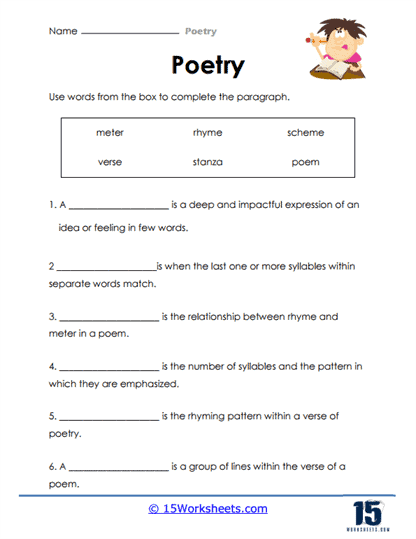
Matching The Meanings
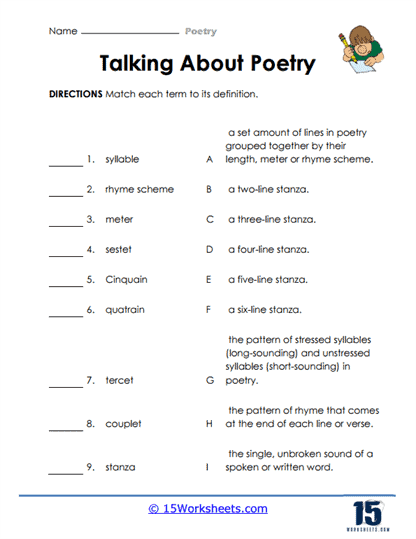
Students pair poetic terms with their correct definitions. It’s a mix-and-match adventure that sharpens understanding through fun. This kind of activity strengthens memory and vocabulary in a hands-on way. It sets up students to recognize literary terms with ease.
Resonance Revealed
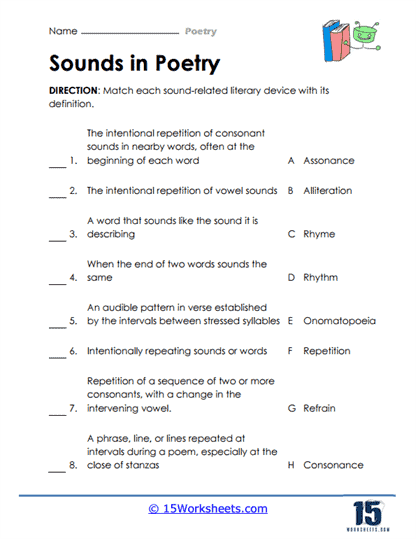
This worksheet explores how poems create emotional echoes through imagery and sound. Students are guided to notice how words “resonate” with meaning and feeling. It’s like tuning into the poem’s inner music. This activity deepens emotional engagement and sensory awareness.
Verses Or Paragraphs
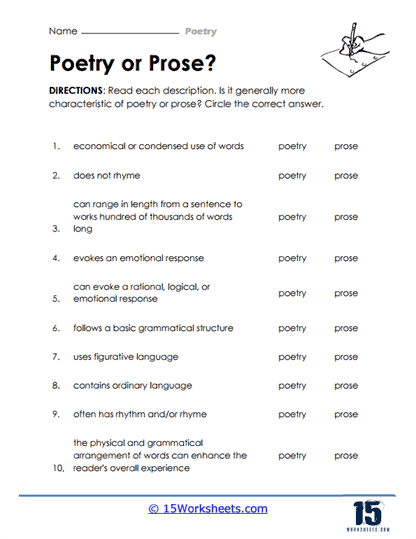
This activity challenges students to distinguish poetic form (verses) from prose (paragraphs). It’s a bit like a spotting-game-what makes lines in a poem unique? This sharpens their recognition of form and structure. It helps students see the visual and rhythmic identity of poetry vs. prose.
What Sets Them Apart
This worksheet helps students compare poems to other types of writing. They explore what features make poetry unique-rhythm, line breaks, figurative language, etc. Think of it as an exploration of poetry’s personality. It builds awareness of poetic identity and distinctiveness.
Navigating Poetic Terrain
Students map out different elements of poems-like tone, structure, and imagery-as if navigating a landscape. It turns analysis into an adventure. This encourages deeper reading and interpretive skills. It helps students explore poems with curiosity and direction.
Mastering Metrical Magic
This one focuses on rhythm and meter-how poems create beat and musicality. Students learn to identify patterns like iambic meter. It’s basically a rhythm workshop for budding poets. It enhances their sense of pace and poetic flow.
From Words To Wisdom
This worksheet encourages students to pull deeper meaning from poems-moving from literal words to insightful understanding. It’s a guided reflection that asks “what is the poem really saying?” It builds critical thinking and interpretation. It helps students climb from surface reading to thoughtful insight.
Truth Or Myth?
Students examine common poetic claims and decide if they’re true or misconceptions. It’s a myth-busting challenge that gets them thinking. A playful way to clear up misunderstandings about poetry. It promotes critical thinking and skepticism in a fun format.
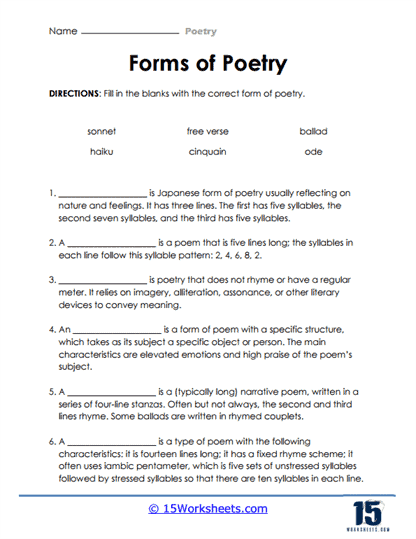
Sonnet Sleuths
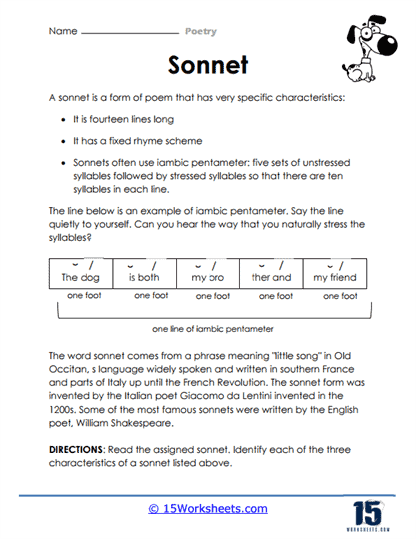
This invites students to investigate sonnets-spotting structure, rhyme, and meter. A bit like being a detective in verse. Great for understanding formal poetry structures. It encourages focused attention on poetic form.
Analyzing Structure And Message
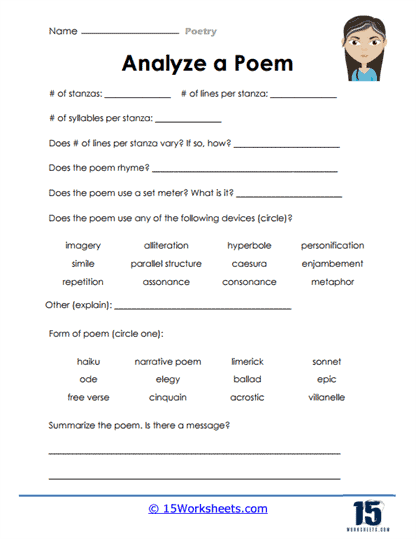
Here, students dissect poems by looking at how form and content work together. They analyze how structure supports meaning. It’s like decoding the blueprint of a poem. It builds understanding of how poetic construction shapes meaning.
Quotes That Speak Volumes
This worksheet uses impactful lines-quotes-from poems to spark discussion and analysis. Students explore how a single line can carry powerful meaning. It’s like capturing lightning in a bottle. It enhances appreciation of poetic precision.
Build-A-Verse
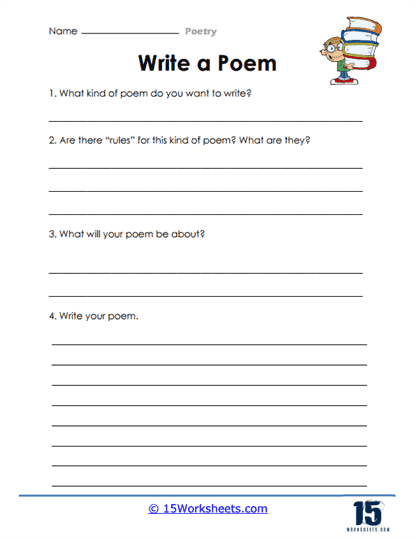
Students get creative by constructing their own lines of poetry using prompts or patterns. It’s hands-on and inventive, encouraging them to play with language. It gives a creative outlet within guided structure. It boosts poetic confidence and creative expression.
Unrestrained Poetry
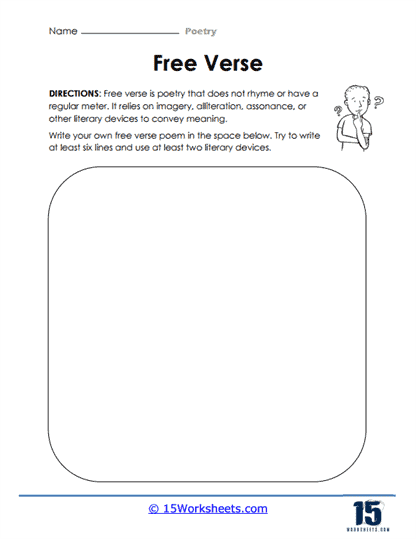
This worksheet invites free-form writing-encouraging students to break boundaries and express themselves freely in verse. It’s a creative playground for words. No rules, just expression. It nurtures confidence and individual poetic voice.
Poetry Passion
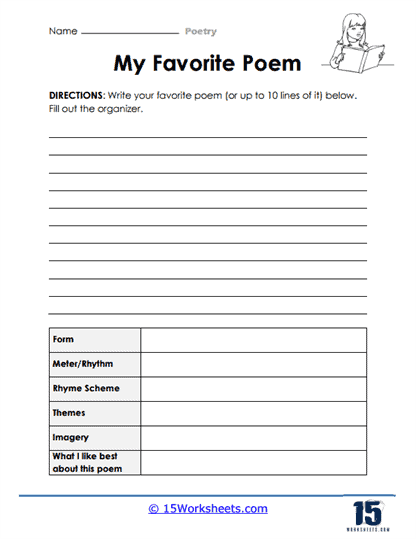
A celebration of student emotion and favorite forms-this worksheet encourages reflection on what kind of poetry students love and why. It’s like a poem-style love letter. Promotes personal connection and enthusiasm. It cultivates lifelong fondness for poetry.
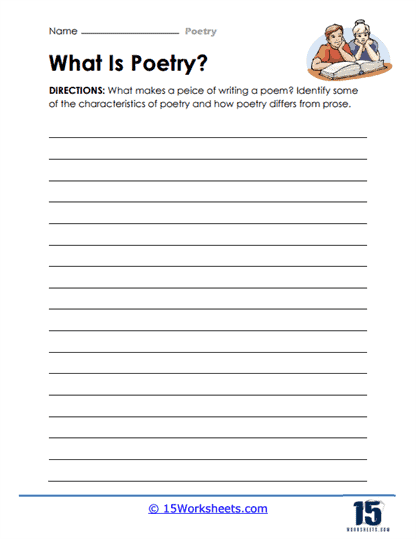
What is Poetry?
Poetry is like playing with words to paint pictures in your mind, tell a story, or share a feeling. It’s like when you play with toys and create your own world; poets use words to create their own worlds too! Let’s take a look at some famous poems that you should be familiar with:
Example #1 – Twinkle, Twinkle, Little Star by Jane Taylor
Twinkle, twinkle, little star,
How I wonder what you are!
Up above the world so high,
Like a diamond in the sky.
This poem paints a picture of a star in the night sky. When we read it, we can imagine a bright, sparkling star way up high!
Example #2 – Rain by Shel Silverstein
The rain is raining all around,
It falls on field and tree,
It rains on the umbrellas here,
And on the ships at sea.
This poem gives us the feeling of a rainy day. We can imagine drops of rain falling everywhere, making everything wet!
Example #3 – A Bear in There by Anonymous
There’s a bear in there,
And a chair as well,
People with games,
And stories to tell.
This poem paints a picture of a cozy room with a bear, a chair, and some people. It feels like a fun place to be, maybe a playroom or a reading corner!
So, poetry is a special way of using words to make us see, feel, and think different things!