
Close Reading Worksheets
About Our Close Reading Worksheets
Close reading is like turning on a magnifying glass for stories – it helps students slow down, look closer, and uncover layers of meaning they might have missed the first time. Instead of racing through a passage, students learn to notice details, question choices, and think about why the author wrote something the way they did. These worksheets make that process approachable by offering fun, bite-sized activities that guide readers step by step.
This collection is designed to take the mystery out of close reading and turn it into an adventure. With every worksheet, students practice comprehension, inference, vocabulary, and text analysis in engaging, story-driven ways. From unicorn rainbows to basketball buzzer-beaters, the worksheets use imaginative contexts to help students see that reading closely isn’t just for textbooks – it’s a skill for every kind of story.
Best of all, these worksheets show how close reading connects stories to real life. Whether it’s teamwork on the court, leadership in the treetops, or courage under pressure, the lessons inside each passage encourage thoughtful reflection. By practicing these skills, students not only become stronger readers but also more curious thinkers who can connect literature to their own experiences and the wider world.
About Each Worksheet
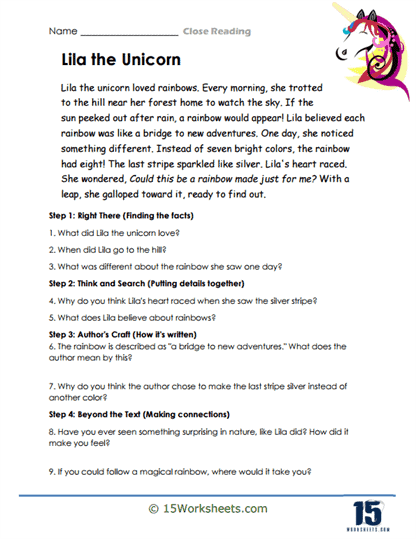
Rainbow Quest
This magical worksheet introduces Lila the Unicorn and her adventure with a rainbow that has a mysterious silver stripe. Students practice finding facts, making inferences, and noticing symbolic meanings like rainbows as bridges. The story encourages imaginative thinking while still building critical comprehension skills. It’s perfect for sparking curiosity and connecting personal experiences to literature. Plus, who wouldn’t want to chase a unicorn’s rainbow?
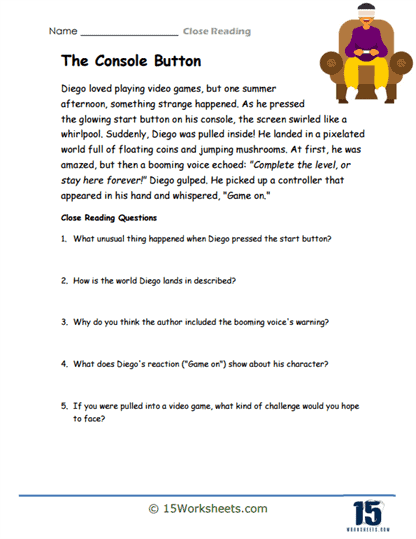
Pixel Quest
In this adventure, Diego gets sucked into his own video game and must complete the level to escape. Students practice analyzing events and character reactions while making inferences about warnings and dialogue. The pixelated world makes the reading feel like play while still building comprehension. Kids can even imagine what challenges they might face inside a game. It’s reading practice with a gamer’s twist!
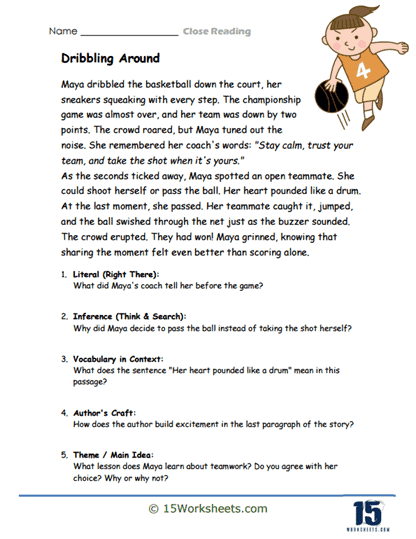
Team Triumph
This worksheet follows Maya in the nail-biting final seconds of a basketball championship. Students learn to notice vocabulary, analyze emotions, and explore themes of teamwork and sportsmanship. The questions encourage both literal understanding and deeper inferences about choices. It’s a great way to show how literature mirrors real-life decisions and values. And who doesn’t love a buzzer-beater win?
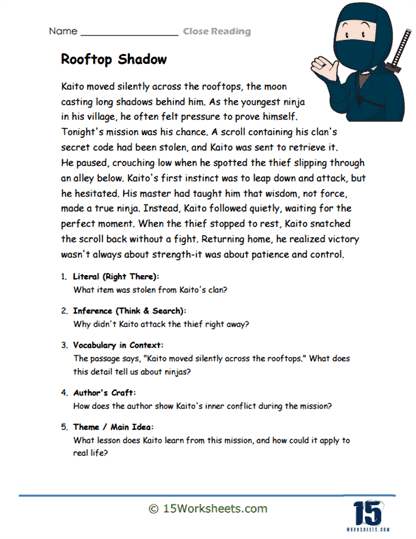
Shadow Mission
Kaito the ninja faces a challenge where patience and strategy are more powerful than force. Students practice comprehension, vocabulary, and inference as they analyze his choices and internal conflict. The worksheet also invites reflection on values like wisdom and self-control. It feels exciting and action-packed, but the real lesson lies in quiet strength. A sneaky way to teach deep thinking through ninja moves!
Nutty Cracker
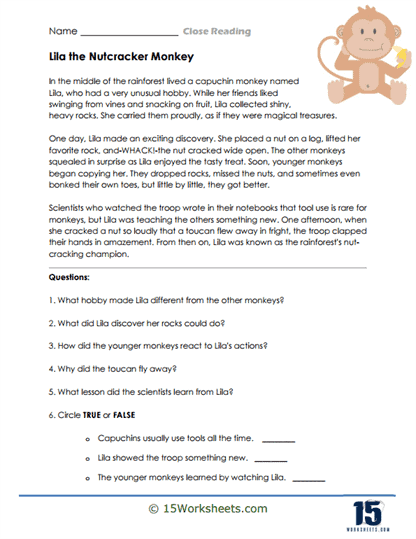
Meet Lila the monkey, who discovers that rocks make perfect nut-cracking tools – and soon her troop learns too. Students practice cause-and-effect, details, and drawing conclusions about character actions. The story connects to science while still building strong literacy skills. It’s all about how learning spreads and how one character’s actions change others. A nutty but brilliant way to practice comprehension!
Bow Tie Boldness
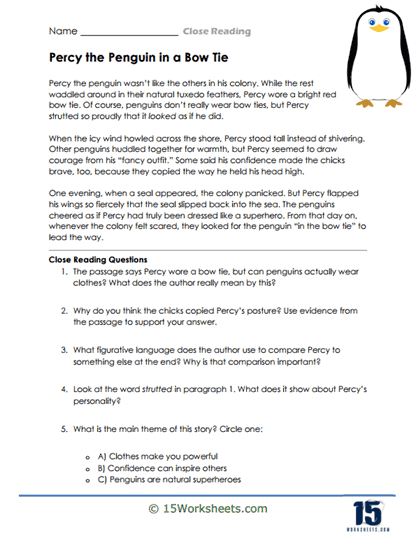
Percy the penguin struts with confidence as if wearing a bow tie, inspiring his colony to be brave. Students learn to recognize figurative language, symbols, and themes of leadership. The playful imagery makes interpretation feel fun instead of tricky. It shows how confidence can be contagious, even in penguin colonies. A stylish spin on building inference skills!
Skyward Koala
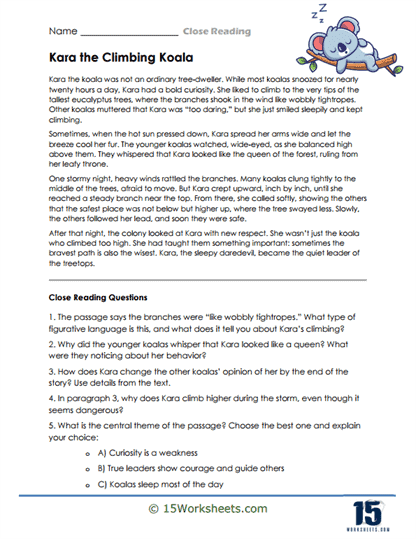
Kara the koala loves climbing higher than anyone else, even in the middle of a storm. Students practice citing evidence and analyzing themes like courage and leadership. The worksheet emphasizes resilience while still focusing on reading comprehension. It’s inspiring to see bravery tied to text analysis. Who knew koalas could climb into leadership roles?
Character Compare
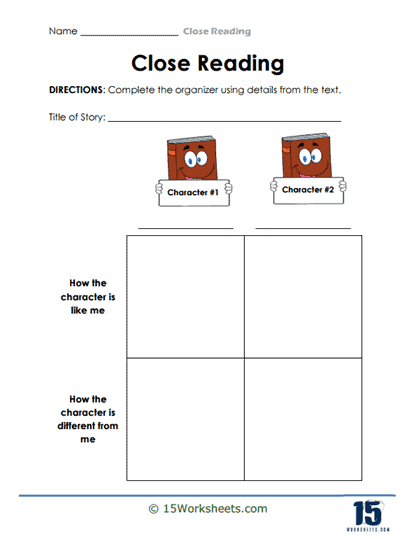
This worksheet invites students to compare two characters to themselves in a handy chart. They reflect on similarities and differences, building empathy while sharpening analysis. The activity develops comprehension and self-awareness at the same time. It’s like holding up a mirror between you and a character. A fun way to say, “Hey, we’re more alike than I thought!”
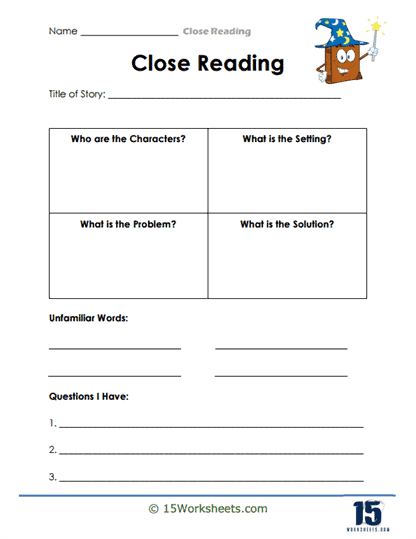
Story Map
Here, students chart characters, setting, problem, and solution to break down a story. They also record unfamiliar words and questions along the way. The format helps even complex texts feel clear and organized. It’s a roadmap to better comprehension. Think of it as GPS for stories!
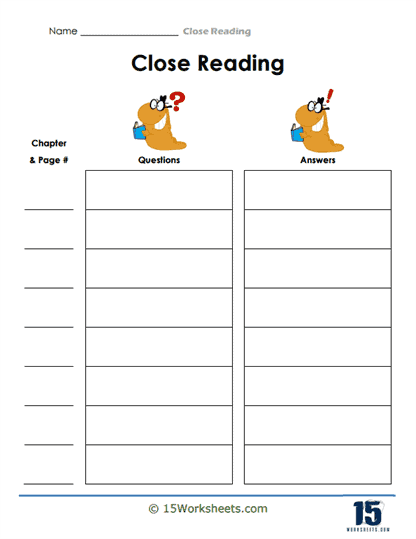
Question Quest
Students create their own questions while reading and then go back to find the answers with page numbers. This builds habits of evidence-based reasoning and keeps reading interactive. It’s a fantastic way to encourage deeper curiosity. The activity makes students feel like detectives in the text. Every good quest starts with the right questions!
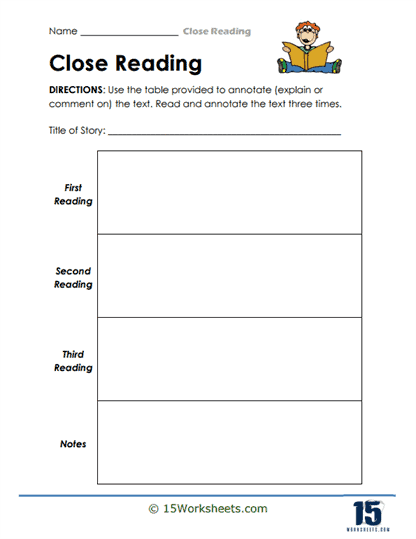
Triple Take
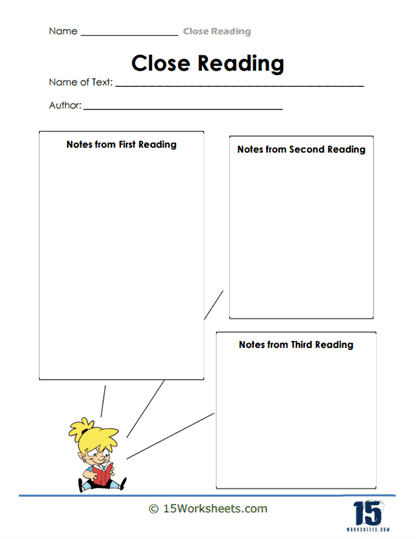
This worksheet trains students to read the same passage three times, each with deeper notes and observations. They discover how rereading adds new layers of understanding. It builds patience and persistence in close reading. The notes show growth with each round, making progress visible. Third time’s the charm for comprehension!
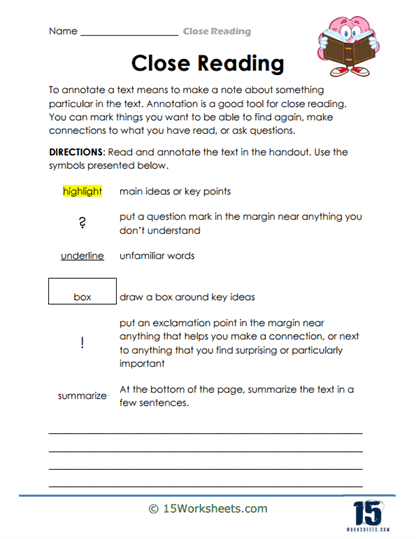
Annotation Guide
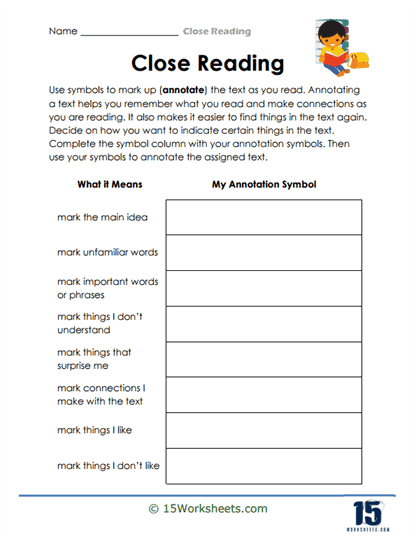
Students learn a system of symbols to mark main ideas, surprises, confusing parts, and connections. They also summarize at the bottom of the page to pull everything together. The guide makes annotation feel like a code-breaking activity. It’s fun, structured, and very practical for active reading. Think of it as a cheat sheet for unlocking any text!
Annotation Log
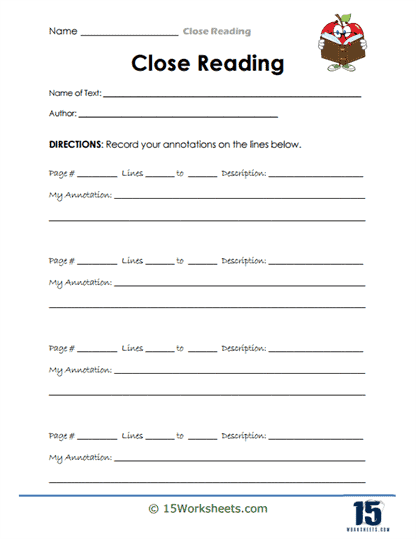
This worksheet offers a neat system for recording annotations with page and line numbers. Students write observations and explanations to keep their thinking organized. It emphasizes precision and accuracy in text analysis. The structured log keeps reading reflections clear and evidence-based. It’s like a diary of discoveries hidden in the text!
Symbol System
Students design their own symbols for marking details, surprises, and questions while reading. This gives them ownership of their annotation style. It makes the process fun and personal while still keeping it purposeful. The activity helps students engage more actively with the text. Basically, they get to invent their own secret reading code!
Comment Capture
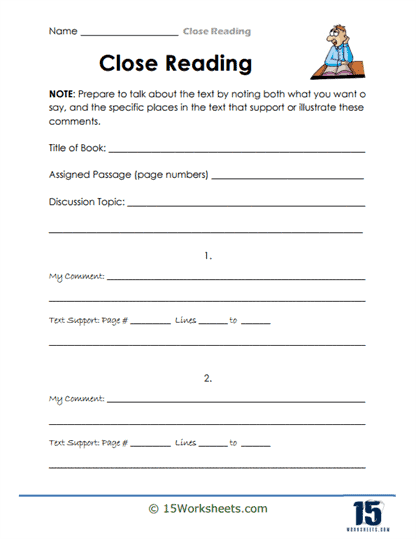
This worksheet gets students ready for group discussions by writing down comments with supporting evidence. They cite page numbers and lines to back up their ideas. It’s a great way to prepare for thoughtful conversations. The activity builds confidence in sharing text-based opinions. Perfect for turning shy readers into discussion leaders!
Reader’s Lens
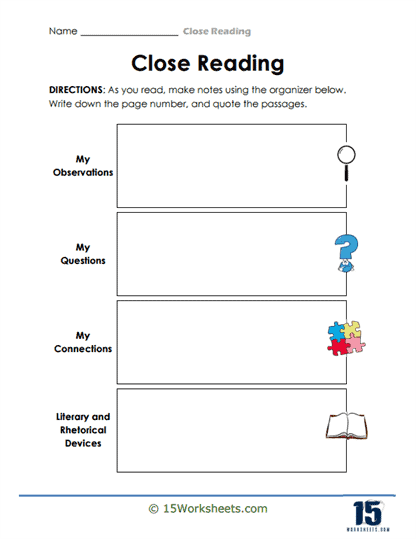
Students jot down observations, questions, connections, and notes on literary devices as they read. They support each idea with quotes and page numbers. It encourages them to look at texts from multiple perspectives. The activity deepens comprehension and appreciation of author techniques. Think of it as trying on different glasses to see stories in new ways!
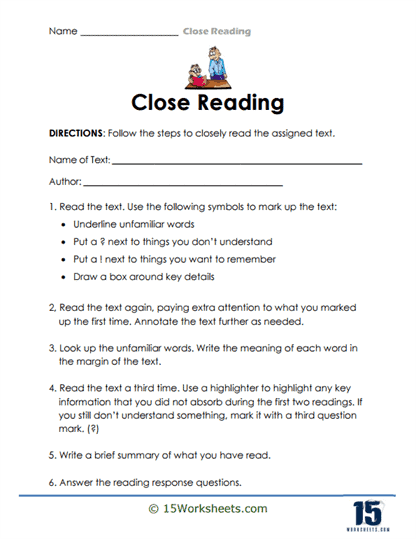
Close Steps
This worksheet walks students through a six-step close reading process, from annotation to summarizing. Each stage helps them move from first impressions to deeper comprehension. The structured process builds strong study habits. It also reinforces vocabulary, inference, and summary skills. It’s like a recipe for successful reading – just follow the steps!
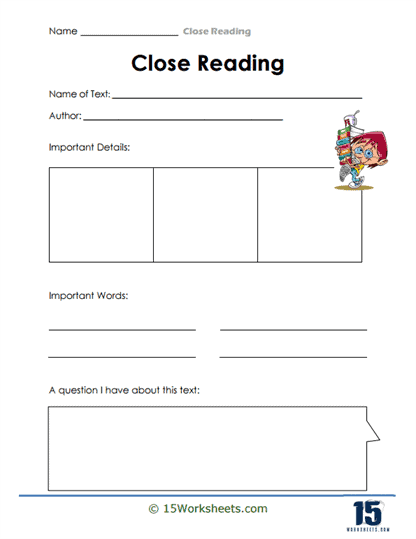
Detail Dig
Here, students pull out important details, list key words, and ask one good question about the text. The boxes make the process simple and focused. It trains them to notice main ideas and supporting details. The questioning piece encourages curiosity and critical thinking. Digging into details has never been more fun!
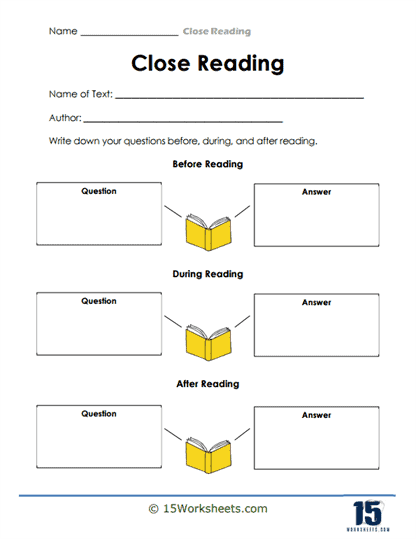
Question Journey
This worksheet organizes questions into before, during, and after reading. Students predict, analyze, and reflect as they move through the stages. The process makes reading feel more interactive and purposeful. It’s a great way to track understanding as it grows. Every journey is better when you bring questions along!
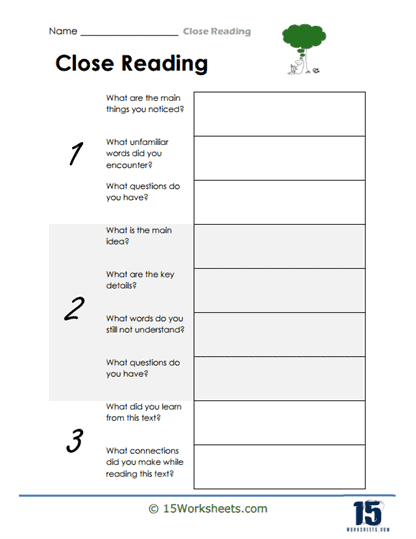
Reading Roots
Students follow a three-stage process of noticing, analyzing, and reflecting on a text. Each stage asks for details, main ideas, and connections. This organization makes comprehension feel clear and manageable. It also strengthens retention and deeper understanding. Roots help texts grow in students’ minds!
Layered Notes
Students take notes across three different readings of the same passage. They see firsthand how understanding deepens each time. The activity builds persistence and critical thinking. It encourages students to look for new meaning even in familiar words. It’s like peeling an onion – but way less teary!
Double Focus
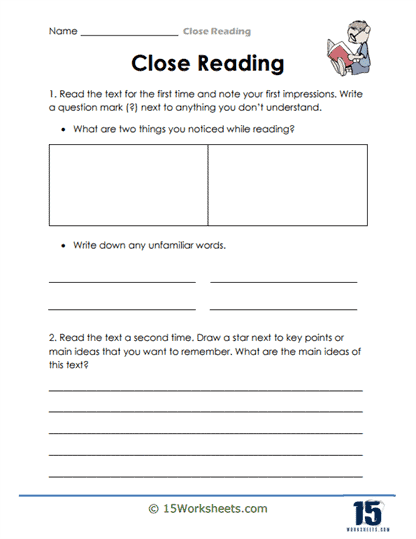
This worksheet splits first and second readings into different tasks. Students note observations and questions the first time, then star important ideas the second time. The process helps them move from surface understanding to deeper comprehension. It’s structured yet simple for readers of all levels. A double take that pays off in big learning!
What is Close Reading?
Close reading is the art of slowing down and giving a text your full attention – like savoring every bite of your favorite snack instead of rushing through it. Instead of reading just to “get it done,” close reading asks you to pause, notice, and question what’s happening in the words. It’s not about speed but about depth, and it often feels like solving a puzzle with the clues hidden in plain sight.
This skill matters because it helps us unlock meaning, spot details, and understand not only what a text says but how it says it. Authors make choices about words, symbols, and structure, and close reading helps us appreciate those choices. Whether we’re looking at a poem, a short story, or even an article, close reading makes us more thoughtful, curious readers.
In the bigger picture, close reading builds habits that stretch far beyond English class. It sharpens critical thinking, makes us stronger writers, and improves how we communicate ideas. With practice, students learn to connect what they read to the world around them and to their own experiences. It’s like a superpower for reading, writing, and learning about life itself.