
Reading for Meaning Worksheets
All About These 15 Reading for Meaning Worksheets
Reading words on a page is one thing. Understanding what those words really mean and connecting them to larger ideas is something else entirely. These worksheets help students move beyond simply finishing a passage and encourage them to actively engage with what they’re reading. Through questioning, predicting, summarizing, visualizing, and making connections, students learn how to become thoughtful readers who interact with a text instead of just moving through it.
What makes this collection especially valuable is that it focuses on the habits strong readers naturally use. Good readers ask questions, make predictions, connect ideas to their own experiences, and stop to think when something doesn’t make sense. These worksheets help students practice those skills step by step. Whether they’re exploring story elements, analyzing themes, or reflecting on their own understanding, each activity encourages deeper comprehension and stronger critical thinking.
Learning to read for meaning benefits students across every subject area. Whether they’re reading literature, science articles, historical documents, or informational texts, the ability to think critically about what they’re reading helps them learn more effectively. These worksheets build confidence, strengthen comprehension, and help students develop the tools they need to become independent, engaged readers for years to come.
About Each Worksheet
Making Meaningful Connections
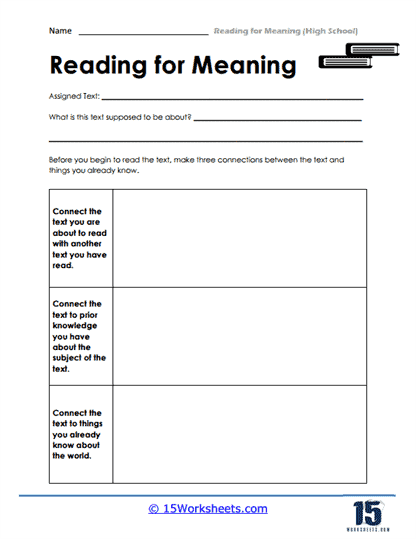
Strong readers naturally connect what they’re reading to things they already know. This worksheet helps students make those connections before they even begin the text, linking the topic to past reading experiences, personal knowledge, and real-world understanding. It’s a simple strategy that often makes comprehension much easier.
Cross-Textual Linkages
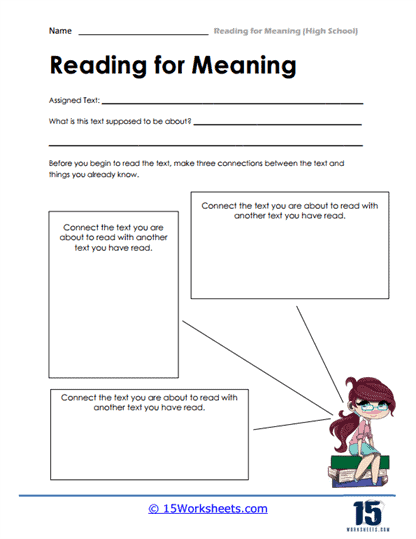
Every text becomes more meaningful when students can connect it to other things they’ve read or learned. This activity encourages them to draw those connections before diving into the passage. The result is a richer reading experience and a stronger understanding of the material.
Pre-Reading Insights
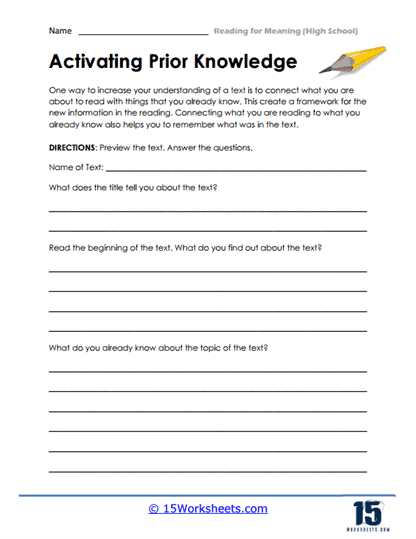
Sometimes a title alone can reveal a surprising amount of information. This worksheet encourages students to preview the text, make observations, and think about what they already know before reading. It’s a great way to build curiosity and set a purpose for reading.
Guided Questioning
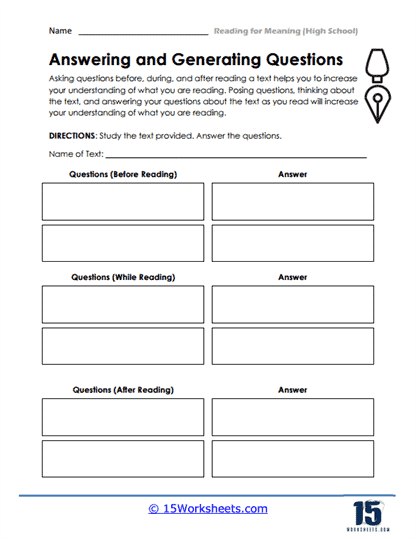
Good readers ask questions constantly, and this worksheet helps students develop that habit. They’ll create questions before, during, and after reading while tracking how their understanding changes along the way. The process turns reading into an active investigation rather than a passive activity.
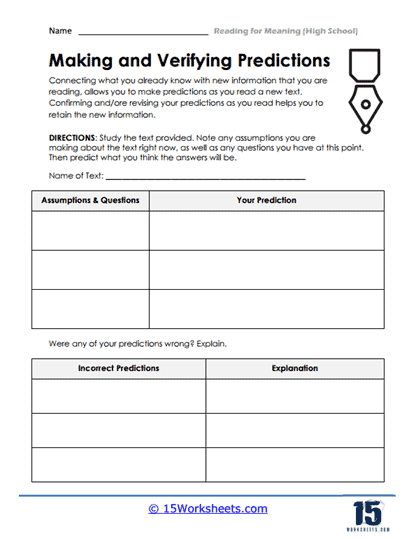
Predict and Reflect
Making predictions can be fun, but evaluating those predictions is where the real learning happens. Students record their assumptions, predict answers, and then compare those ideas to what the text actually says. It’s an excellent exercise in critical thinking and self-reflection.
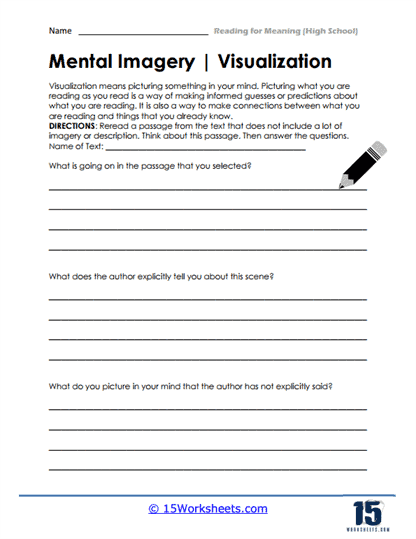
Extracting Implied Imagery
Not every detail appears directly on the page. This worksheet asks students to look beyond what the author explicitly describes and imagine what may be happening in the scene. It strengthens visualization skills while encouraging deeper engagement with the text.
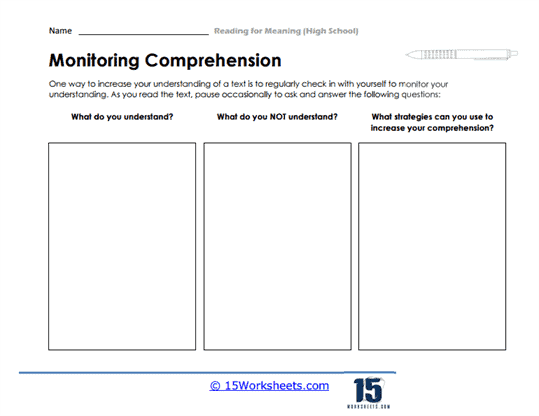
Assessing Understanding
Many students keep reading even when they’re confused. This worksheet teaches them to pause, reflect, and monitor their own understanding as they go. It’s a valuable tool for building stronger reading habits and greater independence.
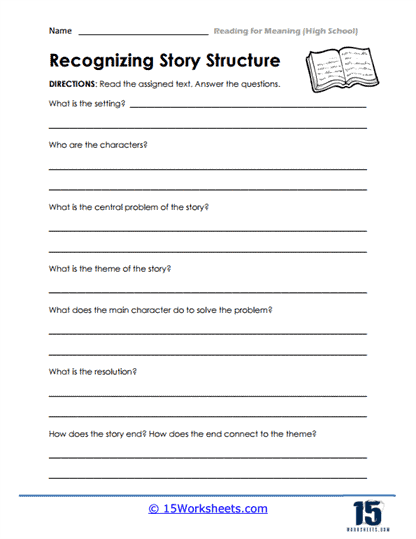
Story Anatomy
Every story is built from important pieces that work together to create meaning. Students examine characters, setting, conflict, theme, and resolution while exploring how these elements connect. It helps readers see the bigger picture behind a narrative.
Element Breakdown
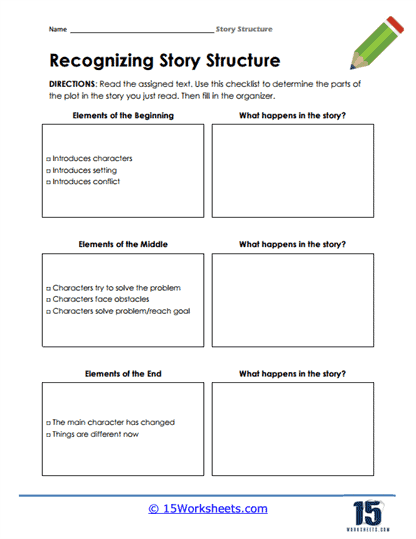
This worksheet focuses on the structure of a story and how events unfold over time. By identifying plot elements in the beginning, middle, and end, students gain a clearer understanding of narrative development. The organizer makes complex plots feel much easier to follow.
Delving Deeper
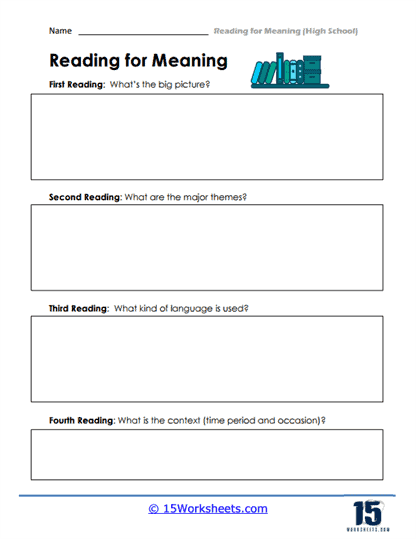
Some texts reveal more each time you read them. This activity encourages students to revisit a passage multiple times while focusing on different aspects such as themes, language, and context. It’s a great reminder that deeper understanding often comes from slowing down and looking again.
Eventful Exploration
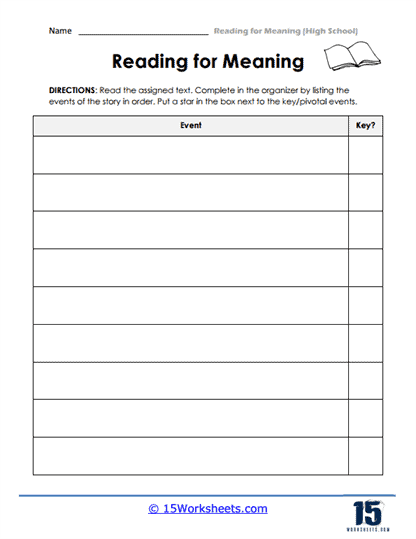
Keeping track of events can make a huge difference in comprehension. Students list story events in order and identify which moments are most important to the overall narrative. The process helps them separate major events from minor details.
Exploring Text Dimensions
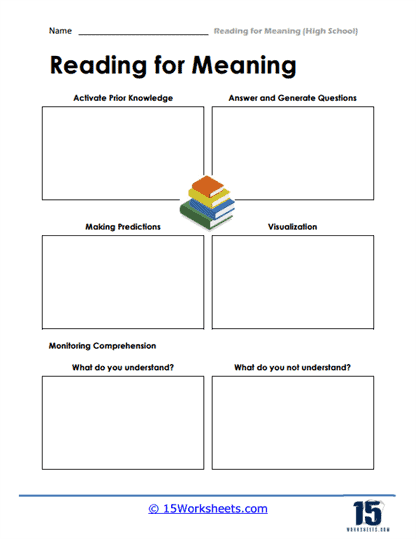
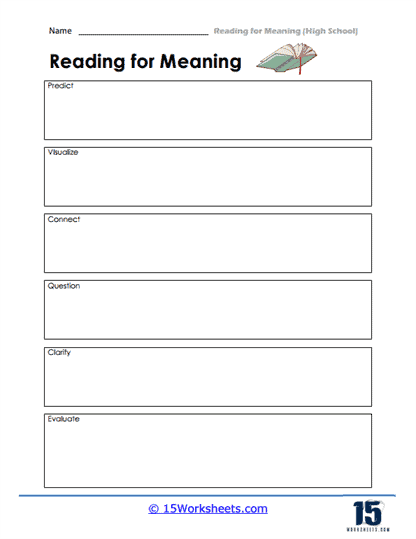
This worksheet brings together several reading strategies in one place. Students activate prior knowledge, ask questions, make predictions, visualize scenes, and assess their understanding throughout the reading process. It’s like giving students a complete toolkit for reading success.
Connect, Question, Summarize
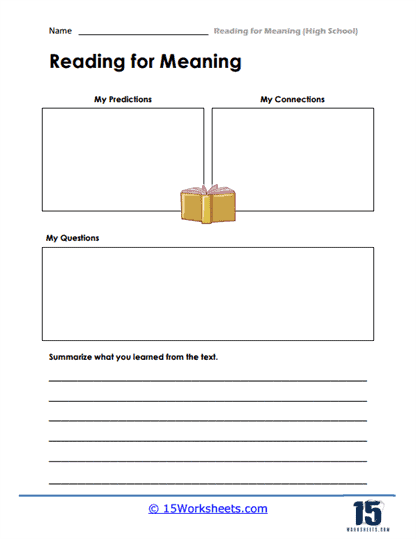
Strong comprehension often starts with curiosity and ends with reflection. This worksheet guides students through predicting, questioning, connecting, and summarizing as they read. The combination of strategies helps students engage with texts from multiple angles.
Knowledge And Curiosity
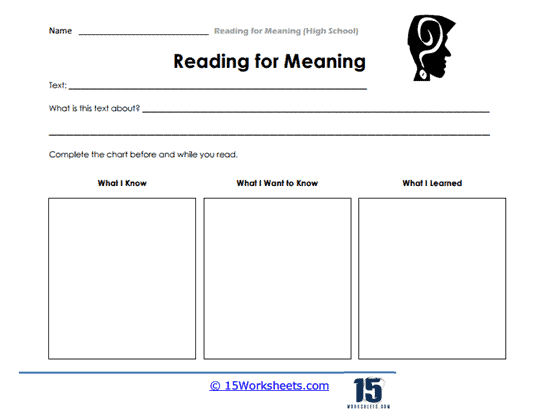
The best learning happens when students combine what they already know with what they want to discover. This worksheet encourages them to track their background knowledge, questions, and new learning as they read. It creates a meaningful bridge between curiosity and understanding.
What is Reading for Meaning?
Reading for meaning is the process of actively thinking about and understanding a text rather than simply reading the words. It involves asking questions, making connections, drawing conclusions, visualizing ideas, and reflecting on what the author is trying to communicate. Strong readers constantly interact with the text as they read, which helps them build a deeper understanding of the material.
Reading for meaning goes beyond remembering facts or recalling events. It encourages students to think about why things happen, how ideas connect, and what larger messages the author may be sharing. Whether reading a story, article, biography, or informational passage, students use these skills to uncover meaning and gain new insights.
Developing strong reading-for-meaning skills helps students become more successful learners across all subjects. They learn to approach texts with curiosity, confidence, and purpose. Over time, these habits improve comprehension, critical thinking, and communication skills while helping students become lifelong readers who truly understand and enjoy what they read.