
Premise Worksheets
All About These 15 Premise Worksheets
Every story, article, movie, and television show starts with an idea. Before writers create characters, build settings, or write chapters, they need to know what their work is really about. That’s where a premise comes in. These worksheets help students understand how writers take a simple idea and turn it into the foundation for a strong story or piece of writing.
One thing students quickly discover is that a premise is much more than a summary. It’s the central idea that drives everything else in the writing process. Throughout this collection, students compare writing terms, analyze stories, develop original ideas, and practice turning rough concepts into clear and engaging premises. The activities make a challenging writing skill feel much more manageable by breaking it into smaller steps.
Understanding premises helps students become stronger readers as well as stronger writers. When students can identify the core idea behind a book, article, movie, or television show, they begin to think more deeply about how stories are constructed. These skills support reading comprehension, critical thinking, and creative writing while helping students develop a greater appreciation for the art of storytelling.
About Each Worksheet
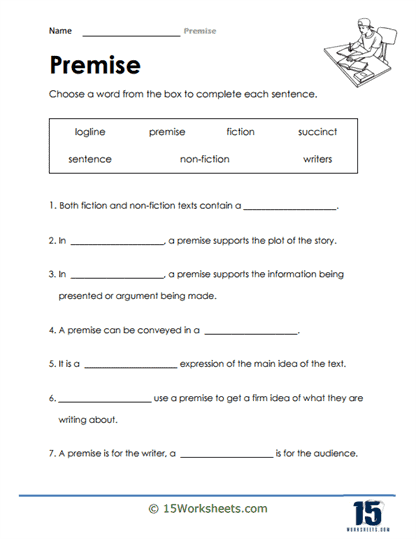
Unveiling The Core
This worksheet helps students get comfortable with the vocabulary that writers use when talking about stories and ideas. Instead of memorizing definitions, they’ll use terms like premise and logline in context so the concepts actually stick. It’s a great starting point for students who are just beginning to think like writers.
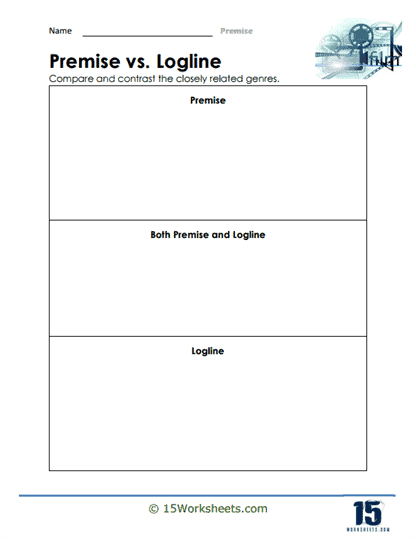
Compare And Contrast
Premise and logline sound similar, which is exactly why students often mix them up. This activity helps clear up the confusion by letting students compare the two side by side and spot what makes each one unique. By the end, they’ll have a much better understanding of how both tools help shape a story.
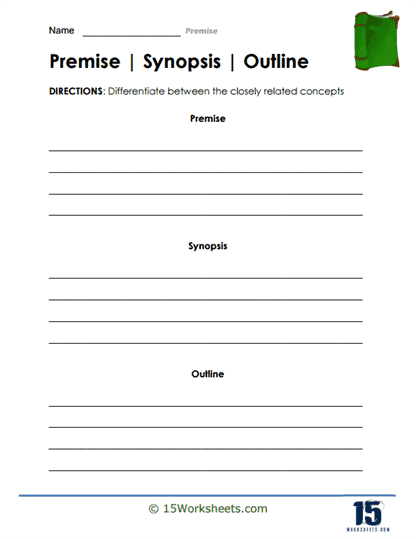
Differentiating Storytelling Essentials
Writers use outlines, synopses, and premises for different reasons, but those differences aren’t always obvious at first. This worksheet helps students sort through each concept and understand where it fits in the writing process. It’s a simple way to make storytelling terminology feel much less overwhelming.
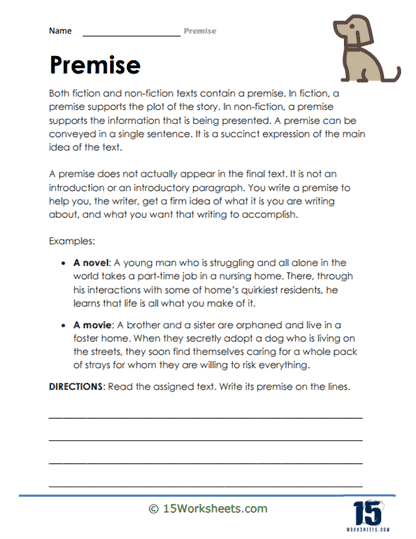
Essence In A Few Lines
Some students can retell an entire story but struggle to explain what it’s really about. This activity challenges them to boil a text down to its most important idea and express it in just a few sentences. It’s excellent practice for summarizing without losing the heart of the story.
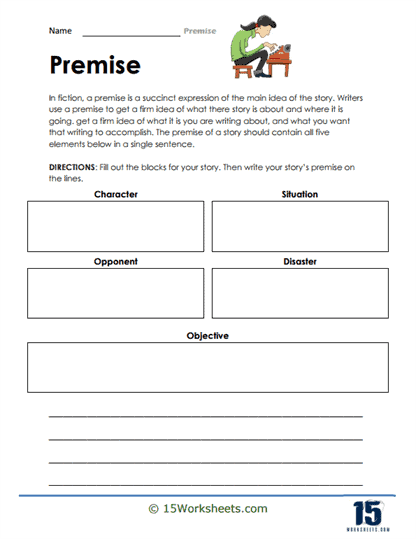
Building Blocks Of Tales
Every memorable story starts with a strong foundation, and this worksheet helps students build one piece at a time. They’ll think about characters, goals, conflicts, and challenges before pulling everything together into a clear premise. It feels a little like designing the blueprint before building the house.
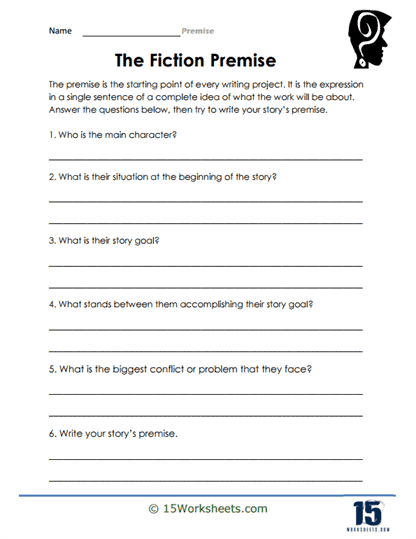
Crafting Your Narrative’s Core
This worksheet walks students through the kinds of questions authors ask themselves before they start writing. As they explore their character’s wants, struggles, and obstacles, the bigger picture of the story begins to come into focus. It’s a helpful way to turn scattered ideas into something that feels like a real narrative.
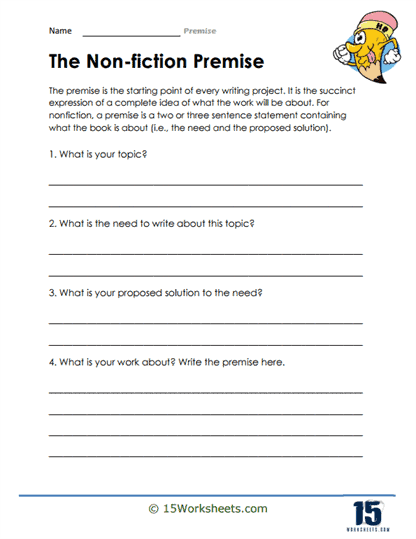
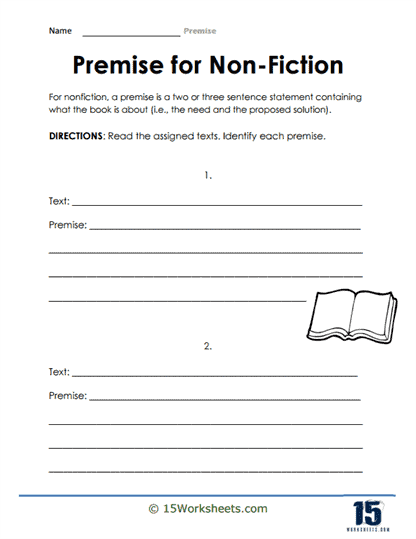
Framing Your Non-Fiction Work
Writing non-fiction starts with having a clear purpose, and that’s exactly what students practice here. They’ll identify a problem, think about possible solutions, and shape those ideas into a focused premise. It’s a useful exercise for students learning that informational writing needs a strong foundation too.
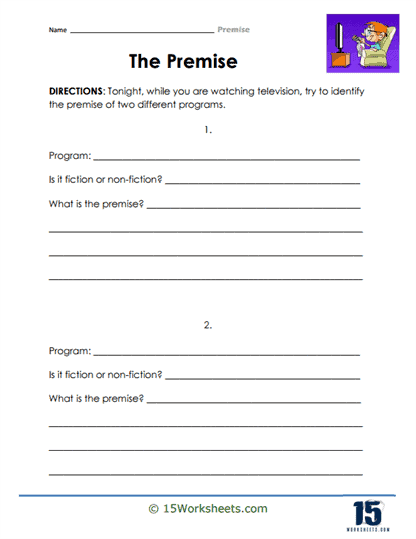
TV Tale Fundamentals
Most students watch television all the time, but they rarely stop to think about what drives a show’s story. This worksheet encourages them to look beyond the characters and action to identify the central idea behind each program. It’s a fun way to practice analysis using something they’re already interested in.
Transforming Brainstormed Ideas
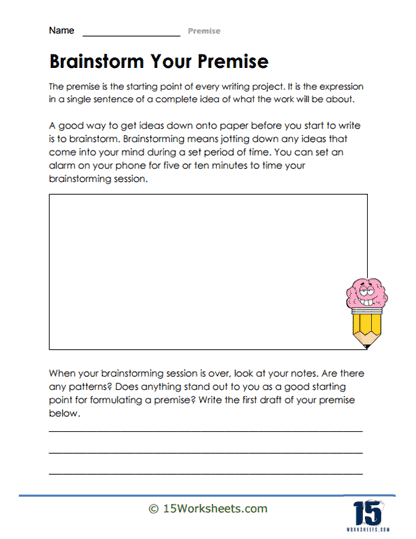
Sometimes the hardest part of writing is figuring out which idea is worth developing. This activity gives students permission to brainstorm freely before looking for patterns and possibilities within their notes. It’s a great reminder that many strong stories start as rough ideas scribbled on a page.
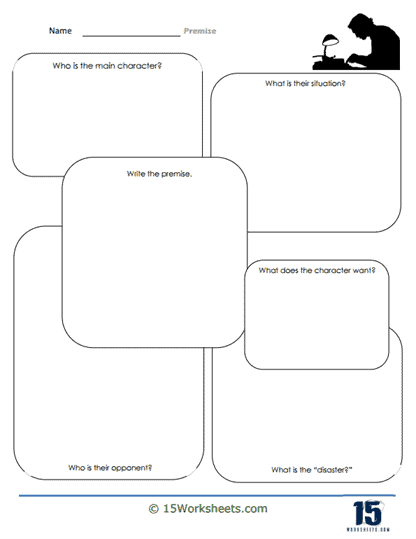
From Idea To Premise
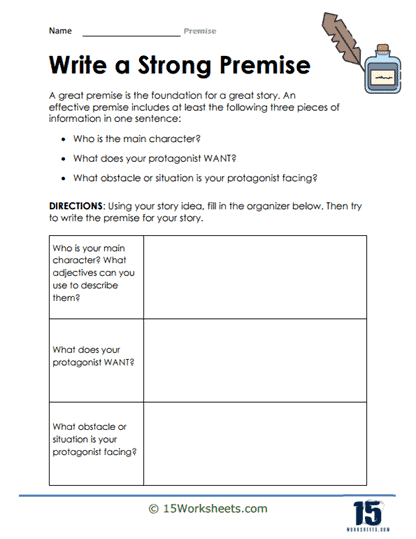
Students often have interesting story ideas but aren’t sure how to organize them. This worksheet helps them focus on who the story is about, what they want, and what’s standing in their way. By the end, they have the ingredients needed to create a clear and engaging premise.
Perfecting The Formula
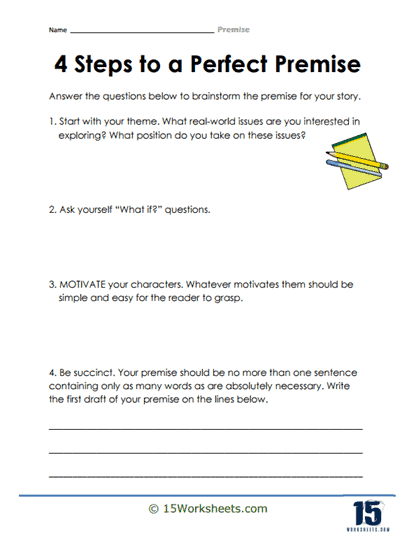
Great stories often begin with a simple question: “What if?” This worksheet encourages students to explore themes, real-world issues, and imaginative possibilities as they develop new story concepts. It’s a creative exercise that helps turn curiosity into compelling ideas.
Beyond Ordinary
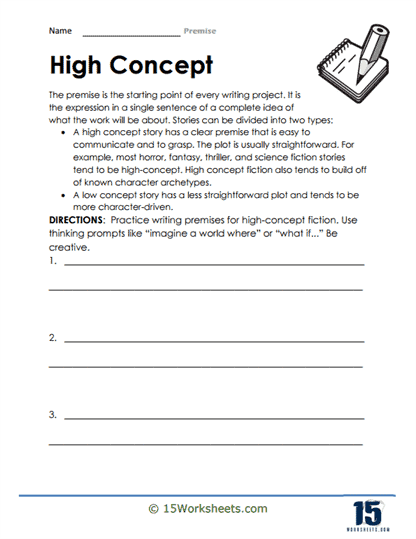
This activity invites students to let their imaginations run wild. Using creative prompts and unusual scenarios, they’ll experiment with high-concept ideas that push beyond everyday storytelling. It’s perfect for students who enjoy dreaming up unique worlds and unexpected situations.
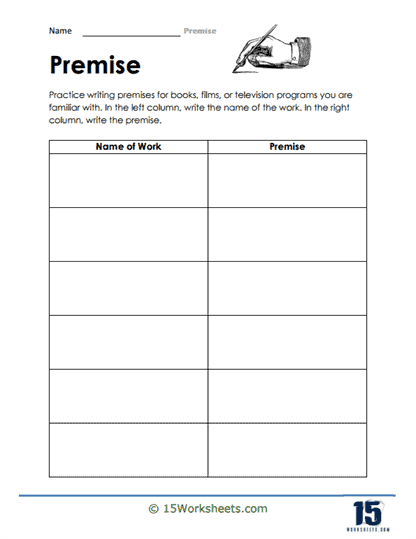
Transmedia Premise Challenge
Students get the chance to look at familiar books, movies, and television shows from a writer’s perspective. By reducing complex stories to a single premise, they begin to see what makes those narratives work. It’s part analysis, part creativity, and a lot of fun for students who love popular media.
Building Your Story’s Backbone
This worksheet helps students focus on the essential pieces every story needs before the writing begins. They’ll identify the character, conflict, goals, and challenges that form the heart of their narrative. Once everything is in place, creating a strong premise becomes much easier.
Decoding Non-Fiction Premises
Finding the main point of a non-fiction text isn’t always as simple as it sounds. This worksheet teaches students how to identify the central argument and separate it from supporting details. It’s a valuable skill that strengthens both reading comprehension and critical thinking.