
Dictation Sentences Worksheets
About Our Dictation Sentences Worksheets
Dictation is one of the best ways for students to strengthen spelling, listening, grammar, and writing all at the same time. Our Dictation Sentences Worksheets help learners carefully listen to spoken sentences, remember what they hear, and write it accurately using correct spelling, capitalization, punctuation, and grammar. Instead of focusing on isolated words, students practice recording complete thoughts that reflect authentic language. These activities encourage careful listening while helping students become more confident and accurate writers.
This collection includes a wide variety of dictation activities for students of different ages and skill levels. Some worksheets focus on spelling words, homophones, punctuation, phonics patterns, and word families, while others introduce sentence editing, grammar transformations, note-taking, syntax revisions, and advanced writing conventions. Students write complete sentences, proofread errors, apply grammar changes, and organize ideas using engaging themes such as space, oceans, jungles, mysteries, and treasure hunts. The variety keeps dictation practice interesting while steadily building stronger language skills.
Regular dictation practice improves much more than handwriting and spelling. Students develop stronger listening comprehension, working memory, sentence fluency, proofreading habits, and overall written communication. Learning to accurately translate spoken language into written form prepares learners for classroom lectures, note-taking, essays, presentations, and everyday writing tasks. These worksheets help students become more attentive listeners and more confident writers by strengthening several essential literacy skills at once.
About Each Worksheet
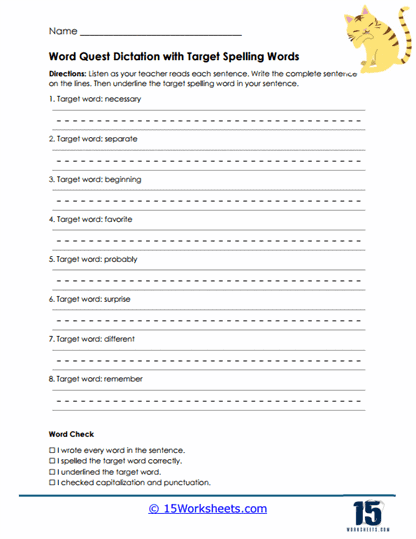
Target Dictation
Students listen to complete sentences before writing each one and underlining a featured spelling word. The built-in editing checklist encourages them to review their work instead of stopping after the final sentence.
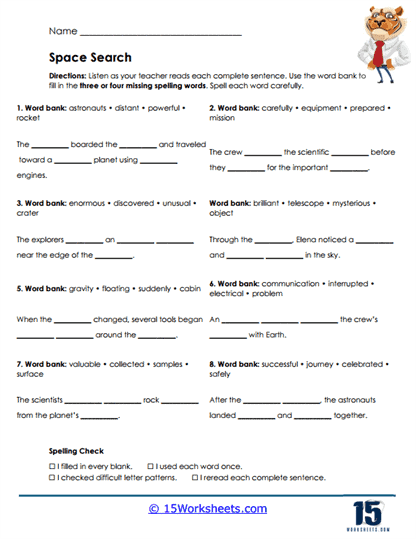
Space Search
Space-themed dictation sentences challenge students to place every word from a word bank into its correct position. Careful listening and sentence building work together to launch stronger spelling and writing skills.
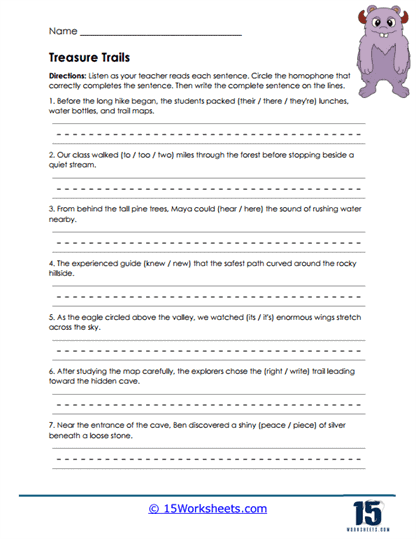
Treasure Homophones
Students choose the correct homophone before rewriting each adventure-themed sentence in full. The activity shows that meaning-not just sound-is the key to accurate spelling.
Expedition Editing
Students become editors by listening for spelling mistakes hidden inside complete sentences before rewriting them correctly. Comparing what they hear with what they see builds strong proofreading habits.
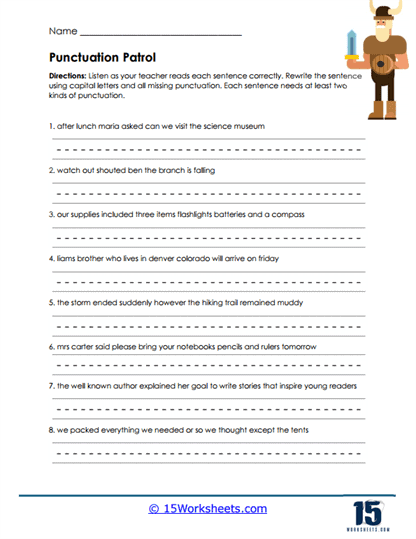
Punctuation Patrol
Listening carefully helps students restore missing capitalization and punctuation throughout a variety of sentences. The activity demonstrates how expression and tone often reveal where punctuation belongs.
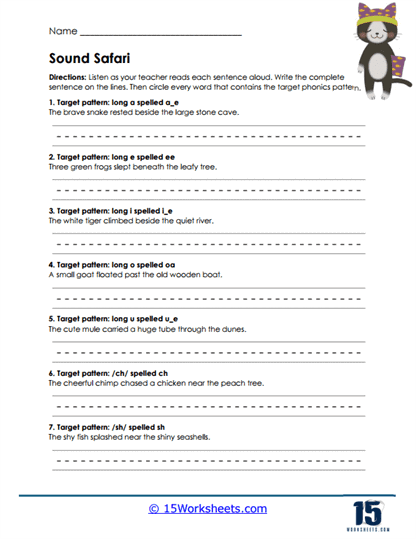
Sound Safari
Students write complete sentences before circling words that contain the featured sound pattern. Combining dictation with phonics review helps strengthen both spelling and decoding skills.
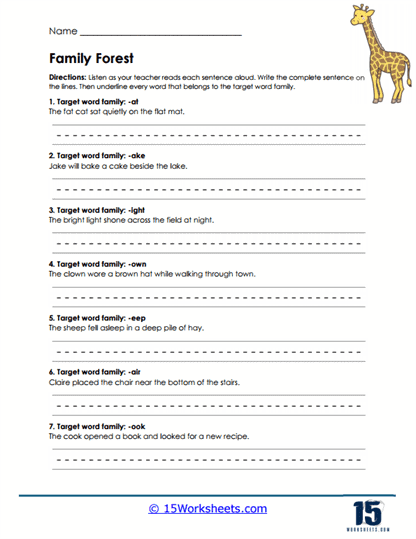
Family Forest
Word families come alive as students write dictated sentences and identify rhyming spelling patterns. Underlining related words helps make common endings easier to recognize and remember.
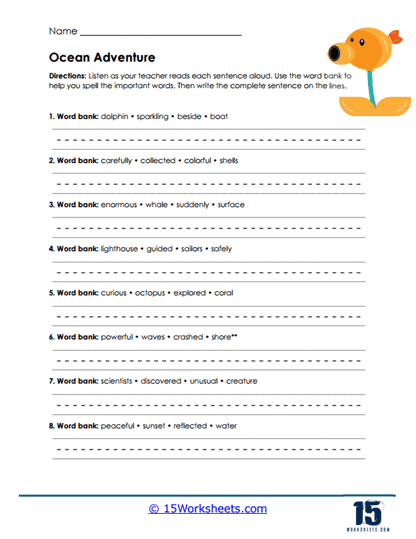
Ocean Words
Helpful word banks support students as they write ocean-themed dictation sentences filled with important vocabulary. The guided format builds confidence while encouraging careful listening.
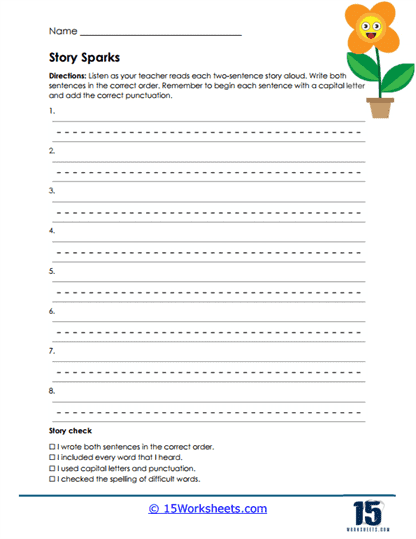
Story Sparks
Students listen to two connected sentences and write them in the correct order with proper conventions. Remembering a short sequence helps strengthen both writing fluency and listening memory.
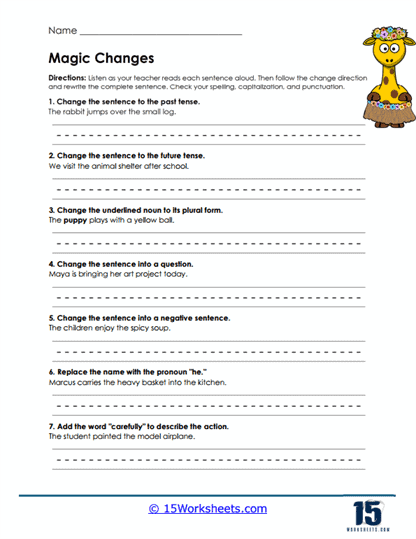
Magic Changes
After writing each dictated sentence, students transform it by changing tense, number, or sentence type. The grammar twist shows how small changes can completely reshape a sentence.
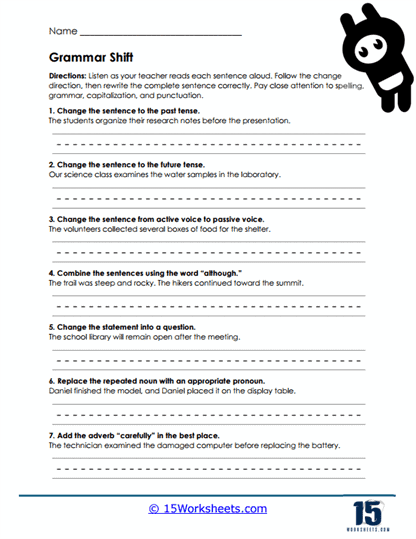
Grammar Shift
Students rewrite dictated sentences using more advanced grammar transformations while preserving the original meaning. The activity encourages flexible thinking and stronger sentence construction.
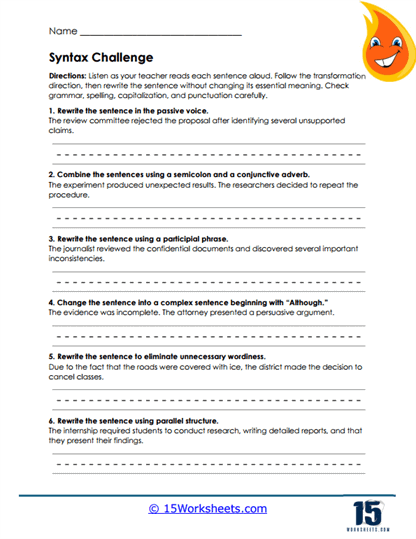
Syntax Challenge
Complex grammar tasks ask students to reorganize dictated sentences using techniques such as passive voice, semicolons, and participial phrases. It’s a thoughtful challenge that strengthens advanced writing skills.
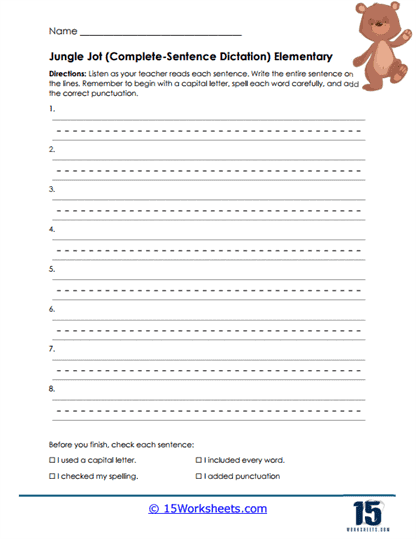
Jungle Jot
Students practice writing simple dictated sentences exactly as they hear them while checking spelling, capitalization, and punctuation. The open-ended format allows teachers to tailor practice to current classroom lessons.
Mystery Notes
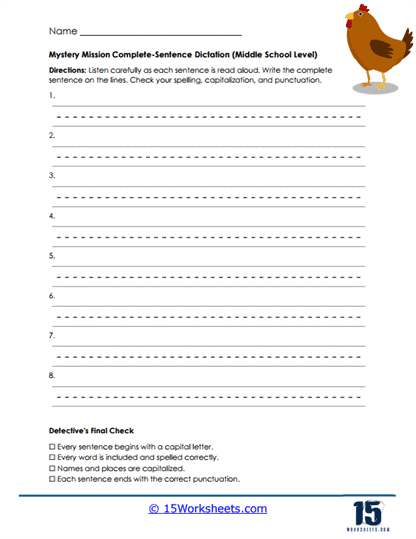
Longer middle school dictation sentences encourage students to capture every important detail without leaving anything out. The mystery theme turns careful note-taking into an engaging challenge.
Scholar Sprint
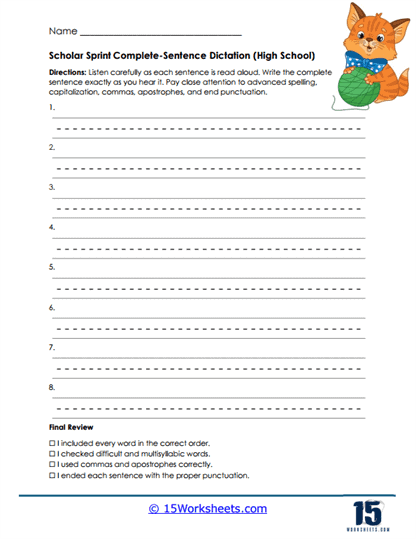
Students record advanced academic sentences while paying close attention to spelling, punctuation, and sentence structure. The activity builds the listening precision needed for high school, college, and beyond.
What are Dictation Sentences?
Dictation sentences are complete sentences that students hear first and then write from memory. As the teacher or another reader says each sentence aloud, students listen carefully, remember what they hear, and record it using correct spelling, capitalization, punctuation, grammar, and word order. Unlike simple spelling tests, dictation requires students to apply multiple language skills at the same time. This makes it an effective way to strengthen overall literacy rather than focusing on one isolated skill.
Dictation activities can be adapted for students at every grade level. Younger learners often practice short sentences that reinforce phonics patterns, sight words, and punctuation, while older students work with longer passages that include advanced vocabulary, grammar, and more complex sentence structures. Some dictation exercises also include editing, proofreading, or grammar transformations that require students to revise what they have written. These variations help learners develop flexibility while reinforcing accurate written communication.
Regular dictation practice supports many important academic skills beyond spelling. Students improve listening comprehension, working memory, proofreading, handwriting, grammar, and sentence fluency while learning to pay closer attention to detail. These abilities transfer naturally to classroom note-taking, essay writing, research projects, presentations, and everyday communication. By practicing dictation regularly, students become more confident writers who can accurately turn spoken language into clear, organized written work.