
Changing Y to I Worksheets
About Our Changing Y to I Spelling Worksheets
Many English words change their spelling before a new ending is added, and one of the most important patterns students learn is changing a final y to i. Our Changing Y to I Spelling Worksheets help students recognize when this rule applies and how it affects past tense verbs, plural nouns, comparative adjectives, adverbs, and other word forms. Instead of simply memorizing spelling rules, learners build, analyze, and apply words through engaging activities that make the pattern easy to recognize and remember. Every worksheet encourages students to think about both spelling and grammar as they work.
This collection presents the changing y to i rule in a variety of creative ways. Students solve mazes, complete humorous stories, build new word forms, search reading passages, match endings, finish sentences, sort spelling patterns, and complete comprehensive review activities. Along the way, they practice changing y to i before adding endings such as -ed, -es, -er, -est, -ly, and -ness, while also learning when the y should remain unchanged. The wide range of activities provides meaningful repetition that helps students apply the rule with confidence.
Understanding when to change y to i strengthens both spelling and writing skills. Students become more accurate when forming new words, proofread more effectively, and develop a better understanding of how English spelling patterns work. These worksheets build vocabulary, grammar awareness, reading comprehension, and word analysis while encouraging careful attention to detail. By mastering this common spelling rule, learners gain confidence using more complex words in both reading and writing.
About Each Worksheet
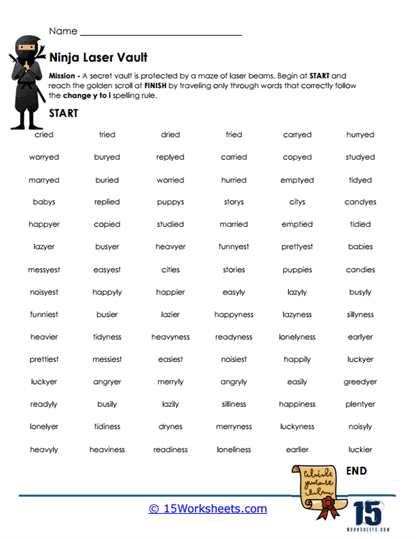
Ninja Trail
Students help a ninja navigate a laser-filled maze by following only words that correctly change a final y to i. Every successful turn reinforces the spelling rule while making review feel like an exciting secret mission.
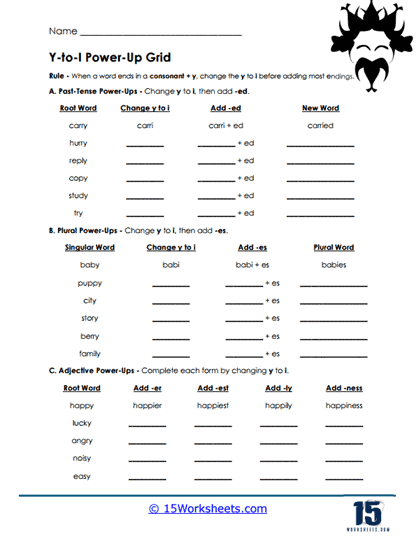
Power Grid
Students build new words step by step as they transform root words into past-tense verbs, plurals, adjectives, adverbs, and nouns. The organized format makes it easy to see exactly how each spelling change happens.
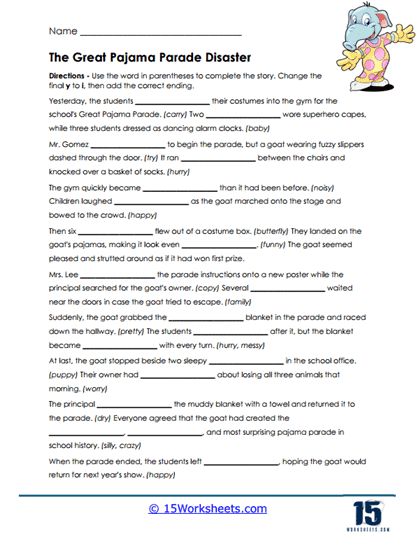
Pajama Disaster
A hilarious school pajama parade provides the backdrop for practicing the y to i rule in context. Filling in the story helps students connect spelling patterns with meaningful sentences instead of isolated word lists.
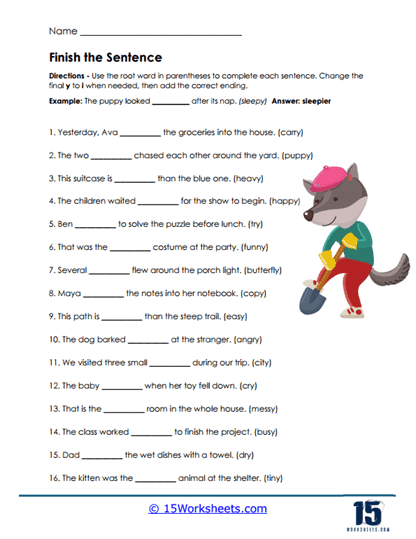
Sentence Finish
Students complete each sentence by selecting the correct ending and applying the spelling rule where needed. The sentence clues encourage learners to think about grammar and meaning before spelling.
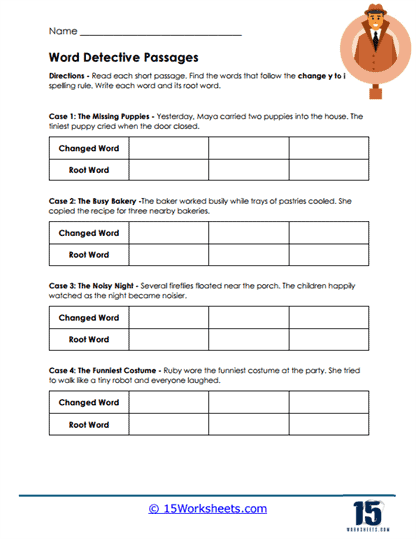
Word Detectives
Students become spelling investigators as they search short passages for words that follow the y to i rule. Working backward to identify each root word helps strengthen word analysis skills.
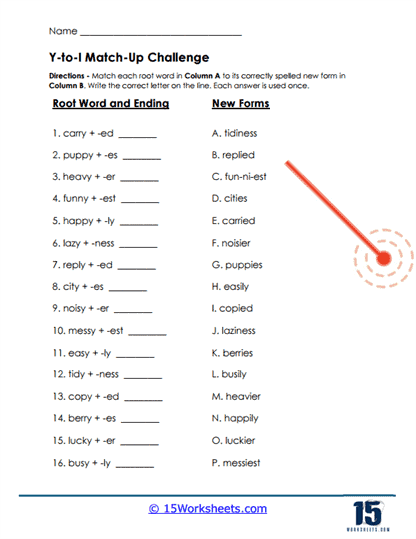
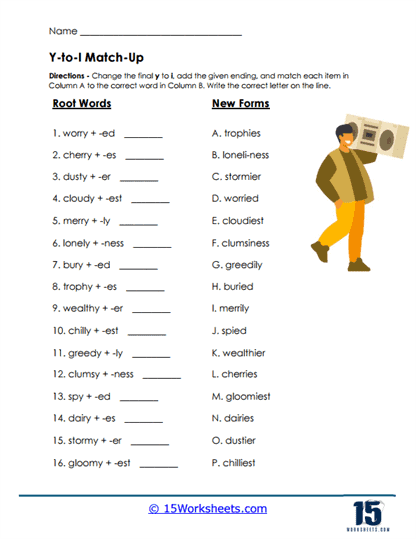
Ending Match
Matching root words, endings, and completed spellings gives students plenty of opportunities to compare similar word forms. The activity shows how one spelling rule can be used across many different endings.
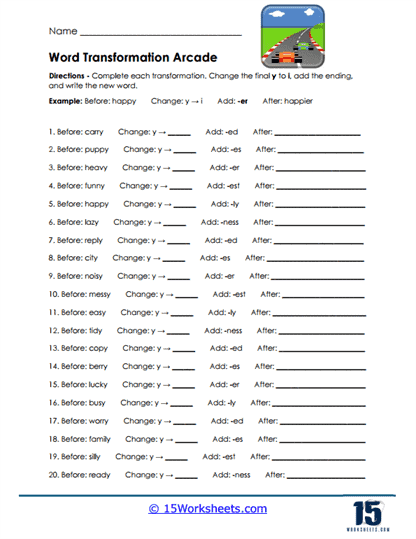
Word Arcade
Students race through a series of quick word-building challenges by changing final y letters before adding new endings. The arcade theme makes repeated practice feel fast-paced and rewarding.
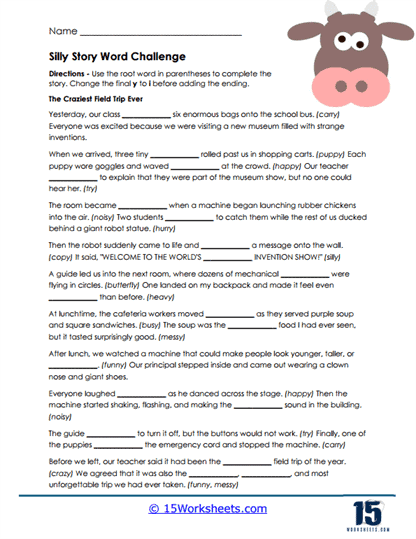
Silly Trip
An unforgettable class field trip filled with strange inventions gives students a fun setting for practicing changing y to i. Every completed sentence reinforces spelling while keeping learners entertained.
Form Match
Students create new word forms before matching them to their correctly spelled partners. The extra verification step encourages careful thinking instead of rushing through each answer.
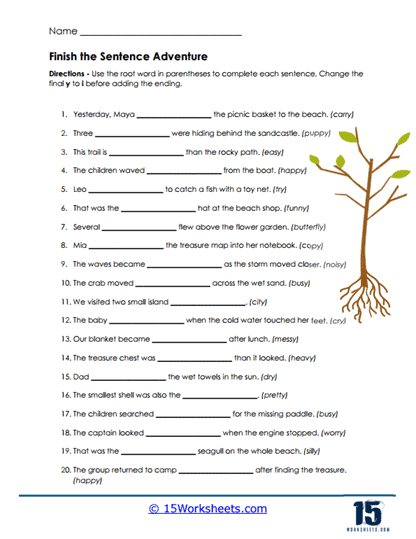
Beach Adventure
A treasure hunt at the beach unfolds one sentence at a time as students apply the y to i rule throughout the story. Following the adventure makes repeated spelling practice feel much more engaging.
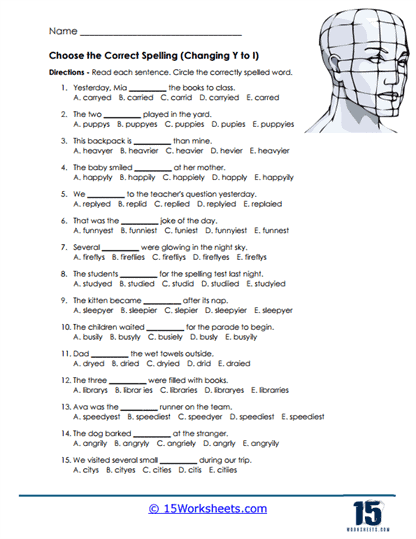
Spelling Choice
Students compare several nearly identical spellings before selecting the correct answer for each sentence. Looking closely at every option helps build stronger proofreading habits and spelling confidence.
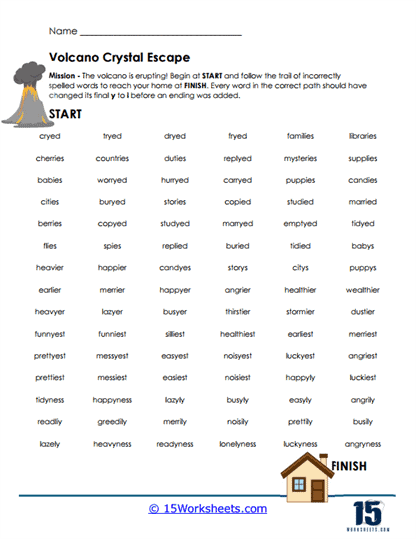
Volcano Escape
Escaping an erupting volcano depends on finding incorrectly spelled words that break the y to i rule. The action-packed maze rewards students who carefully inspect every spelling.
Mountain Mystery
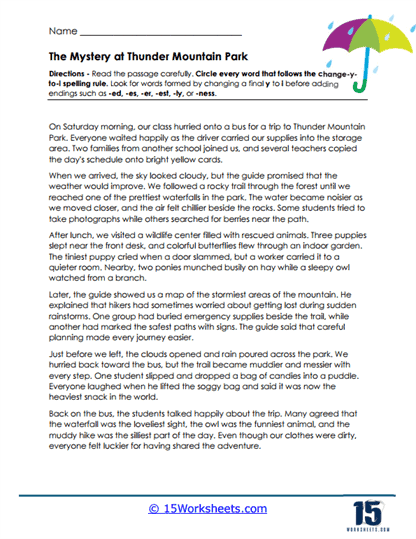
Students search a longer adventure story for words that correctly follow the spelling rule. Discovering examples in authentic reading helps learners recognize the pattern naturally.
Rule Review
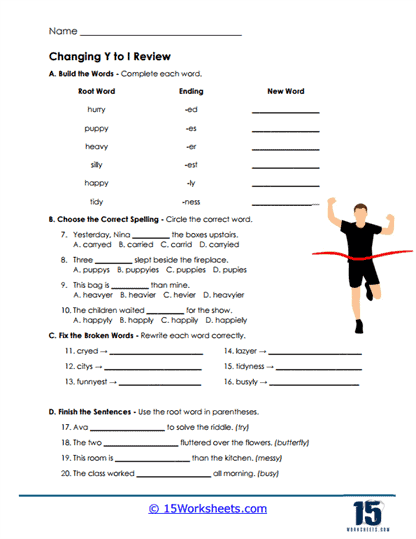
This comprehensive review combines word building, sentence completion, proofreading, and spelling corrections into one activity. Students finish with a well-rounded check of everything they’ve learned.
Rule Challenge
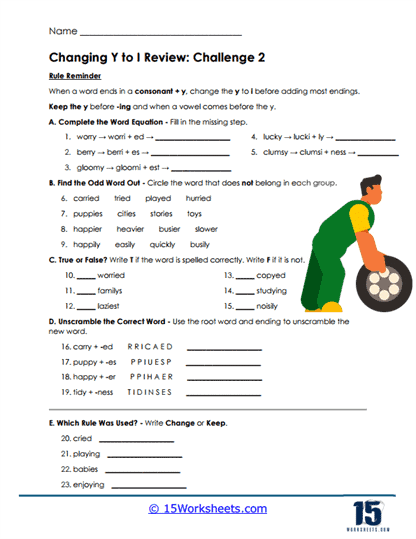
Students test their understanding by solving a variety of spelling challenges while also learning the important exceptions to the rule. Explaining why a word changes-or doesn’t-helps build lasting confidence.
What is the Changing Y to I Spelling Rule?
The changing y to i spelling rule explains what happens when many English words ending in a consonant followed by y receive certain endings. In these cases, the final y is usually changed to i before adding endings such as -ed, -es, -er, -est, -ly, or -ness. For example, carry becomes carried, happy becomes happier, and easy becomes easily. Learning this rule helps students form words correctly instead of relying on guesswork.
Like many English spelling rules, there are important exceptions. When adding -ing, the final y usually stays the same, so carry becomes carrying rather than carriing. The y also remains when it follows a vowel, such as in play, which becomes played instead of plaied. Understanding both the rule and its exceptions helps students recognize why words change in different situations.
Mastering the changing y to i rule improves much more than spelling accuracy. Students become stronger readers because they recognize word patterns more quickly, and they become more confident writers because they know how to build new word forms correctly. These skills support grammar, vocabulary growth, proofreading, and overall written communication. As students practice this common spelling pattern, they develop a stronger understanding of how English words are formed and used.