
CK or K Spelling Words Worksheets
About Our CK or K Spelling Words Worksheets
Learning whether to end a word with ck or k is an important spelling skill that helps students recognize common English word patterns. Our CK or K Spelling Words Worksheets teach learners how to determine which ending belongs by paying attention to the sounds and letter patterns within a word. Instead of memorizing individual spellings, students practice identifying the rules through engaging games, stories, sorting activities, and proofreading challenges. These hands-on exercises help students build confidence while making spelling patterns much easier to remember.
This collection explores the ck and k spelling rule through a wide variety of interactive activities. Students solve mazes, complete space adventures, sort words by spelling pattern, proofread factory reports, unscramble jungle words, investigate vowel clues, finish themed passages, and complete comprehensive review exercises. Along the way, they learn that ck usually follows a short vowel in a one-syllable word, while k is more commonly used after a long vowel or another consonant. The variety of activities provides repeated practice while helping students recognize these patterns naturally.
Mastering the difference between ck and k strengthens far more than spelling alone. Students improve their reading fluency, proofreading skills, vocabulary development, and overall confidence with written language. Recognizing these spelling patterns also helps learners decode unfamiliar words more efficiently while reducing common writing errors. By practicing the rule in meaningful contexts, students develop lasting spelling habits they can apply every day.
About Each Worksheet
Cavern Trail
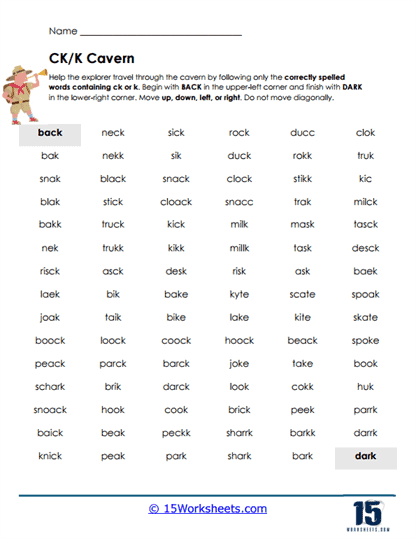
Students guide an explorer through a cave maze by following only correctly spelled ck and k words. Every turn reinforces important spelling patterns while making review feel like an exciting underground adventure.
Planet Passages
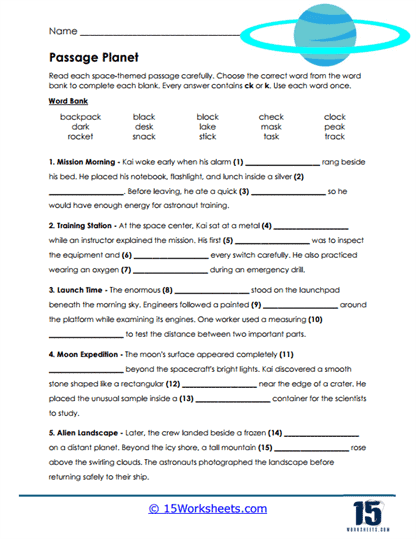
Space-themed stories challenge students to complete each passage using correctly spelled ck and k words from a word bank. Context clues and spelling rules work together to guide every choice.
Letter Locker
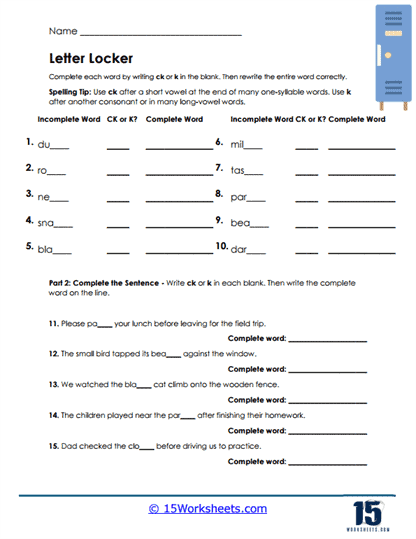
Missing letters have locked away important words, and students must decide whether ck or k completes each one. Rewriting every finished word helps strengthen spelling memory and word recognition.
Racing Sort
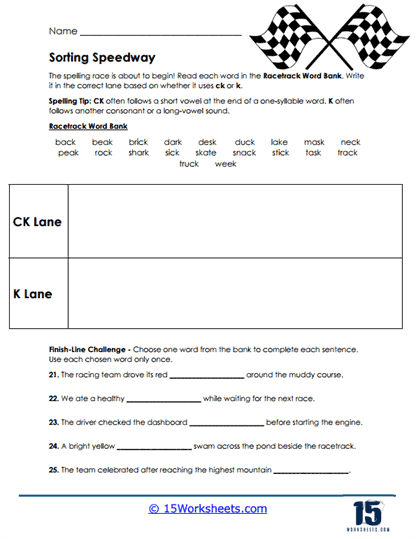
Students send words into either the CK Lane or the K Lane before putting their choices to work in racing-themed sentences. Sorting makes the spelling pattern much easier to recognize and remember.
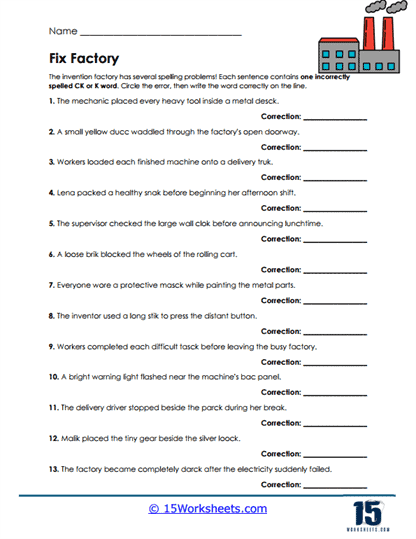
Factory Fixes
An invention factory is filled with spelling mistakes that students must repair before production can continue. Proofreading complete sentences helps learners apply the ck and k rule in authentic writing.
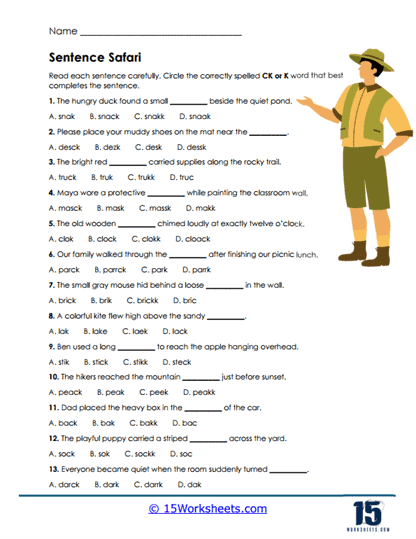
Safari Choices
Students travel through a safari adventure by choosing the correctly spelled word from several close-looking options. Careful comparison helps build both spelling confidence and test-taking skills.
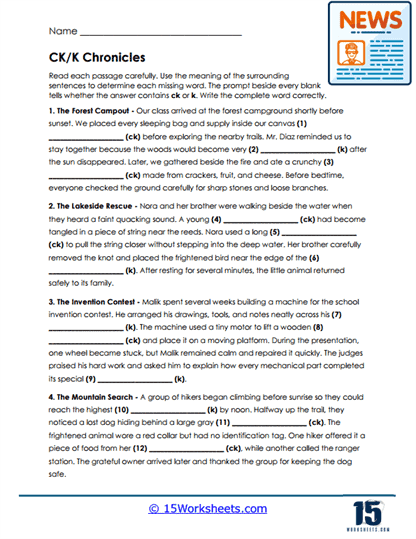
Chronicle Clues
News-style passages contain missing ck and k words that students restore using context clues and spelling knowledge. Reading longer passages encourages thoughtful application of the spelling rule.
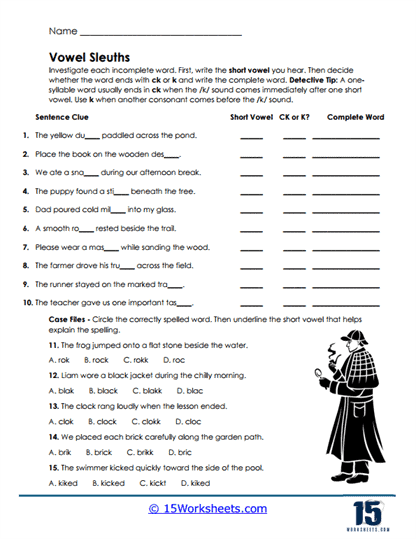
Vowel Sleuths
Students become detectives by investigating vowel sounds before deciding whether a word ends with ck or k. Focusing on the vowel pattern helps make the spelling rule easy to explain and remember.
Vowel Launch
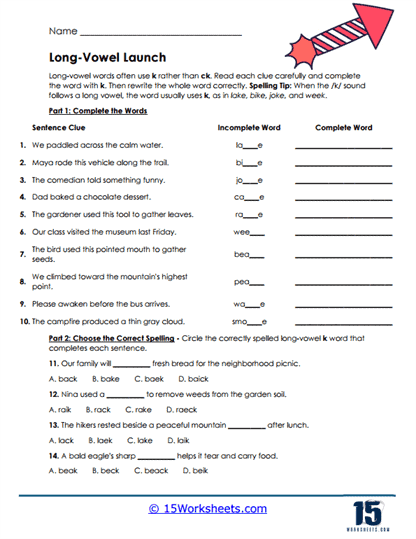
Long-vowel words blast off as students practice recognizing when k belongs instead of ck. The activity highlights one of the most important differences between these two spelling patterns.
Jungle Jumble
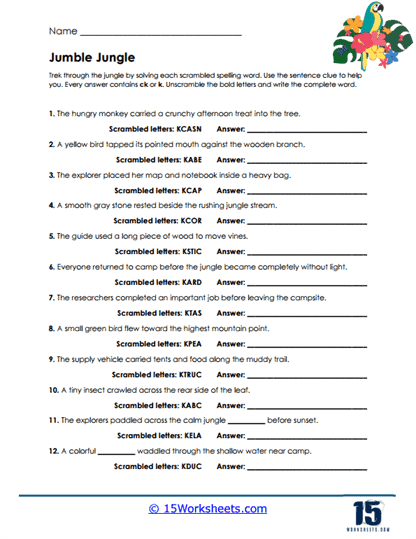
Scrambled jungle words challenge students to rebuild familiar ck and k spellings before continuing the adventure. Unscrambling strengthens vocabulary while encouraging close attention to every letter.
Digraph Dungeon
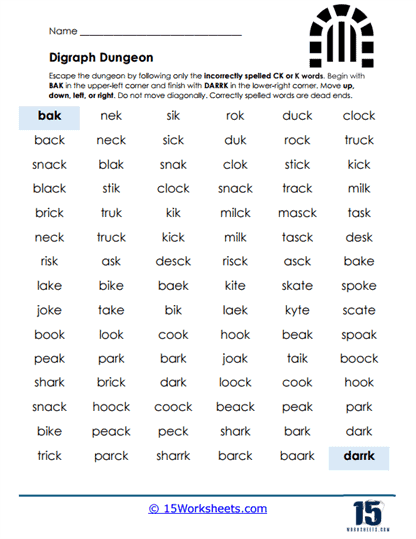
Escaping the dungeon depends on following a maze made entirely of incorrectly spelled words. Searching for mistakes instead of correct spellings gives students a fresh way to master the rule.
Lagoon Logon
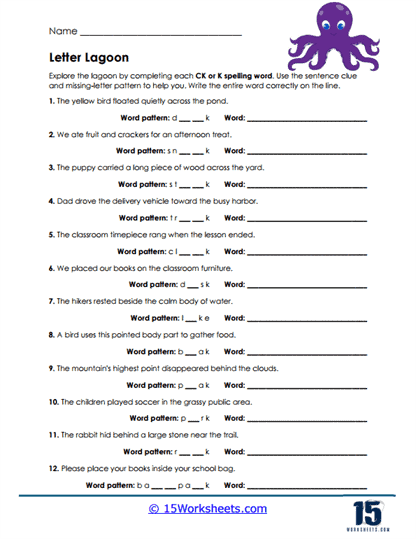
Students complete partially spelled words by deciding whether ck or k belongs at the end. The sentence clues provide helpful support while reinforcing accurate spelling.
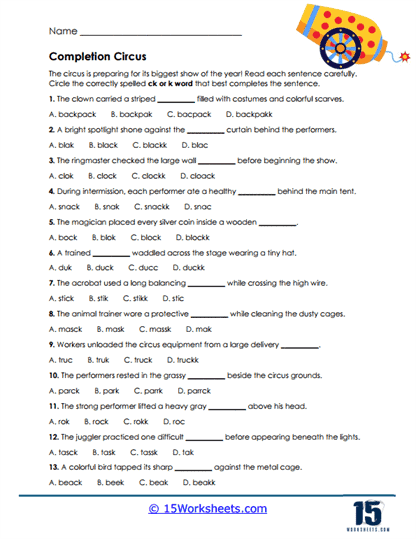
Circus Completion
Circus-themed multiple-choice questions ask students to identify the correctly spelled ck and k word in each sentence. Comparing similar spellings helps sharpen proofreading skills.
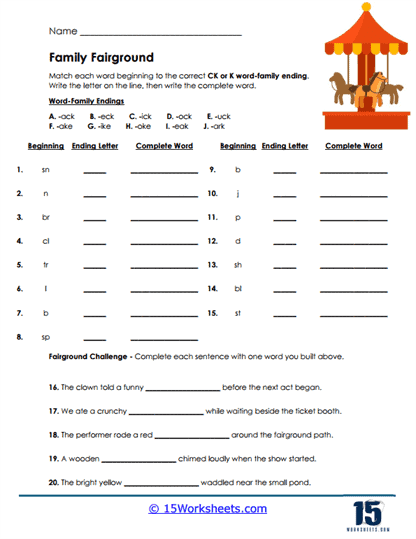
Fairground Families
Students build complete words by matching beginnings with ck and k word-family endings. Using the finished words in sentences helps connect spelling patterns with everyday vocabulary.
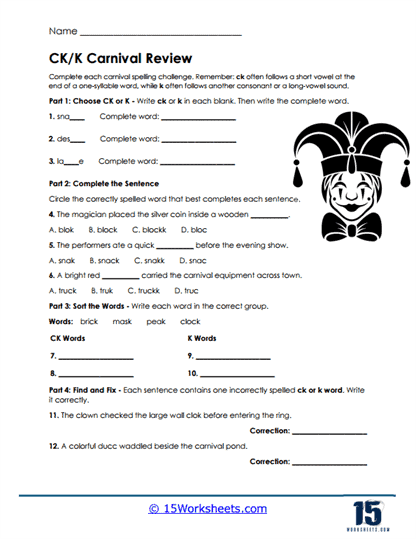
Carnival Review
This comprehensive review combines word building, sorting, proofreading, and sentence completion into one engaging activity. The carnival theme wraps up the collection with a fun and well-rounded spelling challenge.
What are CK and K Spelling Words?
CK and k spelling words both end with the same /k/ sound, but they follow different spelling patterns. In many one-syllable words, ck is used after a short vowel, such as in duck, rock, neck, and stick. The letter k is more commonly used after a long vowel, another consonant, or in certain other spelling patterns, as seen in words like bake, milk, and task. Learning these patterns helps students predict spellings instead of relying on memorization alone.
Rather than focusing only on the ending sound, successful spellers learn to examine the letters that come before it. Listening for the vowel sound often provides the clue needed to determine whether a word should end with ck or k. As students practice reading, writing, sorting, and proofreading these words, the spelling patterns become easier to recognize automatically. This understanding supports both decoding and accurate writing.
Mastering the ck and k spelling rule helps students become stronger readers, writers, and proofreaders. They gain confidence spelling familiar words while also improving their ability to tackle unfamiliar vocabulary. These skills strengthen phonics, vocabulary development, reading fluency, and written communication across many different subjects. By understanding why words end with ck or k, students build a stronger foundation for future spelling success.