
Commonly Misspelled Words Worksheets
About Our Commonly Misspelled Words Worksheets
Some words seem to cause spelling trouble no matter how often students write them. Our Commonly Misspelled Words Worksheets help learners build confidence with the words they encounter most often in school by turning spelling practice into meaningful, interactive activities. Rather than relying on memorization alone, students solve puzzles, proofread passages, complete sentences, sort words, and analyze spelling patterns that appear repeatedly in everyday writing. Each worksheet encourages careful observation while helping students recognize and remember correct spellings.
This collection grows alongside students from kindergarten through high school with activities designed for each grade level. Younger learners focus on matching, sorting, and rebuilding familiar sight words, while older students tackle proofreading, word formation, spelling analysis, etymology, and advanced academic vocabulary. Throughout the collection, students compare correct spellings with common mistakes, study challenging letter patterns, and apply words in meaningful contexts. The wide variety of activities provides repeated exposure that strengthens long-term spelling accuracy without becoming repetitive.
Mastering commonly misspelled words helps students become more confident readers, writers, and editors. When learners recognize these words automatically, they spend less time worrying about spelling and more time expressing their ideas clearly. These worksheets strengthen vocabulary, proofreading, reading comprehension, and writing fluency while encouraging careful attention to detail. By practicing the words students use most often, this collection builds spelling habits that support success across every subject.
About Each Worksheet
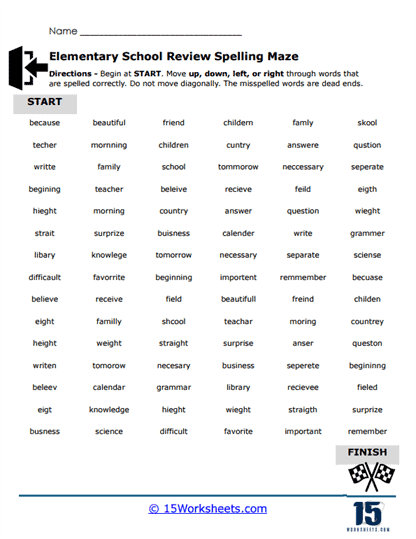
Spelling Maze
Students weave through a maze by following only correctly spelled high-frequency words while avoiding convincing misspellings. Every careful turn strengthens visual memory and encourages slower, more accurate proofreading.
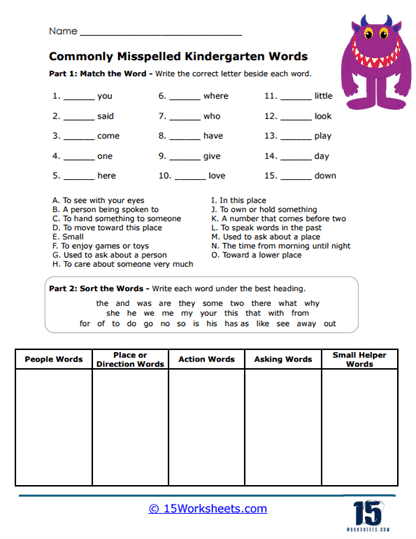
Kindergarten Sort
Young learners match familiar words with simple meanings before sorting them into helpful categories. The beginner-friendly format connects spelling, vocabulary, and sentence use all at the same time.
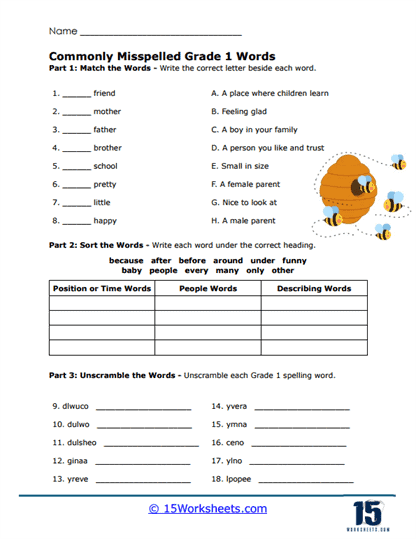
First Foundations
Students match, sort, and unscramble common first-grade words through a variety of quick activities. Changing the task format keeps practice interesting while reinforcing correct letter order.
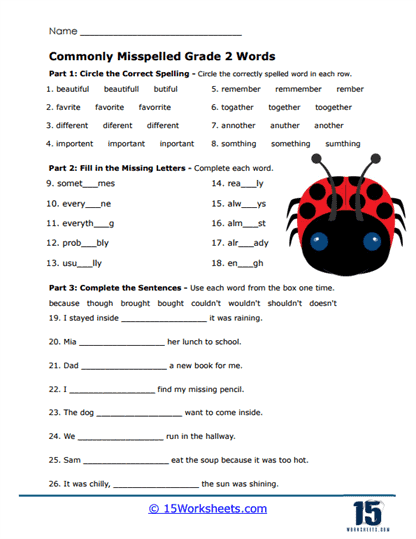
Second Steps
Students move from recognizing correctly spelled words to rebuilding them and finally using them in complete sentences. The gradual progression helps spelling feel connected to real reading and writing.
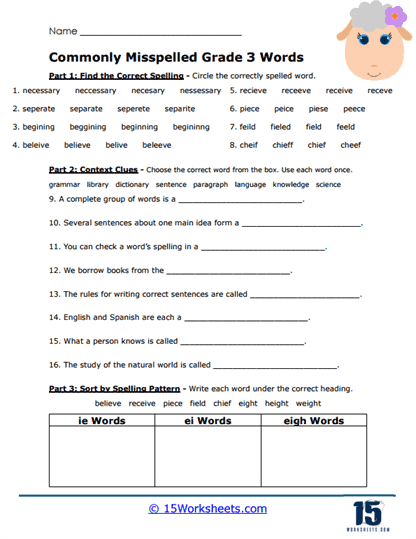
Third Patterns
Students explore tricky third-grade spelling words by completing sentences and sorting words with similar letter patterns. Looking for patterns instead of isolated words makes difficult spellings easier to remember.
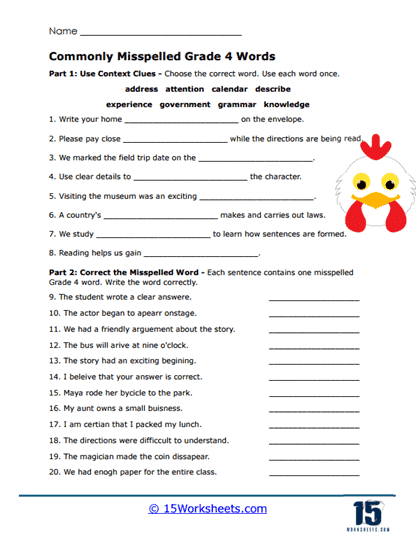
Fourth Focus
Sentence completion and proofreading work together to strengthen advanced elementary spelling skills. Students learn that understanding a sentence often helps uncover hidden spelling mistakes.
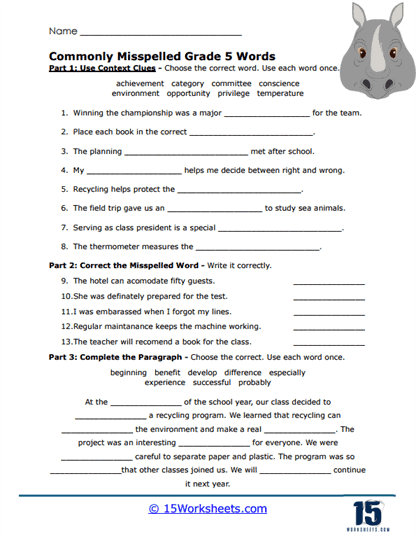
Fifth Mastery
Students apply challenging vocabulary through context clues, proofreading, and paragraph writing. Working with connected text helps spelling practice feel more authentic and meaningful.
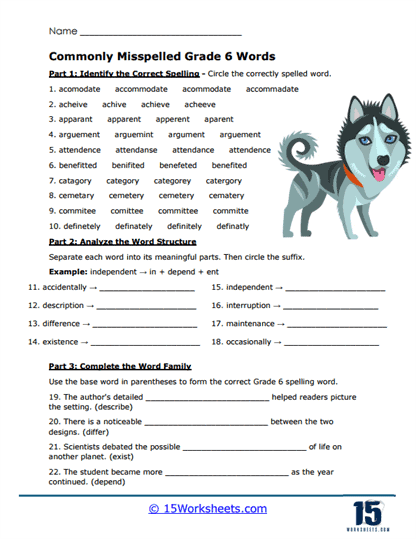
Sixth Structure
Longer academic words become much less intimidating as students break them into roots, prefixes, and suffixes. Understanding how words are built gives learners another strategy beyond simple memorization.
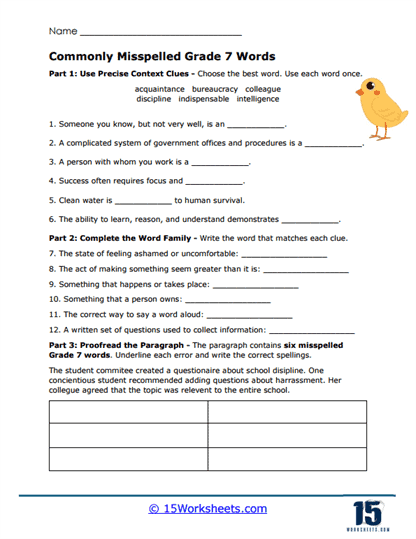
Seventh Precision
Students strengthen advanced spelling through context clues, word families, and paragraph editing. The variety of activities helps them use difficult vocabulary with greater confidence and accuracy.
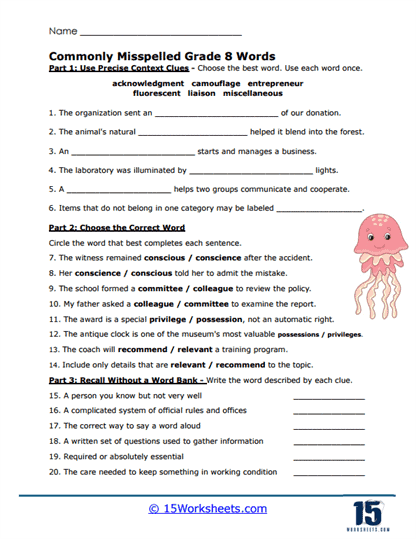
Eighth Recall
Students rely on memory, definitions, and sentence clues to produce advanced vocabulary independently. The recall activities encourage long-term retention instead of simple word recognition.
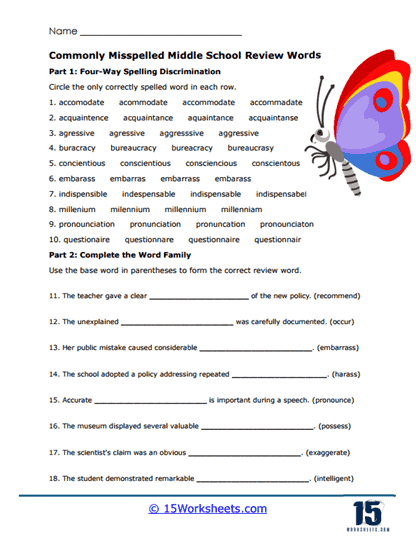
Middle Review
This review combines careful multiple-choice analysis with word-building challenges that reinforce middle school vocabulary. Students practice both identifying correct spellings and producing them on their own.
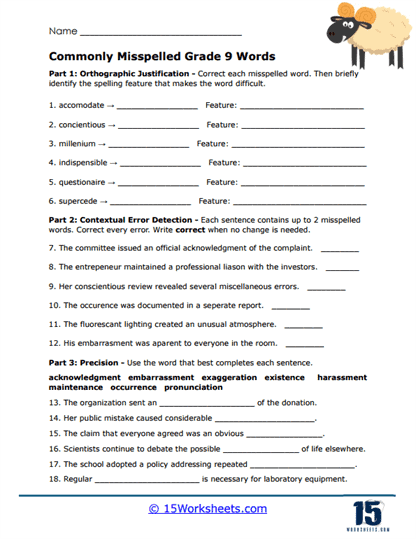
Ninth Analysis
Students investigate why certain words are difficult by explaining challenging spelling features before correcting mistakes. Understanding the reason behind a spelling often makes it much easier to remember.
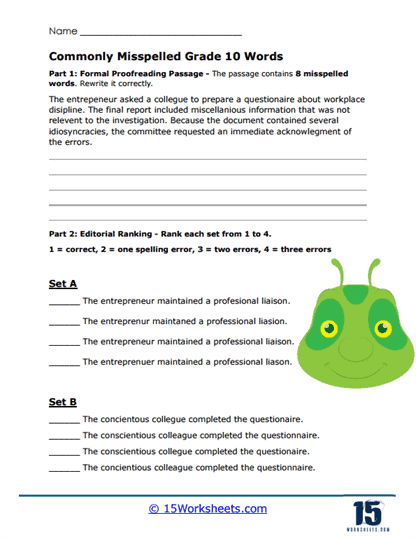
Tenth Editing
Students proofread formal writing, rewrite corrected passages, and compare nearly identical sentences for spelling accuracy. The editing-focused format mirrors the kind of careful revision used in academic writing.
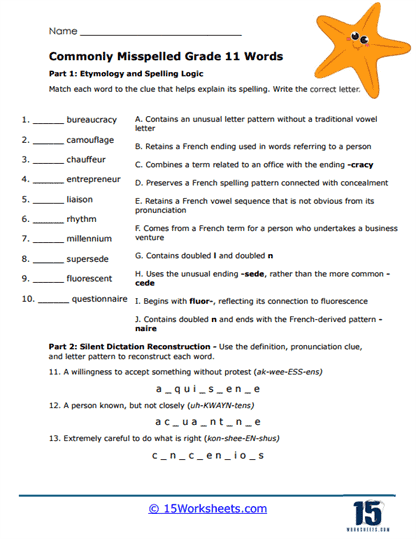
Eleventh Logic
Students discover the fascinating histories behind difficult English words while rebuilding advanced vocabulary from clues. Learning about language origins gives many unusual spellings a memorable explanation.
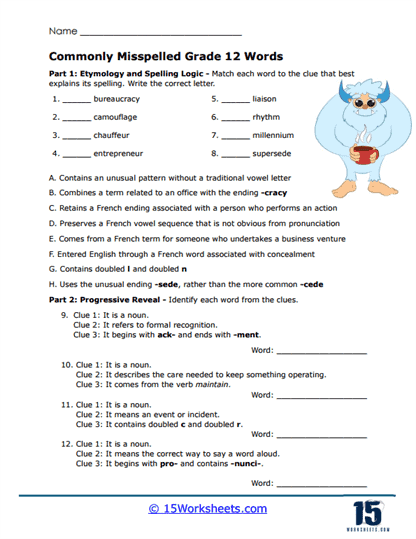
Twelfth Reasoning
Students solve advanced spelling challenges using etymology, structure, and progressive clues rather than memorization alone. The reasoning-based approach prepares learners for the demanding vocabulary they will encounter beyond high school.
What are Commonly Misspelled Words?
Commonly misspelled words are words that many people find difficult to spell correctly, even after seeing and using them many times. Some are challenging because they contain silent letters, unusual letter combinations, doubled consonants, or spelling patterns that do not match their pronunciation. Others are frequently confused with similar-looking words or contain letter sequences that are easy to reverse. Learning these words helps students avoid some of the most frequent spelling mistakes in everyday writing.
As students grow, the words they find challenging become more advanced. Younger learners often practice high-frequency words used in everyday reading and writing, while older students encounter longer academic vocabulary with more complex spelling patterns. Understanding roots, prefixes, suffixes, borrowed words, and common spelling rules helps learners recognize these words more easily. Looking for patterns is often much more effective than trying to memorize every word individually.
Developing confidence with commonly misspelled words improves writing across every subject. Students spend less time correcting mistakes and more time focusing on their ideas, organization, and communication. Strong spelling also supports proofreading, reading comprehension, vocabulary growth, and overall language development. By mastering the words that cause the most trouble, students build writing habits that will continue to benefit them throughout school and beyond.