
Drop the E Spelling Worksheets
About Our Drop the E Spelling Worksheets
Many English words change slightly before a suffix is added, and one of the most common spelling rules is dropping the final silent e. Our Drop the E Spelling Worksheets help students recognize when this rule applies and how it changes words as they add endings such as -ing, -ed, -er, and -est. Instead of simply memorizing the rule, students build new words, compare spelling patterns, and apply the changes in meaningful reading and writing activities. Each worksheet helps learners understand not just what changes, but why it changes.
This collection explores the drop the e rule through a variety of creative, hands-on activities. Students solve beach, safari, space, aquarium, museum, and mountain-themed challenges while building words, sorting suffixes, completing stories, proofreading sentences, matching roots, and choosing correctly spelled forms. Along the way, they learn when the silent e should be dropped before vowel-starting suffixes and when it should remain before many consonant-starting suffixes. The variety of exercises provides repeated practice that helps the rule become second nature.
Understanding when to drop the final e strengthens much more than spelling. Students improve their grammar, vocabulary, proofreading, and word-building skills while gaining confidence using new word forms in their writing. Recognizing this common spelling pattern also helps learners decode unfamiliar words more efficiently and avoid frequent spelling mistakes. By practicing the rule in meaningful contexts, students develop a stronger understanding of how English words are formed and used.
About Each Worksheet
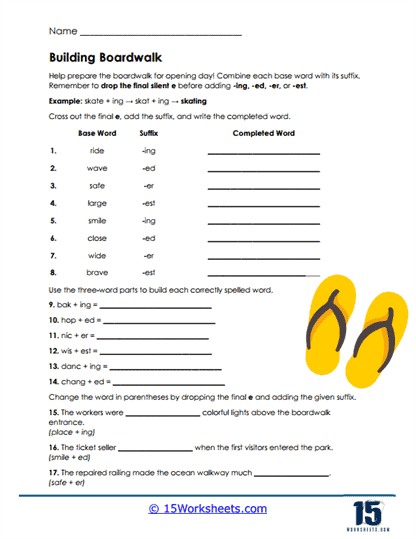
Boardwalk Builder
Students transform silent e words by adding new endings while preparing a busy beach boardwalk. Building each word step by step makes the drop the e rule easy to spot and remember.
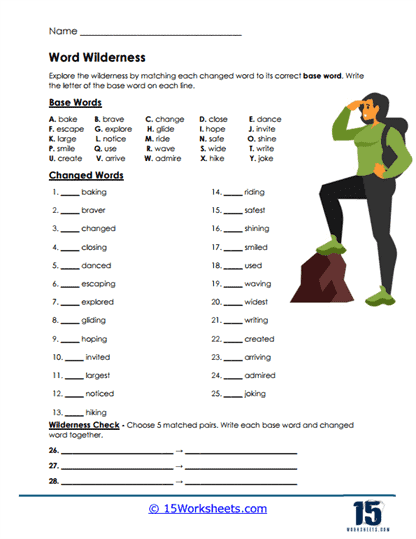
Wilderness Match
Students work backward by matching changed words with their original base words. Seeing how the same rule applies across many examples helps reinforce lasting spelling patterns.
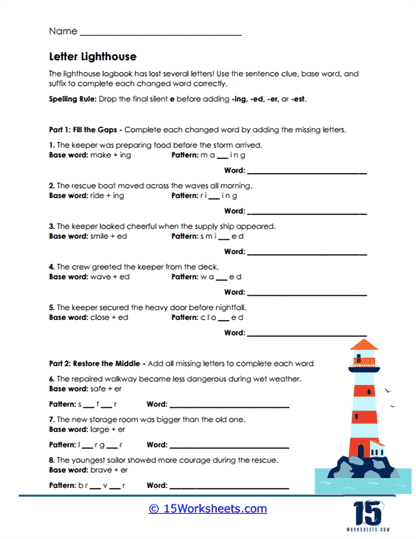
Lighthouse Letters
A lighthouse logbook is missing important words, and students must restore them using sentence clues and the drop the e rule. The combination of reading and spelling encourages careful problem-solving.
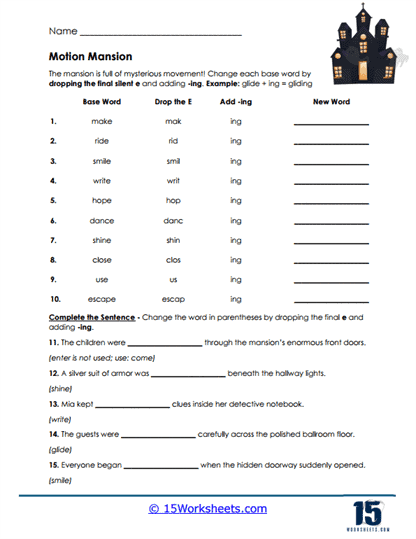
Motion Mansion
Students explore a mysterious mansion while changing action words into -ing forms. The spooky setting makes repeated word-building practice surprisingly entertaining.
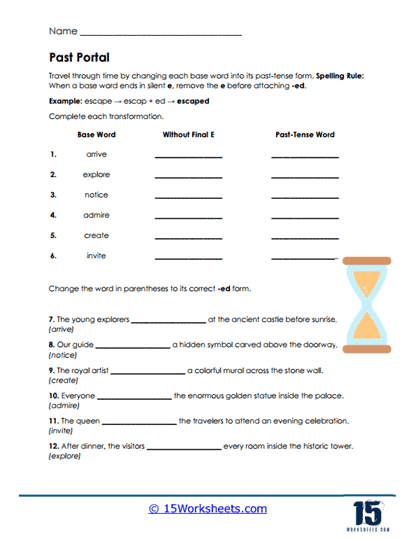
Past Portal
Time-travel adventures give students plenty of opportunities to build correctly spelled past-tense verbs. The activity clearly shows why an extra e isn’t needed before adding -ed.
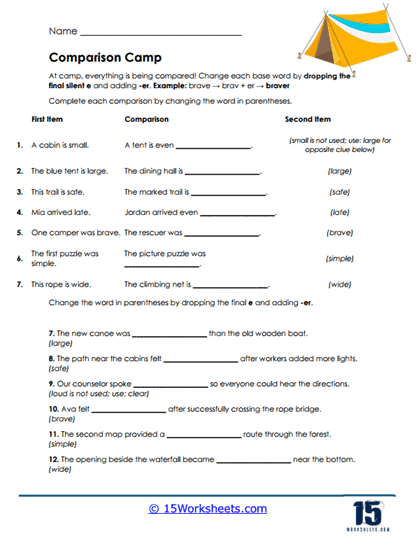
Comparison Camp
Camping-themed comparisons help students create -er forms from silent e words. Every sentence connects the spelling change with real descriptive writing.
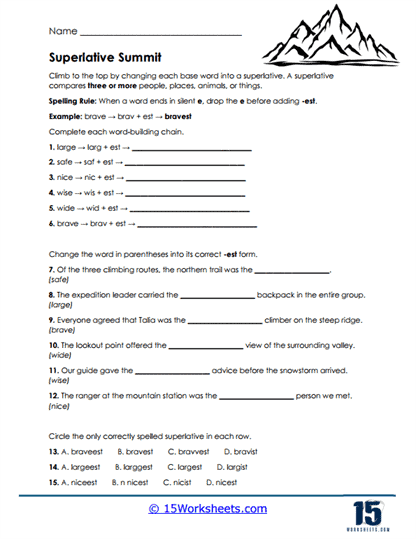
Summit Superlatives
Students climb toward the highest peak by forming superlative words ending in -est. Building each word in stages makes the spelling pattern much easier to understand.
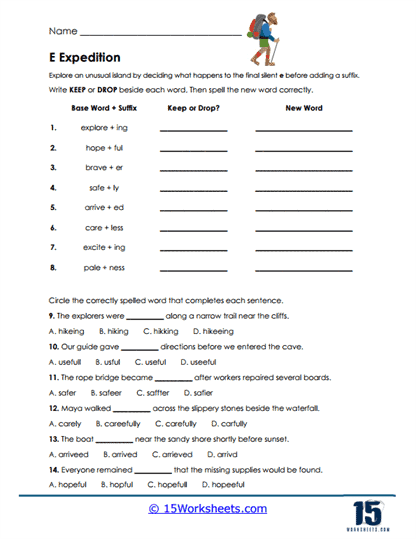
Island Decisions
Students decide whether each silent e should stay or disappear before adding different suffixes. Comparing vowel-starting and consonant-starting endings helps build flexible spelling knowledge.
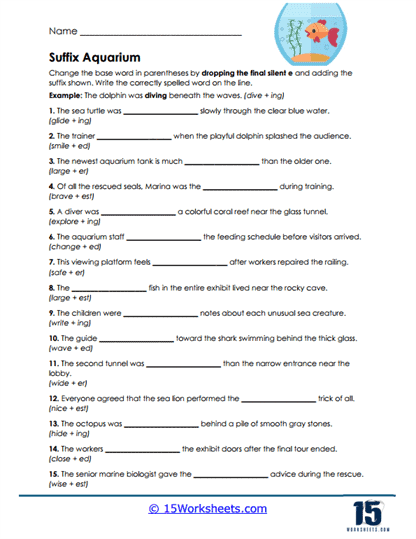
Aquarium Changes
Sea-life sentences challenge students to choose the correct suffix before applying the spelling rule. Mixing different word forms encourages students to think about grammar as well as spelling.
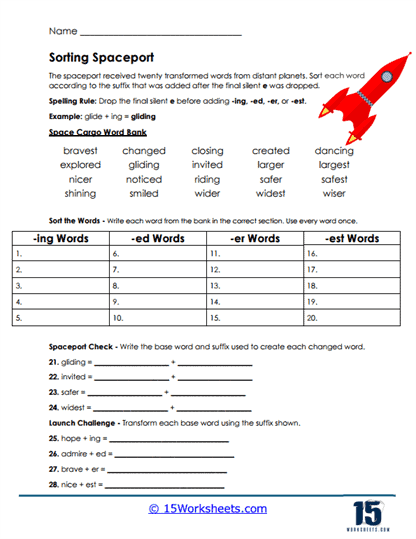
Spaceport Sorting
Students organize changed words into groups based on their suffixes before launching new word-building challenges. Sorting helps reveal how different endings serve different purposes.
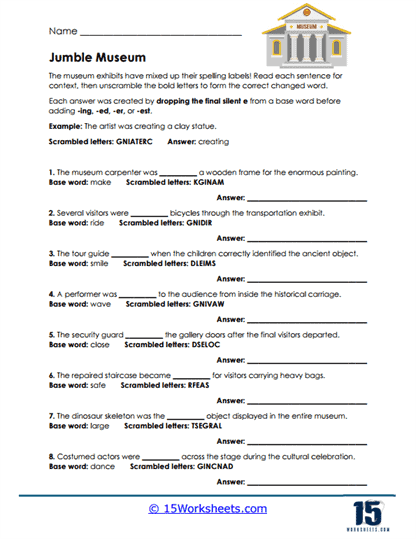
Museum Scramble
Mixed-up museum labels require students to unscramble words after applying the drop the e rule. Rebuilding each word strengthens visual memory and careful letter sequencing.
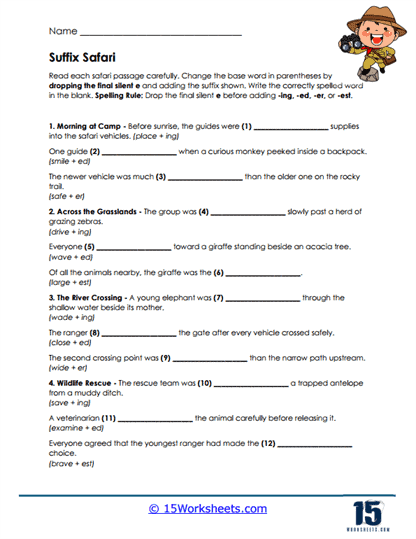
Safari Suffixes
Students complete an exciting safari adventure by creating correctly spelled words throughout the story. Reading connected passages helps the spelling pattern feel more natural and meaningful.
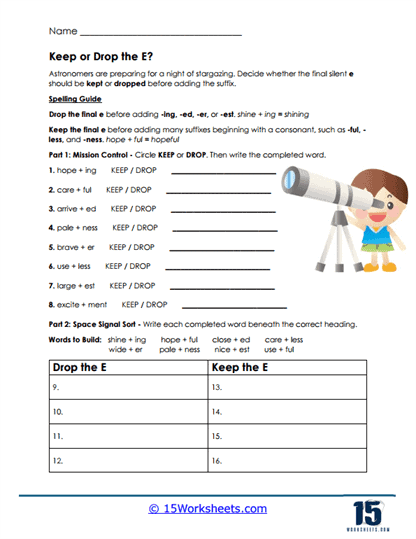
Stargazing Sort
Students decide whether each silent e should be kept or dropped before sorting completed words into rule-based groups. Comparing both patterns side by side helps prevent common spelling mistakes.
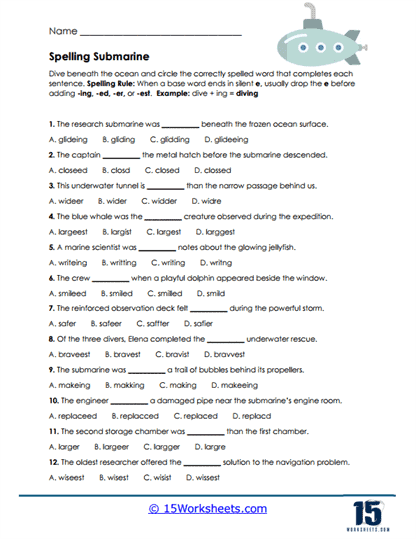
Submarine Spelling
Ocean-themed multiple-choice questions challenge students to identify correctly spelled words from several convincing alternatives. Careful comparison builds proofreading confidence while reinforcing the rule.
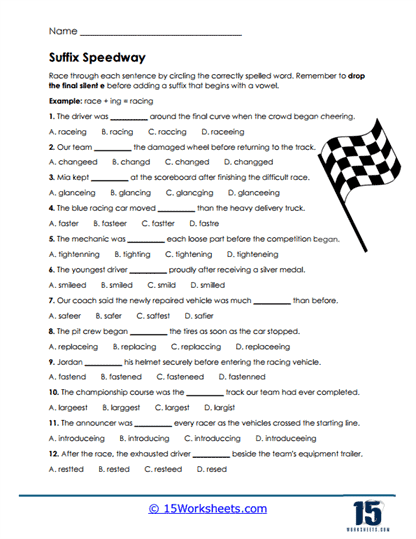
Suffix Speedway
Students race through a final review by choosing correctly spelled suffix forms in a variety of sentence types. The fast-paced format provides an energetic finish while reviewing every major part of the rule.
What is the Drop the E Spelling Rule?
The drop the e spelling rule explains what often happens when a word ending in a silent e receives a suffix that begins with a vowel. In many cases, the final e is removed before adding endings such as -ing, -ed, -er, or -est. For example, make becomes making, hope becomes hoped, and large becomes larger. Removing the silent e keeps the spelling simpler while maintaining the correct pronunciation.
The rule does not apply in every situation, however. When many suffixes begin with a consonant, such as -ful, -less, or -ness, the final e is usually kept. For example, hope becomes hopeful and care becomes careless. Learning to look at the beginning of the suffix helps students decide whether the silent e should stay or be removed.
Mastering the drop the e rule helps students become stronger readers, writers, and proofreaders. It improves spelling accuracy, strengthens grammar, and helps learners recognize how words change when new endings are added. These skills also support vocabulary growth because students begin to understand how many related words are built from the same base word. By practicing this common spelling pattern, students gain confidence using a wide variety of word forms in everyday writing.