
Adding -ed and -ing Worksheets
About Our Adding -ed and -ing Spelling Worksheets
Learning when to add -ed and -ing is an important step toward becoming a stronger reader and writer. Our Adding -ed and -ing Worksheets help students understand how verbs change to show actions that already happened or actions that are happening now. Instead of simply memorizing spelling rules, students practice applying them through creative activities that make word building feel both interactive and meaningful. Each worksheet encourages learners to recognize patterns, think carefully about spelling changes, and use verbs correctly in complete sentences.
This collection explores adding -ed and -ing through a variety of engaging formats. Students solve mazes, proofread funny stories, complete sentence activities, repair mixed-up words, follow adventure themes, sort spelling patterns, and build new verb forms from root words. Along the way, they practice important spelling rules such as dropping a final e, doubling a final consonant, changing y to i before adding -ed, and knowing when a word simply takes the new ending. The changing activity styles provide repeated practice while keeping students interested from one worksheet to the next.
Understanding how to add -ed and -ing helps students write more accurately and communicate their ideas more clearly. These spelling patterns appear in everyday reading, classroom assignments, stories, and conversations, making them essential language skills. As students become more confident using these verb endings, they also strengthen their grammar, proofreading, reading comprehension, and overall writing fluency. This collection gives learners the tools they need to recognize spelling patterns and apply them with confidence.
About Each Worksheet
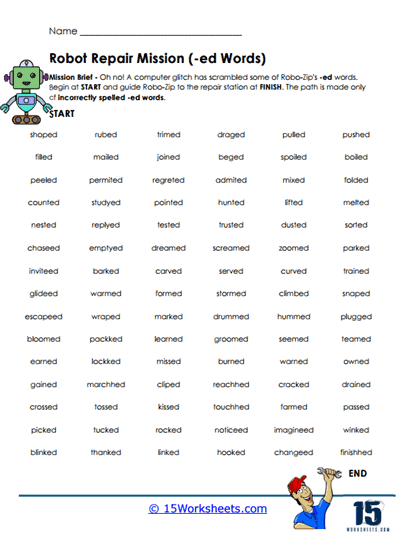
Robot Route
Students guide a repair worker through a robot-themed maze by following only correctly spelled -ed words. Every careful turn reinforces past-tense spelling while making proofreading feel like part of the adventure.
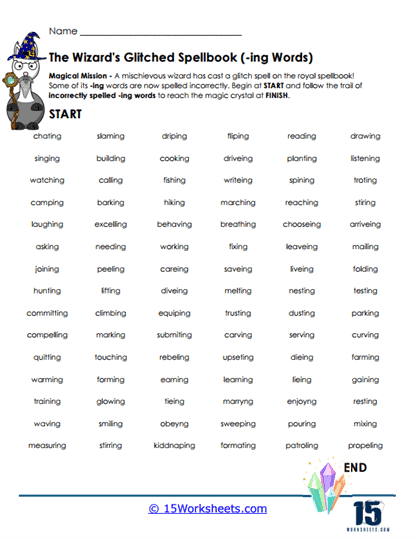
Wizard Trail
A magical maze challenges students to spot incorrectly spelled -ing words before collecting the wizard’s crystals. Comparing similar spellings helps learners build confidence with ongoing-action verbs.
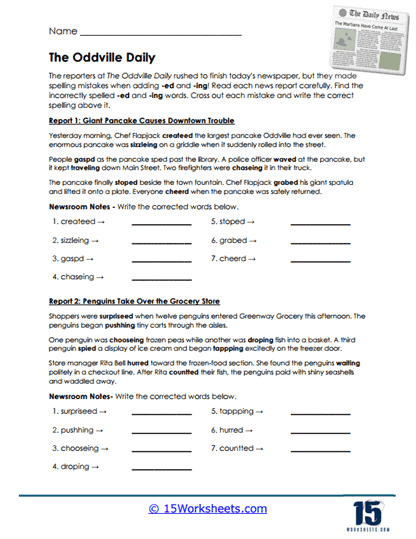
Newsroom Corrections
Students become newspaper editors as they fix spelling mistakes hidden inside two hilarious news stories. The unusual headlines keep proofreading fun while reinforcing -ed and -ing spelling rules.
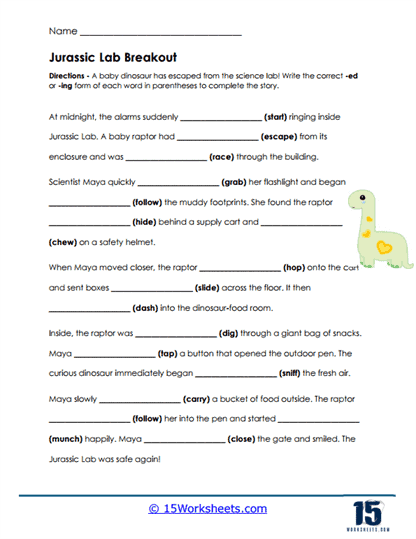
Raptor Escape
A runaway baby dinosaur creates plenty of excitement as students choose the correct -ed or -ing form for each sentence. Following the action-packed story makes verb endings much easier to understand.
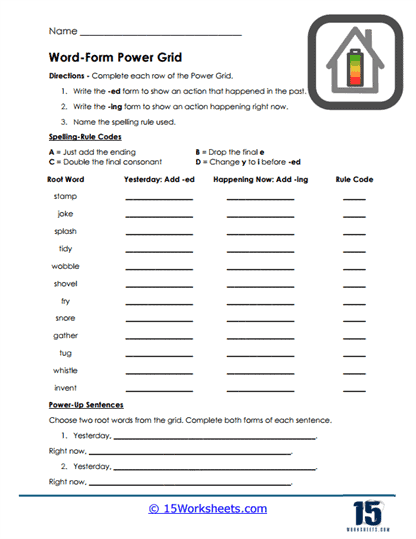
Verb Grid
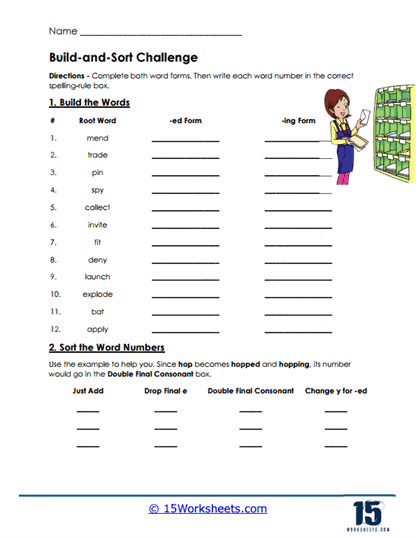
Students build both the -ed and -ing forms of each root word before identifying the spelling rule that applies. Seeing the two forms side by side helps spelling patterns become much more noticeable.
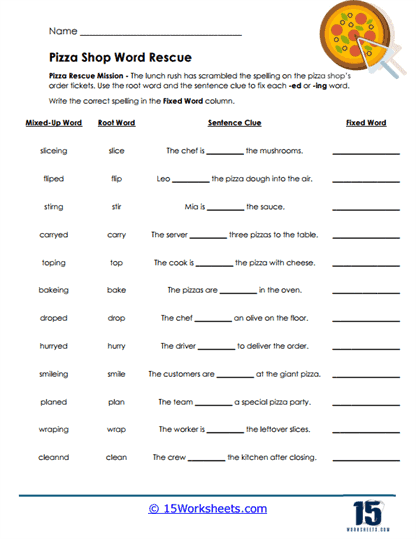
Pizza Repair
A busy pizza shop needs help fixing scrambled order tickets filled with incomplete action words. Students repair each verb while using sentence clues to determine the correct ending.
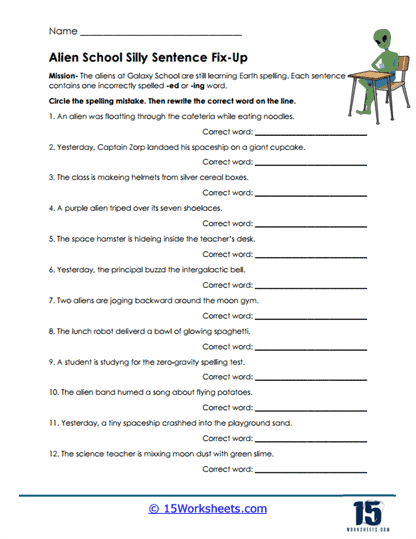
Alien Errors
Earth spelling has completely confused a group of friendly aliens, and students must fix every mistake they make. The silly sentences add humor while providing valuable proofreading practice.
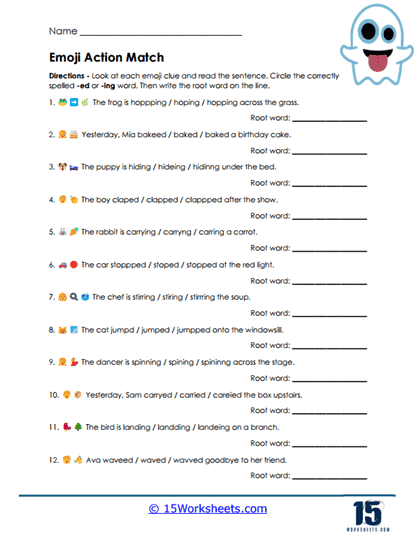
Emoji Actions
Emoji clues help students choose the correct -ed or -ing form before identifying the original root word. The visual prompts make grammar practice feel quick, colorful, and engaging.
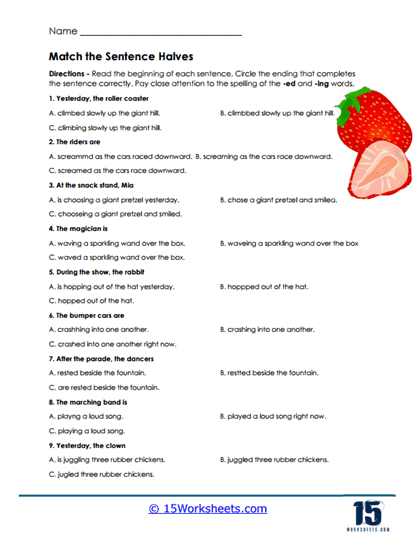
Sentence Partners
Students match sentence beginnings with the endings that correctly use -ed or -ing verbs. Time clues such as yesterday and right now help guide every decision.
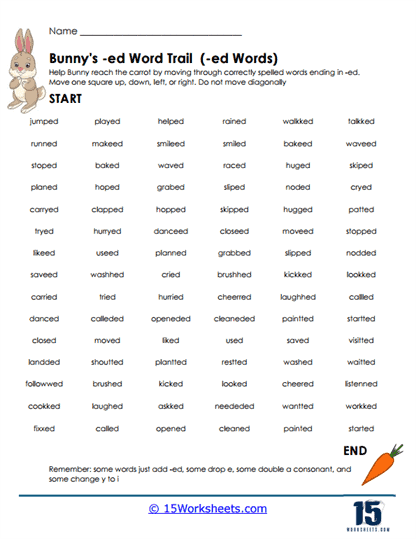
Bunny Trail
A hungry bunny can only reach its carrot by following correctly spelled -ed words through a winding maze. Every correct choice reinforces past-tense spelling patterns in a playful way.
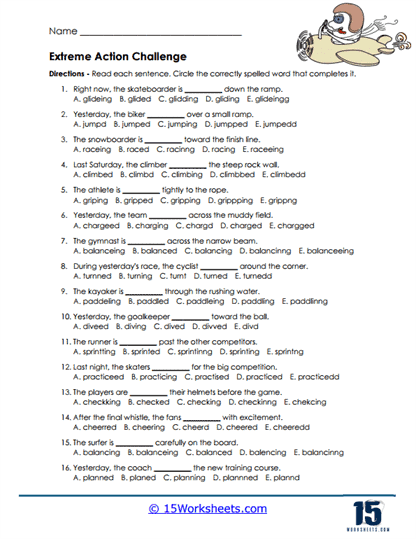
Action Trials
Sports-themed sentences challenge students to select the correctly spelled verb from several similar-looking choices. The fast-paced situations make grammar and spelling practice feel energetic and relatable.
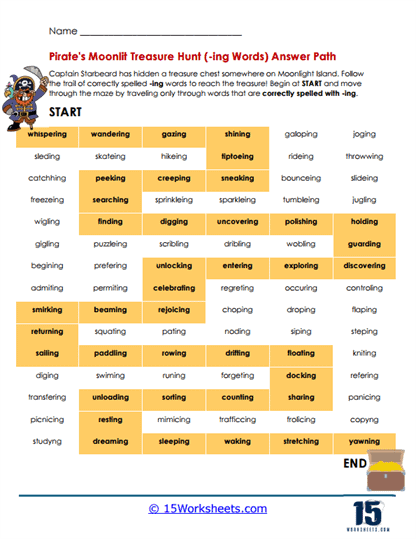
Treasure Path
Students help a pirate discover hidden treasure by following a trail of correctly spelled -ing words. The adventurous setting turns present-action spelling practice into an exciting puzzle.
Build Sort
Students first create -ed and -ing forms, then sort them according to the spelling rule they follow. Organizing words into categories helps learners recognize patterns instead of relying on memorization.
Time Postcards
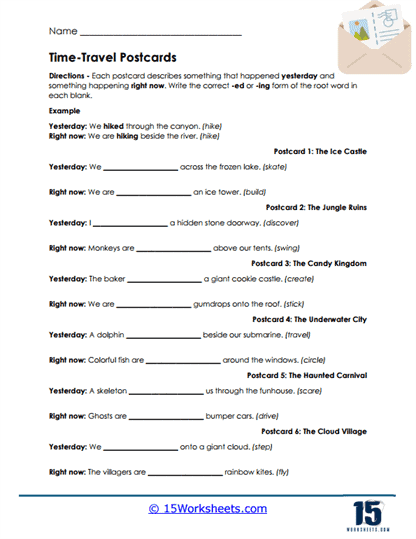
Imaginary postcards from exciting destinations ask students to write about both yesterday and today using the correct verb endings. The travel theme makes comparing past and present actions especially memorable.
Ending Review
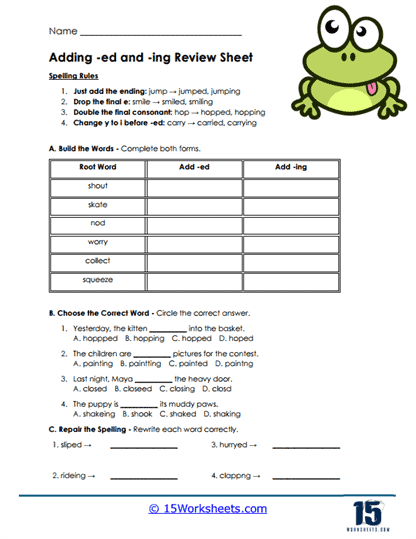
This comprehensive review combines word building, sentence completion, and proofreading into one final challenge. Students finish the collection by applying every major -ed and -ing spelling rule they’ve learned.
Why Do We Add -ed to Words?
When you add -ed to the end of an action word (a verb), it acts like a time machine that pushes the action into the past. It tells the listener or reader that the action is completely finished and already happened.
For example, if you say, “I walk to the park,” you are talking about what you do right now. But if you add -ed to make it “I walked to the park,” your words now show that your trip to the park is over and done with.
Why Do We Add -ing to Words?
When you add -ing to a word, it shows that an action is happening right now or is continuing over time. It makes your words feel active and alive in the present moment!
For example, if you change “I play video games” to “I am playing video games,” it lets everyone know that you are in the middle of the game at this very second. Changing the ending completely shifts when and how the action takes place in the reader’s mind.