
Letter K Worksheets


About These 15 Worksheets
The letter K doesn’t always get the spotlight like A or Z, but it’s a fun and friendly character in the alphabet lineup. These worksheets make K come alive through coloring, tracing, mazes, word games, and even kangaroo and koala themes. Kids get to practice recognizing both uppercase and lowercase K, learn how to write it, and connect it to real words they already know. It’s a well-rounded mix of handwriting practice, phonics, and playful activities that keep kids excited about learning.
This collection is designed to give learners multiple ways to interact with the letter. Some worksheets focus on fine motor skills through tracing and penmanship, while others spark creativity with coloring or themed puzzles. By presenting K in so many different contexts, kids can build recognition, strengthen recall, and understand how the letter shows up in words. The variety also helps every type of learner-whether they love drawing, solving puzzles, or hunting for letters in a word search.
Best of all, these worksheets connect literacy with fun themes that kids actually care about. Spotting K’s in a maze feels like an adventure, coloring kangaroos builds a bridge between animals and letters, and unscrambling K words turns phonics into a puzzle. It’s a playful way to ensure the letter K doesn’t just stay on the page-it sticks in memory and shows up naturally in everyday reading and writing.
Have a Look Inside Each Worksheet
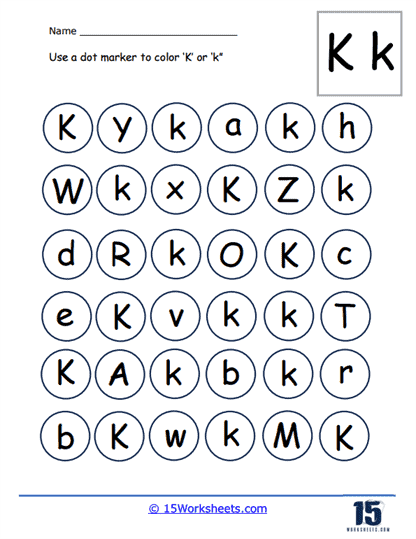
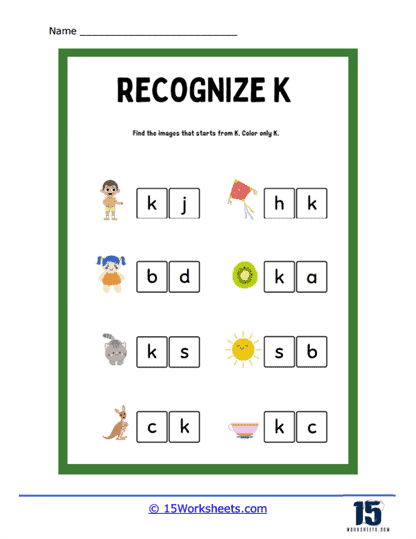
K-Circle
Students circle every K they can find in a mix of letters. It sharpens recognition by making them scan carefully through distractors. The task feels like a mini detective hunt. A quick and fun way to reinforce spotting the letter K.
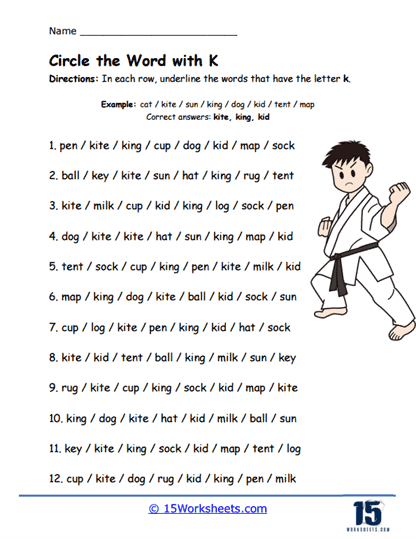
Karate K
This worksheet pairs the letter K with karate imagery for extra excitement. Kids trace and color K’s while connecting the sound to action-packed pictures. The theme adds energy and fun to standard practice. A lively way to remember K with some “kick.”
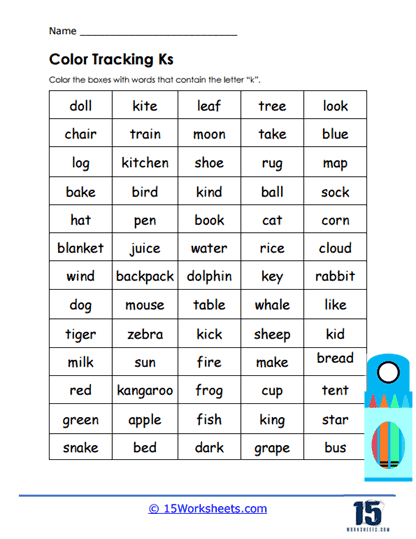
K-Tracker
Children follow or trace the letter K along paths designed to strengthen writing flow. It encourages consistent strokes and better penmanship. The guided paths act like training wheels for letter formation. A supportive step toward confident handwriting.
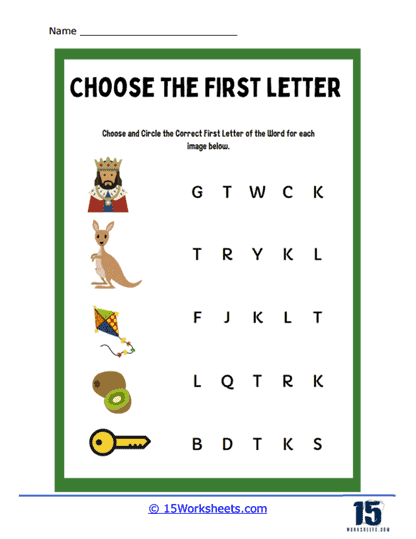
The 1st Letter
This activity introduces “K” as the first letter of the alphabet sequence, encouraging kids to recognize its position in context. It helps establish alphabetic order and familiarizes young learners with where K belongs. The recognition skill supports early literacy development in a straightforward, visual way. A solid first step in forming a friendship with the letter K.
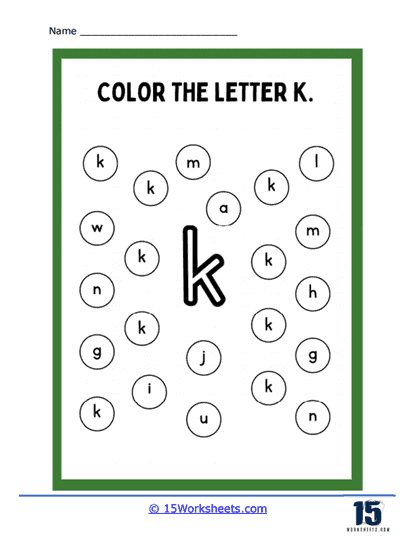
Coloring Ks
Students get to color big, bold K’s-uppercase and/or lowercase-bringing creativity and bold strokes to letter recognition. It helps reinforce the shape and contour of the letter K in a fun, artful way. Combining coloring with learning keeps young minds engaged and relaxed. A creative way to make letter shapes memorable.
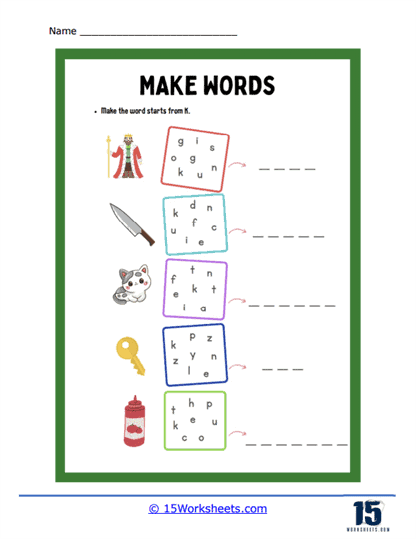
Unscramble K Words
Here, children unscramble letters to form K-starting words like “kite,” “key,” or “kangaroo.” It links phonics with spelling, helping kids connect the K sound to actual words. Through playful puzzles, they build decoding and literacy skills. A clever puzzle that turns letters into real words.
K Bubbles
This worksheet fills the page with bubbly versions of the letter K for students to trace or color, making practice feel more like art than work. Repeating the bubble letter K helps strengthen recognition while also improving fine motor control through careful tracing. The large, rounded shapes give kids plenty of space to practice, turning letter learning into a fun and creative experience.
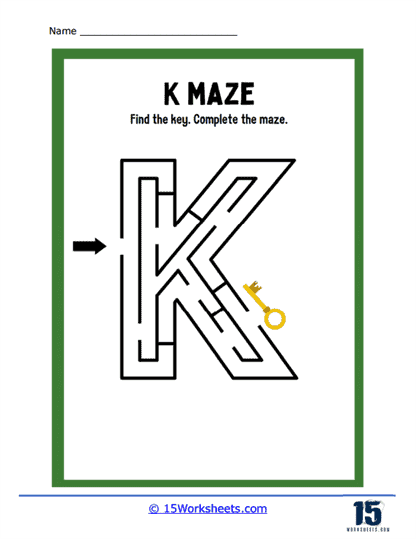
K Maze
Kids navigate through a maze by following only the paths marked with the letter K. It’s a fun, interactive way to sharpen letter identification and visual scanning. The challenge format adds excitement and focus to learning. A maze adventure that doubles as letter practice.
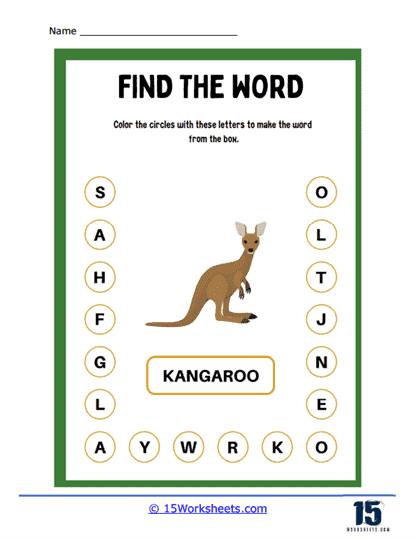
Kangaroo Letters
This worksheet features kangaroos-maybe hopping across the page-labeled with uppercase or lowercase K for kids to trace or color. It ties the letter K to an iconic animal, reinforcing phonics through imagery. Kids connect a sound with a fun visual, boosting recall. A playful bridge between animal imagery and academic learning.
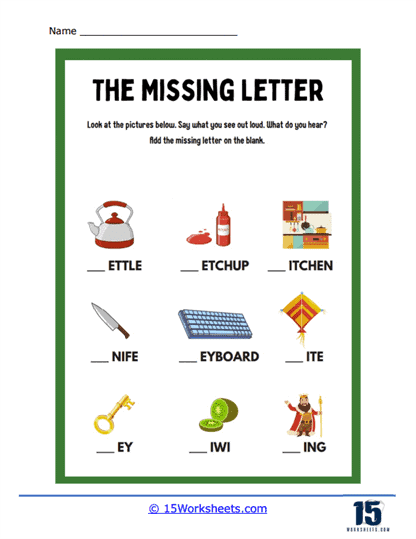
Front Missing Letter
Students see words or letter sequences with a missing “front” letter and must fill in the “K” where appropriate. It strengthens spelling and phonemic awareness. Detecting the right missing piece adds an element of puzzle-style learning. A precise way to focus on letter placement.
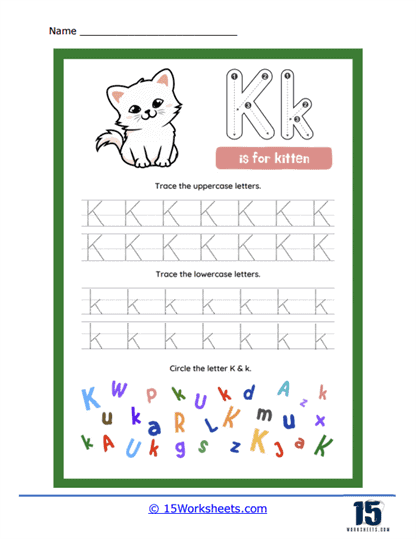
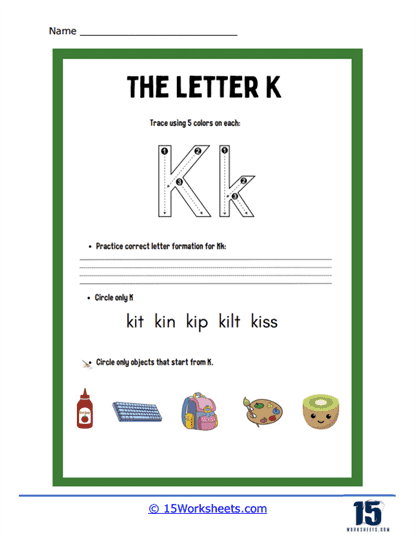
Trace and Circle
Here, children trace the letter K multiple times and then circle instances of K in a group of letters. It combines writing practice with visual discrimination. Repetition and recognition work hand in hand. A balanced, hands-on letter lesson.
K Skill Review
A review worksheet consolidates multiple K-focused skills-perhaps tracing, recognizing, and writing words with K. It brings together everything learned into one comprehensive review. This encourages confidence through repetition and varied practice. A final check to make sure K is well understood.
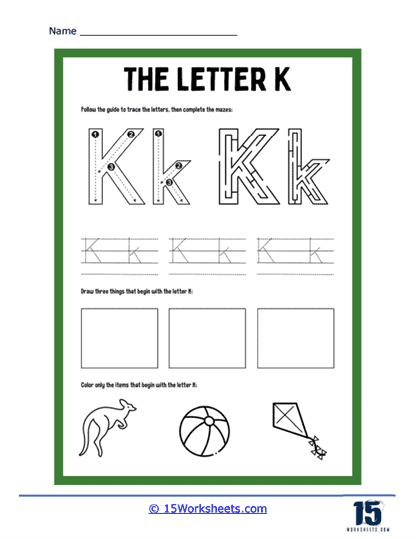
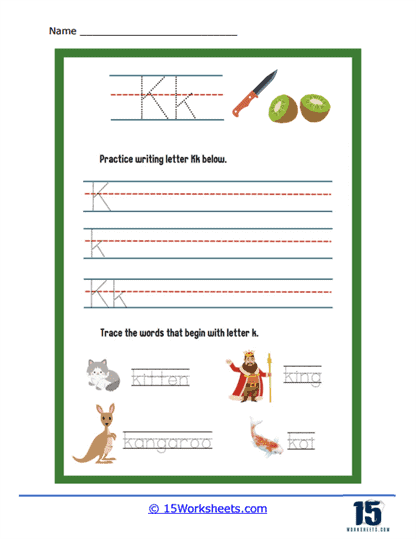
Trace, Write, and Color
Students trace K, then write it independently, and finally color a K-picture or the letter itself. This multi-step process integrates motor skill development with visual and kinesthetic learning. It gives learners a full cycle from guided tracing to independent writing. A complete letter-formation package that doesn’t feel like drill work.
Find the Letter
Children search through a jumble of letters to locate and mark all the K’s. This activity supports visual scanning and letter recognition in a fun, game-like approach. It’s useful for boosting attention to detail. A classic “spot-the-letter” that keeps learners alert.
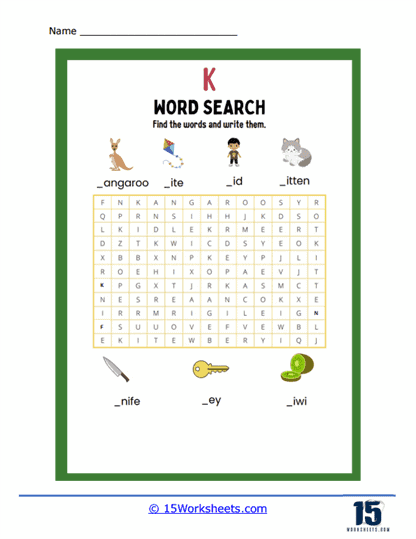
K Word Find
This is a word-search puzzle filled with K-related words-kids find and circle words like “kite,” “king,” or “kangaroo.” It combines vocabulary practice with puzzle solving. Perfect for reinforcing sight word recognition tied to the letter K. A word-hunt that’s both engaging and educational.
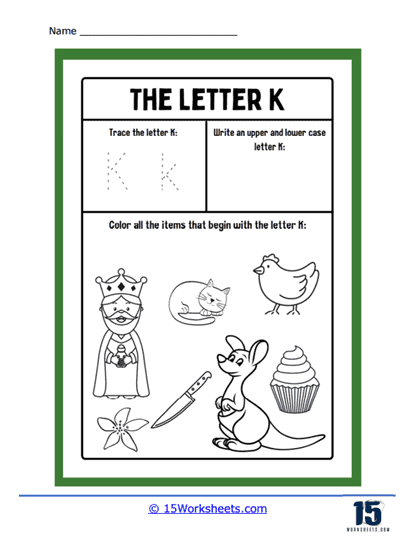
5 Colors
This worksheet may incorporate coloring activities using five specified colors-possibly by coloring the letter K or items that start with K. It practices color recognition alongside letter identification. Blending art and literacy keeps practice vibrant and varied. A small rainbow of learning in one activity.
Penmanship K
Students practice writing uppercase and lowercase K neatly, focusing on stroke formation and spacing. This builds fine motor control and handwriting skills. Formative repetition ensures better muscle memory. Penmanship practice that prioritizes neatness and accuracy.
Tracing Koalas
Kids trace koala shapes or letter-koala hybrids-perhaps outlines of koalas with K’s inside-adding an animal theme to tracing. It ties the letter K to a cute and memorable creature, making tracing more appealing. The friendly imagery motivates tracing practice. A cuddly twist to letter learning.
Little-known Facts About The Letter K
The Silent “K”
In words like knight, knee, and know, the K used to be pronounced in Old and Middle English. Over time, the sound dropped away, but the spelling stuck. Today, the silent “K” is one of the quirkiest leftovers in English spelling.
Baseball’s Strikeout Symbol
In baseball scorekeeping, K means strikeout because the “K” is the most prominent letter in strike. A backward K (ꓘ) means the batter didn’t swing and struck out “looking.” This shorthand was invented in the 1860s and is still used today.
Kilo and Big Numbers
The letter K is shorthand for “thousand”, coming from the metric prefix kilo-. That’s why people say “20K” to mean 20,000. The usage spread from science into finance, tech, and everyday language.
Potassium’s Chemical Symbol (K)
On the periodic table, K stands for potassium, but not because of the English word. It comes from kalium, the Latin name for potassium salts. This creates a fun mismatch: sodium is Na, but potassium is K.
Greek and Norse Origins
Words that start with K in English often trace back to Old Norse or Greek, while C-words usually trace to Latin or French. For example, kettle came from Norse, while cauldron came from Latin. This hidden divide explains why English sometimes has two similar words with C and K.
K in Chess Notation
In chess, K stands for the King, which is why the Knight uses N instead. This makes K one of the most important symbols in chess writing. Without it, recording games would be confusing.
The “K” Text Message
In modern texting culture, a simple “K” reply often feels cold or dismissive. Even though it’s just a shorthand for “okay,” tone and context make it come across as passive-aggressive. It shows how a single letter can carry a big social meaning.