
Letter Sequence Worksheets
About These 15 Worksheets
Learning the alphabet is one thing, but mastering the correct order of letters is another milestone altogether. These worksheets give kids plenty of practice filling in missing letters, unscrambling jumbled sequences, and predicting what comes next. With formats like circling, coloring, sorting, and rewriting, the activities keep things varied and engaging. Each worksheet builds both recognition and memory, making ABC order second nature.
This collection mixes structure with creativity. Worksheets like Color Proper Sequences and Fill Boxes add a visual twist, while Ordering Letters and Sort Them challenge kids to problem-solve. Others, like Rewrite the Order, reinforce neat handwriting along with sequencing skills. The balance ensures kids practice in multiple ways without it ever feeling repetitive.
Beyond just the ABCs, sequencing worksheets strengthen broader skills like logic, organization, and attention to detail. Recognizing what comes before and after supports early reading and spelling, since letter order is the foundation of words. These worksheets turn the basics into fun puzzles that help children feel confident and ready for bigger literacy tasks.
Have a Look Inside Each Worksheet
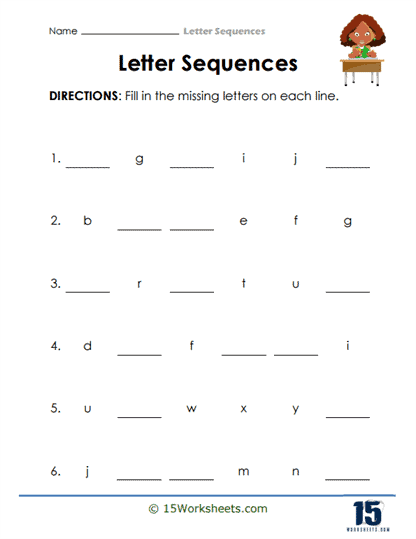
Fill Ins Alphabet
Kids complete alphabet patterns by filling in missing letters. It reinforces letter order and sharpens recognition skills. The activity feels like solving a simple puzzle. A fun way to practice the ABC sequence.
Missing Letters
Students identify and write the missing letters in short sequences. It strengthens memory of alphabetical order. The activity builds quick recall and accuracy. A straightforward drill for beginners.
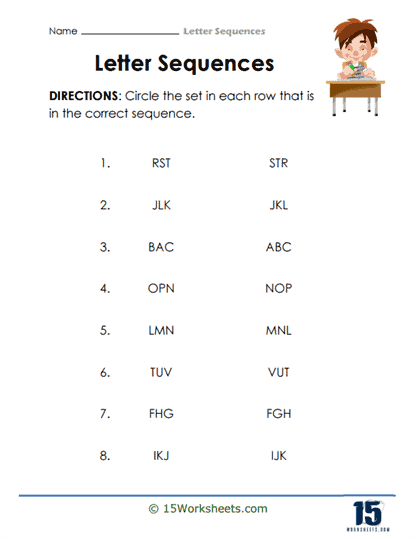
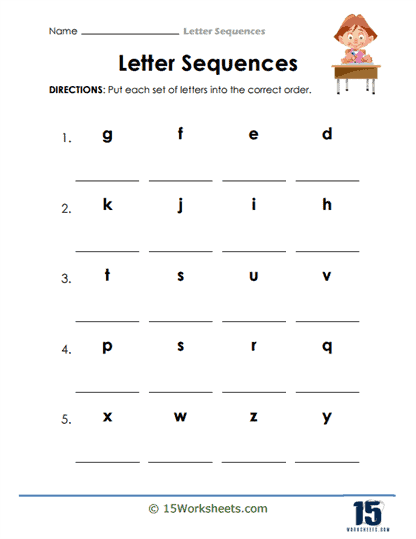
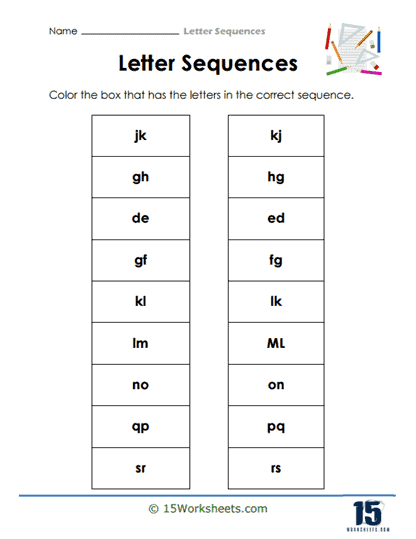
Correct Sequence
This worksheet asks kids to arrange letters into the proper order. It boosts logical thinking and sequencing skills. Learners practice spotting what comes before and after. A neat way to reinforce the ABC flow.
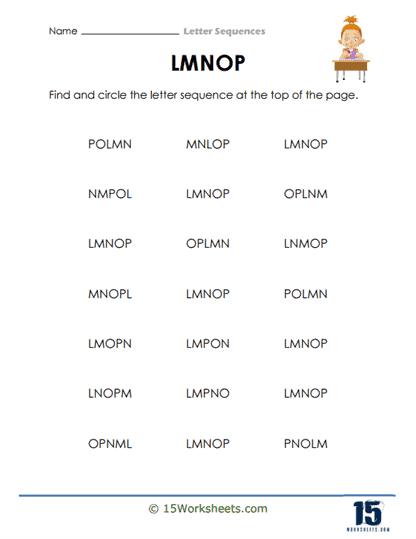
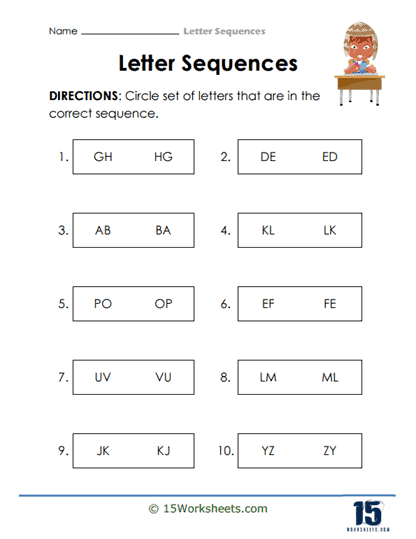
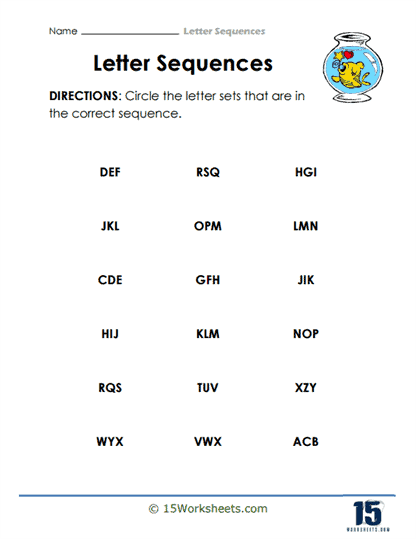
Circle the Sequence
Students circle the correct next letter in a series. The activity develops attention to detail and decision-making. It keeps practice short and engaging. Great for early learners building focus.
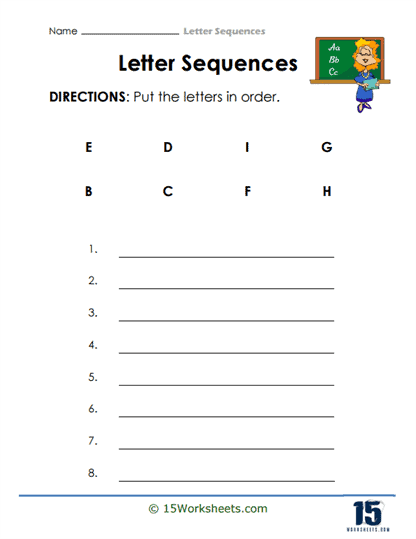
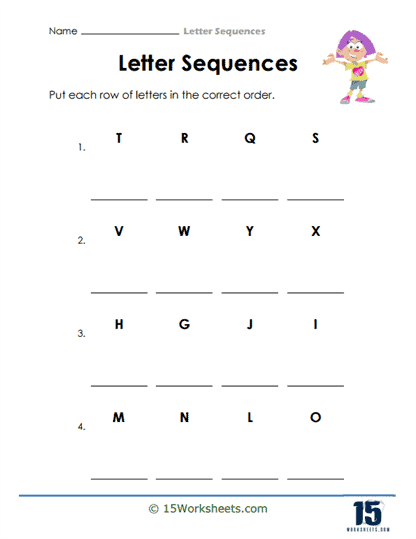
Ordering Letters
Here, children put scrambled letters into the correct order. It helps them internalize the alphabet structure. The task also sharpens sorting and reasoning skills. A hands-on way to master order.
That’s Right
Students check and correct letter sequences. It builds awareness of errors and reinforces accuracy. The activity encourages careful observation. A reflective way to strengthen sequencing confidence.
Bringing Order In
This worksheet focuses on restoring jumbled letters into order. It challenges kids to recognize the proper flow. The task builds both memory and logic. A thoughtful sequencing practice.
What’s Next
Students decide what letter comes next in a given sequence. The activity builds prediction and recall skills. It’s a quick exercise that feels like a guessing game. A playful way to practice ABC order.
Color Proper Sequences
Kids color in sections to show correct letter sequences. The activity blends literacy with art. It reinforces order while making practice creative. A colorful twist on sequencing.
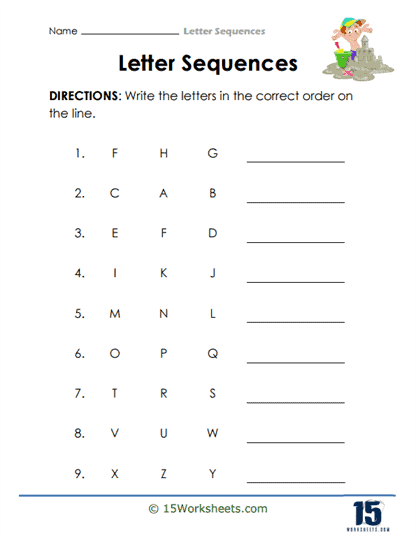
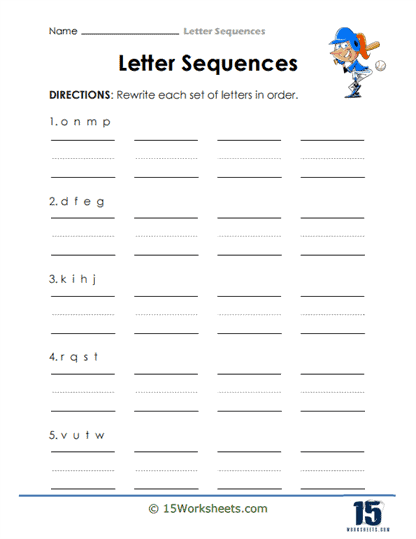
Rewrite the Order
Students rewrite full letter sequences neatly. It builds handwriting, memory, and organization skills. The task supports both literacy and fine motor control. A structured way to strengthen practice.
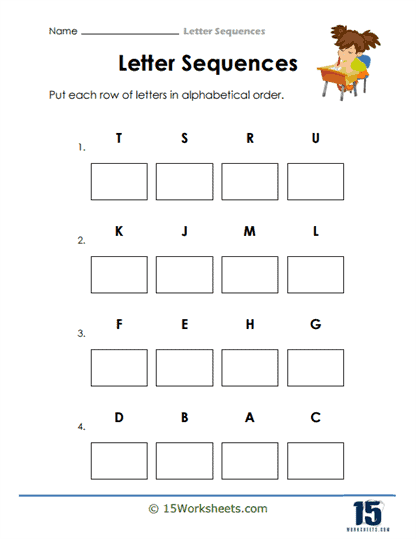
Placing in Rows
This worksheet asks kids to place letters in rows correctly. It emphasizes neatness and sequence recognition. The activity combines order with spatial awareness. A steady drill for beginners.
Putting Them In Place
Students slot letters into their correct positions. The worksheet encourages logical placement and recall. It helps learners see the bigger alphabet pattern. A puzzle-like exercise for young learners.
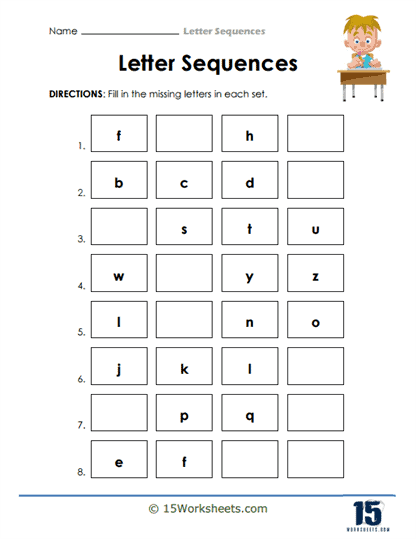
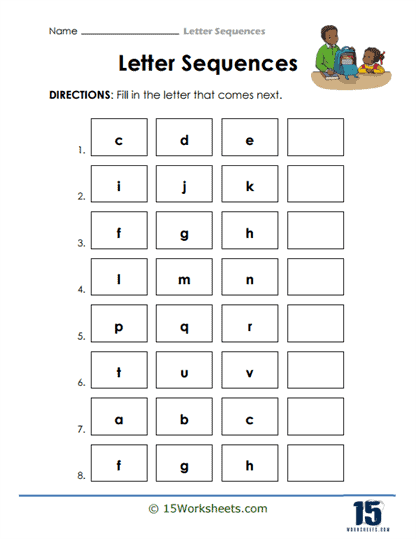
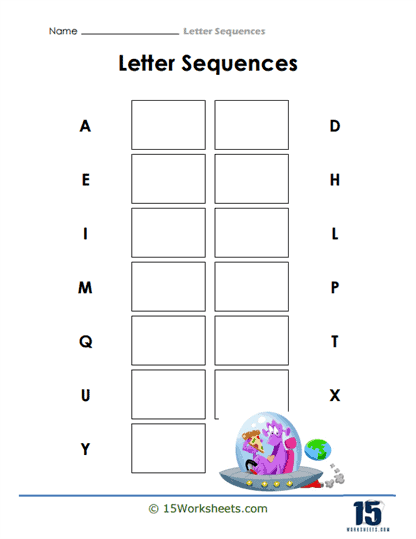
Fill Boxes
Kids place missing letters into boxes to complete the sequence. The box format makes spacing and order clear. It supports handwriting and recognition. A simple but effective activity.
Sort Them
Students sort letters into the right sequence from a mixed set. It strengthens problem-solving and order recognition. The activity feels like organizing a puzzle. A satisfying way to finish the practice.
Helping Kids Understand Letter Sequences
One of the best ways to help students with letter sequences is to get them noticing patterns in words. Instead of thinking about letters one by one, they start to see that some letters often travel together, like “sh,” “ch,” or “ing.” You can make this fun by pointing them out during shared reading, playing simple games where they highlight or circle certain letter groups, or even making a word wall of “letter teams.” This helps students realize that these chunks have their own sounds and can make reading feel a little less overwhelming.
After they’ve had some practice spotting patterns, the next step is helping them use those sequences when they read and write. Word sorts are great for this-students can group words by the patterns they share. Hands-on activities like building words with tiles or magnetic letters also make the practice feel engaging. When reading aloud, blending the sounds in those letter groups helps students connect the pattern they see with the way it sounds. And in writing, filling in missing letter groups or making up new words with them can really strengthen spelling confidence.
It’s also important to show kids these patterns in “real” reading, not just in drills or worksheets. Short stories, poems, or even songs with lots of repeated letter sequences give them a chance to spot what they’ve learned in action. You might encourage them to highlight the sequences in their own books or make a little “treasure hunt” out of it. As they start to notice these chunks in longer, trickier words, they’ll feel more capable as readers and writers. The more they see and use these sequences in meaningful ways, the more natural it becomes.