
Letter Q Worksheets

About These 15 Worksheets
The letter Q doesn’t always get as much spotlight as A, B, or C, but it’s still a superstar of the alphabet! These worksheets make sure kids don’t skip over it by giving plenty of fun ways to meet, trace, and play with Q. From spotting Q’s in mazes to coloring them in bubbles, each activity turns practice into something exciting rather than boring drills. The more children interact with Q, the more confident they’ll be in recognizing and writing it.
This collection helps young learners master both the uppercase and lowercase versions of Q. By combining tracing, coloring, searching, and word connections, kids get a variety of approaches to lock this tricky letter into memory. Even the themes-like queens, quails, and quills-help tie the letter to real-world vocabulary, which makes remembering it a whole lot easier. The worksheets balance handwriting practice with phonics in a way that feels natural and engaging.
On top of letter recognition, these worksheets also sharpen focus, attention to detail, and problem-solving skills. Following Q through a maze or hunting for Q words challenges children’s brains while keeping things fun. Since the letter Q often appears with “u,” kids will also start seeing early spelling patterns without even realizing it. By the end, students won’t just know the letter Q-they’ll be ready to use it with confidence in reading and writing.
Have a Look Inside Each Worksheet
Q-Spotter
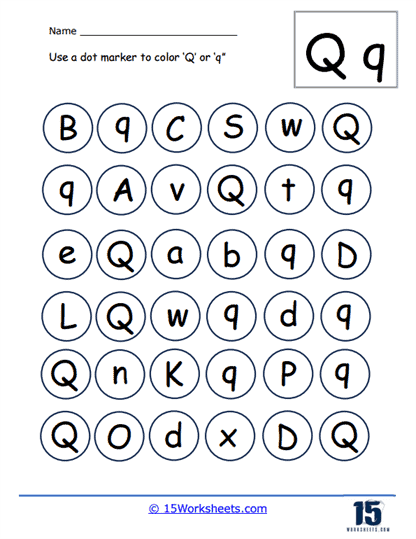
Kids search for uppercase and lowercase Q’s hidden in a sea of other letters. This boosts attention to detail while sharpening letter recognition skills. It feels like a word-search game but focused only on the letter Q. Children get to enjoy a puzzle-like challenge while reinforcing their alphabet knowledge.
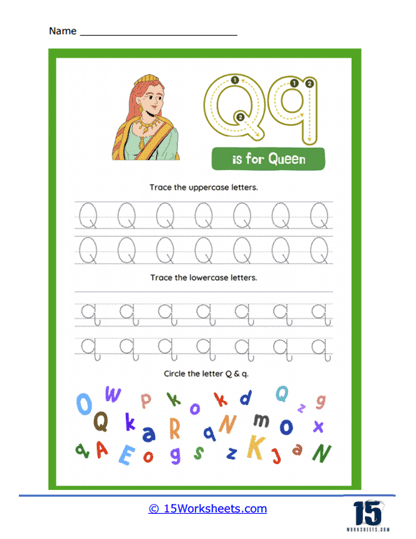
Queen Q
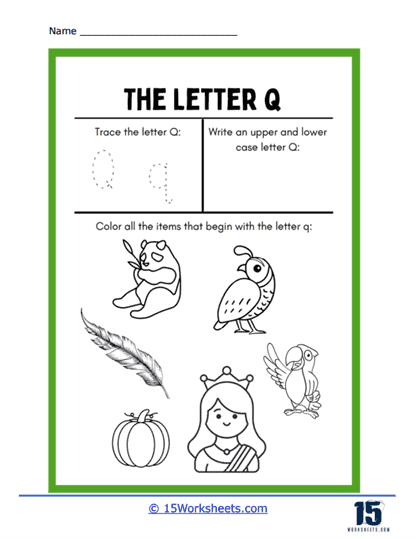
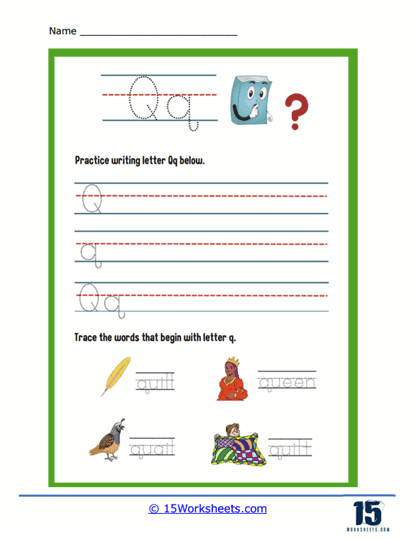
This worksheet introduces Q with a regal queen to make learning memorable. Students trace and write uppercase and lowercase Q, practicing proper handwriting strokes. The queen theme makes the activity fun and engaging. It builds fine motor skills while connecting the letter to a visual image.
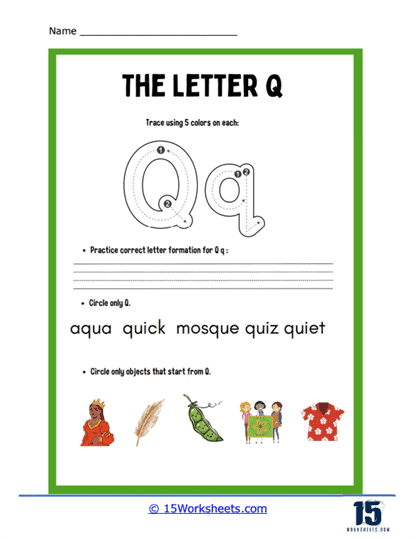
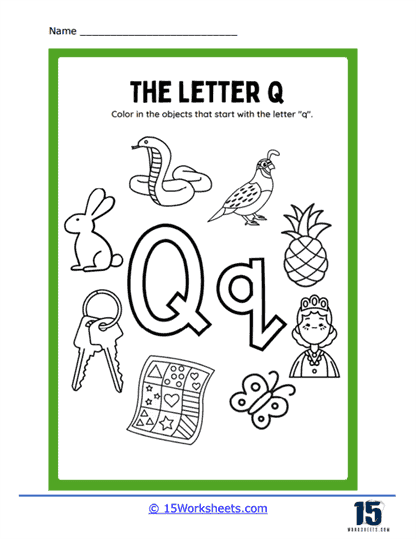
Q-Hunt
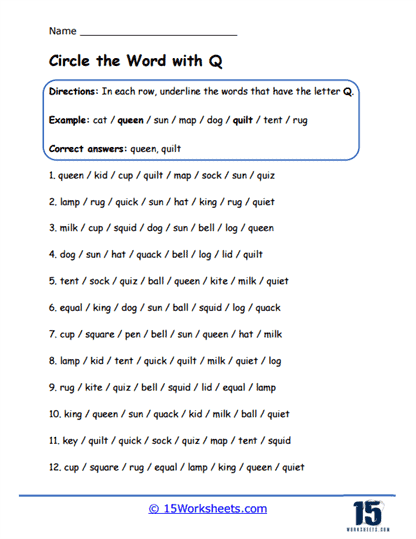
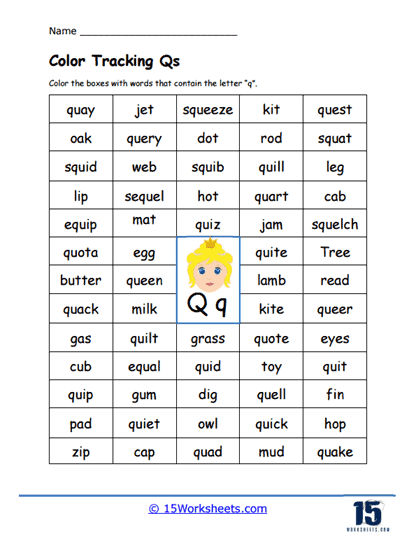
Children go on a playful hunt for words and images that begin with Q. They’ll circle or color items like quilts, queens, or quills. This reinforces phonics skills and helps expand vocabulary. The interactive format makes practicing the sound of Q exciting.
Q Word Scramble
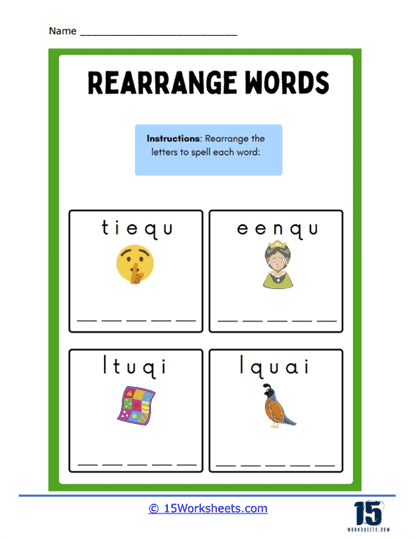
This worksheet challenges kids to unscramble mixed-up letters to form Q-words. It sharpens spelling skills while reinforcing the Q sound in context. The activity feels like a puzzle, encouraging problem-solving. It’s a fun way to combine letter practice with word-building.
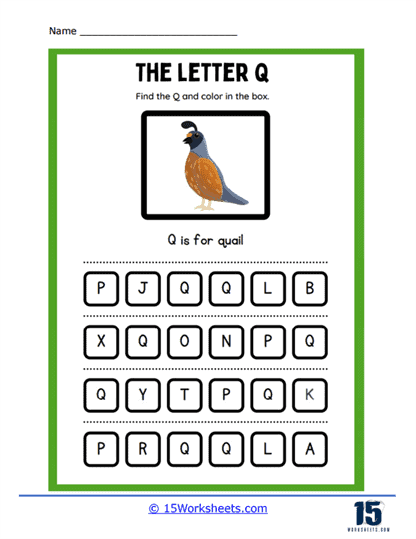
Q is For Quail
Here, kids learn the letter Q by connecting it with the bird quail. They’ll trace, color, and read along with the letter focus. The nature tie-in makes the activity more interesting and memorable. It’s a great way to practice recognition and phonics together.
Find the Word Quill
Students search for the word “quill” in different spots, sharpening reading skills. They’ll strengthen both visual scanning and word recognition. The repetition helps kids connect Q with a familiar vocabulary word. It feels like a little treasure hunt for readers in training.
Letter Q Skills
This worksheet combines multiple Q activities into one. Kids might trace, spot, and match Q words, giving them varied practice. It’s designed to reinforce recognition, writing, and phonics at the same time. The variety keeps learners motivated and practicing longer.
Trace and Circle Qs
Students trace big bold Q’s, then circle smaller ones mixed with other letters. This strengthens both handwriting and recognition skills. The two-step approach makes kids switch between writing and searching. It’s an effective way to reinforce Q from multiple angles.
Introducing Q
This worksheet provides a simple, friendly introduction to the letter Q. Students learn to recognize, trace, and identify it in words. The activity is beginner-friendly, perfect for children just meeting Q for the first time. It’s a gentle entry point into letter learning.
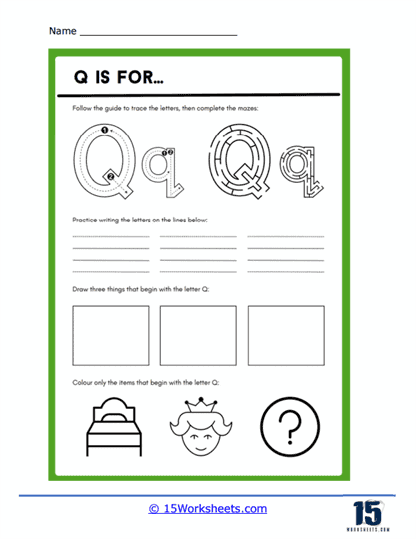
Lots to Q-Do
A playful worksheet with multiple mini-activities around Q. Children might color, trace, and spot the letter in one sitting. The mix makes it feel more like a game pack than a worksheet. It helps students stay engaged while practicing many Q skills at once.
First Letter Pictures
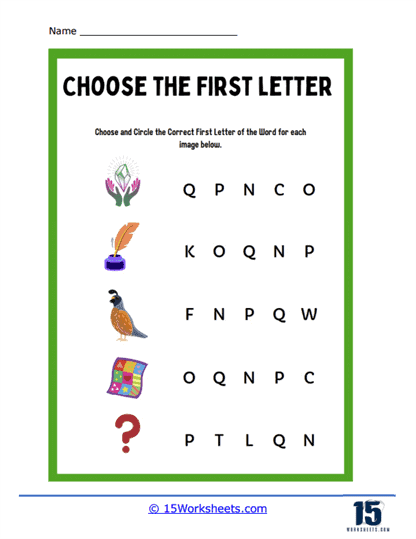
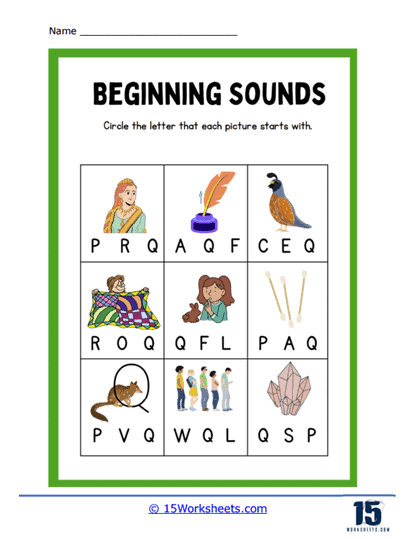
Kids look at pictures and decide which ones start with the letter Q. They’ll mark or color the correct ones, linking phonics with vocabulary. The activity sharpens early sound recognition. It also expands children’s word bank with Q-themed items.
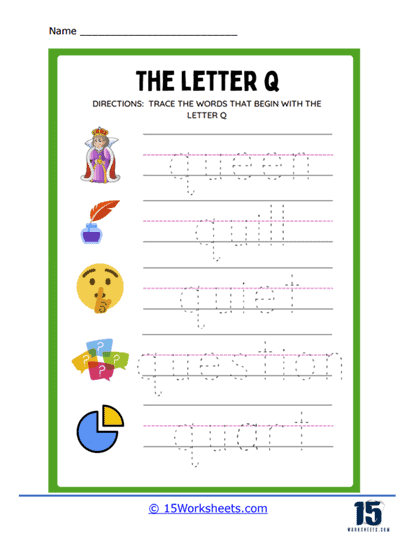
Begins With Q
This worksheet asks children to match Q with words that start with it. Students may sort images or circle Q-starting words. It’s a straightforward phonics activity that connects sounds with visuals. Kids practice the alphabet while building early reading confidence.
Letter Q Bubbles
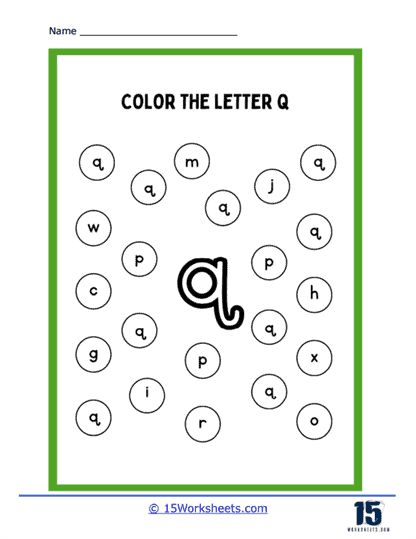
Students find Q’s hidden inside bubble shapes. They’ll color or circle them, turning letter recognition into a coloring game. This makes learning feel lighthearted and playful. It strengthens focus while helping kids visually distinguish Q.
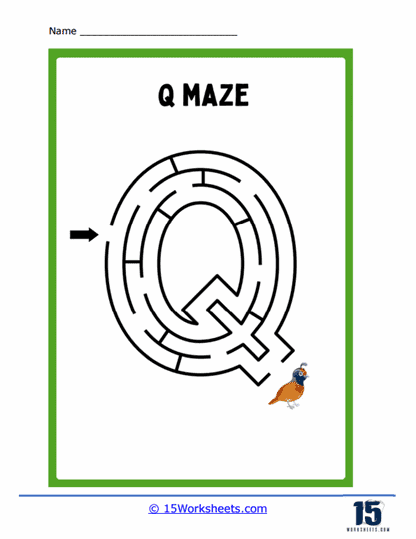
Q Maze
A letter-themed maze guides children along a path of Q’s. They must follow the correct trail, avoiding other letters. The maze boosts problem-solving, focus, and letter recognition. It’s a brain game that sneaks in extra alphabet practice.
Color If Its a Q
Children color only the Q’s from a group of letters. This activity reinforces recognition by requiring careful observation. It feels like a fun coloring page while teaching focus. Kids build attention skills alongside alphabet knowledge.
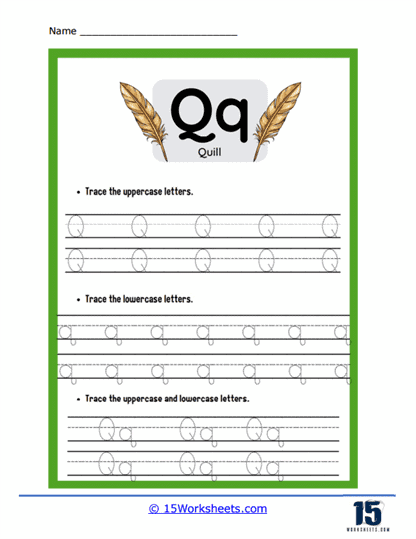
Q Penmanship
Students practice neat handwriting by tracing and writing rows of Q’s. The focus is on consistent letter formation. It’s great for building fine motor control and penmanship clarity. This worksheet ensures kids master writing Q with confidence.
Trace the Letter Q
This worksheet gives big dotted outlines for students to trace. The repeated motion builds muscle memory for writing Q. Kids enjoy the structured, hands-on practice. It’s a simple but essential step in learning the alphabet.
Pencil Q Practice
Children use their pencil to trace, write, and maybe even color Q’s. This worksheet focuses on pencil control and fine motor strength. It gives a mix of tracing and writing practice. By the end, students feel more confident forming the letter Q independently.
Quirky and Quick: 6 Fun Facts About the Letter Q
It Is Rarely Alone
The letter Q almost always brings its best buddy U along for the ride. Think of words like queen, quiet, and quick. This “Q + U” partnership is a language rule in English, making Q one of the most loyal letters in the alphabet. Kids can think of them as inseparable friends who just don’t like being apart.
It Is the Rarest Letter
Out of all the letters, Q doesn’t get used very often in English. That’s why spotting it in words feels extra special, kind of like finding hidden treasure. In fact, you’re much more likely to see an E, S, or T than a Q in everyday reading. This rarity makes practicing it even more important.
It Has a Royal Connection
The letter Q often stands for queen in teaching, games, and even playing cards. That royal image helps kids remember Q quickly because it feels powerful and important. The “queen of letters” theme sticks easily in young learners’ minds. It’s no wonder Q wears a crown in so many alphabet illustrations.
It Takes Time in Scrabble
In the game of Scrabble, Q is worth a whopping 10 points! That’s because it’s one of the hardest letters to use. Players have to think carefully about where to place it, especially since it usually needs a U. It shows how letters can be fun even in games.
It Wasn’t Always in English
The letter Q came to English from Latin, and before that, from ancient Greek. Its shape and sound have changed across history, but the unique “kw” sound it represents stayed strong. Knowing this makes Q feel like a little piece of history every time we write it. It’s like carrying an ancient secret in the alphabet.
It Has Global Twists
Not every language treats Q the same way. Some, like French and Spanish, also pair it with U, while others barely use it at all. In fact, some alphabets don’t even have the letter Q! That makes English’s quirky Q something special for learners to master.