
Letter X Worksheets
About These 15 Worksheets
The letter X might not be the most common letter in English, but it’s definitely one of the coolest. It shows up in exciting words like “xylophone,” “fox,” and of course, the classic “X marks the spot.” This collection of worksheets makes learning the letter fun, hands-on, and engaging-whether students are tracing, coloring, cutting, or even dot-painting. By giving kids multiple ways to interact with X, they’ll not only recognize it quickly but also remember it better.
These worksheets are designed to hit all the big learning goals: recognition, writing, fine motor development, and confidence building. Instead of just memorizing, kids get to do something with the letter every step of the way. That means they stay more engaged and have fun while learning. After all, who doesn’t love cutting, pasting, and coloring?
And here’s the sneaky bonus: working with X gets kids thinking about sounds, spelling patterns, and word construction. They’ll begin to notice X hiding in everyday words and understand that even though it’s a rare letter, it plays an important role. By mixing literacy practice with creativity, these worksheets help students connect learning to real-world language.
Have a Look Inside Each Worksheet
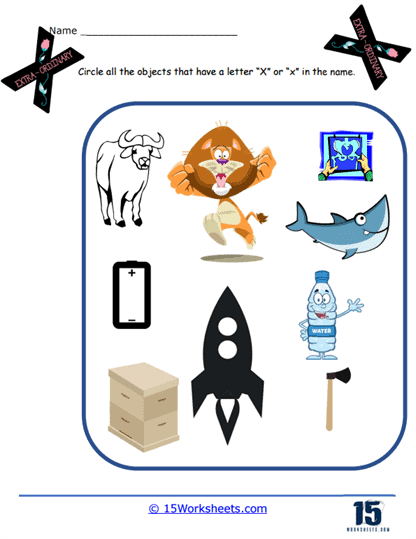
X in the Name
Students will find and highlight instances of the letter X in their own name-strengthening letter recognition in a personal way. They’ll practice visual discrimination (spotting X among other letters). Also enhances fine motor skills if they mark or color the Xs. Helps build confidence by relating the letter to themselves.
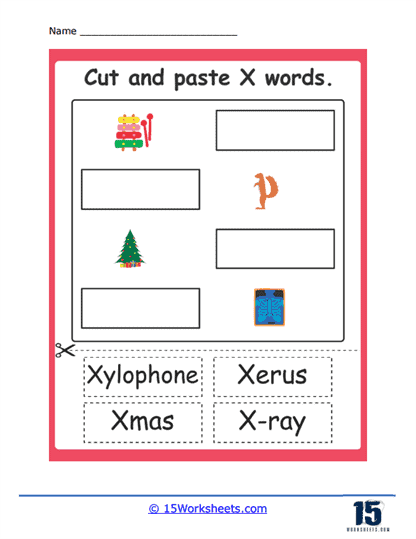
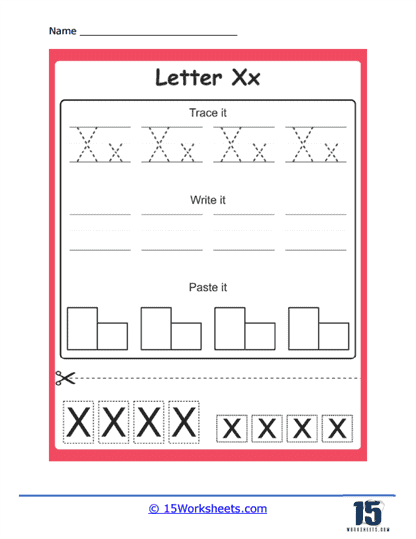
Cut and Paste Xs
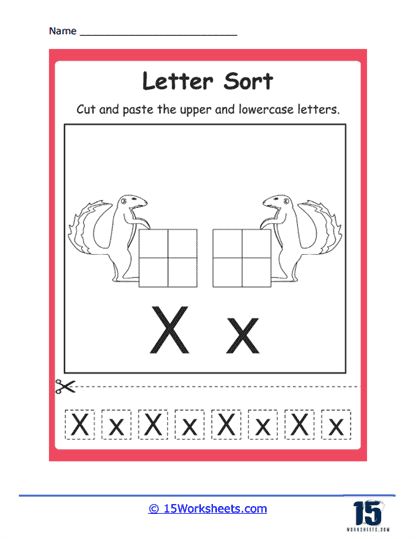
Kids will cut out X letters and paste them in appropriate places-often matching uppercase/lowercase or adding them into words. They’ll work on scissor skills, matching, and fine motor control. It’s hands-on, which makes learning more playful. Supports recognizing the shape and form of the letter X.
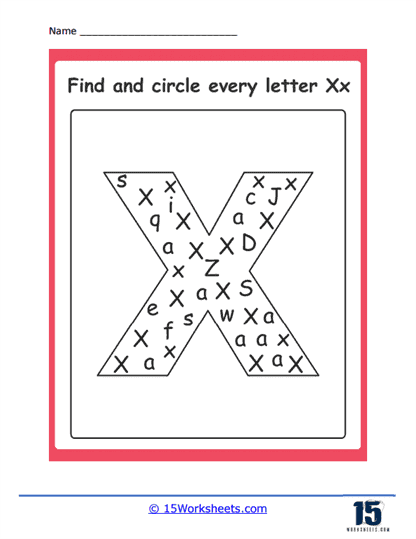
Xs in the X
This worksheet likely has many X’s inside the outline of a large X, so students can find all the little ones inside the big one. Helps with counting, visual scanning, pattern recognition. Probably also coloring or circling; makes it fun. Reinforces what X looks like in different fonts or sizes.
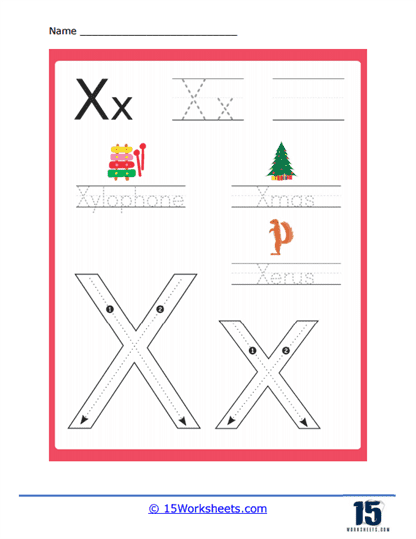
Introduction to X
An introductory sheet giving the basics: what sound(s) X makes, what X looks like uppercase & lowercase. May include examples of words that use X. Develops foundational understanding of the letter. Sets the stage for all the other worksheets in the set.
Connect the Xs
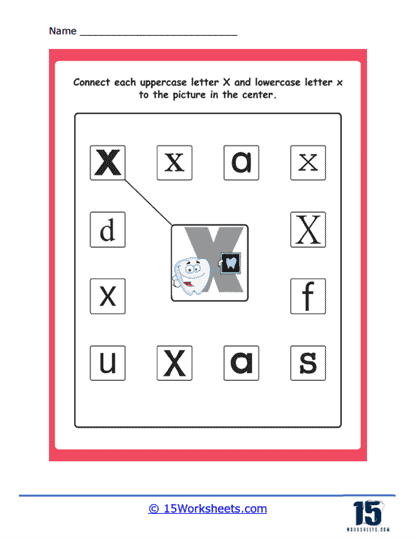
Students draw lines to connect multiple instances of X, perhaps in sequence or tracing. Supports fine motor skills, hand-eye coordination. Helps them see consistency in how X is shaped. Reinforces recognition through movement.
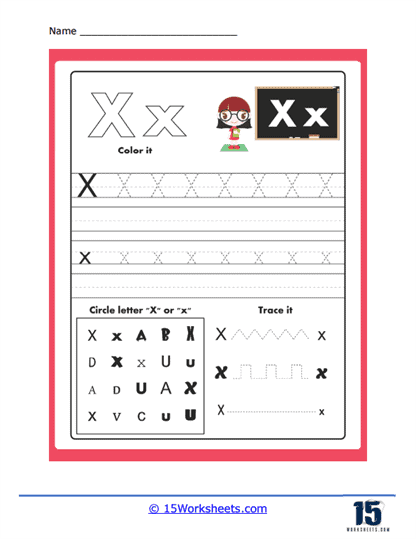
Color, Trace, Match, and Find X
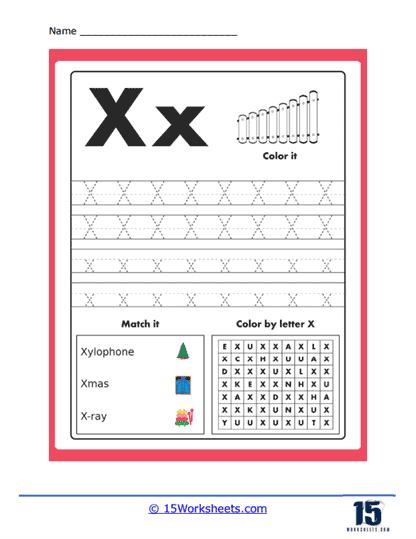
A multi-part activity: color X’s, trace the letter, match uppercase/lowercase, and find X among other letters. Supports multiple skills: visual discrimination, writing, matching. Keeps students engaged by varying the activity. Helps cement knowledge of X in different contexts.
X Coloring Puzzle
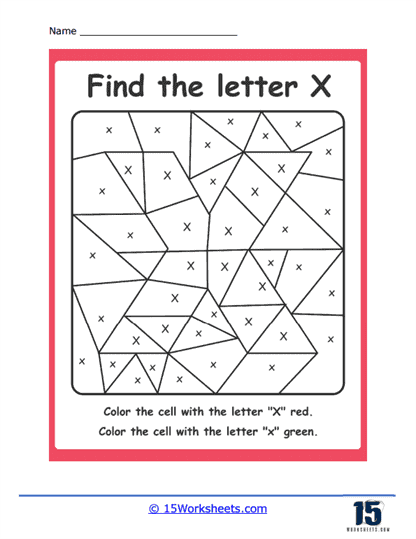
Using a puzzle format (maybe color by number or matching), where completing parts reveals something involving X. Supports problem solving, patience, color recognition, fine motor control. More playful, less drill. Helps associate the letter X with positive, fun experiences.
Cut and Paste X
Similar to “Cut and Paste Xs”: likely cutting out pictures/letters with X and assembling or pasting into a template. Reinforces matching, recognition, and eye/hand coordination. Nice tactile experience. Builds deeper familiarity with letter shape.
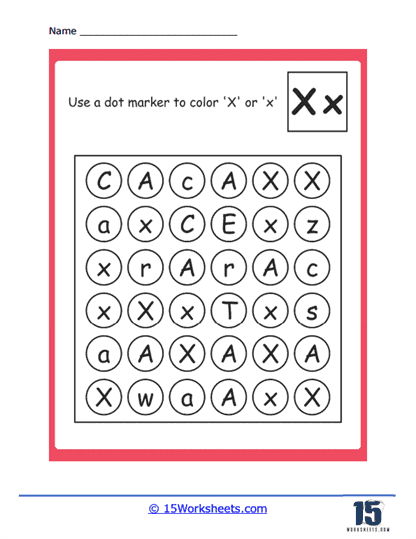
Xs Dot Markers
Students use dot markers or bingo dabbers to mark each X among other letters. Helps with pinpointing shape, attention to detail. Good for motor control and focus. Makes learning active and colorful. Helps with distinguishing X in diverse contexts.
Letter X Trace and Paste
They’ll trace the letter X (uppercase and/or lowercase) then paste something related to X (possibly words or pictures). Combines writing practice with matching or categorization. Reinforces motor skills and letter form. Helps students move from recognition to production.
Pencil Control X
This is about the strokes: leading from one point to another to form X, possibly through lines or guided paths. Very focused on control, neatness, consistency. Helps prepare for clean writing. Reinforces correct formation of the letter.
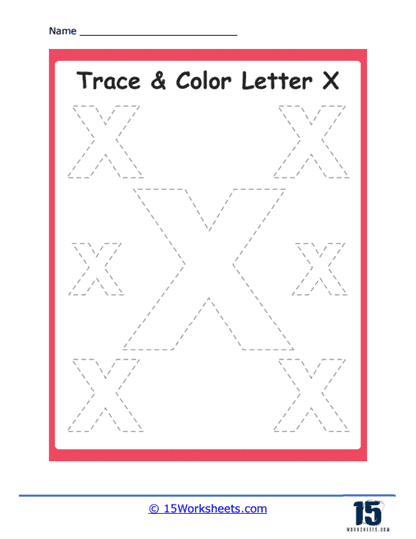
Trace and Color X
Students trace over dotted or faint X’s then color them in. Helps with handwriting, control, and also following outlines. Coloring adds interest and helps retention. Supports recognizing shape and reinforcing memory.
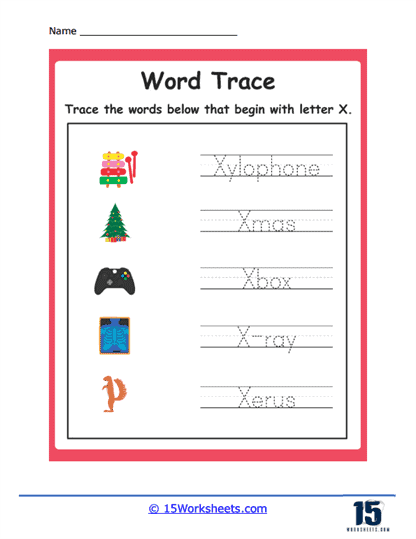
X Word Trace
Tracing words that contain X (like “box,” “fox,” “xylophone,” etc.). Helps us practice using X in context. Also supports spelling, print awareness. Moves beyond letter to word-level work.
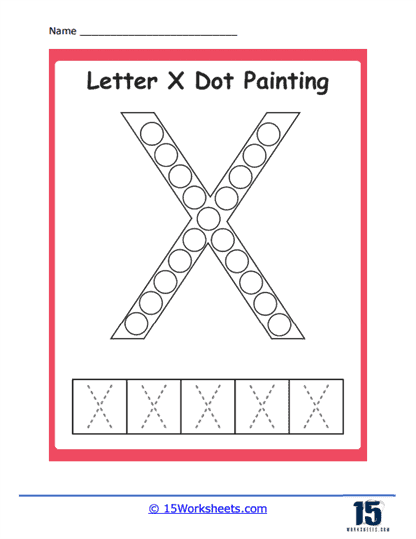
X Dot Painting
Probably using paint dots or sticker dots to create or highlight X shapes. Very sensory and fun. Helps with fine motor, hand eye coordination, visual recognition. Encourages creativity around the letter.
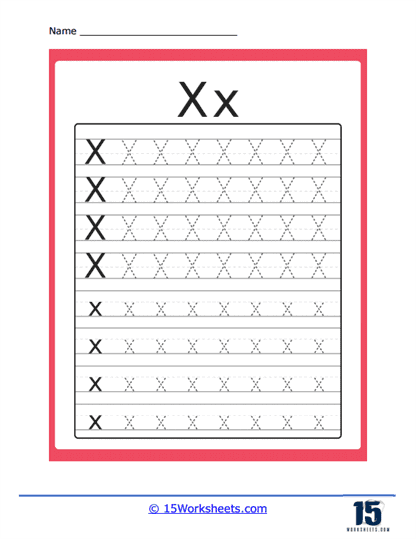
Penmanship X
Practice writing X neatly and correctly, following guidelines. Focus on letter form, spacing, consistency. Helps build skills needed for handwriting. Reinforces the distinction between uppercase & lowercase forms.
What Is Special About the Letter X?
The letter X is truly special and it distinguishes itself in the English alphabet for several reasons. It is the third least frequently used letter in English, which gives it a unique and fascinating presence when it does appear in words. Adding to its intrigue, X can produce multiple sounds, such as “ks” in words like “box” or “mix,” “z” in “xylophone” or “xenon,” and, in some rare cases, “sh” or “ch” in words like “luxury” or “anxious.”
In the realm of mathematics, X often serves as a symbol for the unknown or as a variable, making it a critical part of problem-solving equations. In our culture, X carries symbolic weight as well. It can be used to mark locations, indicate a choice on a voting ballot, represent a cross or a wrong in games like tick-tack-toe or in error marking, and even signify kisses in written correspondence, such as “XOXO” for “hugs and kisses.”
The letter X also holds importance in the field of genetics. Humans usually have a pair of sex chromosomes, and X is one of them, with women typically having two X chromosomes and men having one X and one Y. It doesn’t stop there; X finds utility in various scientific applications as well. It represents a unit of electromagnetic radiation, known as X-ray, it denotes a time axis on a graph, and it stands for an unknown element or reactant in chemistry.
In Roman numerals, X symbolizes the number 10. It’s commonly used to indicate a decade in years, like how the 1990s are often written as the 1990s. So, it’s clear that the letter X is more than just a letter. Its versatility and significant roles in our language, math, science, and culture underscore its unique and distinctive position.