
Geometry Worksheets
About Our Geometry Worksheets
Geometry is all about understanding the shapes, spaces, lines, and patterns that make up the world around us. From the angles in a stop sign to the symmetry of a butterfly’s wings, geometry helps students make sense of everyday objects in a fun and visual way. This collection of Geometry Worksheets introduces learners to important concepts step by step, helping them build confidence as they explore both simple and advanced geometric ideas. Whether your child is just beginning to identify shapes or learning coordinate geometry formulas, these worksheets provide approachable and engaging practice. Best of all, geometry becomes less intimidating and much more exciting when students can see how it connects to real life.
These worksheets are designed to support students through hands-on learning, problem-solving, and visual reasoning activities that encourage active participation. Learners practice important skills like measuring angles, identifying transformations, graphing figures, and applying formulas in meaningful ways. Parents and teachers will appreciate how the collection gradually increases in difficulty while still keeping practice manageable and encouraging. The variety of activities helps prevent math fatigue by giving students opportunities to sort, classify, calculate, draw, and analyze shapes in different contexts. With consistent practice, students can strengthen both their mathematical accuracy and their confidence in tackling geometry problems independently.
A Look At The Worksheet Categories
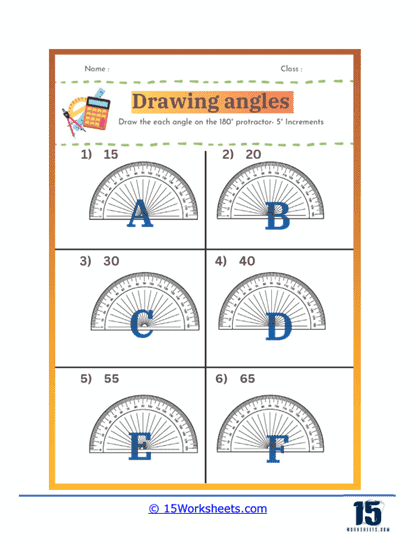
Angles
Kids explore how angles appear in everyday life, from pizza slices to playground slides, while practicing how to identify and measure them. By the end, many students start spotting acute and obtuse angles everywhere they look.
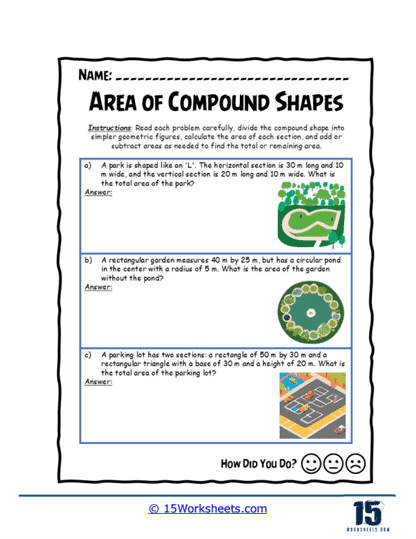
Area
Finding the space inside shapes becomes much less intimidating with guided examples and simple practice problems. Students gradually build confidence measuring rectangles, triangles, and other familiar figures like little future architects.
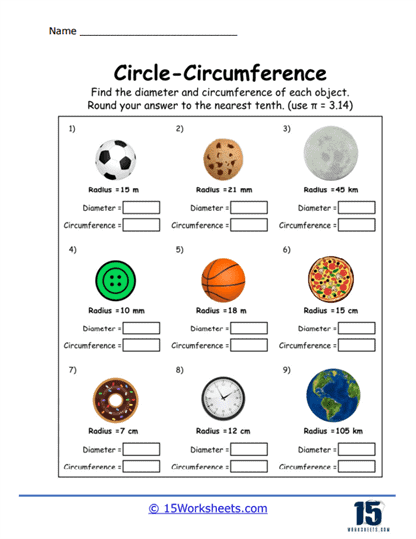
Circumference
Circles suddenly make a lot more sense once students learn how to measure the distance around them. Practice with radius, diameter, and pi helps learners feel more comfortable using circle formulas step by step.
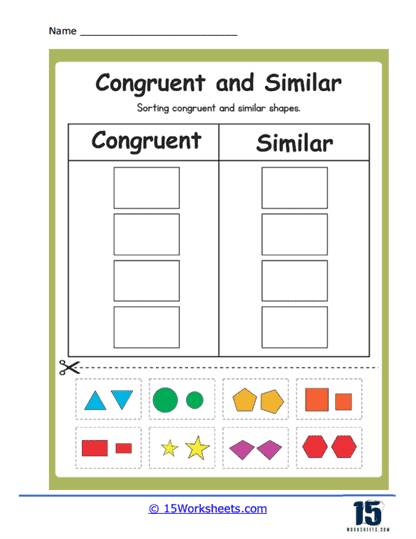
Congruent and Similar
Shape comparisons become much more fun as students figure out whether figures are exact matches or proportional lookalikes. The activities encourage careful observation while making geometry feel a bit like solving puzzles.
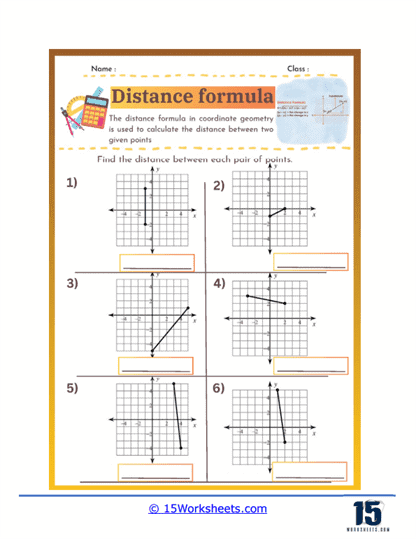
Distance Formula
Measuring the distance between points on a coordinate plane feels far less overwhelming with structured practice and visual examples. Students strengthen both algebra and geometry skills while gaining confidence along the way.
Geometry Word Problems
Real-world geometry situations encourage students to slow down, think critically, and choose the right problem-solving strategies. Many learners enjoy the challenge of becoming “math detectives” as they work through each scenario.
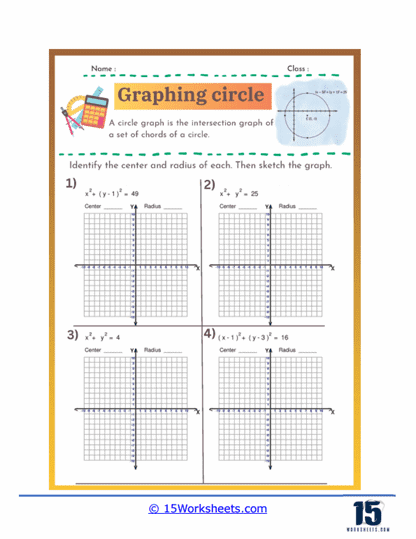
Graphing Circles
Step-by-step graphing activities help students connect equations to visual representations of circles on the coordinate plane. Watching a perfect circle come together on a graph can feel surprisingly rewarding for learners.
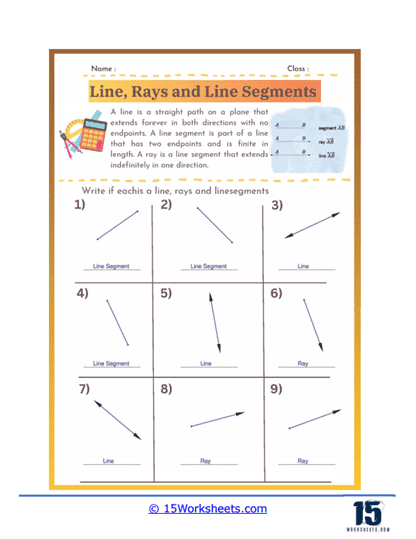
Lines, Rays, Line Segments
Geometry basics feel approachable as students learn to identify lines, rays, and line segments through clear visuals and guided practice. Once the concepts click, kids often begin pointing them out in everyday objects around them.
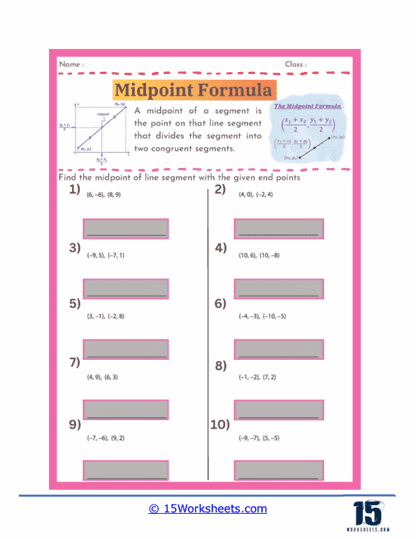
Midpoint Formula
Finding the exact middle between two points becomes easier with practice that blends graphing and coordinate skills together. Students usually feel proud once they can confidently locate midpoints on their own.
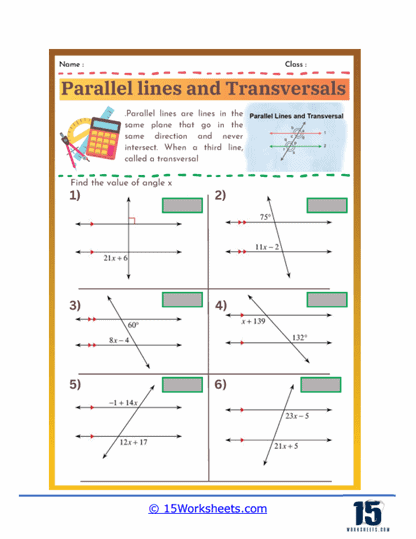
Parallel Lines and Transversals
Angle relationships become much clearer as learners work through visual examples involving intersecting lines and transversals. Those satisfying “aha!” moments start happening once students recognize the repeating angle patterns.
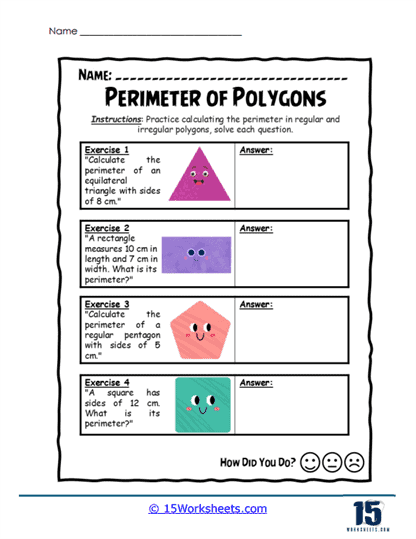
Perimeter
Measuring the distance around shapes gives students practical experience with addition, measurement, and problem-solving skills. Some kids even start measuring random objects around the house just for fun afterward.
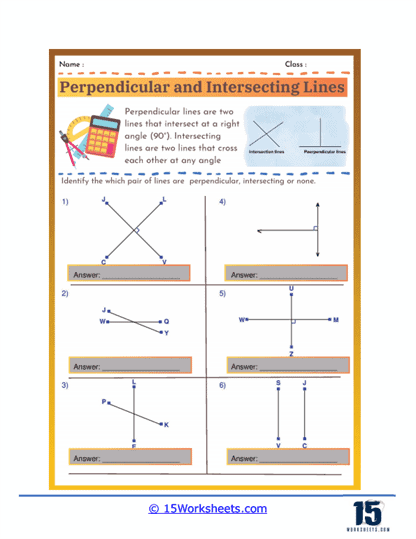
Perpendicular and Intersecting Lines
Students build a stronger understanding of how lines meet, cross, and connect within geometric figures and graphs. Before long, many learners begin noticing perpendicular and intersecting lines all around them in daily life.
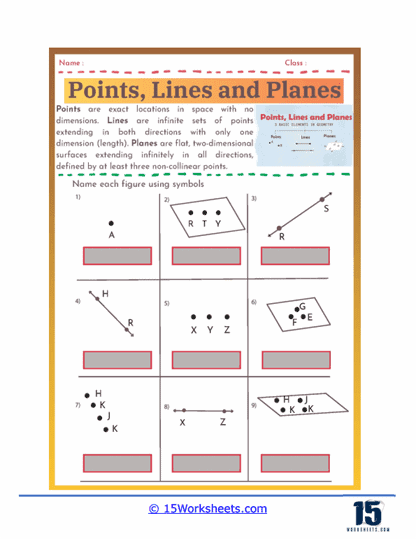
Points, Lines, and Planes
Every geometry journey starts with these foundational concepts, and simple guided activities help make them easy to understand. Strong vocabulary and visual practice prepare students for more advanced geometry topics later on.
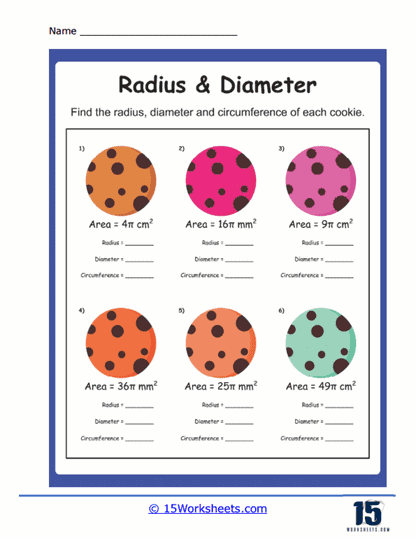
Radius and Diameter
Hands-on circle activities help learners understand how radius and diameter relate to one another. The extra practice builds a strong foundation for future work with circumference and area.
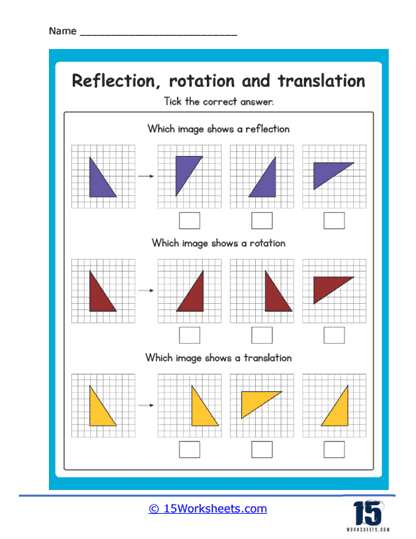
Reflection, Rotation, Translation
Moving shapes across coordinate planes becomes much more manageable when transformations are practiced one step at a time. Many students end up treating these activities like mini puzzle games with flipping and sliding shapes.
Right Triangle Word Problems
Problem-solving activities challenge students to apply right triangle concepts to meaningful real-world situations. Learners often feel especially accomplished after successfully solving the trickier multi-step problems.
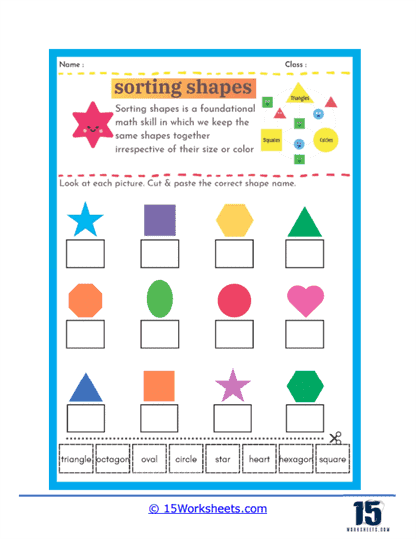
Sorting Shapes
Younger learners get hands-on practice classifying shapes by sides, corners, and symmetry through playful activities. Before long, students may start sorting toys, snacks, or household objects by shape just for fun.
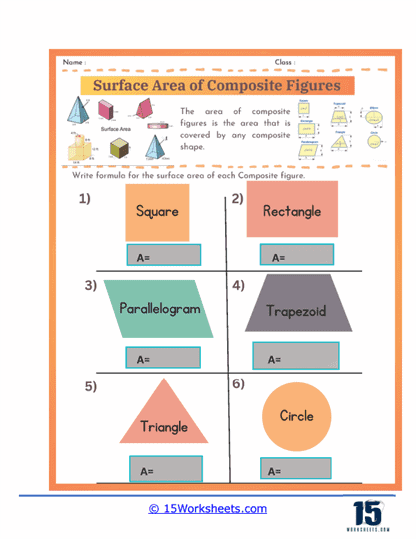
Surface Area
Calculating the outer covering of 3D figures becomes less intimidating with organized examples and guided strategies. Students often enjoy the challenge of imagining how shapes would look “wrapped” in real life.
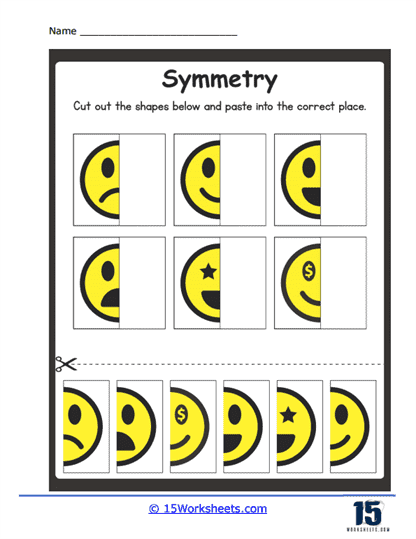
Symmetry
Balanced designs and matching halves help geometry feel more creative and visually engaging for students. The activities often feel more like art-based puzzles than traditional math practice.
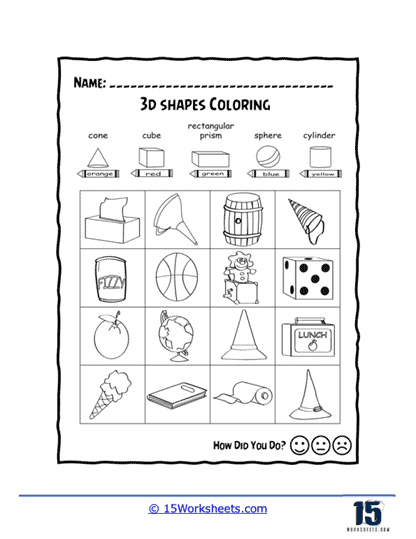
Three Dimensional Shapes
Exploring faces, edges, and vertices helps students better understand the solid figures they see in everyday life. Learners enjoy connecting geometry concepts to objects like dice, cans, and cereal boxes.
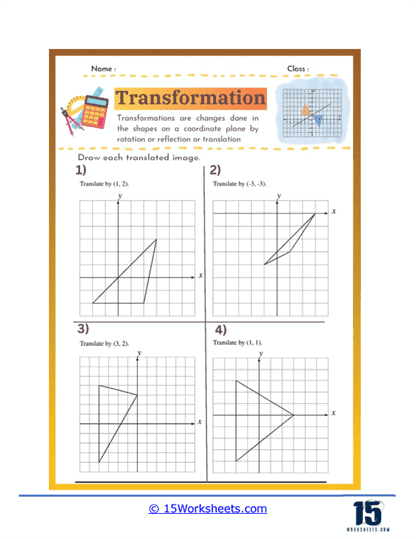
Transformation
Shape movements, resizing, and coordinate changes encourage students to think visually and carefully analyze patterns. Many learners enjoy the creative side of “remixing” shapes across the coordinate plane.
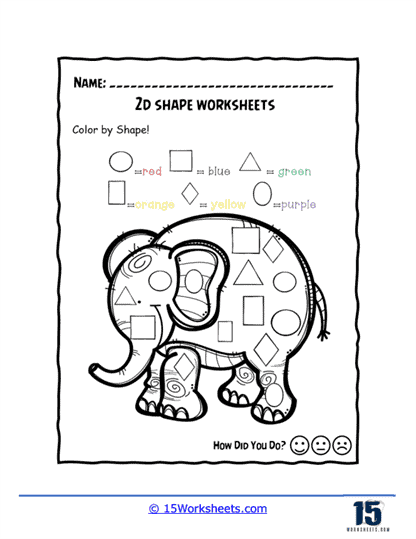
Two Dimensional Shapes
Recognizing and comparing flat shapes helps students build a strong early geometry foundation. Kids often love realizing just how many circles, triangles, and rectangles appear in the world around them.
What is Geometry?
Geometry is a branch of mathematics that deals with the properties, relationships, and measurements of points, lines, angles, surfaces, and solids. It is one of the oldest fields of study in mathematics, with origins dating back to ancient civilizations such as the Egyptians, Babylonians, and Greeks. The term “geometry” comes from the Greek words “geo,” meaning earth, and “metron,” meaning measure, reflecting its historical role in surveying land and understanding spatial relationships.
Geometry is profoundly embedded in various facets of the modern world, playing a critical role in fields like architecture, engineering, and computer science. In architecture, geometric principles guide the design and construction of buildings and structures, ensuring aesthetic appeal, stability, and functionality. Architects use geometry to create detailed blueprints and plans that translate abstract concepts into tangible forms, considering angles, symmetry, and spatial relationships to maximize space efficiency and structural integrity. Similarly, in engineering, geometry is essential for designing and analyzing components and systems. Engineers rely on geometric calculations to determine the dimensions, shapes, and tolerances necessary for machinery, vehicles, and infrastructure, ensuring that each part fits and functions correctly within the larger system.
Beyond physical structures, geometry is indispensable in the digital realm, particularly in computer graphics, robotics, and geographic information systems (GIS). In computer graphics, geometric algorithms generate and manipulate visual images, enabling the creation of realistic 3D models, animations, and virtual environments used in video games, simulations, and films. Robotics employs geometric principles to navigate and interact with physical spaces, allowing robots to perform tasks with precision and efficiency. In GIS, geometry helps in mapping and analyzing spatial data, facilitating urban planning, environmental monitoring, and navigation systems. These applications highlight how geometry underpins technological advancements and contributes to solving complex problems in our increasingly interconnected world.