
Et Word Family Worksheets










About These 15 Worksheets
The -et word family is a fun and important stepping stone in early reading. Words like jet, net, pet, and sunset give students a chance to practice decoding patterns while also expanding their vocabulary. Because these words are short and common, they’re easy for beginners to recognize and connect to everyday life. Working with this family helps children build confidence in both reading and writing.
Our -et worksheets provide a variety of playful approaches to learning. From coloring and tracing to matching and cutting, each activity reinforces the spelling pattern in a new way. This keeps lessons fresh and engaging, so students stay motivated while practicing. Whether used at home or in class, the worksheets make phonics practice fun instead of a chore.
Best of all, these activities connect word learning to real-world experiences. A child might think about a pet at home, a net at the park, or a rocket flying into the sky. These connections bring meaning to the practice, making the words stick. With repeated exposure and practice, students will quickly recognize -et words in books, conversations, and beyond.
About Each Worksheet
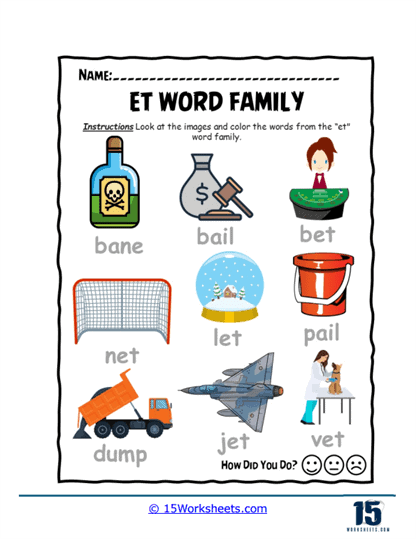
Poison Potion
This worksheet gets kids excited by asking them to color pictures that match -et family words. They’ll sort out correct choices like net and vet from unrelated words. The illustrations make it easy for learners to recognize which belong to the family. Sorting and coloring combine visual memory with word practice. Great for centers, early finishers, or home review.
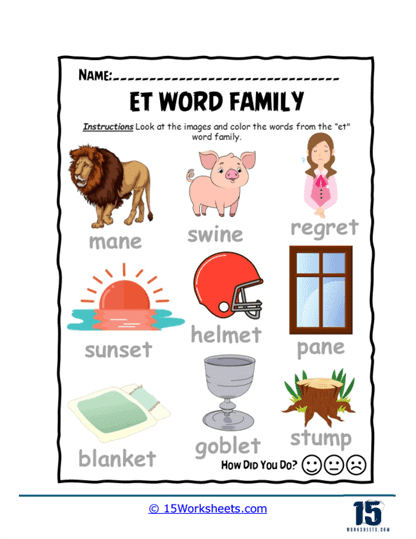
Sunset Safari
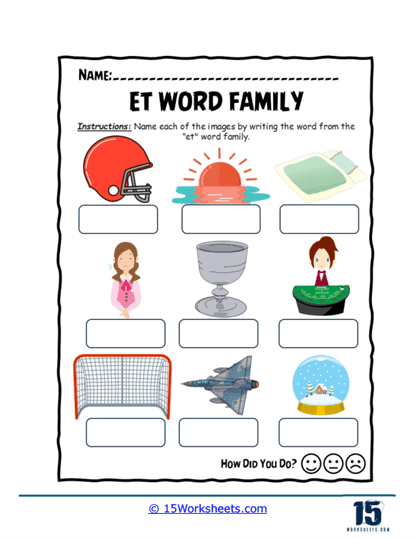
Students discover longer -et words like helmet and goblet through picture-word connections. The safari theme adds fun as children explore both simple and complex vocabulary. Learners sharpen decoding skills while matching words to pictures. It’s a good challenge for students ready to expand their word family knowledge. Perfect for small group work or extra practice.
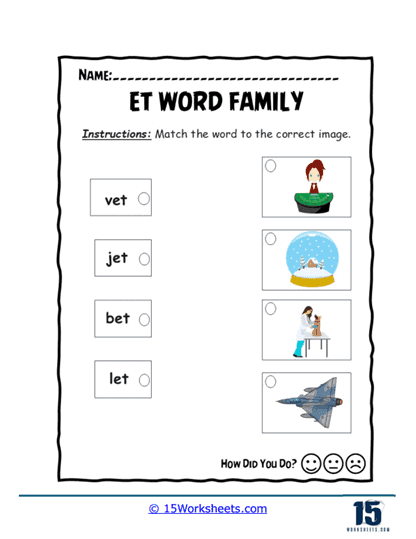
Fast Match
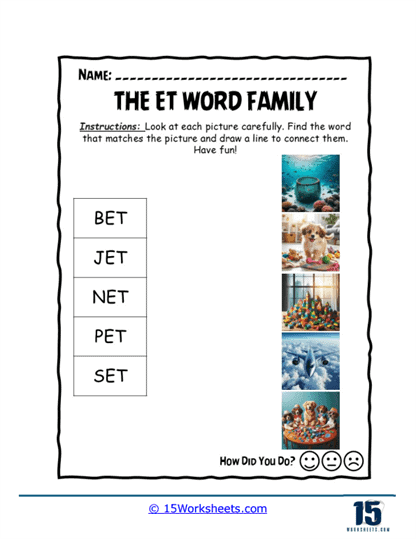
Here, kids match short -et words such as jet and vet to the correct illustrations. The quick format makes practice simple but effective. Matching builds confidence in recognizing and using word family vocabulary. The activity works well for warm-ups or partner games. It’s a fast way to reinforce the basics.
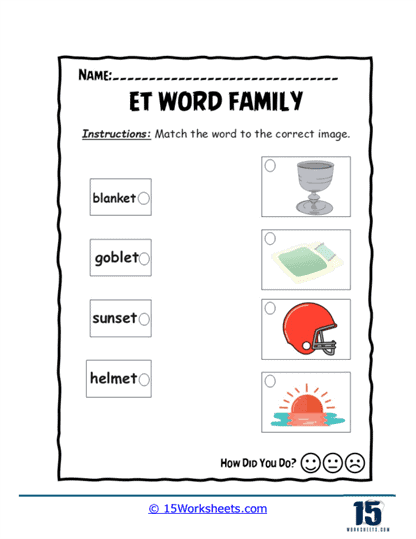
Magic Net
Students move on to longer words like blanket and sunset with this matching worksheet. The pictures help them decode and confirm their choices. Focusing on multisyllabic words gives learners new challenges. They practice breaking down words into chunks for easier reading. This worksheet is great for building toward more advanced literacy skills.
Jet Set Write
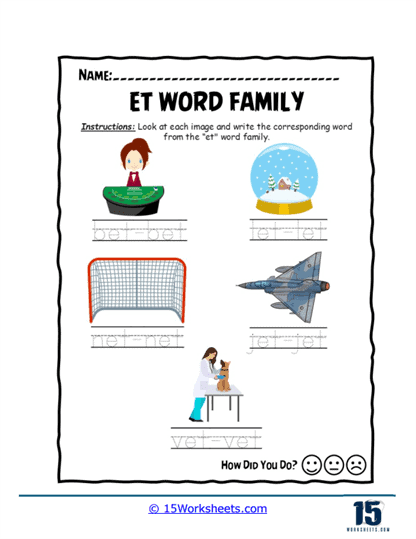
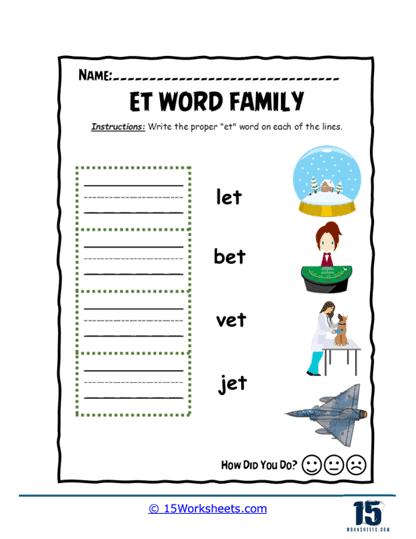
In this writing-focused activity, students copy short -et words like jet and bet under matching images. Writing combines phonics with fine motor practice. Producing the words themselves reinforces spelling accuracy. Kids also enjoy the satisfaction of completing the page with their own handwriting. A great tool for daily practice or homework.
Sunset Scribbles
This page takes writing to the next level with longer words like helmet and regret. Learners match each picture and then carefully write the word. The extra length challenges spelling and handwriting skills. Students develop focus and accuracy while still having fun. This activity fits nicely into literacy centers or handwriting practice sessions.
Word Patch Puzzle
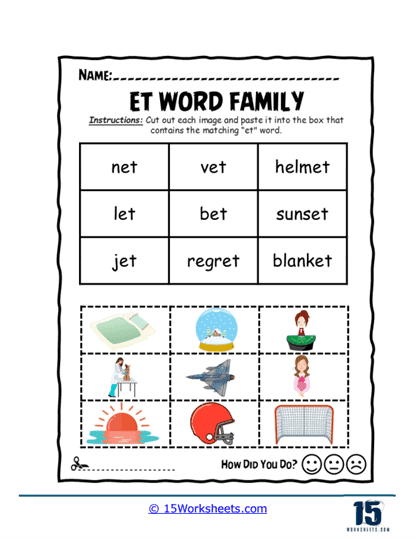
A hands-on cut-and-paste page lets students pair words like net and sunset with their pictures. The tactile element keeps kids engaged while learning. Cutting, sorting, and gluing add a crafting component to literacy. The puzzle format makes the task playful and memorable. It’s a perfect choice for kinesthetic learners.
Blanket Blanks
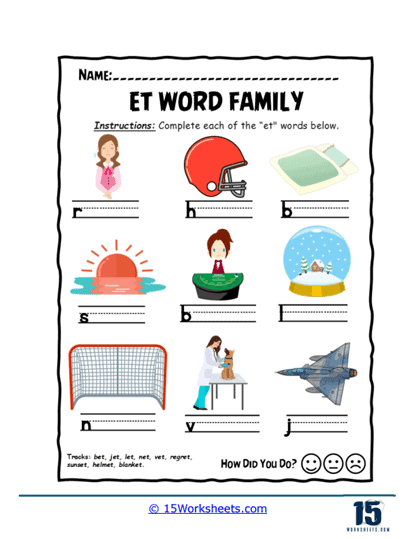
Here, students fill in missing letters to complete -et words shown in pictures. The task promotes problem-solving and spelling accuracy. Children think critically about phonics patterns to reconstruct the words. The visual cues make it both fun and supportive. A strong choice for reinforcing decoding strategies.
Line Write Challenge
This worksheet gives repeated writing practice with longer words such as blanket and sunset. Copying builds memory and handwriting fluency. Students focus on neatness and spelling accuracy. Repetition cements word recognition and recall. Ideal for independent desk work.
Jet Pack Practice
Students speed through short words like vet and jet with repetitive writing practice. The shorter words help build fluency and confidence quickly. Learners focus on correct letter formation and spelling. It’s a great foundation before moving on to longer vocabulary. This sheet works well for morning work or extra practice at home.
Word Nest
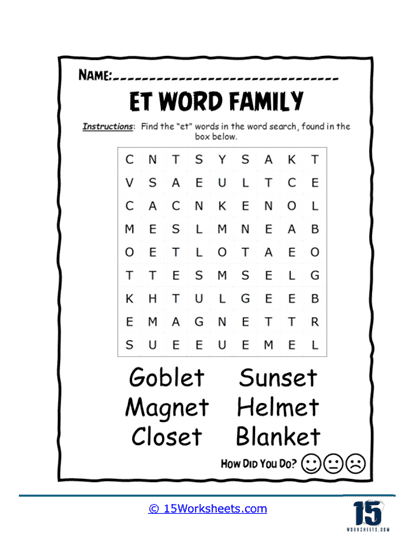
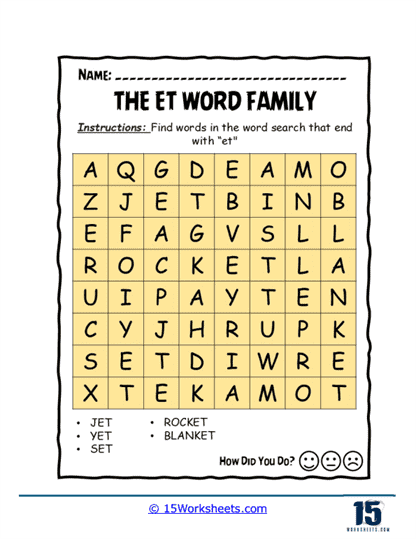
Kids hunt for -et words like closet and goblet in a word search puzzle. Searching builds scanning skills and spelling recall. Students practice spotting patterns in different directions. This kind of puzzle makes word practice feel like a game. A fun option for homework or quiet time.
Letter Net
This word search continues the fun with words like regret and greet. Mixing short and longer words keeps it engaging. Learners strengthen phonics awareness while solving. Persistence and focus are key to success here. Teachers can use it for fast finishers or group competitions.
Puzzle Net
Students explore a grid to find words like helmet and blanket. The mix of familiar and new vocabulary builds confidence. Searching for words reinforces both recognition and decoding. Kids enjoy the challenge of scanning in multiple directions. It’s an activity that blends fun with literacy practice.
Net Jet
Pictures of simple words like net and vet invite students to color the matching -et family words. The task is approachable and playful. Learners sharpen their word recognition skills quickly. It’s a straightforward sheet that works in many settings. Great for introducing the word family to beginners.
Tracing Treasures
Students trace words like pet and wet for handwriting practice. Tracing builds muscle memory while reinforcing phonics. The repetition improves spelling recall. Young learners enjoy the guided lines and neat results. This is a strong choice for early writers.
Jet Net
Here, students fill in and write short words like net and bet under pictures. It’s part handwriting, part phonics, all in one. Writing strengthens both motor skills and literacy recall. Learners practice until the words become automatic. Teachers can assign it as morning practice or review.
Regret Sunset
Students write longer words like regret and helmet under pictures. The length adds an extra layer of challenge. Writing improves spelling accuracy and fluency. Students also practice neat handwriting in context. It’s a practical way to mix phonics with vocabulary growth.
Cut Set
This cut-and-paste sheet focuses on sorting words like vet and helmet. Kids match pictures to words with scissors and glue. The hands-on activity builds coordination while reinforcing word recognition. It’s a perfect blend of literacy and fine motor practice. Students enjoy the crafting aspect too.
Bet Get
Students complete partially written words like blanket and sunset. Picture clues help guide their choices. The activity strengthens decoding and spelling skills. Learners pay close attention to letter placement. It’s a smart way to review and reinforce accuracy.
Picture Pairs
Students match words like met and wet with images. The exercise connects spelling patterns to meaning. Visual association makes learning memorable. Kids enjoy making the connections independently. It’s great for small group or partner work.
Word Matchers
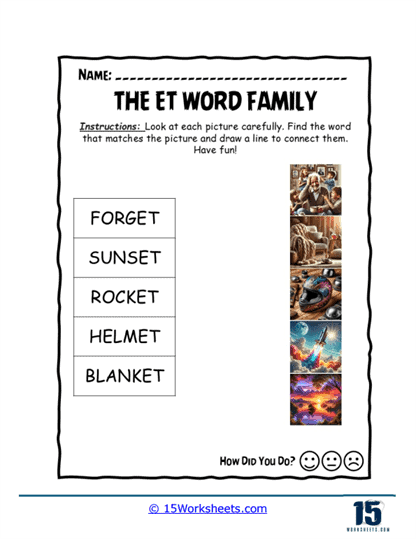
This activity focuses on longer words like rocket and forget. Students match each word with a picture. Working with more complex vocabulary builds decoding skills. Kids expand their vocabulary while practicing the familiar -et ending. The mix of short and long words keeps things interesting.
Blanket Bananas
Students draw lines to connect words like sunset and blanket with their pictures. The playful title makes it fun right from the start. Visual matching strengthens both recognition and comprehension. Learners practice focus while analyzing each picture carefully. A good fit for centers or individual practice.
Monkey Mix
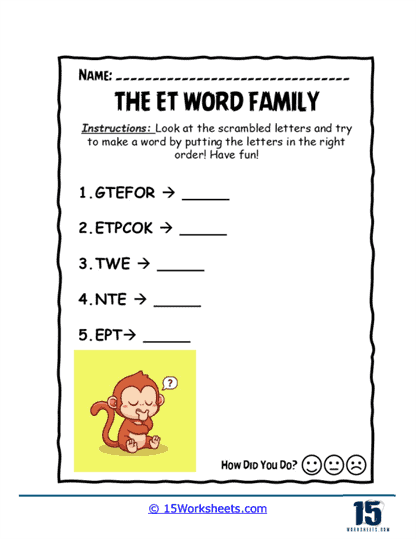
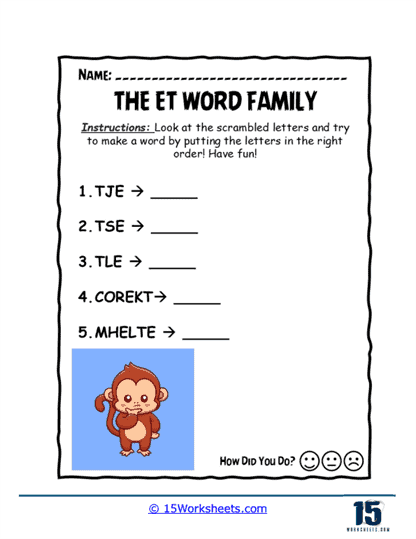
Kids unscramble jumbled words like TJE for JET. The monkey theme adds energy and fun. Solving scrambles strengthens phonemic awareness. Students also practice spelling correction. This puzzle is engaging for independent or group play.
Scramble Challenge
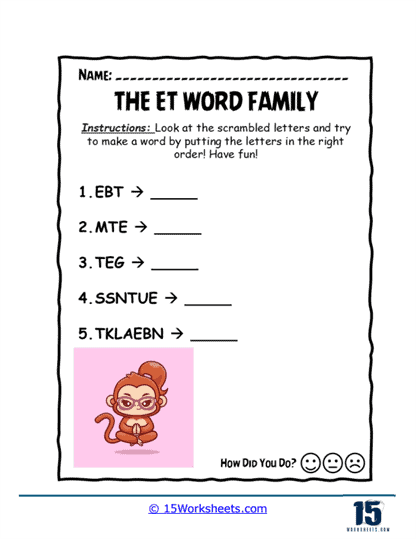
Students rearrange letters like EBT into BET. The challenge encourages problem-solving and memory recall. Kids practice recognizing patterns in word construction. The scrambled format keeps them motivated. Great for extra practice or homework.
Monkey Jumbles
This scramble worksheet mixes play with practice. Students reorganize letters to spell correct -et words. A cheerful monkey illustration motivates learners. Self-check icons let them reflect on their progress. The activity builds confidence and spelling fluency.
ET Where
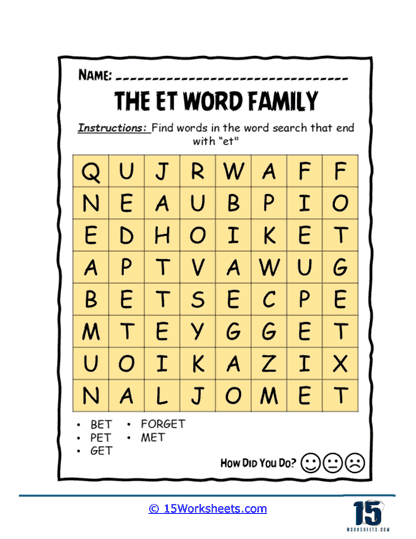
Kids search for words like forget and bet in a puzzle grid. Word searches train attention to detail and pattern spotting. Learners practice both short and longer words in one activity. The format makes it feel more like a game than a lesson. A fun way to review after harder tasks.
ED Puzzles
This puzzle asks students to spot words like helmet and net. The mix of simple and extended vocabulary keeps it engaging. Kids learn to scan carefully while thinking about phonics. Each discovery boosts confidence in spelling. It’s a playful way to practice literacy.
Rocket Grid
Students search for words like jet and blanket in a rocket-themed puzzle. The theme makes the activity exciting and memorable. Finding words reinforces recall and decoding skills. Both short and long words are included for variety. It’s a great independent task for students who love puzzles.
Space Story
In this fill-in-the-blank passage, students complete a rocket adventure using -et words. The story format brings phonics into a narrative context. Learners practice comprehension while choosing words that fit. The space theme keeps motivation high. This worksheet works well for group reading or fun homework.
Park Story
Students finish a short park-themed story by filling in missing -et words. The playful context makes vocabulary come alive. Learners use comprehension skills to pick the right words. The activity combines phonics with storytelling. It’s a fun, meaningful way to review vocabulary.
What is the -et Word Family?
The -et word family is made up of words that all share the same ending sound, -et. Examples include simple words like net, pet, and jet, as well as longer ones like sunset and blanket. This consistent spelling pattern makes it easier for young readers to decode new words. Once students learn the pattern, they can apply it to dozens of words they encounter. Recognizing these word families helps children read more fluently and with confidence.
Words in this family come in many forms – nouns like helmet and rocket, verbs like forget, and even descriptive words like wet. This variety helps children see how a single sound pattern can stretch across different meanings and uses. Learning to identify word families shows that words are not random but connected. This skill supports spelling, reading, and even writing stories with a richer vocabulary.
The -et family also appears often in everyday speech and books. Think of a child playing with a pet, catching a ball with a net, or watching the sunset. By learning this word family, students prepare themselves to read real texts with greater ease. The shared ending sound creates a bridge between phonics practice and meaningful reading. Mastering the -et family is an important milestone in the journey toward literacy.
Word List for the -et Word Family
bet · blanket · closet · forget · get · goblet · greet · helmet · jet · let · magnet · met · net · pet · regret · rocket · set · sunset · vet · wet · yet
Example Sentences
The vet helped my pet when it got wet.
I used a net to catch the toy jet before the sunset.
We did not forget to bring a blanket and a rocket.
She will greet her friend she met at the park.
He put a magnet on the closet door and said, “Don’t let me lose it yet!”