
E Word Families Worksheets


About These 15 Worksheets
The E word families are some of the most important stepping stones for young readers. Words like bed, red, pet, and net help children hear and see how short vowel sounds work in patterns. These worksheets give learners the chance to practice spotting, reading, and writing words that share the “-e” ending sound. By focusing on these rhyming groups, students develop confidence and fluency in their early reading journey.
In classrooms and homes alike, these activities bring phonics to life. Children will hunt for matching pictures, color words that belong to the family, and build connections between sounds and spellings. Each worksheet has been designed with fun in mind, so that phonics practice feels more like play than work. Whether in a reading center or at the kitchen table, the activities are flexible and easy to use.
Most importantly, mastering the E word families sets students up for real-world success. They’ll be able to read signs, books, and even short notes with greater ease. The repeated exposure helps them recognize patterns automatically, which builds reading fluency. These worksheets encourage confidence, creativity, and curiosity – three key ingredients for lifelong literacy.
A Look At All The Categories
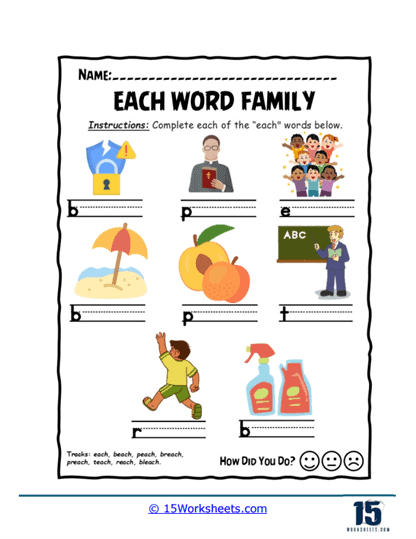
This collection of worksheets explores the “-each” word family (words like each, beach, teach, reach). Children can rhyme, match, and write words to strengthen their recognition of this long vowel pattern. It’s a thoughtful mix of reading and spelling fun. In short: it helps kids reach new levels of confidence with “-each” words!
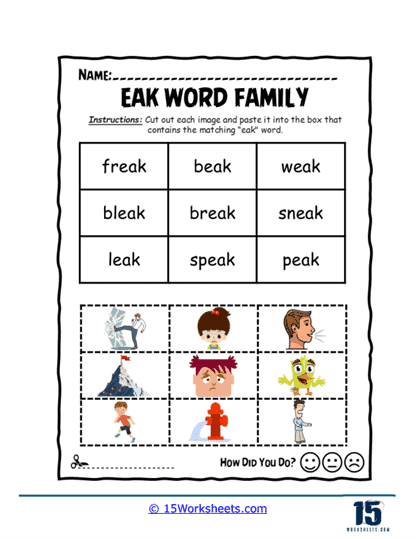
These worksheets focus on the “-eak” word family (think beak, leak, peak, sneak). Through rhyming, reading, and word-building tasks, learners practice spotting and using long vowel sounds. Bottom line: it’s a sleek, engaging set of activities that makes “-eak” words easy to speak!
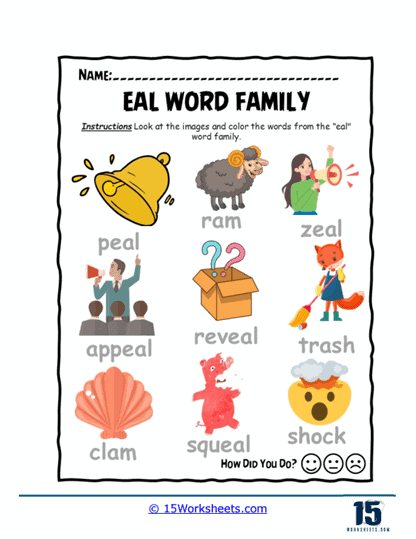
This set of worksheets highlights the “-eal” word family (like seal, meal, real, deal). Kids might complete rhyming puzzles, trace words, or sort pictures and terms by sound. It’s a smooth, playful way to boost reading fluency. Simply put: it’s the real deal for mastering “-eal” words!
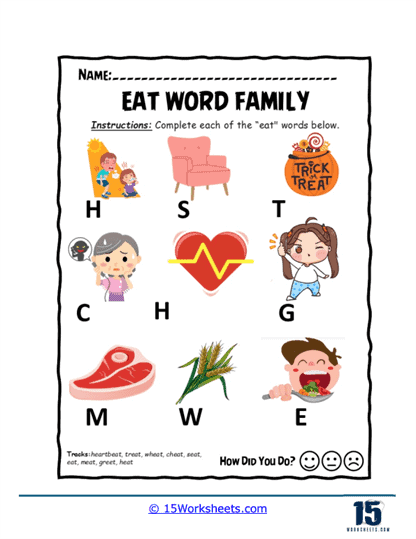
This collection spotlights the “-eat” word family (words like eat, seat, heat, neat). Children can fill in missing letters, match rhymes, or write word lists while learning vowel team patterns. In short: it’s a neat, upbeat pack that helps kids feast on “-eat” word success!
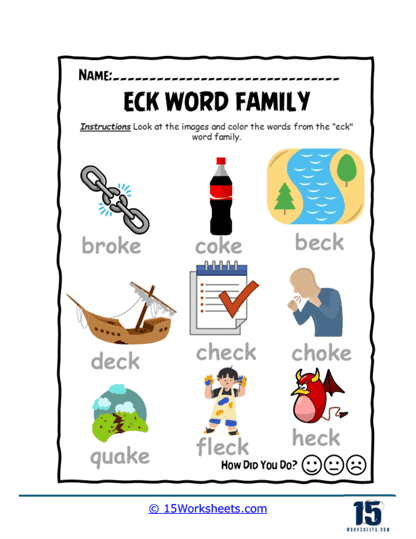
Students build strong phonics foundations by practicing words from the -eck word family. Activities reinforce sound blending, word recognition, and spelling accuracy. This collection supports early readers as they transition into more advanced decoding skills.
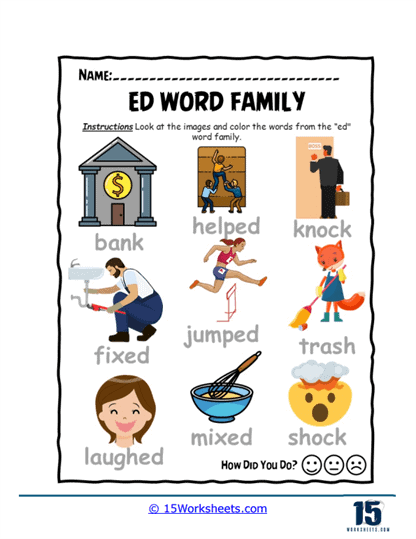
These worksheets focus on the -ed ending, which often signals past tense verbs or short rhyming words like red and bed. Students practice identifying, reading, and writing these words in fun activities such as matching pictures, filling in blanks, or building mini-stories. By repeating the same ending sound, kids strengthen their phonemic awareness and learn how one pattern can change meaning across different words. The worksheets highlight both everyday nouns like bed and common verbs like fed, giving balanced exposure. Learners quickly see how one letter at the front creates a whole new word. Teachers can use these for small groups, morning literacy tubs, or homework review. The consistent practice builds fluency, spelling confidence, and grammar awareness all at once.
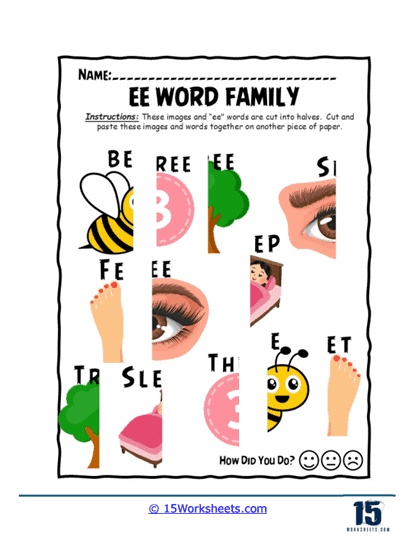
The -ee word family collection introduces students to long vowel patterns through structured phonics practice. Learners improve decoding, spelling, and word recognition with targeted activities. These worksheets support strong foundational reading skills and confidence.
Eed Word Family
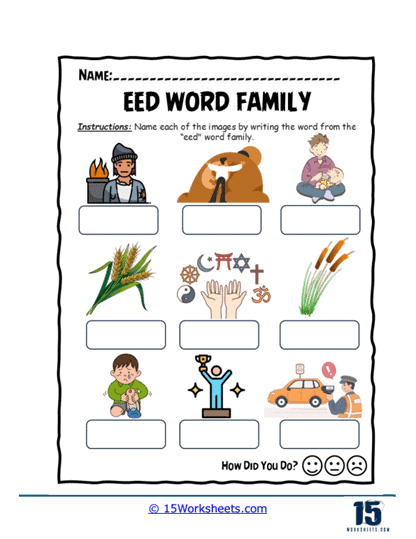
This collection helps students master the -eed word family by focusing on long vowel sound patterns. Worksheets guide learners through reading, writing, and matching activities for improved fluency. These skills help students decode longer words more easily.
Eep Word Family
The -eep word family worksheets strengthen students’ ability to hear and recognize long vowel sounds. Activities include blending, spelling, and sentence-building practice. This collection supports smoother reading and helps build early literacy confidence.
Eg Word Family
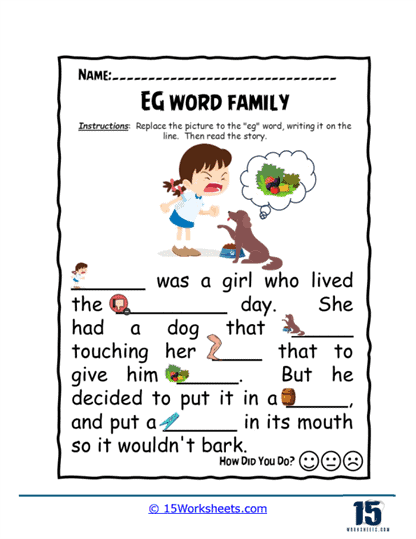
Students explore the -eg word family through engaging phonics and word-building activities. Worksheets focus on sound blending, spelling, and using words in context. These foundational skills support accurate decoding and early reading success.
Ell Word Family
The -ell word family collection helps students identify and read words with double consonant patterns. Learners practice decoding, spelling, and sentence formation using ell-family words. These worksheets strengthen fluency and reinforce important phonics rules.
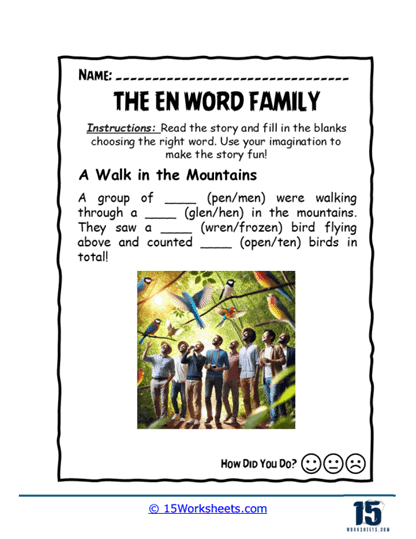
The -en word family includes words like pen, ten, men, and hen, which are short and easy to decode. These worksheets guide students through activities such as word hunts, sentence completions, and picture sorts to reinforce recognition. Learners discover how the vowel + consonant ending stays the same while the first sound changes meaning. By working with these pages, children grow more confident in blending sounds and recognizing patterns. The activities feel like games but pack in lots of phonics practice. Kids especially enjoy seeing how quickly they can list or find rhyming -en words. Parents and teachers can rely on these worksheets for extra practice at home or in literacy centers.
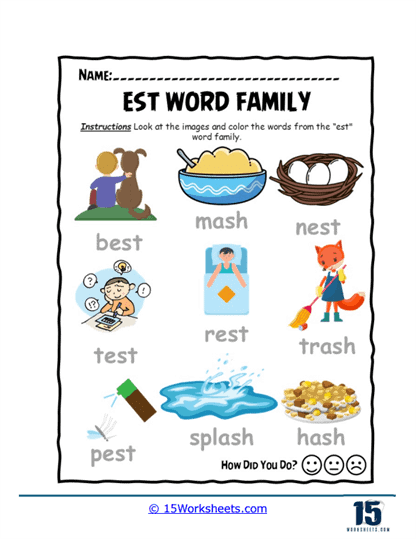
Students practice recognizing and using the -est word family with engaging, skill-building worksheets. Activities target decoding, spelling, and sentence usage for better fluency. This collection supports both early reading and basic writing development.
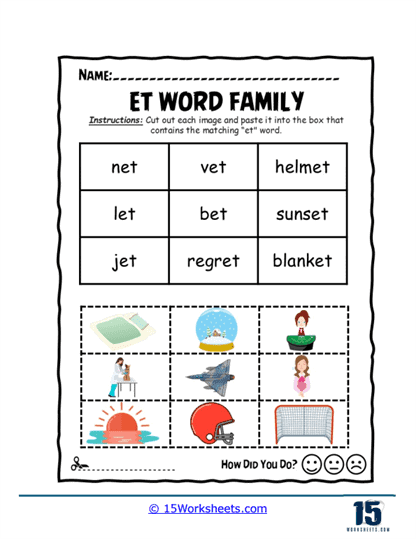
The -et worksheets introduce words like jet, net, vet, and pet, which are very common in children’s stories and real life. Each page offers playful activities like coloring, cutting, and matching that make phonics practice fun. Kids sharpen their decoding and spelling skills while also improving vocabulary. They see how changing just the first sound turns pet into jet or set, which builds awareness of word families. Repetition across multiple worksheets helps lock in the pattern for stronger reading fluency. Teachers can use them for quick warm-ups, partner games, or guided reading support. The simple design makes them easy to use at home for parents too.
What is the E Word Family?
The E word family is all about words that share the short “e” sound and end with common consonant patterns. For example, you’ll often see words like red, bed, net, pet, and jet. They all rhyme, which makes them easier for children to recognize and remember. Because of this predictability, word families give early readers a strong foundation in decoding new words.
When kids work with these families, they learn how just a single letter at the beginning can change the whole meaning. Think of bed versus red – one is where you sleep, the other is a color. This teaches children the powerful role of beginning sounds while reinforcing the shared vowel-consonant pattern. Many of these words are also high-frequency, meaning kids will see them often in books, signs, and classroom directions.
Another neat feature of the -e families is that they cover many parts of speech. You’ll find nouns like net, verbs like let, and adjectives like red. This variety shows students that the same sound and spelling pattern can stretch across grammar categories. Plus, because these words are short and common, they pop up in daily life all the time – from playing with a pet to watching a jet fly overhead.
The E Word Family Word Lists
EACH – beach, bleach, breach, each, leach, peach, preach, reach, teach
EAK – beak, bleak, creak, leak, peak, sneak, speak, squeak, streak, tweak, weak
EAL – deal, heal, meal, peal, real, seal, squeal, steal
EAT – beat, eat, heat, meat, neat, seat, treat, wheat
ECK – check, deck, neck, peck, speck, wreck
ED – bed, bled, fed, fled, led, red, shed, shred, wed
EE – bee, see, tree, free, three, need, keep, sleep
EED – bleed, breed, deed, feed, greed, need, reed, seed, speed, weed
EEP – beep, creep, deep, jeep, keep, peep, sheep, sleep, sweep, weep
EG – beg, keg, leg, neg, peg, veg
ELL – bell, cell, fell, sell, shell, smell, spell, tell, well, yell
EN – den, hen, men, pen, ten, then, when
EST – best, chest, nest, pest, quest, rest, test, vest, west
ET – bet, get, jet, let, met, net, pet, set, wet, yet