
Eat Word Family Worksheets






About These 15 Worksheets
The -eat word family is one of the most rewarding patterns for early readers to master because it appears in so many familiar words – eat, seat, meat, heat, and treat. These worksheets guide students through recognizing, reading, and writing words that share this long-vowel team. By focusing on a consistent spelling pattern, learners build decoding fluency and spelling accuracy with confidence. The activities also use bright, engaging visuals to help connect words to meaning.
Our -eat worksheets mix creativity and structure through coloring, tracing, matching, writing, and searching activities. Each page is designed to reinforce phonics while keeping learning hands-on and meaningful. Students see, say, and write each word in multiple contexts, strengthening both literacy and comprehension. The multisensory approach supports different learning styles and keeps reading practice exciting.
By exploring the -eat family, learners develop core phonics skills that extend to other long-vowel teams like -eet and -eak. They’ll start noticing how similar sounds can appear in many words across reading and writing. Each worksheet encourages fluency, focus, and fun – helping students turn patterns into confidence on every page.
About Each Worksheet
Color & Identify
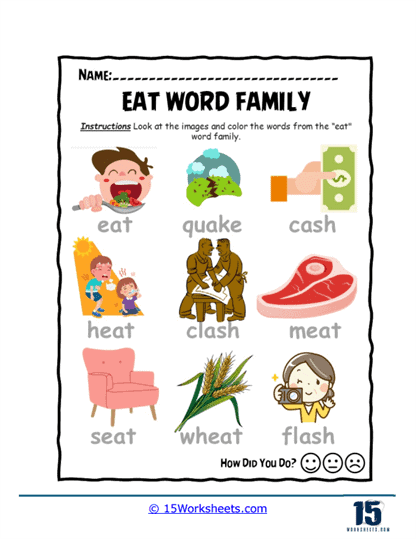
Students color lively images that show -eat family words such as eat, heat, seat, meat, and wheat. The fun visuals link sound and spelling, making phonics more memorable. Learners strengthen decoding skills by choosing only correct examples. Coloring encourages engagement and focus on the word pattern. It’s a bright, inviting way to begin the -eat unit.
Spot & Color
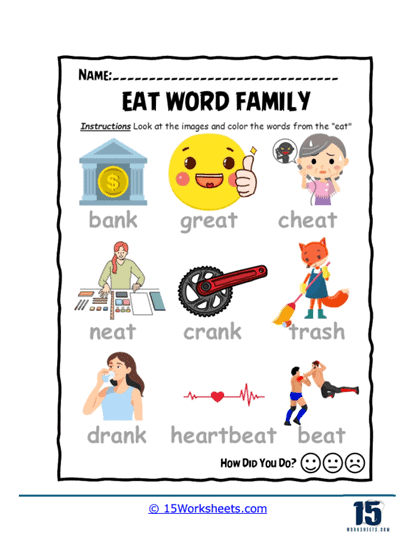
Learners identify and color words like cheat, neat, beat, and great while leaving others blank. The exercise teaches attention to spelling detail and sound similarity. Fun pictures – like boxers or cozy chairs – keep students motivated. It blends phonics practice with visual play. Perfect for quick review or independent learning time.
Rhyme Time
Students match words such as defeat, cheat, eat, and wheat to the right pictures. Matching turns abstract sounds into visual understanding. The activity builds decoding and vocabulary together. Learners strengthen their ability to identify rhyming word endings. A playful, skill-building matching task for all readers.
Sound Search
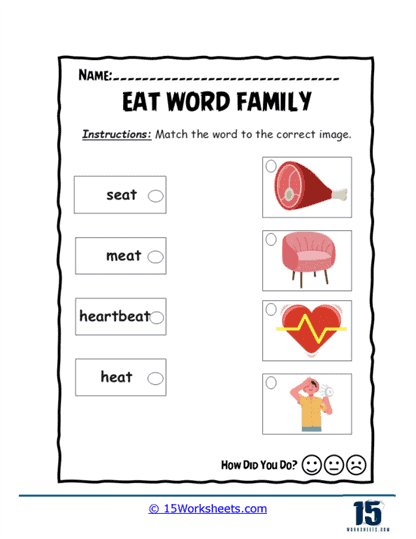
Learners match seat, meat, heartbeat, and heat to their pictures, focusing on visual clues. The task reinforces phonetic reasoning through image interpretation. Each correct match strengthens pattern recognition. It builds comprehension, spelling accuracy, and reading fluency. Great for guided practice or literacy centers.
Letter Practice
Students trace -eat words like defeat, seat, wheat, treat, and heartbeat beneath clear images. The tracing improves letter formation and sound recognition. Repetition builds spelling confidence and reading fluency. Learners practice phonics through motion and sound. Ideal for handwriting lessons or morning work.
Letter Maker
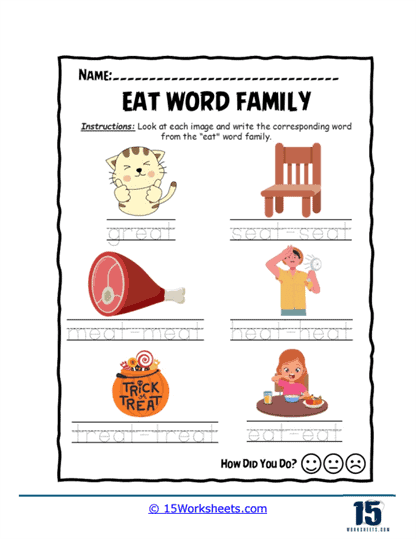
Students trace and write great, meat, heat, treat, and seat under matching pictures. Each image provides context for meaning and pronunciation. The task reinforces rhythm and structure in writing. Learners combine reading, tracing, and recognition for full-skill development. A strong follow-up for handwriting and phonics practice.
Cut & Paste
Students cut out pictures and paste them into boxes with matching -eat words like meat, seat, heat, treat, cheat, and wheat. The activity turns phonics into a hands-on learning adventure. Sorting and organizing boost visual-word connections. It encourages active engagement and fine-motor skill growth. Perfect for centers or homework fun.
Complete Words
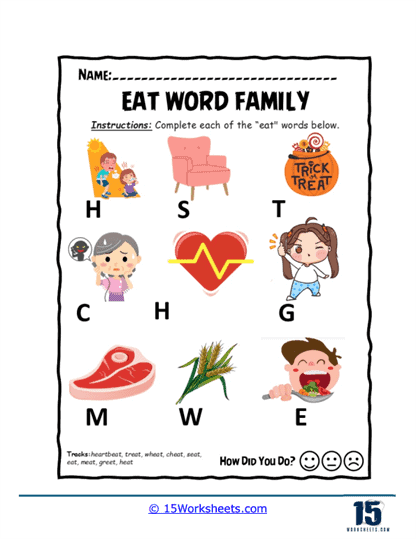
Learners complete missing letters in words such as cheat, seat, treat, wheat, meat, heat, and eat. Picture prompts provide clues for accurate spelling. The fill-in format encourages independent problem-solving and phonetic decoding. It strengthens confidence with consistent word endings. A great puzzle-style reinforcement page.
Write Pair
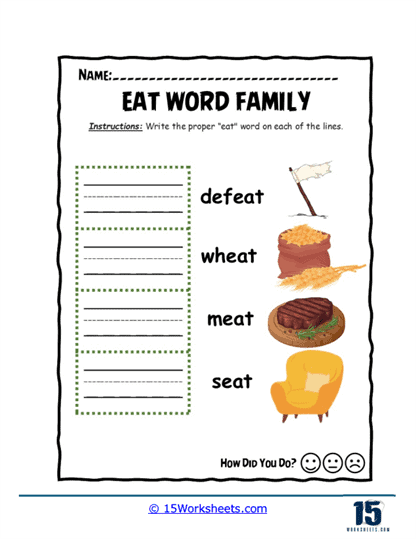
Students write words like defeat, wheat, meat, and seat next to matching images. The combination of handwriting and reading practice reinforces retention. Visual prompts help connect spelling to real-world meaning. Learners develop fluency and attention to letter patterns. An effective tool for solidifying learned vocabulary.
Word Partner
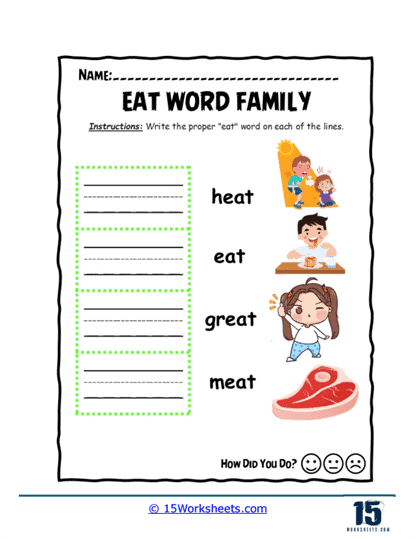
Learners write heat, eat, great, and meat beside their images. Each pair emphasizes phonetic consistency and spelling precision. Writing encourages careful decoding and recall. Students deepen comprehension through visual association. Great for quiet practice or literacy review sessions.
Eat Explorer
This first word search introduces words like defeat, great, wheat, retreat, greet, and heartbeat. Students search and circle each word, practicing letter-sequence recognition. The fun puzzle format promotes focus and persistence. Learners boost spelling confidence through discovery. A perfect start to word family exploration.
Find and Highlight
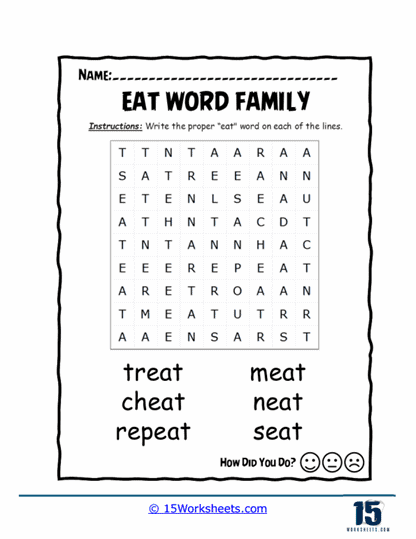
Students search for treat, cheat, repeat, meat, seat, and neat in a word grid. The game-like setup builds excitement around phonics review. Searching enhances scanning and attention to detail. The challenge reinforces spelling and reading fluency. A fun, engaging way to revisit familiar -eat words.
Word Chase
This advanced search includes eat, beat, heat, cheat, repeat, and wheat. The extra challenge pushes pattern recognition and endurance. Learners improve decoding and vocabulary retention. It’s an excellent blend of fun and fluency-building practice. Great for confident readers who love puzzles.
Sound Hunt
Students label pictures with words like seat, treat, wheat, heartbeat, and meat. The visuals support spelling recall and comprehension. Writing connects sound to print while reinforcing phonics patterns. Learners strengthen fine-motor coordination and literacy fluency. A balanced, hands-on practice sheet.
Word Detective
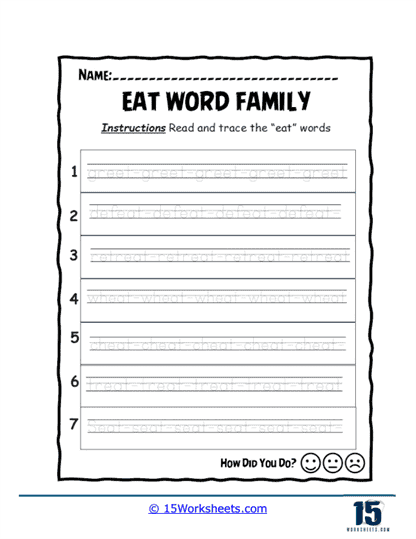
Learners trace -eat words such as great, seat, treat, wheat, and repeat. Repetition through tracing builds automatic spelling recall. Reading aloud supports sound awareness and fluency. The activity improves handwriting while calming focus. A smooth, satisfying way to wrap up the -eat family unit.
What is the -eat Word Family?
The -eat word family includes words that share the -eat ending, most commonly pronounced with the long /ē/ sound, as in seat and meat. Some words, like great and break, have unique pronunciations, which makes this family a fun one for learning phonics flexibility. Recognizing these shared letter patterns helps children decode and spell words more easily. It also introduces the concept that English spellings can make different sounds depending on the word.
Most -eat words are nouns (meat, seat, wheat) or verbs (eat, heat, treat), though several work as adjectives (neat, great). This mix shows learners how endings link across parts of speech. Exploring both regular and irregular pronunciations teaches pattern awareness and problem-solving. The consistent spelling helps readers gain fluency while expanding vocabulary.
In everyday life, -eat words appear everywhere – “take a seat,” “enjoy your meal,” “don’t cheat,” or “have a treat.” These phrases help students recognize familiar sounds in print and speech. Once they master the -eat family, learners can apply that same decoding skill to other vowel teams like -eet (sweet) and -eak (speak). Practicing this family encourages confident, curious reading across all subjects.
Word List for the -eat Word Family
Word List
beat, cheat, defeat, eat, great, greet, heat, heartbeat, meat, neat, repeat, retreat, seat, treat, wheat
Example Sentences
The seat by the fire was neat and warm from the heat.
We will eat the meat and enjoy a small treat with wheat bread.
Don’t cheat to beat the game – just repeat it and feel great!