
Of Mice and Men Worksheets



About Our Of Mice and Men Worksheets
John Steinbeck’s Of Mice and Men may be slim in length, but it’s packed with unforgettable characters, rich symbolism, and timeless themes about friendship, loneliness, and the American Dream. For many students, though, the book can feel like a puzzle-filled with historical context, layered motifs, and heartbreaking twists. That’s why this collection of worksheets was designed: to make Steinbeck’s world approachable, engaging, and rewarding to explore.
Each worksheet in this collection zooms in on a key moment, character, or theme, guiding students step by step. They’ll practice vocabulary, track symbols and motifs, and compare book-to-film versions-all while developing stronger reading and interpretation skills. The activities go beyond memorizing facts; they encourage thoughtful discussion, prediction-making, and reflection on moral choices.
What makes these worksheets even more valuable is how they connect literature to real life. Steinbeck’s novel doesn’t just tell a story about two ranch workers-it shines a light on history, society, and the fragile dreams we all carry. By working through these activities, students come to see that Of Mice and Men isn’t just a book to read in class-it’s a lens for thinking about resilience, justice, and the human condition.
About Each Worksheet
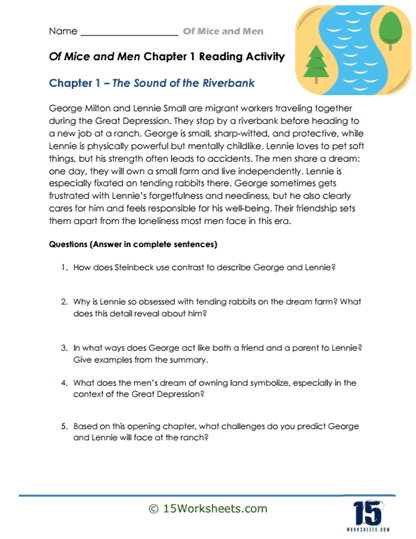
Riverbank Dreams (Chapter 1 – The Sound of the Riverbank)
This worksheet introduces George and Lennie’s friendship as they camp by the river. Students analyze how George’s protectiveness contrasts with Lennie’s childlike obsession with rabbits. It invites them to predict future conflicts and think about symbols of hope. Perfect for early chapters, it strengthens inference and character analysis. Consider it the “dream farm starter kit” of the collection!
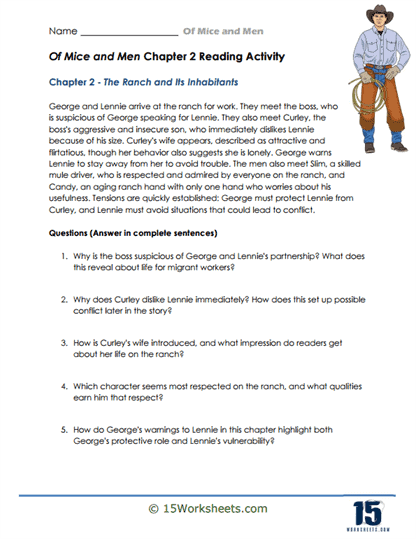
Ranch Rivalries (Chapter 2 – The Ranch and Its Inhabitants)
Here students meet the ranch crew, from Slim’s calm authority to Curley’s instant hostility. The worksheet highlights jealousy, suspicion, and power struggles simmering beneath the surface. Questions guide learners to analyze motives and foreshadow upcoming tension. It’s a great way to see how Steinbeck builds conflict through relationships. Think of it as the ranch’s very own “drama scoreboard.”
Dreams & Dangers (Chapter 3 – Dreams Shared and Tensions Rise)
This worksheet dives into the fragile hope of owning a farm, even as fights and losses shake the dream. Students connect Candy’s old dog and Lennie’s unexpected strength to larger symbols of survival and vulnerability. The activity blends character study with thematic reflection. It encourages them to weigh hope against harsh reality. A little hope, a little danger-Steinbeck keeps us on our toes!
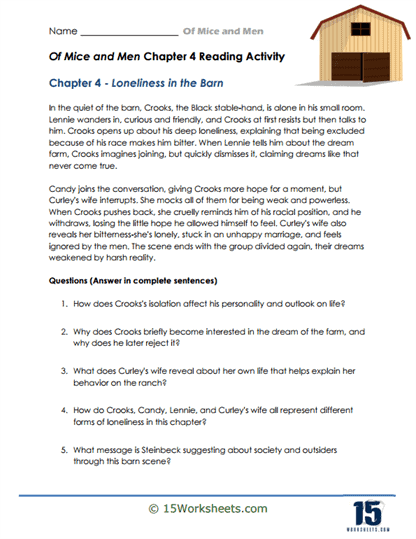
Barn Shadows (Chapter 4 – Loneliness in the Barn)
Students step into Crooks’s isolated world and reflect on loneliness, prejudice, and fragile friendship. The worksheet asks them to analyze character interactions and consider how power dynamics play out. They’ll practice connecting literature to issues of race, disability, and gender. This scene sparks empathy and critical thought all at once. In short: the barn isn’t just a setting-it’s a mirror of society.
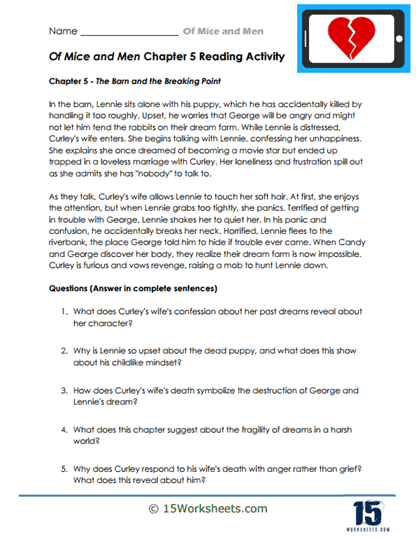
Shattered Dreams (Chapter 5 – The Barn and the Breaking Point)
This tragic scene brings foreshadowing to life as Lennie’s strength leads to heartbreaking consequences. Students interpret the loss of Curley’s wife’s dreams alongside Lennie’s fear of punishment. The worksheet encourages empathy while unpacking how fragile hopes can shatter in an instant. It develops comprehension of symbolism and theme. Heavy stuff, but deeply meaningful to study.
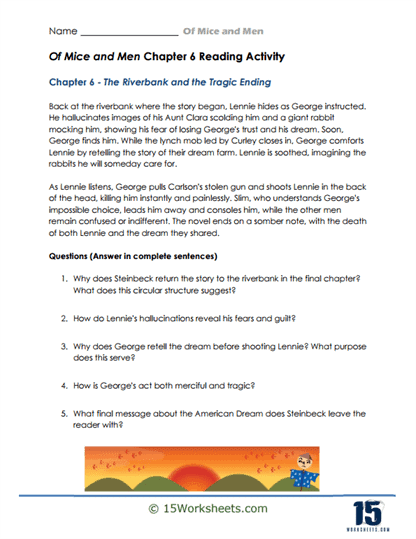
Tragic Riverbank (Chapter 6 – The Riverbank and the Tragic Ending)
Here the novel comes full circle, ending where it began. Students analyze Lennie’s hallucinations, George’s impossible choice, and the collapse of their dream. The worksheet pushes them to reflect on mercy, loyalty, and moral complexity. It strengthens recognition of narrative structure and symbolism. A bittersweet close to both the novel and the worksheet journey.
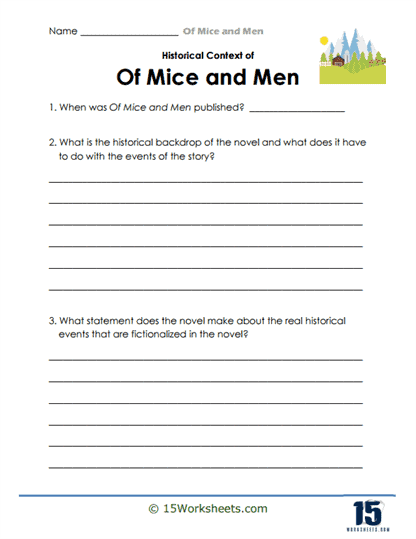
History Lens
This activity zooms out to the Great Depression, connecting Steinbeck’s fiction to real history. Students explore how the novel reflects economic struggle, migration, and inequality. It sharpens their ability to link text with historical context. The questions deepen understanding of literature as social commentary. Suddenly, Of Mice and Men feels like both a story and a history lesson!
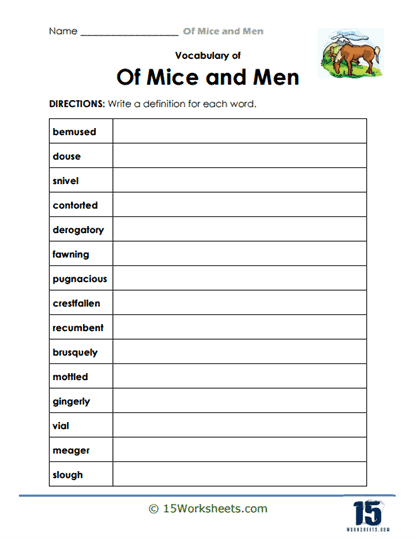
Word Vault
Challenging words like “bemused” and “pugnacious” take the spotlight here. Students define key vocabulary while grounding meaning in Steinbeck’s text. It’s a boost for both language precision and comprehension. Great for building confidence in tackling complex language. Think of it as a toolbox for decoding Steinbeck’s style.
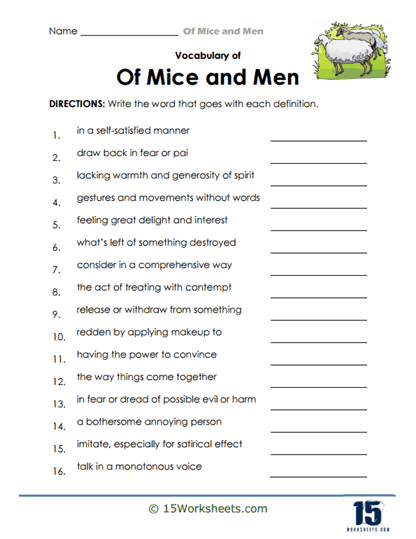
Definition Match
This worksheet makes vocabulary practice interactive. Students match definitions to the novel’s toughest words, reinforcing memory and recall. It’s quick, fun, and perfect for review or warm-ups. By mastering vocabulary, reading becomes smoother and more rewarding. Who knew word-matching could feel like a brain workout?
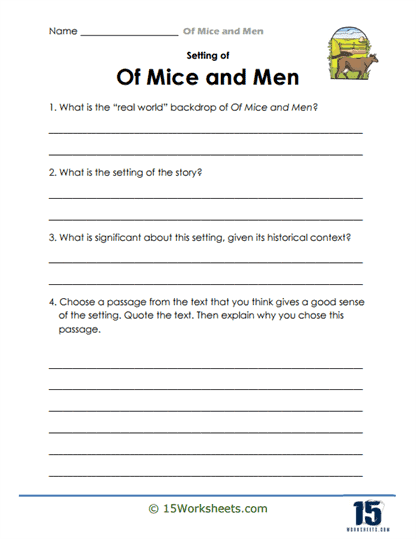
Setting Scope
Students explore both the literal ranch setting and its deeper symbolic role. They’ll find passages that capture place and mood, then analyze how setting drives theme. This activity builds comprehension of Steinbeck’s descriptive craft. It’s ideal for connecting environment with character struggles. The ranch isn’t just scenery-it’s a silent character in the story!
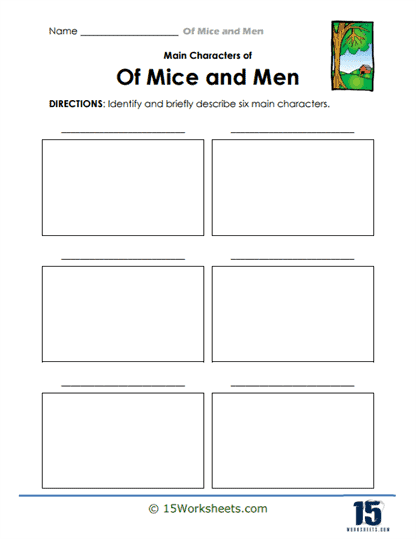
Character Cast
This worksheet organizes the six main characters into one handy chart. Students note traits, roles, and relationships, helping them keep the story straight. It builds comprehension while sparking discussion about symbolism and meaning. Perfect for visual learners who like structure. Consider it a “cast list with personality notes” that makes reading smoother.
Point of View Peek
Students analyze Steinbeck’s narrative perspective and consider alternative viewpoints. The worksheet highlights how storytelling changes depending on who tells it. It strengthens awareness of authorial choices and their impact. It’s also a great exercise in empathy, imagining events through different eyes. A fun way to see that stories are never one-size-fits-all.
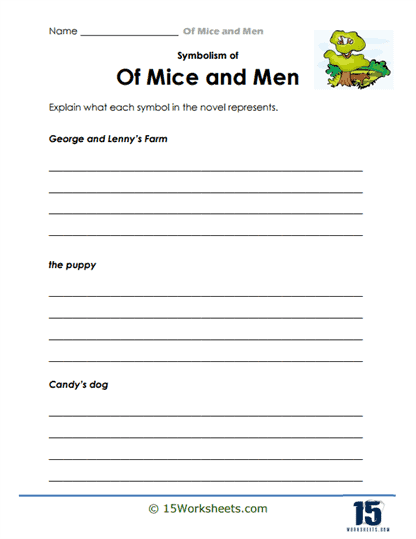
Symbol Search
Dreams, puppies, and Candy’s dog-symbols everywhere! This worksheet asks students to unpack what these objects mean beyond the literal. They’ll connect each symbol to themes like hope, fragility, and survival. It develops interpretive and abstract thinking skills. Who knew a farm dream could carry so much weight?
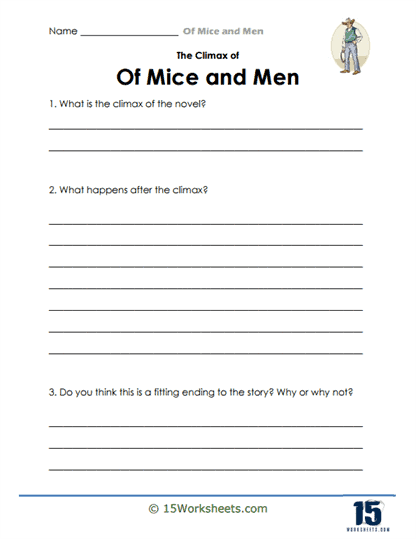
Climax Quest
Students pinpoint the story’s most dramatic moment and reflect on its aftermath. They’ll analyze how the climax reshapes character choices and the story’s ending. It’s a perfect way to connect structure with impact. The activity strengthens comprehension of plot arcs and authorial intent. Every good story needs a peak, and this one is unforgettable.
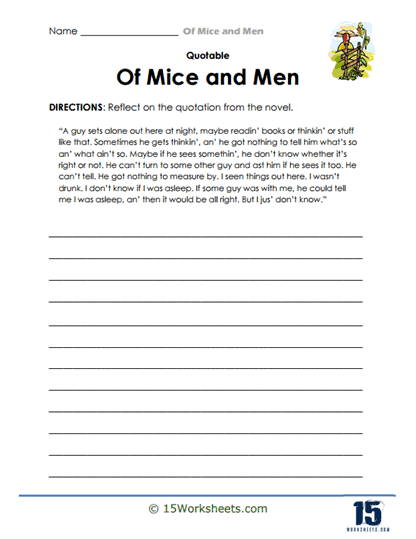
Quote Quest
This worksheet zooms in on one powerful quotation. Students unpack its meaning, reflect on themes, and connect it to bigger human experiences. It’s a short but meaningful way to build interpretation and personal reflection skills. Perfect for journal prompts or class discussion. Sometimes a single line can say it all.
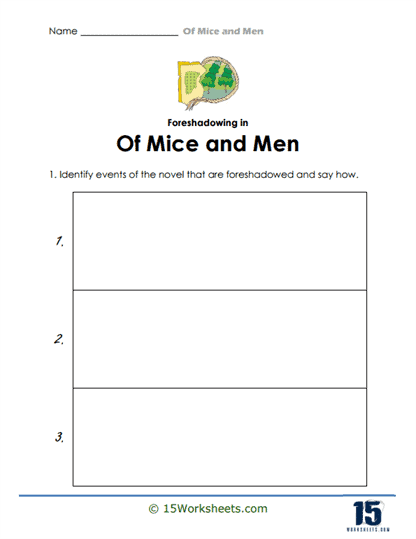
Future Hints
Foreshadowing takes center stage here. Students spot early clues that hint at tragedy, linking them to later outcomes. It strengthens close reading and inference skills. The activity also highlights Steinbeck’s craft as a storyteller. Think of it as playing detective with the text!
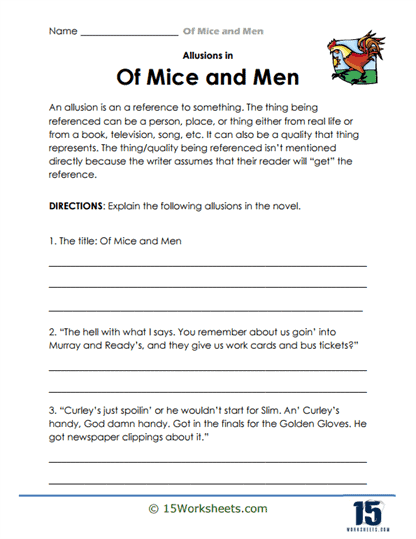
Reference Hunt
Students dig into allusions, from the novel’s title to cultural references woven throughout. They’ll analyze how each adds meaning and connects the book to its time. This worksheet builds awareness of Steinbeck’s broader influences. It’s a great way to see literature as part of a bigger cultural conversation. A title’s never just a title!
Plot Path
This activity maps the story from exposition to resolution. The visual organizer makes narrative structure easy to see at a glance. Students build skills in summarizing and sequencing. It’s great for reinforcing cause-and-effect relationships. In the end, the novel feels less daunting and more like a clear journey.
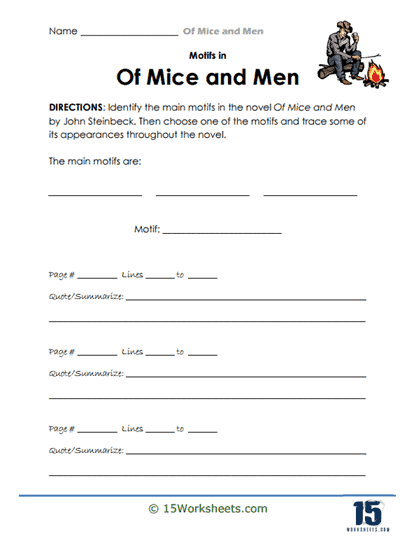
Motif Map
Here students track recurring motifs across the story. They’ll cite passages and explain how patterns deepen themes. It’s a close reading exercise that reveals layers in Steinbeck’s storytelling. The activity strengthens use of textual evidence. Suddenly, repetition feels purposeful instead of repetitive!
Media Match
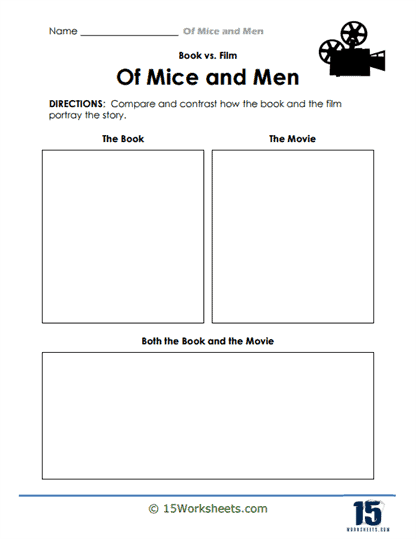
Book versus film-what changes, what stays the same? Students compare the novel with its screen adaptation, noting differences and similarities. It’s a fun way to explore storytelling across mediums. The worksheet builds comparative thinking and media literacy. Hollywood meets Steinbeck in one thoughtful activity.
Theme Threads
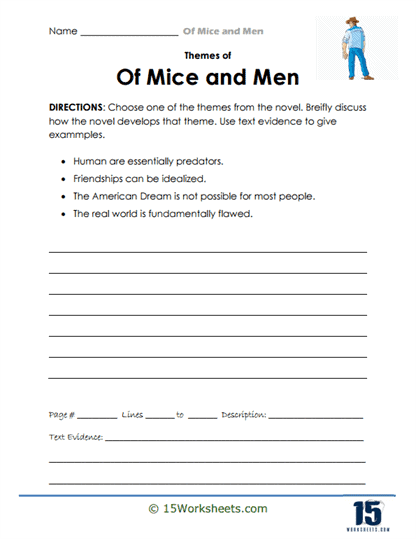
This worksheet invites students to choose a theme-like friendship or the American Dream-and trace its development. They’ll collect text evidence to support their analysis. It’s excellent preparation for essays and class discussions. The activity sharpens critical thinking and reasoning. By the end, students will feel like theme detectives solving Steinbeck’s puzzle.
What is Of Mice and Men?
Of Mice and Men is a classic novella written by John Steinbeck in 1937. It tells the story of George and Lennie, two migrant workers traveling during the Great Depression with a shared dream of owning land. George is quick-witted and protective, while Lennie is gentle but dangerously strong, with a childlike innocence. Their friendship carries them through hardships, but the world around them is unforgiving.
The novella matters because it captures timeless struggles: poverty, loneliness, prejudice, and the pursuit of the American Dream. Through its small cast of characters, Steinbeck asks big questions about dignity, justice, and the fragile nature of hope. The book is powerful not just for its story but also for its cultural and historical resonance.
In classrooms, Of Mice and Men is more than just a reading assignment-it’s a chance to build empathy, analyze symbolism, and connect literature to history and society. Students strengthen their comprehension, interpretation, and communication skills while exploring themes that remain relevant today. It’s a story that lingers long after the final page, making it both a teaching treasure and a reading experience to remember.