
To Kill A Mockingbird Worksheets


About Our To Kill a Mockingbird Worksheets
Harper Lee’s To Kill a Mockingbird is one of the most celebrated novels in American literature, blending a powerful courtroom drama with a coming-of-age story set in the Deep South. Through the eyes of Scout Finch, students encounter themes of justice, racial prejudice, family, and moral growth. The book is rich with history and symbolism, making it both moving and thought-provoking for young readers.
This worksheet collection helps students engage with the novel’s depth in an accessible way. From exploring historical context and Jim Crow laws to analyzing themes, motifs, and symbols, each activity strengthens comprehension while encouraging critical thinking. Creative options like writing eulogies, analyzing justice quotes, or comparing book-to-film adaptations make the study of Mockingbird engaging and memorable.
And because the story’s lessons go far beyond the 1930s, these worksheets also help students reflect on fairness, empathy, and courage in today’s world. By making connections between the novel’s themes and their own experiences, learners develop not only stronger reading skills but also a deeper understanding of society. In short, this collection turns literature into both a classroom tool and a life lesson.
About Each Worksheet
Maycomb Moments
This worksheet introduces students to the Great Depression, Jim Crow laws, and gender roles of the 1930s South. They see how these realities shaped daily life in Maycomb and influenced the novel’s conflicts. Students reflect on how history provides the backdrop for Tom Robinson’s trial. The activity strengthens comprehension and critical thinking about social context. It’s like stepping into Maycomb before Scout’s story even begins.
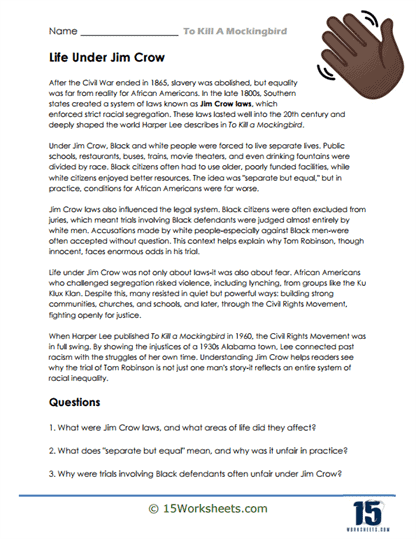
Crow’s Shadow
Here, students take a closer look at Jim Crow laws and their impact on African Americans. The worksheet connects segregation and injustice directly to Tom Robinson’s trial. It develops historical literacy and empathy by grounding the novel in real-world inequities. Students practice close reading of informational text and thoughtful reflection. It’s a sobering reminder of the realities behind Harper Lee’s fiction.
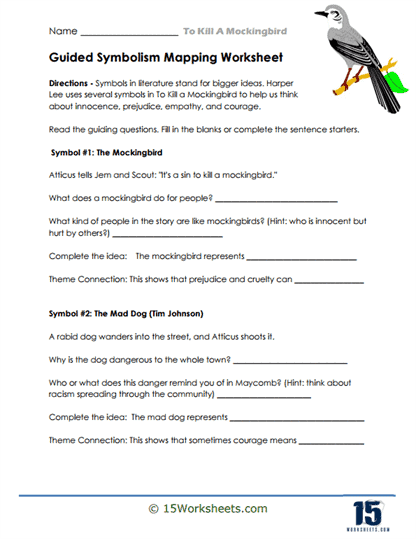
Symbol Hunt
Students explore symbols like the mockingbird and the mad dog, connecting them to themes of innocence, prejudice, and courage. The guided questions encourage deep interpretation. This activity builds literary analysis skills and abstract thinking. It strengthens comprehension by showing how figurative devices enrich meaning. Students discover how small images carry the weight of big themes.
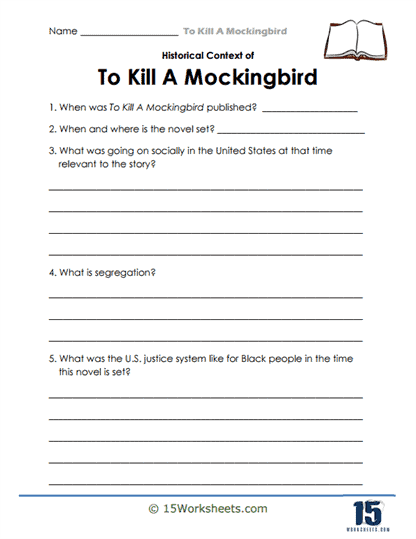
Context Clues
This worksheet situates the novel in its time of publication and setting. Students analyze how racial and legal inequalities influenced the story. The activity connects real-world history to Lee’s fictional Maycomb. It sharpens comprehension and critical thinking about literature as social commentary. Students finish with a stronger understanding of why the novel still resonates.
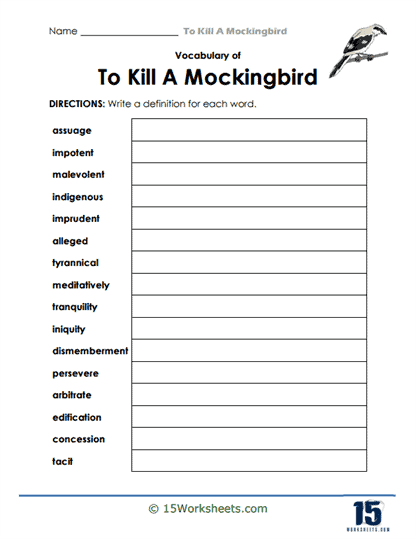
Word Wise
Students define key vocabulary from the novel, expanding their word knowledge before or during reading. The activity ensures they can confidently approach complex passages. Vocabulary practice strengthens comprehension and fluency. It also supports better interpretation of tone and dialogue. Think of it as a toolkit for navigating Harper Lee’s language.
Definition Match
This matching activity pairs vocabulary terms with their definitions. Students reinforce their understanding through careful comparison. The task improves memory, recall, and precision in language use. It also supports comprehension of the novel’s context and themes. It’s a quick, interactive way to solidify word knowledge.
Setting Study
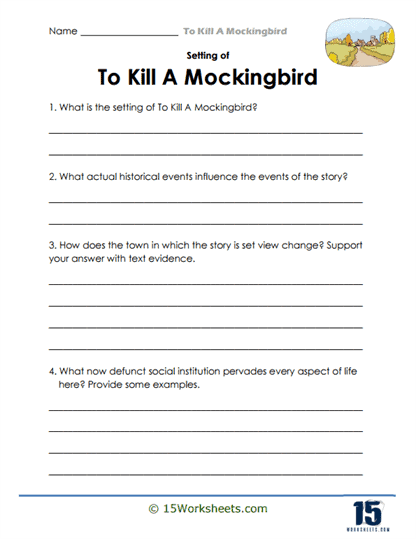
Students analyze Maycomb as a setting, connecting historical events and social institutions to the story. They consider how time and place shape character decisions and conflicts. The worksheet encourages evidence-based responses. It strengthens comprehension of how setting builds meaning. Students see that Maycomb isn’t just a backdrop-it’s part of the story’s conflict.
Character Cards
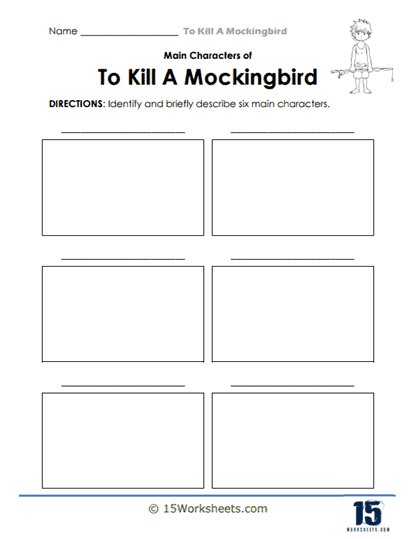
This activity organizes six key characters into boxes with names and descriptions. Students summarize traits, relationships, and roles in the story. The visual structure helps with recall and comprehension. It builds skills in character analysis and concise writing. It’s a handy reference for keeping the novel’s cast straight.
Perspective Point
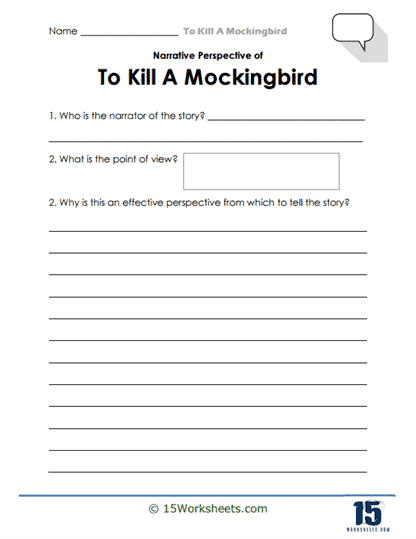
Here, students reflect on Scout’s first-person narration and its impact. They analyze how her viewpoint shapes tone, bias, and theme. The activity builds understanding of literary perspective and authorial choice. It encourages analytical thinking about narration. Students learn why Scout’s voice makes the story so memorable.
Symbol Search
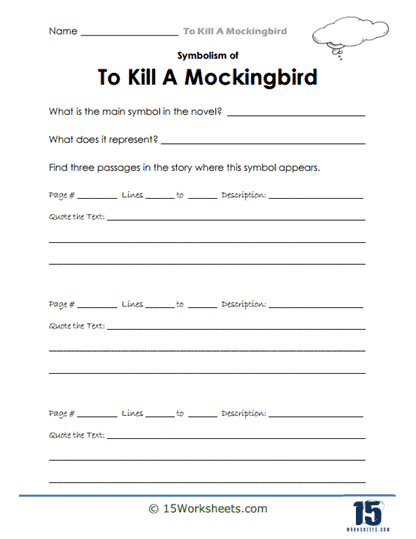
Students dig deeper into symbolism by identifying one major symbol and tracking its use across the novel. They cite passages, summarize, and interpret meaning. This builds close reading and evidence-based reasoning. It sharpens abstract thinking about symbols in literature. Students see how recurring images reinforce themes of justice and innocence.
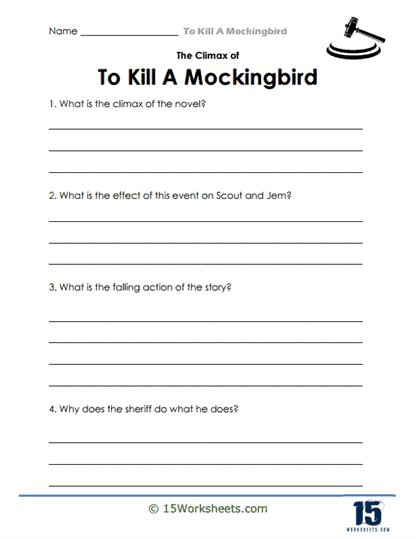
Climax Check
This worksheet focuses on the story’s pivotal moment. Students identify the climax, analyze its impact on Scout and Jem, and explain the sheriff’s decision. The activity sharpens understanding of narrative structure. It builds cause-and-effect reasoning about character growth. Students see how the novel resolves both tension and theme.
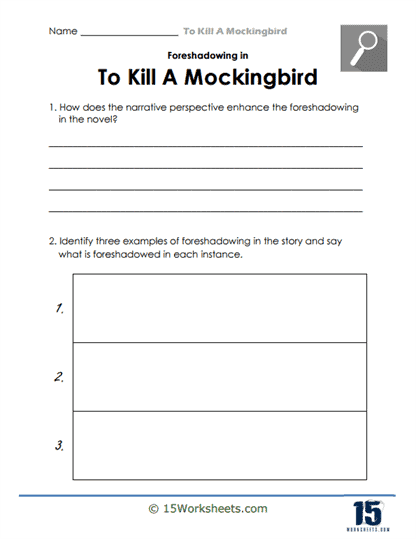
Foreshadow Focus
Students identify examples of foreshadowing and explain what they hint at. The activity highlights how Harper Lee plants clues throughout the story. It sharpens inference and predictive skills. Students practice recognizing subtle techniques authors use to build suspense. It’s like becoming a detective looking for hints in Maycomb.
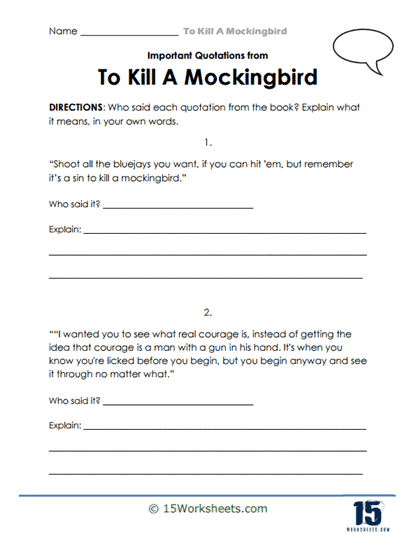
Quote Quest
This worksheet highlights memorable lines from the novel. Students identify speakers, explain meanings, and connect quotes to broader themes. The activity builds comprehension, paraphrasing, and interpretation. It strengthens the ability to link dialogue to character and theme. Students realize that a single line can carry the weight of the whole story.
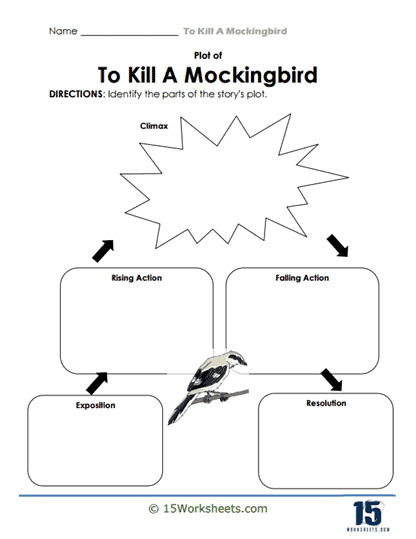
Plot Path
Students fill out a visual chart of the novel’s plot: exposition, rising action, climax, falling action, and resolution. This organizes the story’s structure clearly. It strengthens sequencing and comprehension of narrative flow. Students see how events build tension and resolution. It’s a big-picture view of storytelling in action.
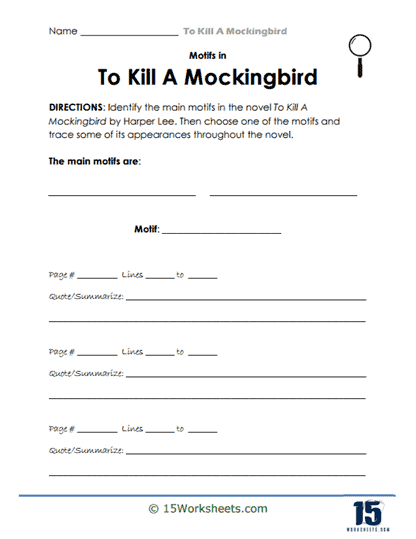
Motif Map
This worksheet guides students in tracing recurring motifs across the novel. They cite text, summarize, and explain how a motif reinforces theme. The activity builds close reading and pattern recognition. It strengthens critical thinking and essay-ready analysis. Students uncover the threads that tie Harper Lee’s themes together.
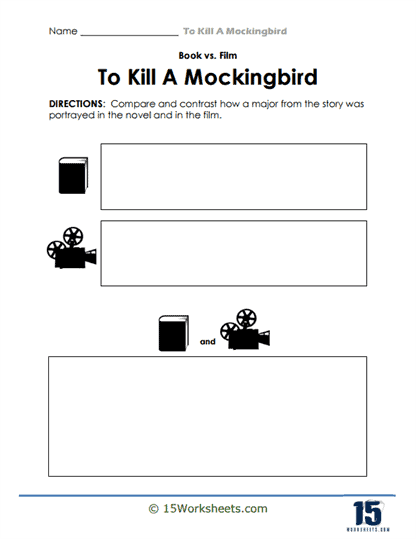
Book vs. Screen
Students compare the novel and its film adaptation. They reflect on differences in theme, setting, or character portrayal. The activity builds comparative analysis and media literacy. It sharpens evaluation of storytelling across mediums. Students see how one story can take on different lives in different formats.
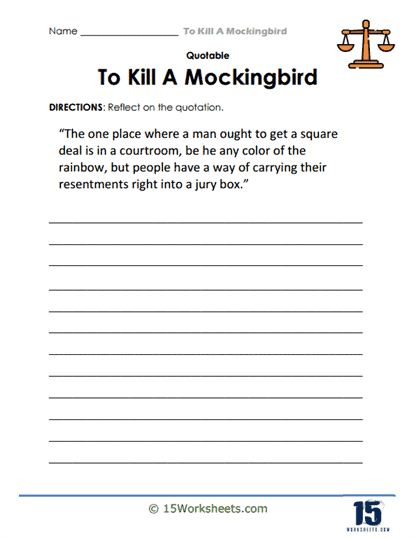
Justice Quote
This worksheet highlights a quotation about fairness and justice. Students reflect on its meaning and significance within the story. The open-ended format encourages personal interpretation. It strengthens critical thinking about moral themes. Students connect the text to timeless questions of justice in society.
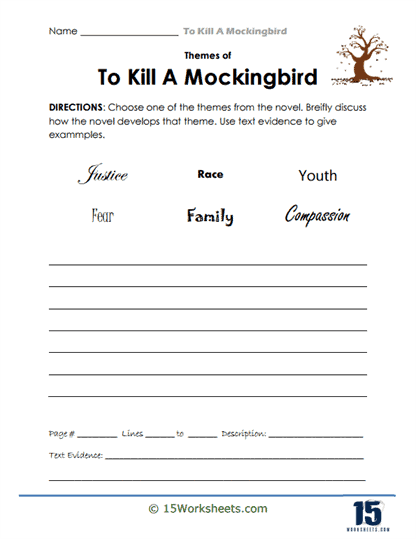
Theme Threads
Students choose a central theme-like race, family, or compassion-and explain how the novel develops it. They must cite text evidence to support their analysis. The activity builds higher-level interpretive skills. It also strengthens evidence-based reasoning and critical writing. Students come away with a stronger grasp of the novel’s central ideas.
What is To Kill a Mockingbird?
To Kill a Mockingbird is Harper Lee’s classic novel set in the small town of Maycomb, Alabama, during the 1930s. Told through the eyes of young Scout Finch, the story follows her family as her father, Atticus, defends a Black man, Tom Robinson, falsely accused of a crime. At the same time, Scout and her brother Jem learn life lessons about fairness, courage, and growing up in a divided community.
The novel is important because it addresses big themes-racism, justice, morality, and compassion-through the simple but powerful perspective of a child. It captures both the harsh realities of prejudice and the hope that empathy can bring change. Its symbols, like the mockingbird, continue to spark reflection and discussion decades after its publication.
For students, To Kill a Mockingbird is both a moving story and a lesson in empathy and justice. It strengthens reading, writing, and analysis skills while encouraging thoughtful reflection on fairness and human dignity. More than just a piece of literature, it’s a story that asks us all to stand up for what’s right-even when it’s not easy.