
Dr. Seuss Worksheets

All About These 15 Worksheets
Dr. Seuss books have a magical way of making kids laugh while secretly teaching them big lessons about kindness, creativity, friendship, and thinking for themselves. These worksheets take all those wild rhymes, goofy creatures, and impossible-looking inventions and turn them into fun learning activities students actually want to do. Parents usually notice pretty quickly that kids stay way more engaged when the lesson includes talking fish, grumpy green creatures, or elephants protecting tiny worlds. It’s reading practice disguised as colorful chaos, which honestly feels very on-brand for Dr. Seuss. Somewhere, the Cat in the Hat would absolutely approve of the mess.
This collection jumps all over the wonderfully weird world of Dr. Seuss instead of sticking to just one type of activity. Some worksheets ask students to reflect on life lessons and emotions, while others focus on rhyming words, creative drawing, storytelling, or silly made-up language. One page may have kids thinking deeply about environmental responsibility with The Lorax, while another has them inventing ridiculous nonsense words that sound like they belong in a Seuss book already. The variety keeps things feeling playful and unpredictable in the best way possible. It’s basically literacy practice wearing a giant striped hat and balancing ten fish at once.
About Each Worksheet
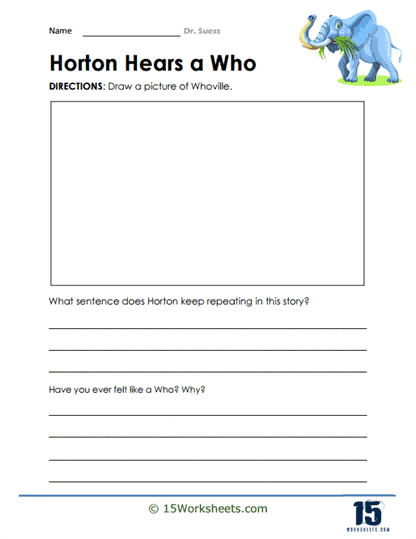
Horton’s Repeating Rhymes
This worksheet lets kids dive into Horton Hears a Who! by drawing Whoville and thinking about Horton’s famous repeated line. The reflection question about feeling small or overlooked tends to lead to some surprisingly sweet and thoughtful answers from students.
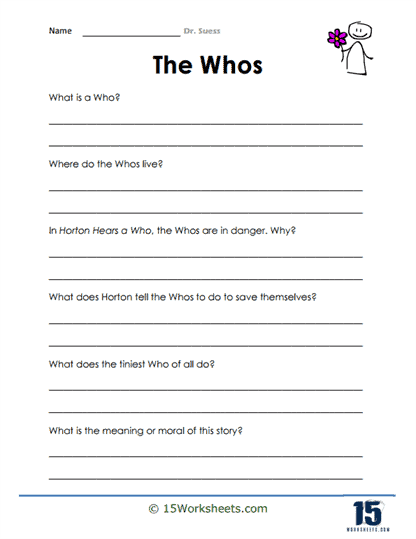
Whos And Whoville Wonders
Students explore the tiny world of the Whos while figuring out why Horton works so hard to protect them. It’s a nice mix of imagination, story comprehension, and “wow, maybe every voice really does matter” energy.
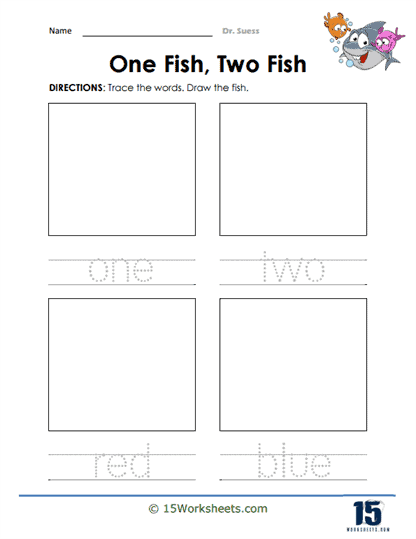
Counting And Coloring
This activity combines tracing simple words with drawing colorful fish inspired by One Fish, Two Fish, Red Fish, Blue Fish. It feels a little like early literacy practice wandered into an art class and decided to stay there.
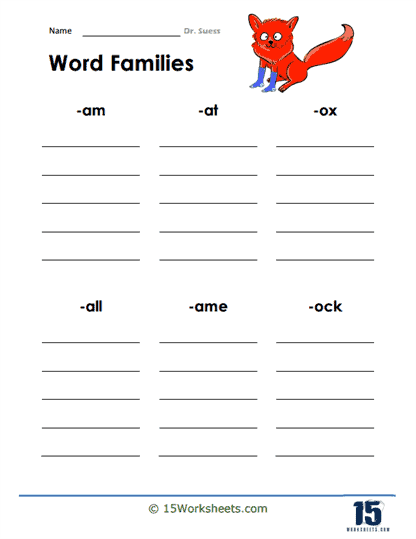
Word Family Whimsy
Kids sort words into rhyming families and quickly realize Dr. Seuss basically built an entire career out of making language bounce around like music. The worksheet sneaks phonics practice into something that feels much more playful than a normal spelling drill.
Sneetches Unite
Students look at the Sneetches and unpack the story’s big message about fairness, inclusion, and treating people kindly. Somehow those little stars-on-thars conversations always end up feeling way more relevant than kids expect.
From Grinch To Gratitude
This worksheet follows the Grinch from full holiday misery to his dramatic heart-growing transformation. Kids usually have a lot to say about the moment he realizes Christmas isn’t really about presents after all.
Rhyme Time
Students hunt for rhyming words inside Green Eggs and Ham and start noticing how rhythm makes the story so fun to read aloud. It’s one of those activities where kids accidentally improve reading skills while giggling over weird food combinations.
The Butter Battle Analysis
This worksheet asks students to think about The Butter Battle Book and its surprisingly serious message hidden under all the silliness. Kids quickly realize two groups arguing about toast might actually be about something much bigger.
Curious Cats And Bumpy Adventures
Students revisit The Cat in the Hat by exploring the mystery, mischief, and giant rainy-day chaos caused by everyone’s favorite troublemaking cat. The drawing section gives kids a chance to relive whichever ridiculous moment made them laugh the hardest.
Tracing And Writing Fun
This activity focuses on tracing and handwriting practice using famous lines from The Cat in the Hat. Repeating “sit sit sit sit” somehow becomes much more entertaining when Dr. Seuss is involved.
The Lorax’s Message
Students reflect on The Lorax by drawing characters and discussing the story’s environmental message. It’s hard not to feel at least a little protective of trees after spending time with that grumpy orange guy.
Rhyming With Dr. Seuss
This worksheet turns students into rhyme hunters as they listen for matching sounds hidden throughout Seuss stories. Kids usually end up realizing rhyming is a lot more fun when the words are attached to strange creatures and nonsense adventures.
Many Hats Galore
Students pick one of Bartholomew Cubbins’ endless hats to draw and describe in detail. Honestly, some of the hats kids invent afterward sound even crazier than the ones Dr. Seuss came up with himself.
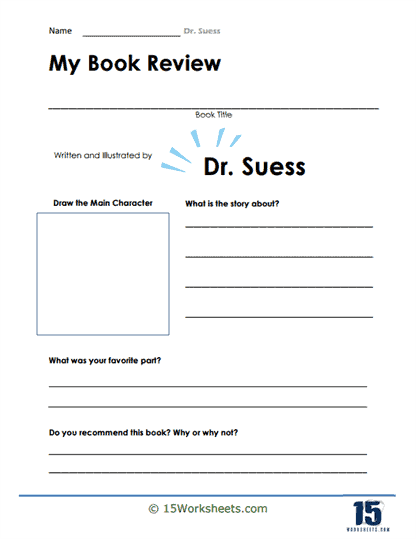
My Book Review
This activity asks students to reflect on a favorite Dr. Seuss book by summarizing it, drawing characters, and sharing opinions. It feels more like excitedly recommending a book to a friend than filling out a traditional reading assignment.
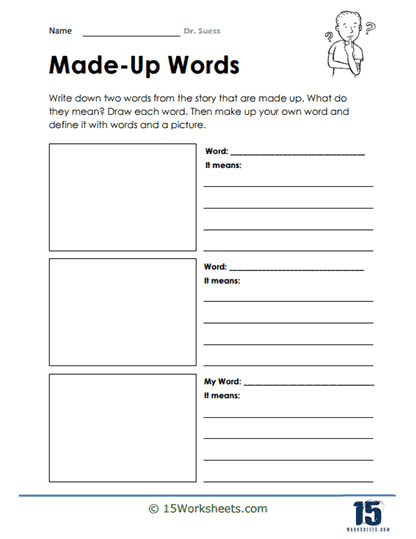
Creative Language Exploration
Students explore Dr. Seuss’s made-up words and then create their own completely ridiculous vocabulary terms. This worksheet basically gives kids official permission to turn language into a playground for a while.
Who Was Dr. Seuss?
Theodor Seuss Geisel, who writes under the pen name Dr. Seuss, born on March 2nd, 1904, in Springfield, Massachusetts, has contributed a lot to the world of children’s classic literature with his notable works like The Cat in the Hat and How the Grinch Stole Christmas. He died on September 24th, 1991, at the age of 87 years.
Dr. Seuss knew that the literature and reading material children are provided with is the rock bottom base upon which their thinking and imagination will be based. He believed that books for children had great potential for shaping the future of the country, for good or bad.
Dr. Seuss began his career working to provide illustrations and cartoons for magazines, ads, and other people’s books. He started writing children’s books because he wanted to channel his passion and message into those books, to bring it to the youth.
Dr. Seuss attended Dartmouth College in 1925 and there became a member of the college’s humor magazine group “Jack-O-Lantern.” Later on, he became the editor of the magazine, but that was short-lived. Dr. Seuss, however, kept contributing to the magazine and started publishing his work under the pen name ‘Dr. Seuss.”
In the Second World War era, Dr. Seuss started working on political cartoons, criticizing the pro-fascist groups. He contributed more than 400 cartoons to PM, New York’s daily newspaper. He also got enrolled in the US army as a commander of the Animation department and started his journey in the art of animation.
After the war ended, Dr. Seuss resumed his work of writing children’s books and wrote several famous books that earned him worldwide recognition and fame.
He had a very unique style of writing that not only made things intriguing, but super vivid. For instance, if he was confronted with writing the sentence: “We got up early and had a tasty bowl of cereal.” His style would write it as: “As the sun rose with a peep, we sprang from our slumber deep, and with a grin so wide and cheerful, we devoured a bowl of cereal most delightful!”
Dr. Seuss published more than 40 books before his death, and half a billion copies of his books have been sold. You can assume that Dr. Seuss has sold even more books than JK Rowling did. There are millions of children in the USA and worldwide who still read his books.