
Lord of the Flies Worksheets
About These Lord of the Flies Worksheets
William Golding’s Lord of the Flies isn’t just a story about boys stranded on an island-it’s a powerful exploration of human nature, society, and the struggle between order and chaos. For many students, the novel can feel mysterious, layered, and even a little intimidating at first. That’s exactly why this collection of worksheets was designed: to break the novel into approachable activities that spark curiosity while encouraging deeper reading.
These worksheets help students unpack the novel’s symbols, language, characters, and themes in bite-sized, engaging ways. Instead of being overwhelmed, learners are guided step by step to connect passages with larger ideas. Along the way, they practice key skills like analyzing figurative language, mapping plot structure, and identifying how setting and perspective shape meaning.
Working through these pages also helps students see the cultural and historical context that shaped Golding’s novel. They’ll discover how events of the mid-20th century-like World War II-echo through the book’s conflicts. By the end, readers not only understand the story of stranded boys but also recognize how the novel comments on real-world struggles with leadership, fear, and morality.
About Each Worksheet
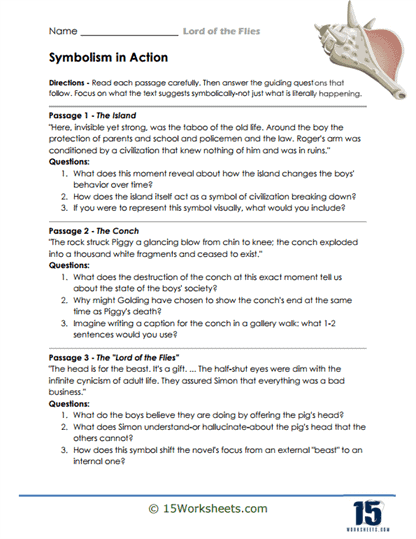
Symbolic Sparks
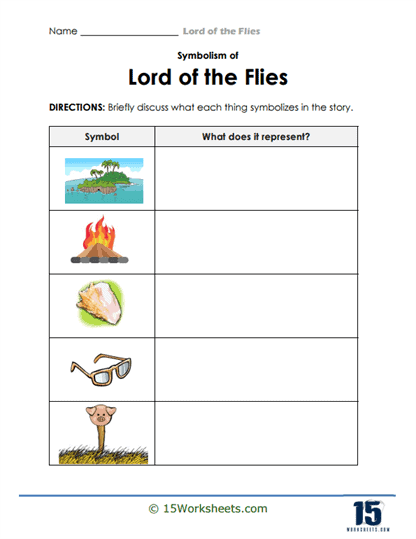
This worksheet lights up the hidden meaning behind the island, the conch, and the pig’s head. Students explore how each symbol goes beyond surface detail to reveal themes of civilization, order, and fear. It encourages critical thinking about how authors use objects to carry big ideas. Perfect for classroom discussions or solo study, this activity sharpens interpretation skills. Think of it as a treasure hunt for hidden meanings!
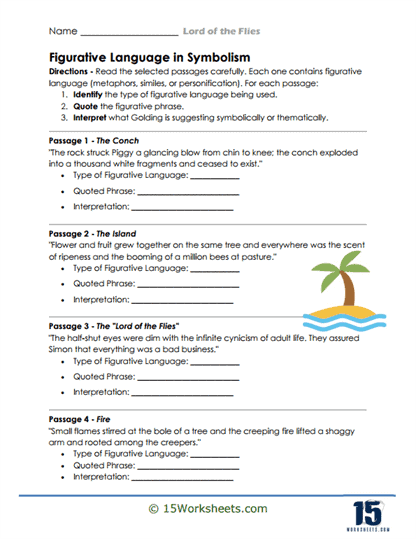
Figurative Focus
Here’s a chance for students to play detective with similes, metaphors, and personification. Short passages challenge them to spot figurative language and unpack what it means in context. As they dig in, they’ll see how Golding’s word choices pack more punch than meets the eye. It’s a vocabulary boost, a close reading workout, and a creativity spark all in one. Plus, it makes “what it means” way more fun than just “what happens.”
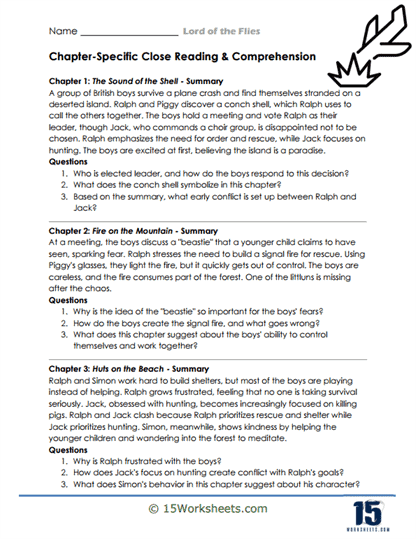
Chapter Compass
This worksheet guides students through three chapters with summaries and thoughtful questions. They’ll track how leadership, conflict, and fear shape the boys’ crumbling society. It helps them connect character choices with big-picture themes. Teachers can use it for discussion, or students can use it independently for chapter review. It’s like a literary GPS that always points toward deeper understanding!
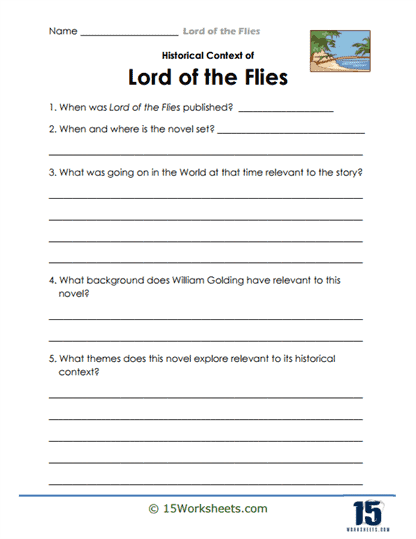
History Hunt
Students dive into the “when” and “why” behind the novel with this worksheet. They’ll explore Golding’s background, postwar history, and how world events influenced the story. It connects literature with real-world history, making reading feel relevant. This activity sharpens research skills while adding layers of context. Bonus: it helps students see that novels don’t pop out of thin air-they grow from their time!
Word Builders
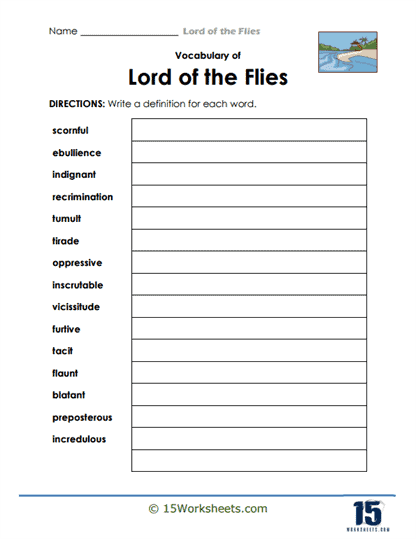
Big words like “tumult” and “incredulous” don’t stand a chance with this worksheet. Students define challenging terms and see how they shape meaning in the novel. It’s a confidence booster for tackling advanced vocabulary. Teachers can use it for pre-reading prep or ongoing support. Who knew building words could feel like flexing literary muscles?
Match Mastery
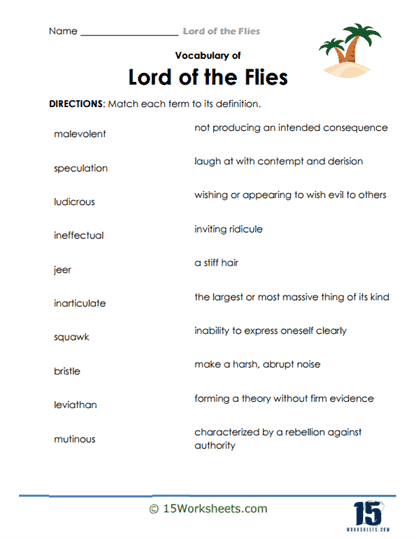
This worksheet turns tricky vocabulary into a fun matching game. Students pair words like “mutinous” with their correct meanings, reinforcing memory along the way. It’s quick, interactive, and effective for solidifying word knowledge. Great for warm-ups or group work, it makes vocabulary less intimidating. Think of it as speed dating-but with words and definitions!
Setting Scene
Students take a close look at the island and what it represents. They’ll describe its details, reflect on its role in the plot, and consider its symbolic meaning. This worksheet highlights how setting is more than just a backdrop. It’s a perfect way to connect place with theme and character. Suddenly, the island feels like another character in the story!
Character Chart
Six key characters, one handy chart-this worksheet makes analysis clear and organized. Students describe personalities, roles, and significance for each major figure. It builds comprehension while sparking discussion about symbolism and theme. Great for visual learners, the chart format makes relationships easy to track. It’s like a cheat sheet that grows into deep understanding.
Viewpoint Vision
Narrative perspective can make or break a story, and this worksheet shows students why. They’ll identify point of view and explain how it shapes the novel. It also asks them to consider why Golding chose this perspective. The activity encourages close reading of authorial choices. By the end, students see storytelling itself in a new light!
Symbol Quest
This activity takes students on a hunt for objects with deeper meaning. They’ll analyze the conch, fire, glasses, and pig’s head, learning how each symbolizes more than it seems. It’s an accessible way to explore abstract ideas through concrete images. Teachers can use it to spark class debates or as a solo reflection tool. Consider it a “symbol safari” where every clue leads to insight!
Conflict Climax
Every story has its boiling point, and this worksheet helps students find it. They’ll map out the novel’s main conflict, climax, and resolution. Along the way, they’ll think about how these moments connect. The activity builds strong understanding of plot structure and cause-and-effect. It’s like replaying the novel with a spotlight on the most intense moments!
Allegory Map
Students discover how characters like Ralph and Jack represent bigger ideas. This worksheet guides them to see the novel as an allegory of society, morality, and power. It builds analytical skills by asking them to look beneath the surface. Perfect for essays or group projects, it connects story to philosophy. Suddenly, the island feels like the whole world in miniature!
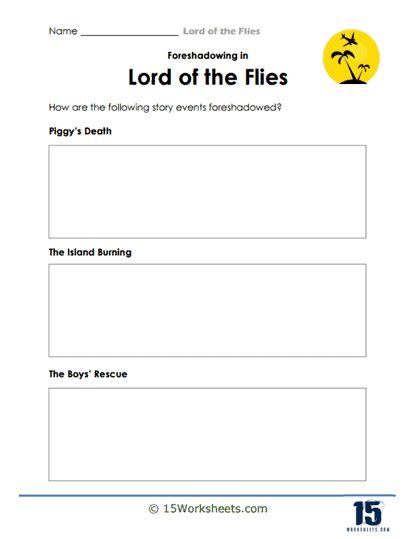
Foreshadow Finder
This worksheet challenges students to spot the author’s hints about what’s coming. They’ll identify clues that predict major events like Piggy’s death or the boys’ rescue. It encourages close reading and inference skills. By the end, students will see how Golding carefully plants breadcrumbs throughout the text. Who doesn’t love a good “aha!” moment?
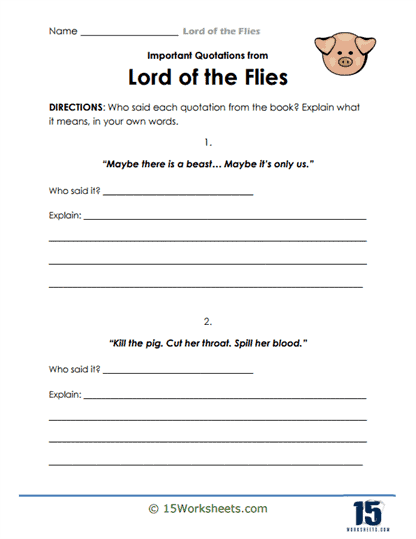
Quote Quest
Iconic lines come to life in this worksheet. Students identify speakers, explain meaning, and connect quotes to themes of human nature and violence. It’s a close reading activity that encourages careful interpretation. Perfect for sparking essays or discussions, it shows how words carry weight. Think of it as a scavenger hunt for wisdom hidden in dialogue!
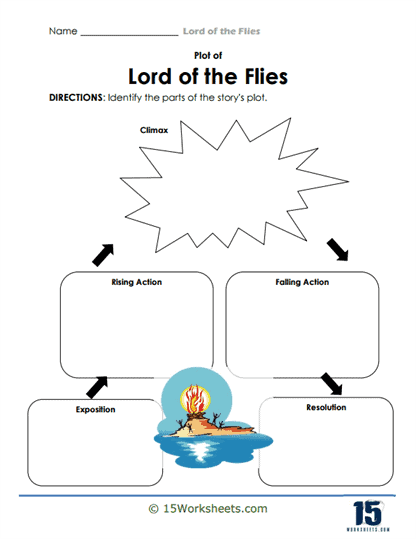
Plot Path
With this worksheet, students chart the novel’s story arc from exposition to resolution. The graphic organizer makes structure crystal clear. They’ll learn how rising action leads to climax and beyond. It’s perfect for visual learners who like to see the big picture. Suddenly, the novel feels less like chaos and more like a well-built rollercoaster!
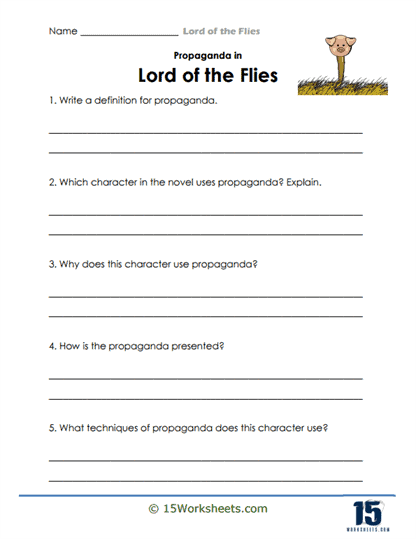
Persuasion Power
Propaganda and persuasion take center stage in this activity. Students identify who uses manipulation in the novel, why, and how it works. It’s a great way to connect fiction with real-world media literacy. The activity sharpens critical thinking about leadership and control. Suddenly, students won’t just read-they’ll question how people influence others in everyday life.
Irony Insight
Outcomes don’t always match expectations, and this worksheet makes students notice. They’ll analyze examples of situational irony in the story and explain their effects. This builds appreciation for subtle literary techniques. It’s an engaging way to connect tension and theme. Irony has never felt this eye-opening!
Theme Tracker
Big ideas like savagery and innocence don’t stay hidden with this worksheet. Students choose a theme and collect evidence across the novel. The organizer makes it easy to tie details together. It’s a perfect prep tool for essays or class discussions. By the end, students will feel like expert theme detectives!
What is Lord of the Flies?
Lord of the Flies is a classic novel written by William Golding in 1954, and it’s about more than just boys stuck on an island. The story follows a group of stranded children as they attempt to govern themselves-only to slip into chaos, fear, and violence. At first, it seems like an adventurous survival tale, but it quickly becomes a deep look at human behavior and the struggle between order and savagery.
The book matters because it explores timeless questions: What happens without rules? How does fear change people? Why do societies rise and fall? Golding’s novel reflects the anxieties of his own postwar world, but it continues to resonate today. Readers find themselves asking not only what happens to the boys but also what the story says about us.
In classrooms, Lord of the Flies is a powerful tool for building reading and critical thinking skills. It connects to history, psychology, and even current events, making it more than just “another book assignment.” By analyzing its characters, symbols, and themes, students also practice key skills in writing, communication, and analysis. In short: this novel sparks big conversations about literature-and life.