
The Outsiders Worksheets


About Our The Outsiders Worksheets
S. E. Hinton’s The Outsiders is a powerful story about identity, loyalty, and growing up in a divided world. Centered on Ponyboy Curtis and his friends, the Greasers, the novel explores the tension between rich and poor, innocence and experience, and the bonds that hold people together in hard times. It’s a book that speaks to teens directly, with raw honesty and heart.
Our worksheet collection makes this classic even more engaging by breaking down its themes, characters, and symbols into approachable, interactive activities. From creative writing prompts like eulogies and report cards to analysis tasks like symbolism hunts and motif trackers, students explore the text in fresh and meaningful ways. These worksheets encourage close reading, critical thinking, and personal reflection while making the story come alive.
And because The Outsiders is just as much about real-life struggles as it is about literature, these worksheets also encourage empathy and self-reflection. Students will consider what it means to be an “outsider,” reflect on family, and debate the values of courage and loyalty. With these resources, the novel becomes not just a reading assignment, but a tool for connecting literature to life.
About Each Worksheet
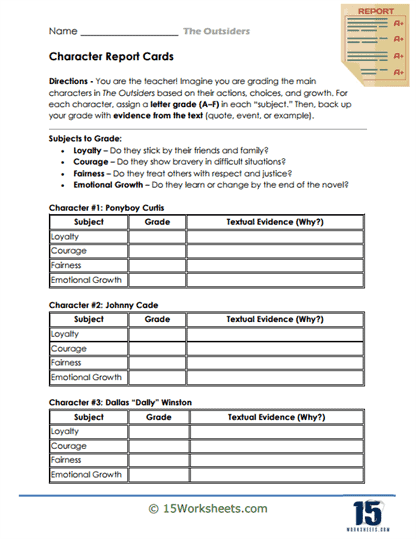
Report Card Rebels
Students become “teachers” grading Ponyboy, Johnny, and Dally on qualities like loyalty, courage, and fairness. They assign letter grades and back them up with evidence from the text. This activity blends creativity with critical thinking. It strengthens evidence-based reasoning and character analysis. Plus, it’s a fun way to reflect on values like courage and growth while connecting directly to the characters.
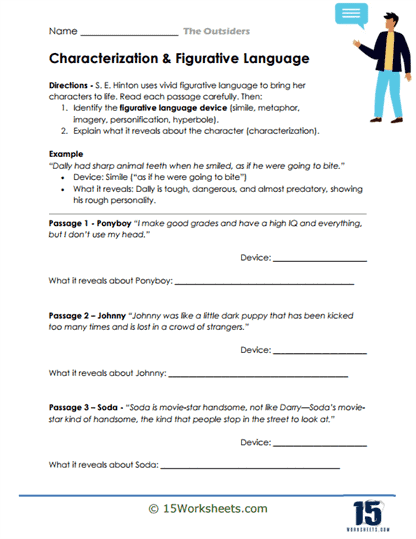
Figurative Faces
This worksheet highlights similes, metaphors, and imagery that describe Ponyboy, Johnny, and Soda. Students explain what the figurative language reveals about each character. It deepens comprehension by showing how style shapes meaning. The activity builds close reading and literary analysis skills. It turns descriptive writing into a window for understanding character.
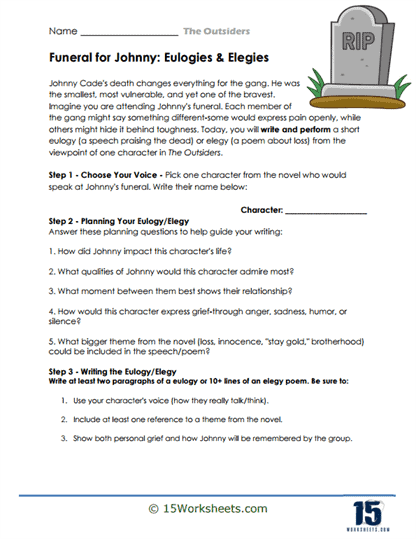
Eulogies for Johnny
Students write eulogies from the perspective of another character, imagining what they’d say at Johnny’s funeral. The task blends creative writing with empathy and textual understanding. It develops voice, perspective-taking, and reflection on relationships. The activity encourages emotional connection as well as literary analysis. It’s a heartfelt exercise in both compassion and interpretation.
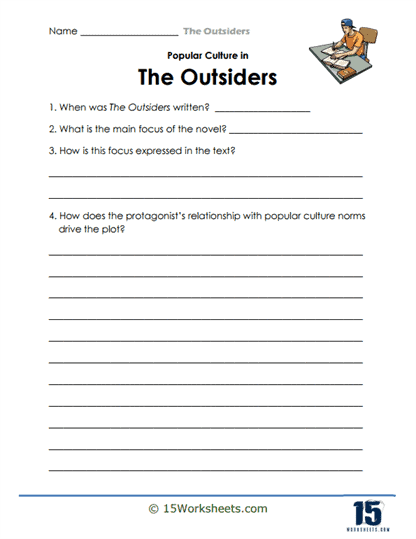
Culture Clash
Here, students explore how popular culture and the 1960s setting shape The Outsiders. They connect historical context to the novel’s conflicts and character behavior. This builds cultural literacy alongside literary analysis. It deepens comprehension of how setting influences story. Students leave with a stronger grasp of how Hinton used culture to fuel conflict.
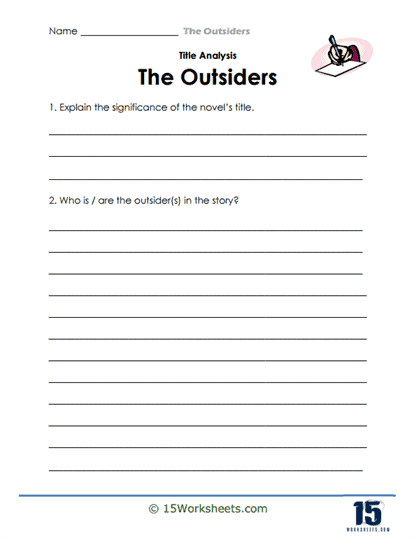
Title Talk
Students reflect on why the novel is called The Outsiders. They identify who the “outsiders” are and what that term really means. This activity builds interpretation and empathy. It encourages personal reflection on social divisions. By the end, students see the title as more than a label-it’s a theme.
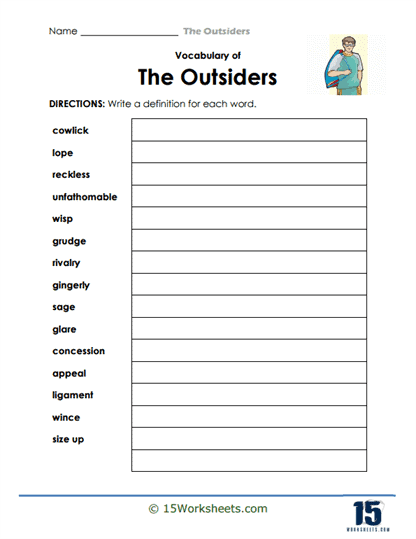
Word Wise
This vocabulary worksheet introduces key terms like “cowlick” and “rivalry.” Students define words to build familiarity with the novel’s language. It strengthens comprehension and contextual reading. Vocabulary practice also improves fluency and confidence. It’s a great foundation before diving deeper into the novel.
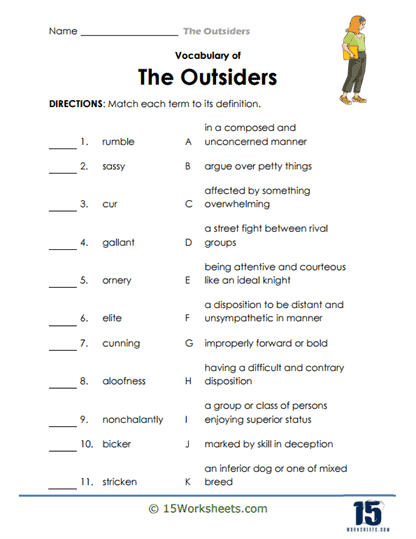
Definition Duel
In this matching activity, students pair terms like “aloofness” or “rumble” with their definitions. It’s an engaging way to reinforce vocabulary. The exercise sharpens memory and attention to detail. It also builds stronger comprehension and word recognition. Students enjoy testing themselves in this quick, game-like format.
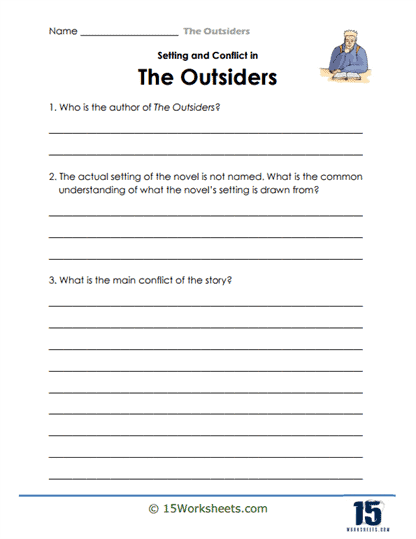
Setting Scenes
Students identify the author, describe the setting, and outline the main conflict of the story. This worksheet builds understanding of narrative elements. It highlights how place and tension shape plot and character. The activity strengthens both comprehension and concise writing. It’s an essential framework for analyzing the novel’s structure.
Character Cast
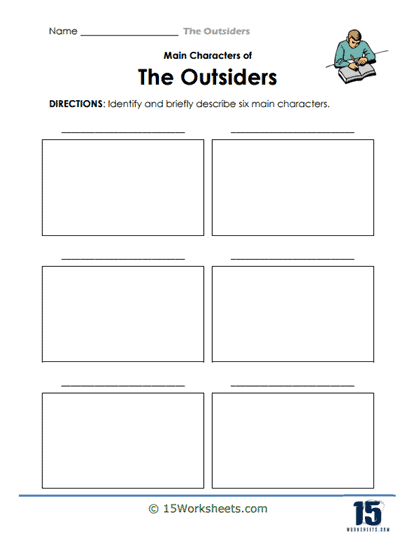
This activity has students identify six main characters and briefly describe them. The chart format encourages organization and clarity. It helps readers keep track of relationships and traits. Students sharpen comprehension and memory recall. It’s like a character “cheat sheet” for the novel.
Viewpoint Vision
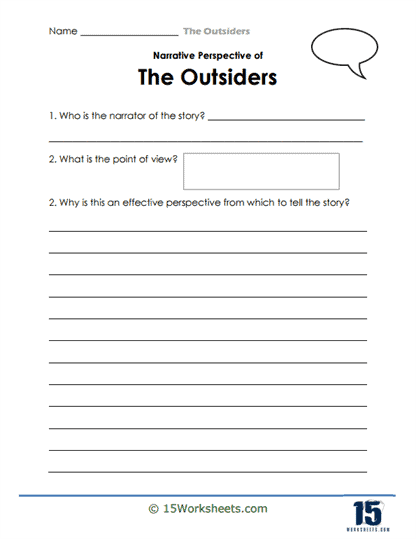
Students analyze Ponyboy’s role as narrator and reflect on how first-person narration shapes the story. They consider tone, bias, and perspective. The activity develops critical thinking about narration in literature. It strengthens analysis of authorial choices. Students finish with a clearer view of why Hinton told the story through Ponyboy’s eyes.
Family Focus
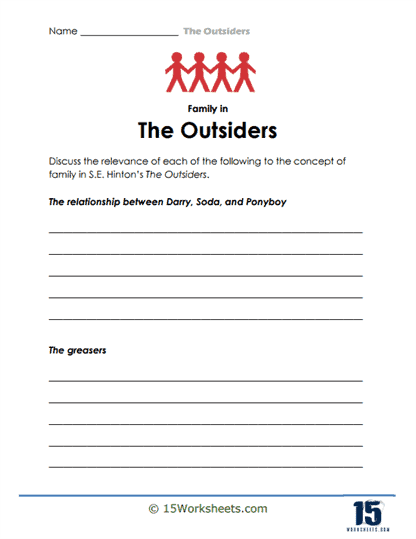
This worksheet explores family themes, from the Curtis brothers’ bond to the Greasers’ role as a chosen family. Students reflect on what family means in different forms. The activity connects character development to broader themes. It builds empathy, comprehension, and social awareness. Students see that family isn’t just about blood-it’s about loyalty.
Symbol Search
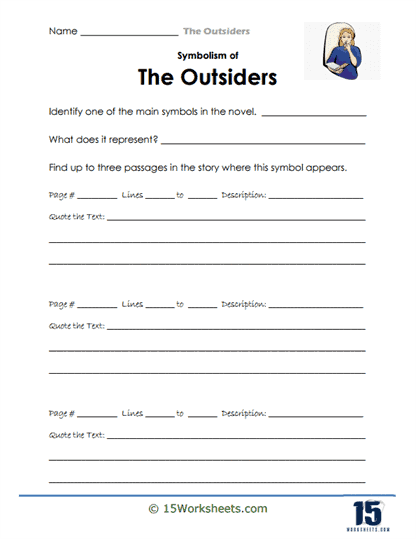
Students analyze symbols in the novel, citing passages and explaining meaning. From sunsets to switchblades, they uncover deeper layers of theme. The activity sharpens abstract thinking and close reading. It builds interpretive and evidence-based reasoning skills. Suddenly, ordinary objects take on extraordinary meaning.
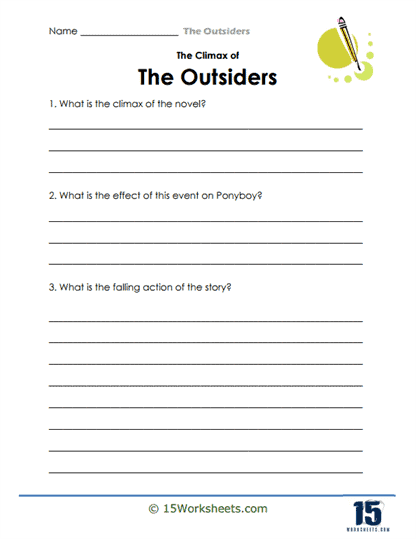
Plot Peak
This worksheet focuses on the climax and resolution. Students identify turning points, explain their impact, and analyze the ending. It strengthens sequencing and structural analysis. The activity sharpens comprehension of cause and effect in narrative. Students gain a clearer understanding of how tension resolves in the novel.
Golden Quote
Students reflect on the iconic line, “Stay gold, Ponyboy. Stay gold.” They analyze its significance and personal meaning. This builds interpretive skills and thematic awareness. The activity blends textual analysis with personal reflection. It’s a simple but powerful way to connect students to the novel’s heart.
Clue Catchers
This worksheet highlights foreshadowing, asking students to connect hints to major events like the church fire. They learn to recognize narrative techniques and anticipate outcomes. The activity strengthens inference and memory skills. It boosts comprehension of story structure. Students see how authors build suspense and meaning through small details.
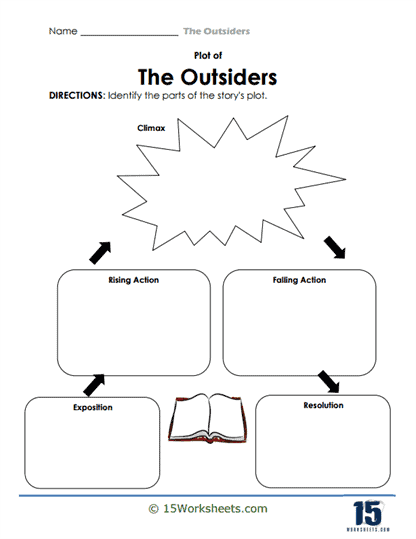
Plot Puzzle
Students map out the novel’s plot with a graphic organizer. They record exposition, climax, and resolution in a clear visual format. The activity strengthens sequencing and organizational thinking. It makes narrative structure easier to grasp. Students finish with a clear “blueprint” of the novel’s story arc.
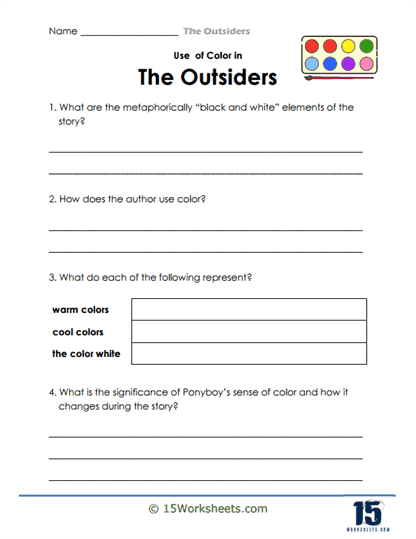
Color Code
This worksheet explores how colors in the novel symbolize emotion and perspective. Students interpret metaphorical uses of color and reflect on Ponyboy’s evolving view of the world. It builds abstract thinking and interpretive skills. The activity deepens understanding of imagery and tone. Students realize that colors in Hinton’s world always mean more than they seem.
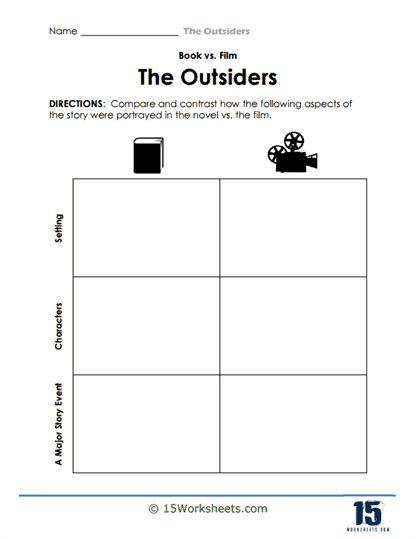
Scene Swap
Students compare the book and film versions of The Outsiders. They analyze differences in setting, character, and major events. This builds comparative analysis and media literacy. It sharpens observation and critical writing skills. It’s a fun way to see how storytelling changes across mediums.
What is The Outsiders?
The Outsiders is a novel written by S. E. Hinton when she was just a teenager, and it remains one of the most popular young adult books ever. It tells the story of Ponyboy Curtis and his friends, the Greasers, who struggle with poverty, violence, and their rivalry with the wealthy Socs. The novel is full of action and heart, from gang fights to quiet moments about sunsets, family, and growing up.
At its core, the story is about what it means to belong-and what it feels like to be an outsider. Themes of loyalty, identity, family, and social division make the novel relatable across generations. Hinton captures the raw emotions of adolescence while asking timeless questions about empathy and understanding.
For students, reading The Outsiders is both an adventure and a lesson in perspective. It builds skills in character analysis, symbolism, and theme exploration, while also encouraging reflection on real-life issues like class, violence, and family bonds. More than just a novel, it’s a reminder that even in tough times, kindness and connection can change everything.