
Polar Express Worksheets






All About These 15 Worksheets
“The Polar Express” is more than just a holiday story-it’s a magical ride into themes of belief, wonder, and imagination. These worksheets give kids a chance to step inside the story, meet the characters, and reflect on all the snowy excitement. Whether they’re analyzing symbols, comparing book-to-movie details, or imagining their own enchanted train ride, each page makes reading interactive and fun.
This collection helps students develop strong comprehension and critical thinking skills in a way that feels festive and lighthearted. Kids practice reading closely, making inferences, and exploring point of view-all while staying wrapped in the charm of hot cocoa, jingling bells, and glowing North Pole lights. Even reluctant readers are more eager when a worksheet feels like part of a holiday adventure.
Beyond academics, these worksheets tie the story’s message to the bigger picture: the importance of believing, even when others don’t. Students see how literature can connect to their own lives and traditions, and they practice expressing that meaning in words, drawings, and thoughtful reflection. The worksheets bring together reading, writing, creativity, and just a dash of Christmas magic.
Have a Look Inside Each Worksheet
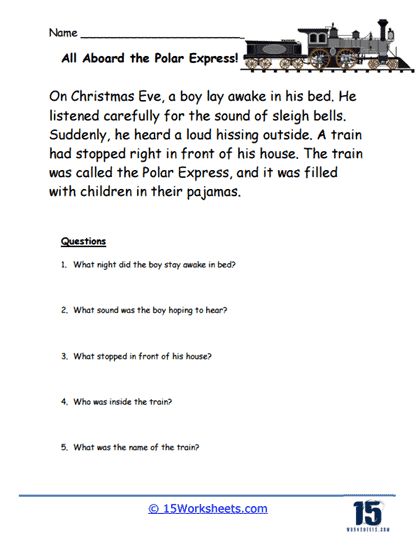
Midnight Train
Students read about the boy lying awake on Christmas Eve, hearing a train stop outside, and boarding the Polar Express with pajama-clad kids. They answer questions that check recall of key details like expectations, arrivals, and who’s on board. It’s a cozy comprehension warm-up that builds sequencing and attention to narrative clues. Great for detail hunting and story flow.
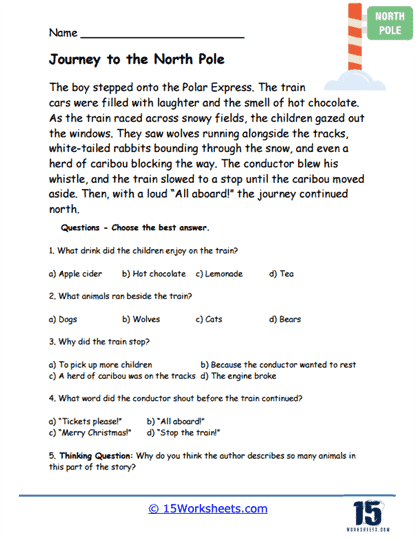
Snowy Ride
Climb into snowy fields, hot chocolate in hand, as animals pace the train and a caribou herd halts the adventure. Kids tackle multiple-choice questions that probe main ideas and supporting details. The scene work strengthens context clues and vocabulary. It’s perfect for practicing evidence-based choices while staying in the wintry mood.
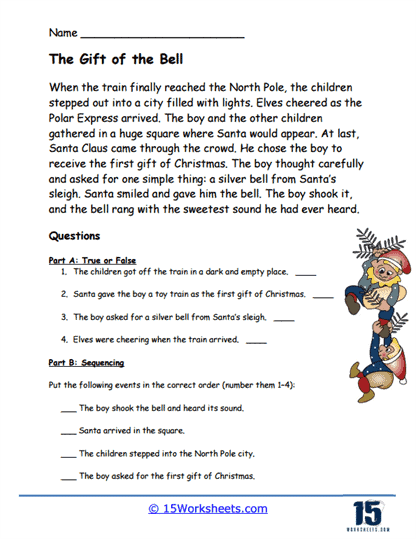
Silver Gift
Arrive at the North Pole square, cheer with elves, and watch Santa choose the narrator for the first gift of Christmas. Students track why the boy asks for a silver bell and how it sounds. True/False and sequencing items reinforce comprehension and logical order. Themes of belief and meaning shine through the questions.
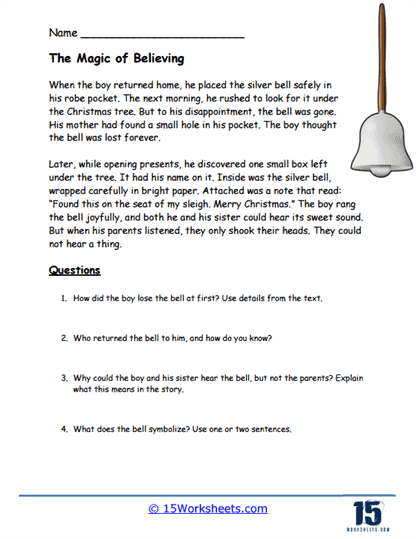
Lost Bell
After tucking the bell into his robe pocket, the narrator loses it-and later finds it wrapped beneath the tree. Children compare who can hear the bell and why belief matters. Prompts guide them to infer symbolism and explain character feelings. It’s a thoughtful blend of text evidence and theme.
Faithful Sound
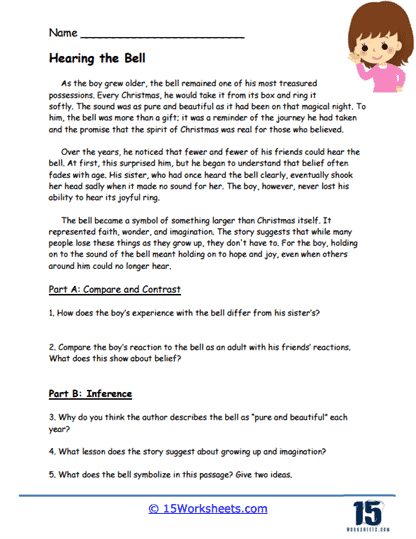
Follow the bell through the years as fewer people can hear it, but the narrator still does. Students compare perspectives (like the sister’s) and infer what the bell represents. They connect theme to character growth and memory. It’s gentle practice with comparison, inference, and symbolism.
Endless Magic
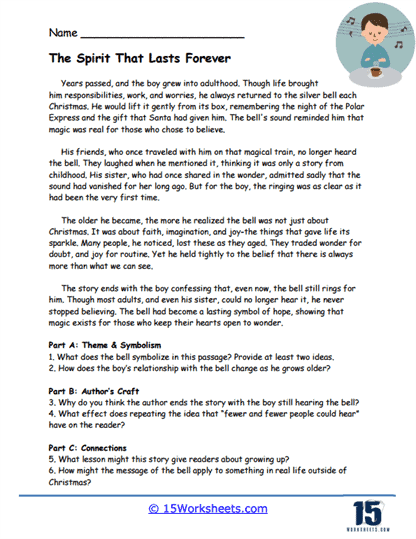
Into adulthood, the narrator keeps the bell-and the wonder. Learners analyze how belief persists despite skepticism around him. Questions highlight author’s craft, repetition, and symbolism. Reflection prompts link the story’s message to students’ real lives.
Journey To The North Pole
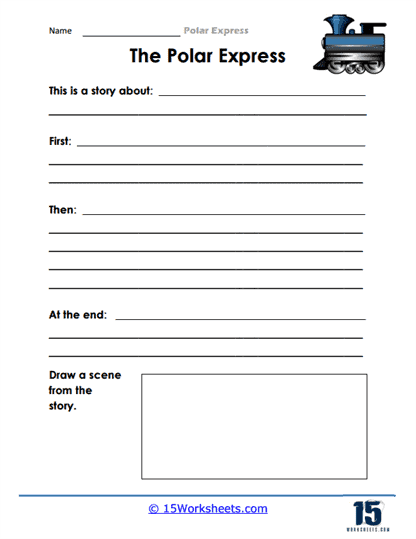
Students identify the story’s setting, the event that launches the plot, what the main character does, and the destination. A final prompt invites them to draw what they imagine on the ride. The mix of concrete questions and illustration supports comprehension and visualization. It’s a great first stop for story elements.
A Scenic Tour
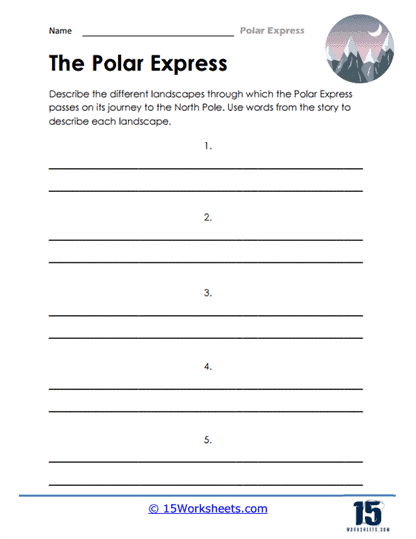
Kids describe five landscapes from the book-icy lake, forest of snowy pines, glistening tundra, billowing peaks, and the North Pole village. They pull exact words and phrases to paint each setting. This boosts descriptive language and attention to text. It’s like a word-based window seat on the train.
Unveiling The Mystery
At the North Pole, students notice what’s oddly missing, figure out the explanation, and anticipate the big event. They capture the importance of that moment for the kids on the train. A “mysterious sound” and a key question nudge close reading. Curiosity and inference take the lead here.
Final Surprises
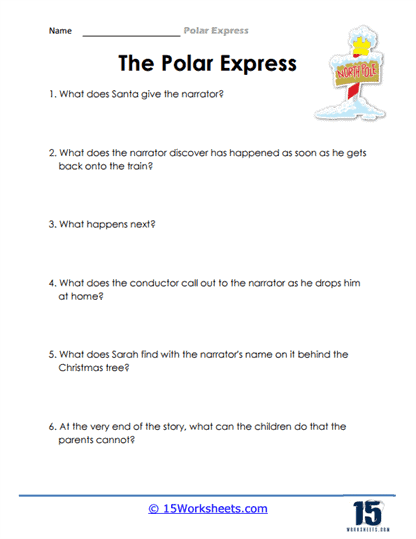
Wrap up the tale by noting Santa’s gift, the narrator’s discovery back on the train, and the conductor’s farewell. Learners also track what Sarah finds under the tree. A last prompt highlights what children can do that parents cannot. It’s a satisfying capstone for comprehension and recall.
The Bell’s Message
Students sketch the silver bell and write about what its sound represents. They explain how it makes characters (and readers) feel. A final prompt asks for their own interpretation of the bell’s meaning. Symbolism gets center stage in a creative format.
Identifying The Narrator
Who’s telling the story, and why don’t we get a name? Learners describe the narrator and decide if he changes from beginning to end. They wrap with their take on what the book is “about.” It’s tidy practice with point of view, characterization, and theme.
The Symbolic Object
Pick the central object and track it from its first mention to the final scene. Students explain what it means early on, how experiences with it evolve, and what it stands for at the end. Prompts push them to connect object and character growth. Deep symbolism work, kid-friendly steps.
Children’s Thoughts
Why did the friend say he’d never hear the reindeer bells, and why does the narrator still listen? Learners consider whether other kids had similar Christmas Eve thoughts. Then they explore the “purpose” of the Polar Express. It’s rich discussion for inference and theme.
Would You Recommend
Students pick three words to describe the book, recap the plot, draw the main character, and note a favorite part. They finish by saying whether they’d recommend it-and why. That blends summary, opinion writing, and a dash of art. Short, reflective, and persuasive.
Analyzing Cover Art
Before reading, kids study the cover and describe how it feels. They predict what might happen in the story based on visual clues. A final prompt taps what they already know about the North Pole. It’s visual literacy that primes comprehension.
Visualizing The Adventure
Learners write a quick summary of the story’s big beats. Then they choose a favorite scene to illustrate, including setting and characters. This pairs concise writing with creative drawing. It’s great for cementing understanding through imagery.
Literary Vs. Cinematic
Using a Venn diagram, students compare the book and the movie. They list what’s unique to each and what overlaps. A final prompt asks which version they prefer, with reasons. Media literacy meets evidence-based opinion.
Santa’s First Gift
Imagine Santa offers you the very first gift of Christmas-no limits. Kids choose a gift, explain why now, and think about how its meaning might change over time. It blends creativity with thoughtful reflection. Big feelings, big ideas, low prep.
To Ride Or Not To Ride
Students decide whether they’d ride the Polar Express, draw their choice, and trace the guiding question. Then they write a short response explaining their decision. It’s simple, clear practice in decision-making and justification. Perfect for early writers.
My Enchanted Christmas Ride
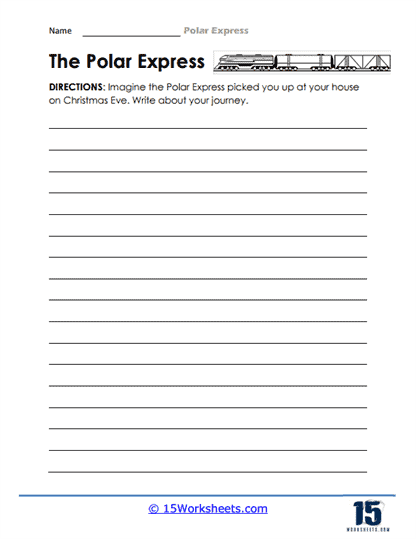
Invite kids to write their own Polar Express adventure from doorstep to North Pole. Prompts cue sights, sounds, and character interactions to fuel descriptive writing. Imagination does the heavy lifting while structure keeps it grounded. A festive way to stretch narrative skills.
What is the Polar Express?
“The Polar Express” is a children’s book written and illustrated by Chris Van Allsburg, first published in 1985. The book has become a classic Christmas story and is known for its beautiful illustrations and heartwarming tale about the magic of the holiday season.
The story is narrated by a young boy who, on Christmas Eve, hears the sound of a train outside his window. The train, called the Polar Express, has stopped to take him and other children on a magical journey to the North Pole. The North Pole is where Santa Claus and his elves live and work, preparing for Christmas.
Aboard the train, the children enjoy hot cocoa and treats while they journey through a snowy landscape toward their destination. Upon arriving at the North Pole, they see the bustling workshop and witness the elves preparing for the big night.
The highlight of the trip is when Santa Claus himself appears and selects the young narrator to receive the first gift of Christmas. The boy chooses a silver bell from Santa’s sleigh, which, when rung, produces a beautiful sound that only those who truly believe in the magic of Christmas can hear.
When the children return home on the Polar Express, the boy discovers that he has lost the bell through a hole in his pocket. Disappointed, he goes to bed, but on Christmas morning, he finds a small package under the tree containing the silver bell, along with a note from Santa reminding him that the bell still rings for all who truly believe.
“The Polar Express” is a heartwarming story about the power of belief and the enduring magic of the Christmas season. The book has been widely praised for its captivating story and lush illustrations, earning several awards, including the prestigious Caldecott Medal. It has been adapted into a successful animated film (2004) featuring the voice of Tom Hanks and has inspired various events and attractions, such as the Polar Express Train Ride, which recreates the magical journey for families during the holiday season.
What Are the Educational Values of the Polar Express?
Promoting Literacy Skills
As a beautifully written and illustrated book, “The Polar Express” can be used to develop and improve children’s reading comprehension, vocabulary, and fluency skills. It can also serve as a starting point for discussions about the story’s themes, characters, and setting, which can help students practice critical thinking and analytical skills.
Encouraging Imagination and Creativity
The magical and fantastical elements of the story can stimulate children’s imaginations and inspire creative thinking. Teachers can use the book as a springboard for creative writing assignments, art projects, or dramatic play activities that encourage students to explore their own ideas and interpretations of the story.
Exploring Values
“The Polar Express” touches on themes such as belief, hope, and the magic of the holiday season. Teachers can use the book to facilitate discussions about these themes and help students explore their own values and beliefs. This can lead to a deeper understanding of the importance of maintaining a sense of wonder and imagination, even as they grow older.
Social and Emotional Skills
The story provides opportunities for students to empathize with the characters, particularly the young narrator, as they experience the excitement and wonder of the Polar Express journey. Engaging with the story can help students develop their ability to understand and express their own emotions and to empathize with others.
Cultural and Historical Elements: The book can be used to introduce students to various aspects of Christmas traditions, customs, and folklore, such as the role of Santa Claus, the North Pole, and the symbolism of bells. Teachers can also use the book as a starting point to explore the history of trains, rail travel, and the role they have played in transportation and commerce.
Cross-curricular Connections: “The Polar Express” can be integrated into various subject areas, such as language arts, social studies, art, and even science (e.g., exploring the Arctic and polar regions, or discussing the physics of trains). This allows teachers to create engaging and interdisciplinary lessons that enhance students’ understanding of the story and its themes.
This collection of Polar Express worksheets invites students on a magical journey that combines literary exploration with the wonder of the holiday season. Beyond enhancing their comprehension of the story, these worksheets foster critical thinking, creative expression, and a deep appreciation for the enduring magic of childhood.
As students engage with “The Polar Express,” they not only develop their analytical skills but also connect with the story’s universal themes of belief, friendship, and wonder. These lessons resonate with learners of all ages, providing a memorable and enriching educational experience.
Empower your students to embark on a journey filled with imagination, belief, and the joy of discovery, becoming not only more skilled readers but also more empathetic, reflective, and imaginative thinkers. Unlock the doors to literary exploration and the magic of the holiday season, one worksheet at a time, and watch as your students become more engaged, enlightened, and enthusiastic learners.