
Ordinal Numbers Worksheets

About These 15 Worksheets
Ordinal numbers are all about order, and these worksheets make that concept easy and fun for kids. Using colorful themes like trophies, ribbons, animals, and even sweets, students practice words like first, second, third, and beyond. The variety of activities keeps things fresh-sometimes kids trace and write, other times they solve puzzles, color, or unscramble words. It’s learning through play while building essential number vocabulary.
This collection is designed to move from simple recognition to full application. Some worksheets focus on spotting the first or last in a row, while others challenge learners to order entire groups, work with grids, or even connect ordinals to calendars and days of the week. The step-by-step approach ensures kids grow confident not just in recognizing ordinal numbers, but also in using them in practical contexts.
And beyond math class, ordinals show up everywhere-from lining up for recess to reading dates on a calendar. These worksheets help kids see the real-world importance of order and ranking. With enough practice, “first” and “tenth” won’t just be words on a page-they’ll be tools kids can use to describe the world around them clearly.
Have a Look Inside Each Worksheet
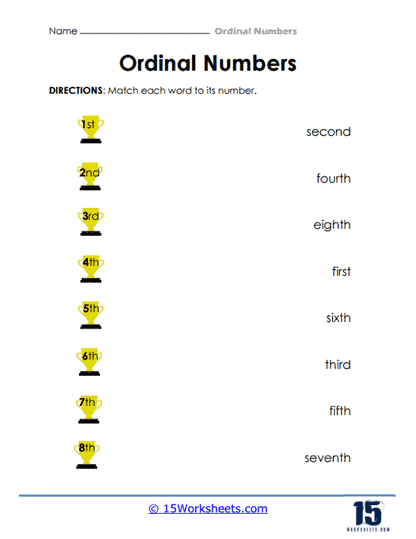
Trophy Case
Students place trophies in order and identify their positions. It’s a fun, visual way to connect ordinal numbers with ranking. Kids get to practice words like first, second, and third in a playful context. Perfect for sports-loving learners.
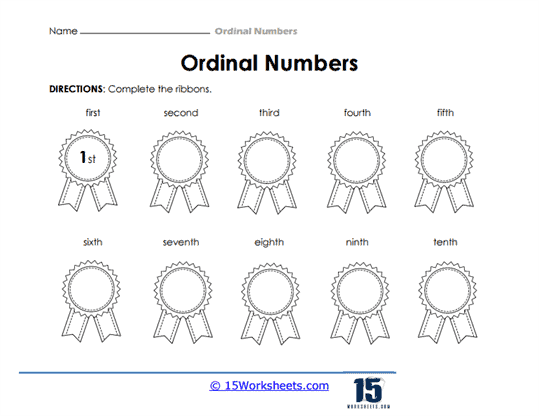
Ribbon Order
Here, learners use ribbons to figure out placement. They’ll see how positions change when items are rearranged. The activity reinforces sequencing in a colorful way. Great for building number vocabulary.
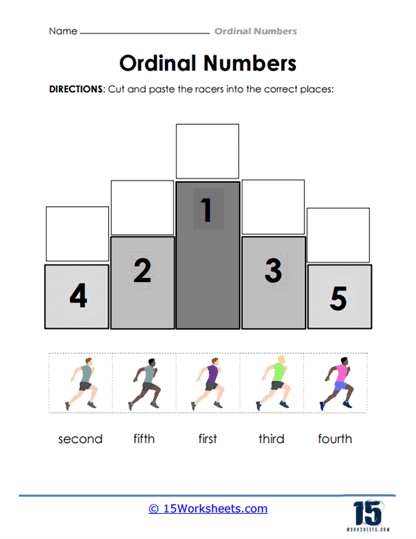
Placing in the Run
Students line up runners and determine who is first, last, and in-between. It’s like watching a race on paper. The worksheet makes ordinal numbers feel real and exciting. A high-energy way to practice sequencing.
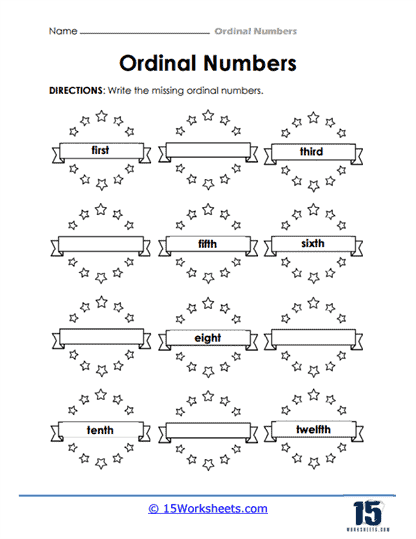
Stars and Places
Kids match stars to their correct positions. The theme adds a sparkly twist to number learning. They’ll enjoy the visual appeal while practicing order. A fun worksheet for early learners.
I Know Today
This activity links ordinal numbers to days of the week. Students practice identifying which day is first, second, or last. It blends calendar skills with math. A practical way to connect ordinal numbers to daily life.
Bugging Me
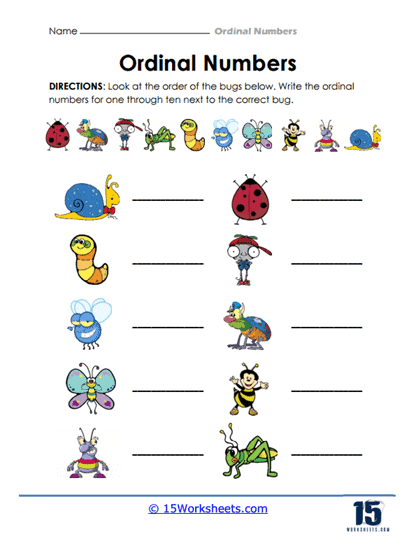
Learners arrange bugs in order and label their positions. The silly bug theme keeps the task engaging. It’s a mix of counting, sequencing, and vocabulary. Perfect for young learners who enjoy playful visuals.
Dog to Snail
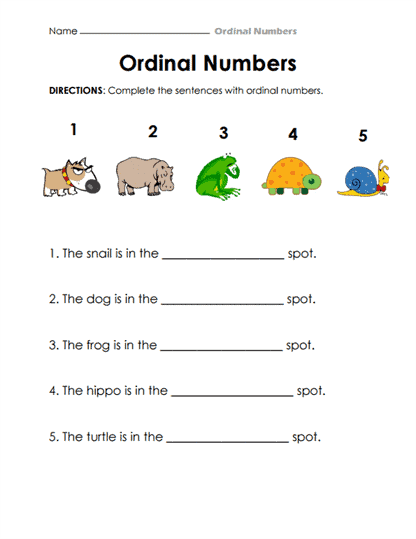
Here, animals are placed in order, and students identify their spots. They’ll practice ordinal numbers while enjoying cute pictures. It’s like a mini animal parade on the page. A lighthearted way to reinforce order.
Use Your Words
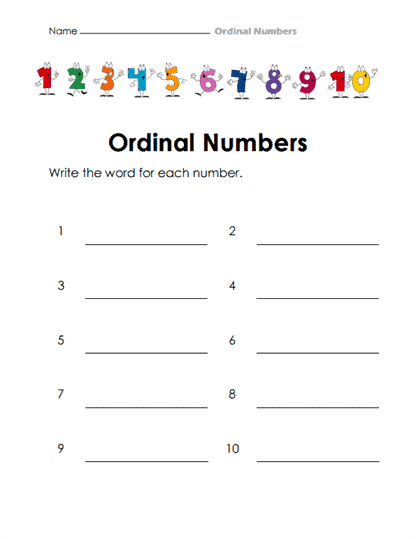
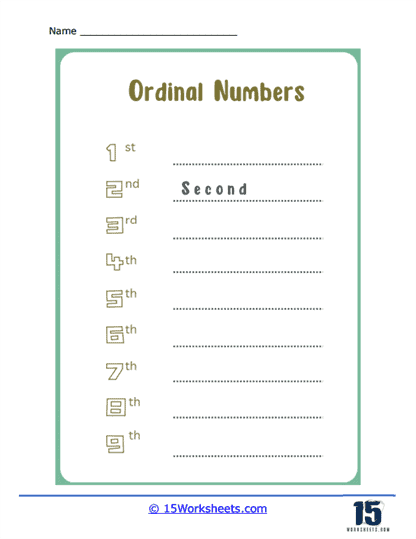
This worksheet emphasizes spelling out ordinal number words. Students move beyond digits to written language. It builds both math and literacy. A great dual-skill activity.
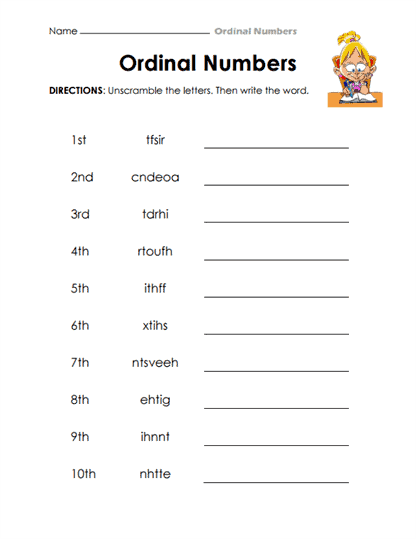
Unscramble
Kids unscramble letters to spell ordinal number words. It’s puzzle-style practice that sharpens spelling and memory. The challenge keeps learners engaged. A creative twist on vocabulary building.
On the Lines
Students trace and write ordinal number words neatly on lines. It reinforces handwriting as well as number vocabulary. Simple but effective practice. Great for repetition and mastery.
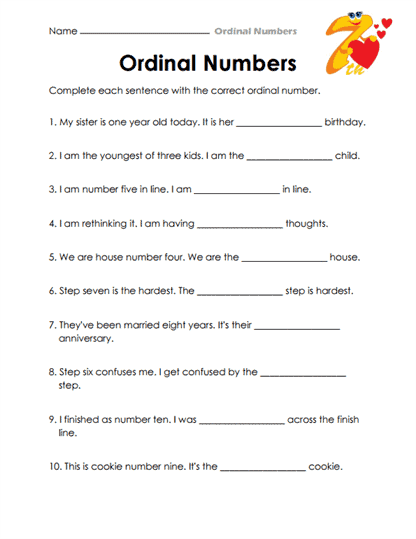
Ordinal Sentences
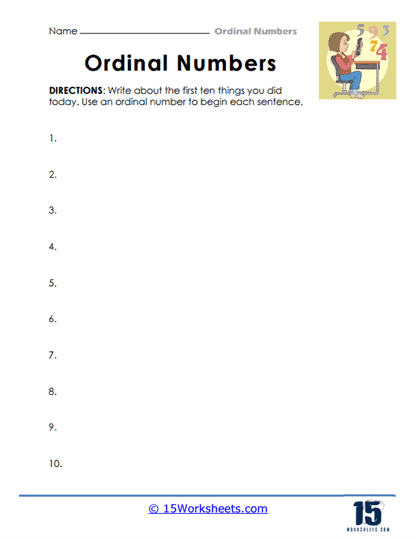
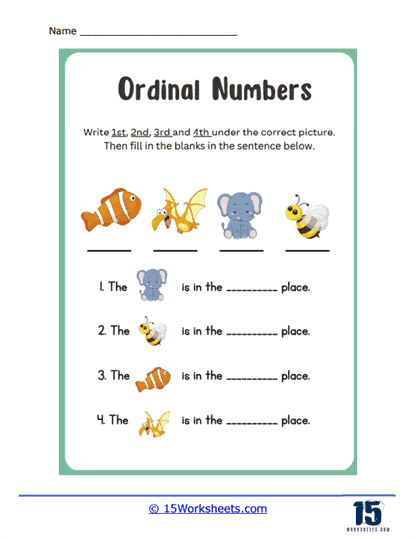
Here, learners fill in blanks in sentences with the correct ordinal words. It blends reading comprehension with math. Kids get to see how ordinals fit naturally in language. A practical application worksheet.
Say Your Name
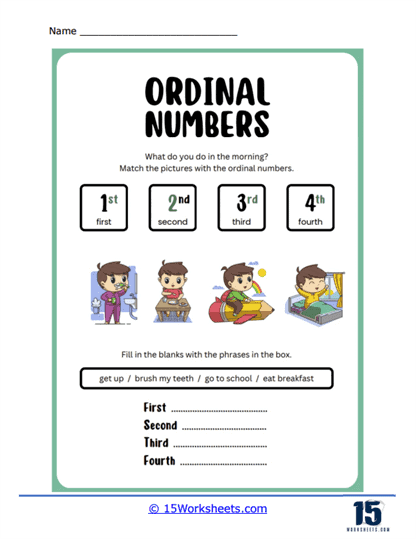
Students connect ordinal numbers with names in a list. It makes order personal and relatable. The activity builds understanding of sequence in real-life situations. A good bridge between abstract and concrete learning.
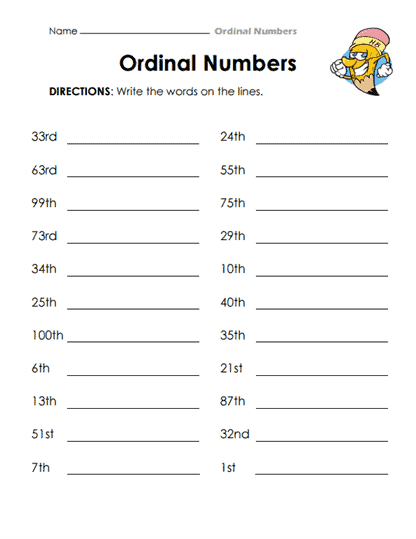
Wording It
This worksheet focuses on turning digits into full ordinal words. It’s spelling and number practice rolled into one. Kids gain confidence using both forms. A strong way to reinforce consistency.
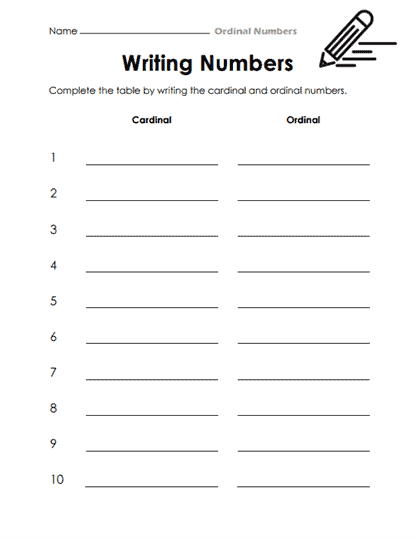
Cardinal or Ordinal
Learners distinguish between cardinal numbers (like 3) and ordinal numbers (like 3rd). The comparison helps clear up confusion. They’ll practice sorting and identifying. A key worksheet for building number sense.
Faces For Places
Students match cartoon faces to their spots in line. It’s a playful sequencing activity. Kids get to practice order in a visual and interactive way. Perfect for younger learners.
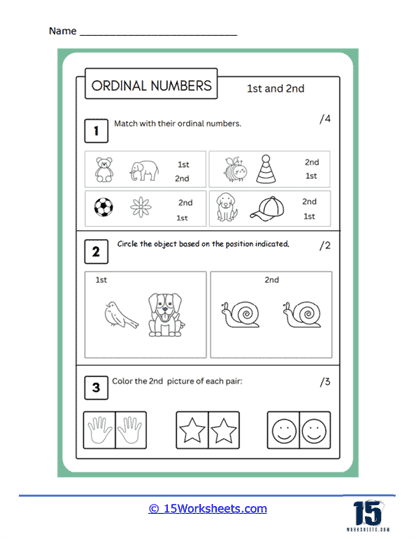
Match, Circle, Color
This worksheet combines matching and coloring to reinforce ordinal concepts. It’s hands-on, creative practice. Students stay engaged while learning. A good fit for kinesthetic learners.
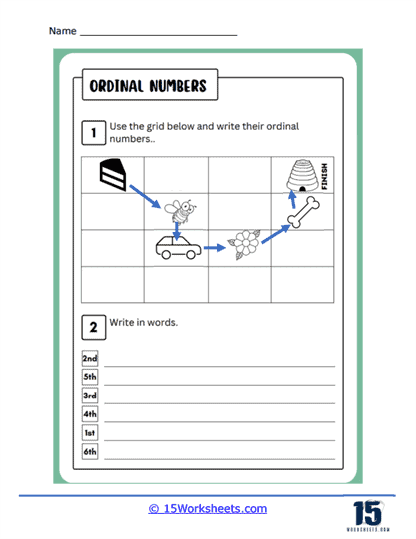
Grid Order
Learners work with objects in a grid and identify positions. It builds spatial awareness alongside ordinal vocabulary. The layout adds a challenge beyond straight lines. A smart step up in difficulty.
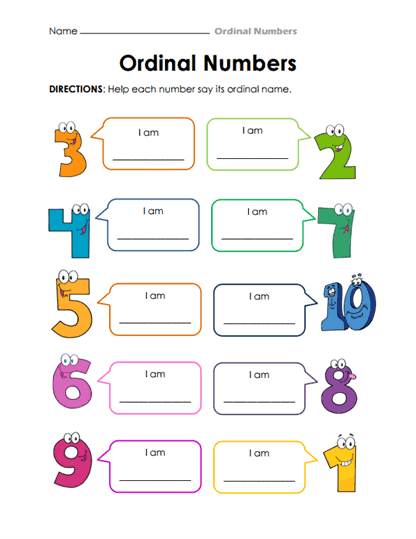
To The Words
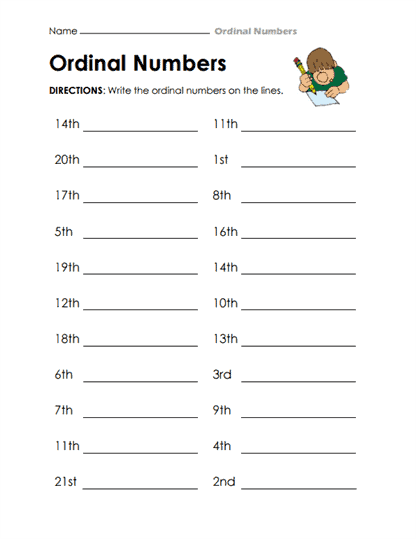
Students translate number digits into ordinal words. It’s straightforward but essential. This builds confidence in switching between number forms. A simple drill for reinforcement.
Navigating Calendars
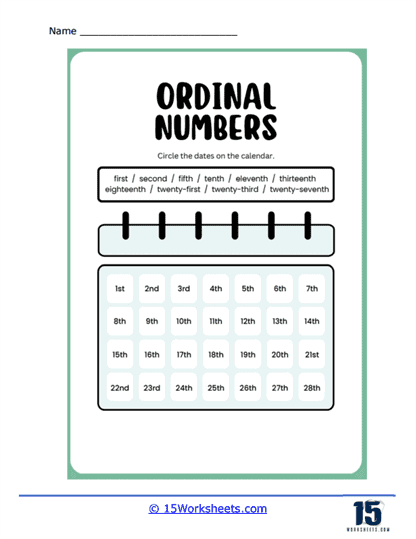
This activity ties ordinal numbers to calendar dates. Students practice sequencing within months and weeks. It shows how ordinals are used every day. A highly practical worksheet.
Arrow of Order
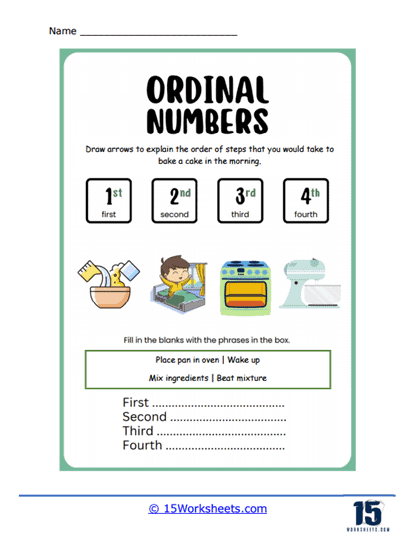
Kids follow arrows to put items in sequence. It’s part puzzle, part number practice. The movement adds a fun twist. A lively way to practice ordinal order.
Placement
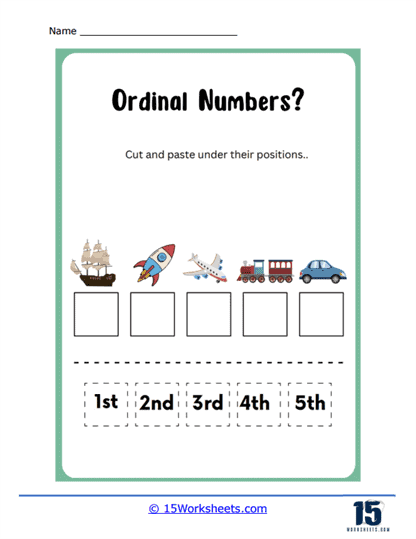
Students decide the position of objects in different arrangements. They’ll see how changing the order changes the answers. It strengthens logical thinking as well as vocabulary. A versatile worksheet for practice.
Critter Crawl
Learners line up critters and identify their positions. The silly theme keeps it fun. Kids reinforce ordinal words in a playful way. A cheerful worksheet for younger students.
Ordinal Number Word Search
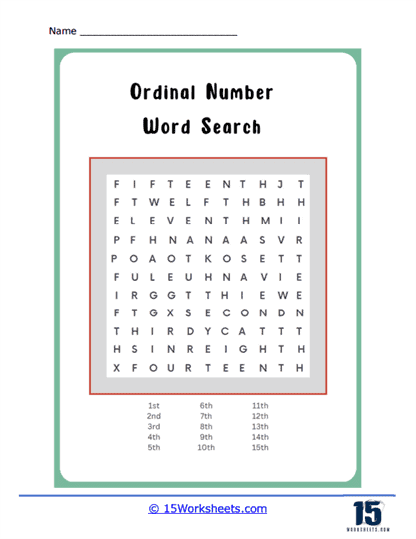
Here, students hunt for ordinal words in a puzzle. It’s spelling, reading, and number practice all at once. The activity feels like a game while reinforcing learning. A great break from traditional drills.
Race Car Order
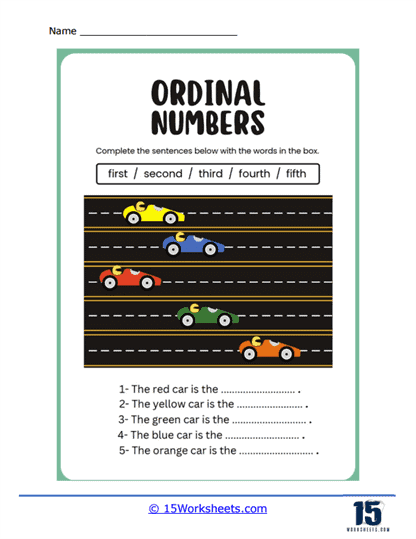
Students rank race cars in order and label them. It’s high-energy, visual practice. The race theme adds excitement. A sure win for kids who love action.
Coloring Fruit
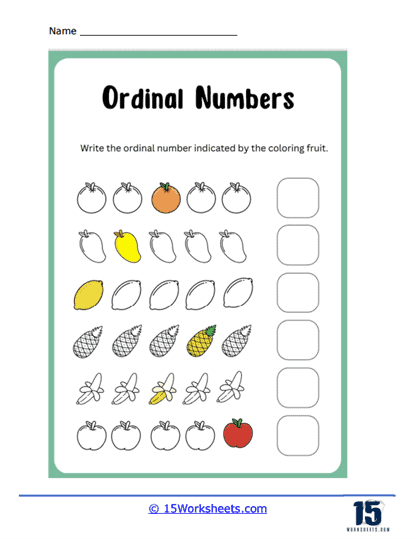
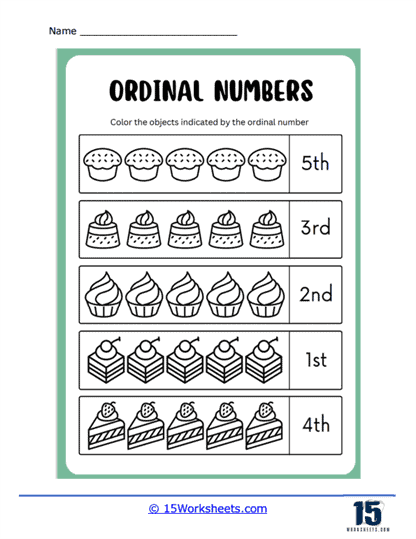
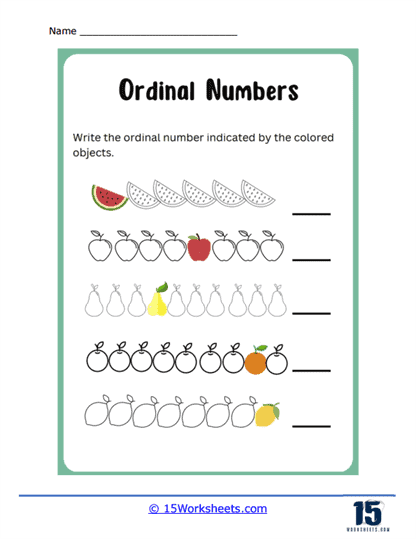
Learners color fruit according to its ordinal placement. It’s a mix of coloring fun and sequencing skills. The activity connects vocabulary to visual cues. A tasty way to reinforce learning.
Ordering Sweets
This worksheet uses candy to practice order. Students label the treats as first, second, or third. It makes learning feel sweet and fun. A playful way to keep engagement high.
What Place Is That
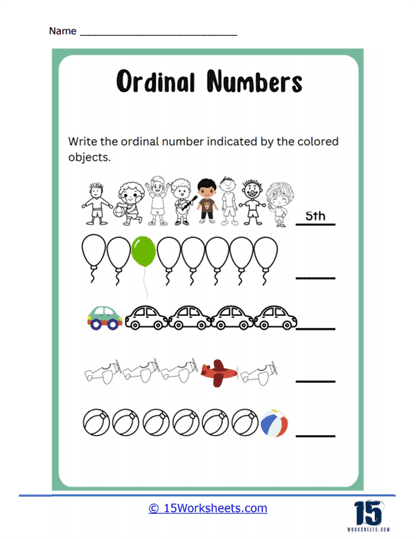
Here, kids identify the position of items in a row. It’s straightforward sequencing with everyday objects. The task builds quick recognition. A solid drill for practice.
Ordering Fruit
Students line up fruit and label them by order. It’s a familiar, relatable theme. Kids practice using ordinal words naturally. A simple but effective worksheet.
What’s the Position
Learners answer questions about positions in a lineup. It builds comprehension as well as vocabulary. The worksheet encourages attention to detail. A good practice for listening and reading skills.
Trace and State
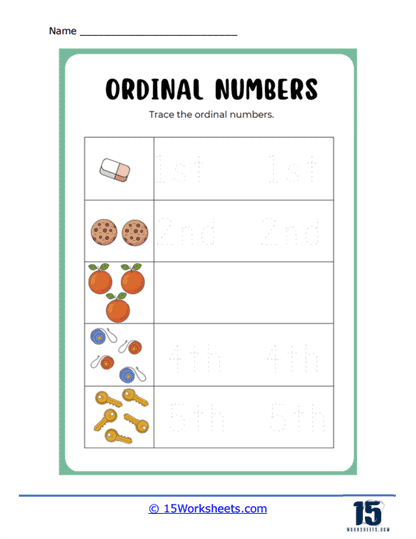
Students trace ordinal numbers and then state them out loud. It combines writing and speaking practice. Kids strengthen both literacy and oral skills. A hands-on wrap-up for ordinal learning.
What Are Ordinal Numbers?
Ordinal numbers are the words we use to describe the position of something in a sequence. While cardinal numbers tell us “how many,” ordinals tell us “which one.” For example, the number 3 means “three items,” but 3rd means “the third item in line.”
These numbers matter because they help us talk about order in everyday life. We use ordinals when describing dates (July 4th), ranking players in a race (first place), or even listing steps in instructions. Without them, it would be tricky to explain positions or sequences clearly.
The worksheets in this collection give kids plenty of chances to explore ordinals in different ways. Whether they’re tracing words, solving puzzles, or organizing animals in a race, learners see that ordinals are both useful and fun. By practicing, they’ll get comfortable using words like first, fifth, or last with confidence.