
1 to 20 Worksheets

About These 15 Worksheets
The main goal of these worksheets is help students begin to master the sequence of numbers between 1 and 20. This is a foundational skill that start students off in the right direction towards their understanding of math.
You know how you learn different things in math like counting, adding, subtracting, comparing numbers, or even understanding how numbers are arranged on a number line? These worksheets are designed to help you practice all those skills and more. For example, one worksheet will have you practice counting from 1 to 20. Another worksheet might ask you to add or subtract numbers within the range of 1 to 20. Yet another might ask you to arrange numbers from 1 to 20 in increasing or decreasing order.
The thing with learning is that the more you practice, the better you get. If you’re trying to learn how to use a screwdriver, the more screws you tighten or loosen, the more comfortable and proficient you’ll become at using the screwdriver. Similarly, the more you use 1 to 20 Worksheets to practice math, the better you’ll get at understanding and using numbers between 1 and 20.
These worksheets are also kind of like a game of soccer or basketball. When you’re playing these games, you have to practice different skills, like dribbling, passing, shooting, and so on. You can’t just jump straight into playing a match without knowing or practicing these skills. Likewise, before you jump into more complicated math topics, you need to have a good grip on the basics. And the numbers 1 to 20 are a fundamental part of those basics. Practicing with these worksheets is like practicing your dribbling or shooting before a game, but for math.
About Each Worksheet
Balloon Bonanza Numbers
This worksheet turns number practice into a colorful balloon-matching adventure using base ten blocks. Students cut out numbered squares and glue them onto balloons that show matching block representations. The activity helps children connect visual groups of tens and ones to their correct numerals. The hands-on cutting and gluing also strengthen fine motor coordination while keeping learners actively engaged. It’s basically math practice floating high in a sky full of balloons.
Ants Sequencing
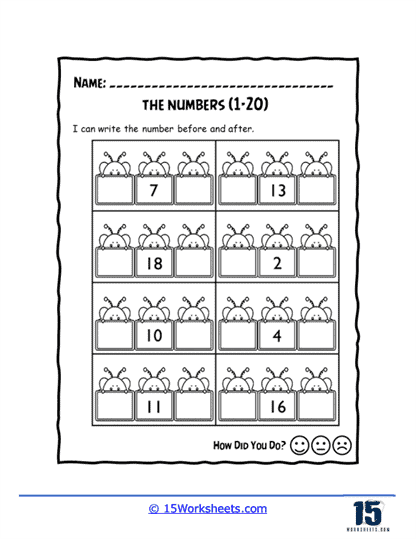
Students help cheerful ants complete their numbered leaf patterns by filling in the missing numbers before and after each given number. The playful ant theme makes sequencing practice feel more like a story than a worksheet. Children strengthen number order skills while learning to identify predecessors and successors within the number line. The activity also helps build confidence with counting forward and backward. By the end, the ants almost seem to march in perfect numerical order.
Ants’ Numeric Picnic
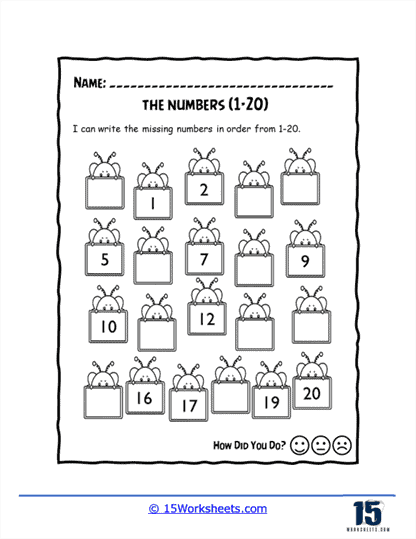
This worksheet invites students to complete missing numbers in a counting sequence carried by picnic-loving ants. Children identify which numbers are missing between 1 and 20 and write them into the correct spaces. The simple sequencing activity helps strengthen counting fluency and pattern recognition. The picnic theme keeps the worksheet visually fun and approachable for beginning learners. It’s a sweet little way to practice number order while hanging out with hardworking ants.
Ants’ Great Number Hunt
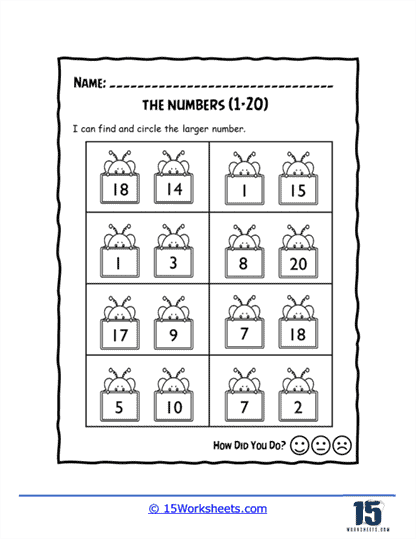
Students compare pairs of numbers carried by ants and circle the larger number in each set. The mini number “competitions” encourage learners to think critically about which values are greater. This worksheet strengthens number comparison skills while reinforcing recognition of numbers 1 through 20. The ant illustrations help keep the activity playful instead of intimidating. Choosing the winning number almost feels like judging tiny math races.
Sheep Shuffle
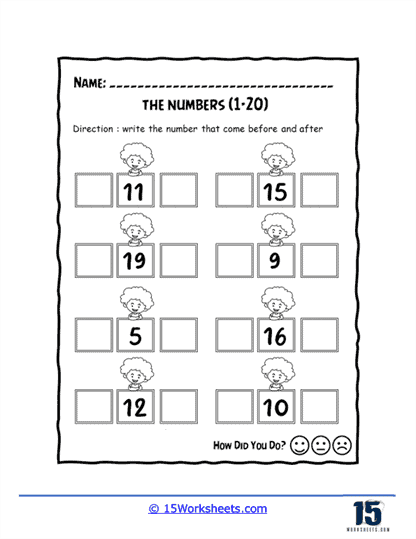
This worksheet asks students to write the numbers that come immediately before and after the number shown on each sheep. The fluffy sheep theme gives the sequencing activity a calm and playful atmosphere. Learners practice counting both forward and backward while strengthening overall number sense. The random placement of numbers encourages independent thinking instead of memorized patterns. It’s like helping sheep find their correct neighbors on the number line.
Counting Clouds
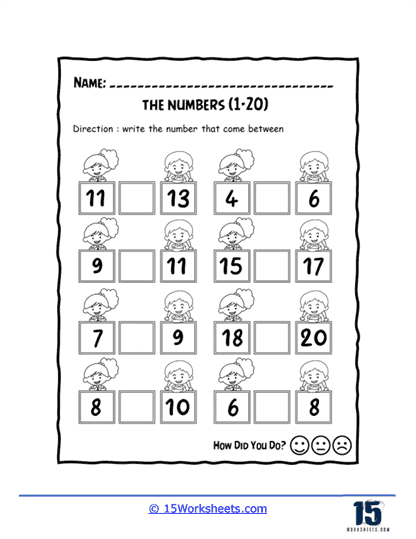
Students examine pairs of numbers floating on clouds and determine which number belongs in between them. The cloud theme gives the activity a soft and imaginative feel while teaching important sequencing concepts. Children strengthen their understanding of consecutive numbers and number order through repeated practice. The activity also introduces the idea of numerical relationships in a very approachable way. Finding the “middle” number suddenly feels like solving a sky-high puzzle.
Before, After, In-Between
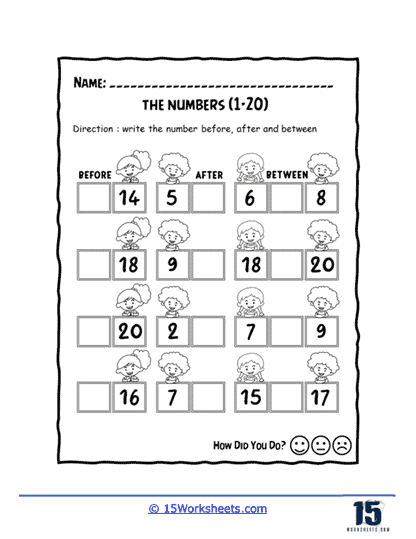
This worksheet combines several sequencing challenges where students fill in numbers that come before, after, and between the given values. Friendly sheep guide learners through the activity, making the math feel playful and supportive. The varied tasks help children build a stronger mental number line and improve numerical fluency. Students practice carefully thinking about how numbers connect instead of simply memorizing them. It’s a lively little number adventure hidden inside a sheep-filled meadow.
Number Navigator
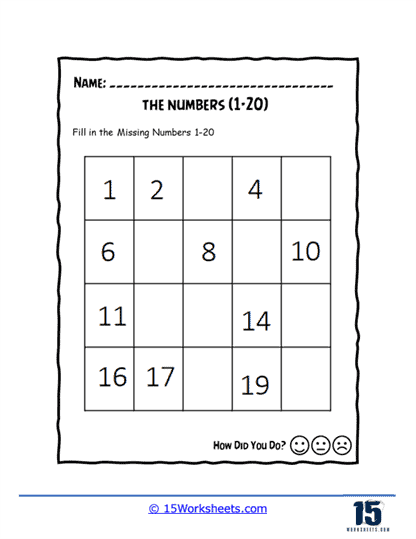
Students complete rows of missing numbers in sequences ranging from 1 to 20. The worksheet encourages children to carefully analyze patterns and determine which numbers belong in the blanks. The clean and organized layout helps learners focus on sequencing without distractions. Writing the missing numbers also strengthens numeral formation and handwriting skills. Completing each row feels a little like navigating through a hidden number path.
Orderly Adventures
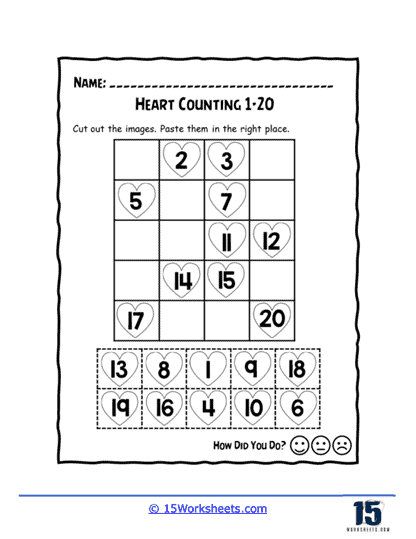
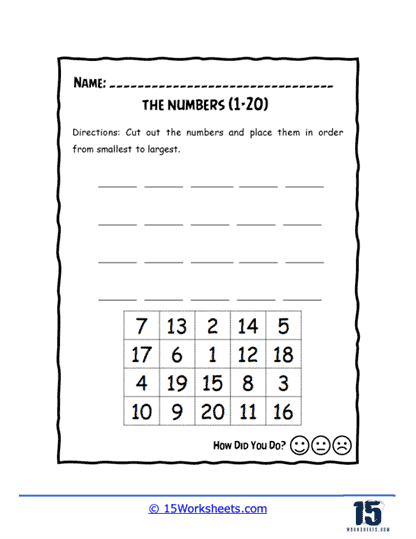
This hands-on worksheet asks students to cut out scattered numbers and arrange them in ascending order from 1 to 20. The activity combines sequencing practice with cutting and pasting for a more interactive learning experience. Children strengthen number recognition while also practicing patience and organization skills. The physical movement of arranging the numbers helps reinforce memory and sequencing concepts more deeply. It’s basically part puzzle, part craft project, and part math lesson all rolled into one.
Hearty Number Hop
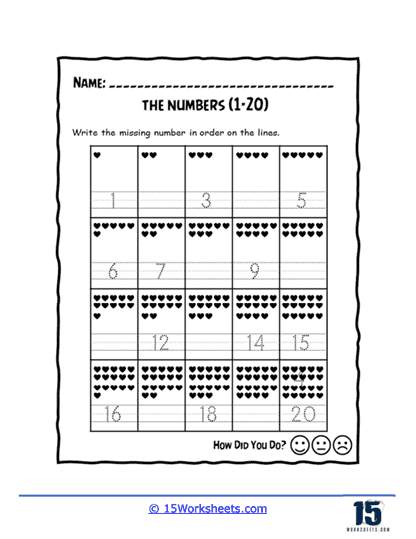
Students count groups of hearts and fill in missing numbers within sequences from 1 to 20. The heart illustrations make the worksheet cheerful and visually engaging while reinforcing counting and number recognition. Learners connect quantities to numerals by carefully counting each group before writing the correct answer. The repeated exposure to missing-number patterns strengthens sequencing confidence. Counting hearts somehow makes math feel extra friendly.
Cloud Number Climb
This worksheet challenges students to place jumbled numbers into the correct order from least to greatest using cloud-shaped boxes. The playful sky theme turns sequencing practice into a climbing adventure through the clouds. Children strengthen their understanding of numerical order while improving logical thinking skills. The visual organization helps learners clearly see how numbers increase step by step. It’s a simple but satisfying way to practice ordering numbers.
Cloudy with a Chance of Numbers
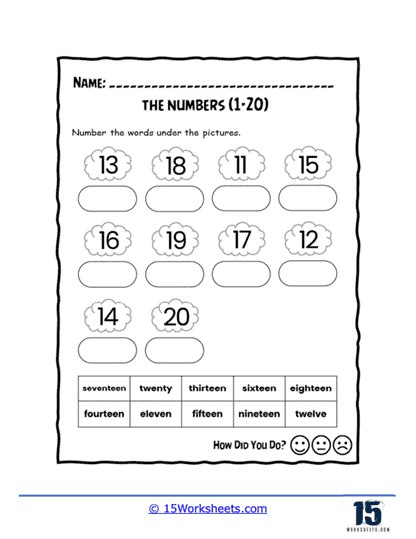
Students match numerals from 13 to 20 with their written number-word forms scattered below the clouds. The activity strengthens number word recognition and helps children connect numerical symbols with spelling and pronunciation. Matching the numbers and words also supports early reading and literacy development. The cloud theme keeps the worksheet lighthearted and visually appealing. Suddenly, learning number words feels a bit like solving weather-themed riddles.
Numerical Ties
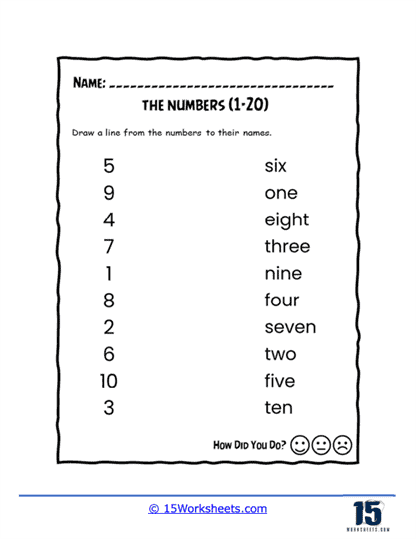
This worksheet asks students to draw lines connecting numerals to their matching number words. The activity strengthens number recognition while helping learners become more familiar with written number names. Drawing the lines also gives students extra fine motor practice and hand-eye coordination work. The matching format keeps the task simple, direct, and confidence-building for younger learners. It’s a foundational activity that quietly builds both math and reading skills together.
Vehicular Ventures
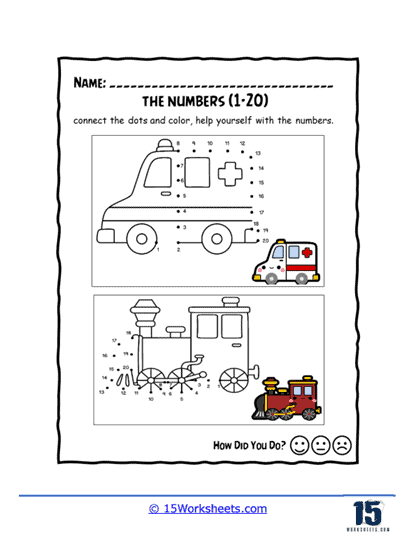
Students connect dots numbered from 1 to 20 to reveal hidden vehicle illustrations like ambulances and trains. The connect-the-dots format makes sequencing practice feel exciting and creative instead of repetitive. As learners connect the numbers in order, they strengthen counting fluency and number recognition naturally. Coloring the completed vehicles adds an extra layer of creativity and fun. It’s part art project, part transportation lesson, and part counting challenge.
Wheels and Sleighs
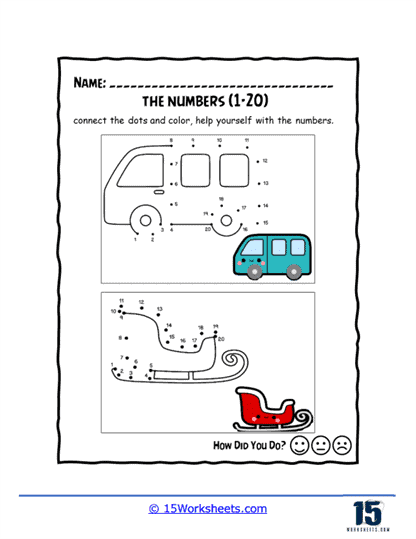
This worksheet invites students to connect numbered dots from 1 to 20 to uncover hidden transportation images like buses and sleighs. The activity strengthens sequencing skills while also supporting fine motor coordination through careful line drawing. Once the vehicles are revealed, students can color them to complete their creations. The transportation theme helps keep learners engaged and curious throughout the activity. Watching the pictures appear dot by dot makes counting feel almost magical.