
Number 30 Worksheets

About These 15 Worksheets
The number 30 may not seem like a big deal at first, but for young learners, it’s a milestone. These worksheets give kids a chance to really own the number-what it looks like, how to write it, and what it means in terms of quantity. Each page takes a slightly different approach, whether it’s tracing, circling, hunting for 30, or filling in the missing spot in a sequence. By mixing fun visuals like eggs, seashells, and chairs, the practice feels more like a playful discovery than a dry drill.
The variety in this set keeps kids interested while reinforcing the same big idea: thirty is a special number that shows up in many ways. Sometimes it’s part of a puzzle, sometimes it’s hidden among other numbers, and sometimes it’s the star of a creative drawing activity. Through repetition and variety, children develop fluency in recognizing, writing, and counting to 30. Teachers and parents can rest easy knowing their kids are practicing this skill in multiple, engaging ways.
These worksheets also start to connect 30 with number relationships. Activities like “20 for 30” gently hint at addition and composition, while others highlight patterns and sequencing. This makes the number 30 more than just a symbol-it becomes part of a broader understanding of math. With consistent exposure in fun formats, students move from recognizing thirty to truly understanding how it fits into the number system.
Have a Look Inside Each Worksheet
Plant Toppers
Picture little potted plants-each with a number on top-and kiddos practicing finding the one marked “30.” It’s a sweet, garden-themed way to reinforce number recognition. Students get to interact visually while their finger hovers over the perfect plant topper. This activity helps make the idea of “30” memorable in a playful context.
Find and Circle
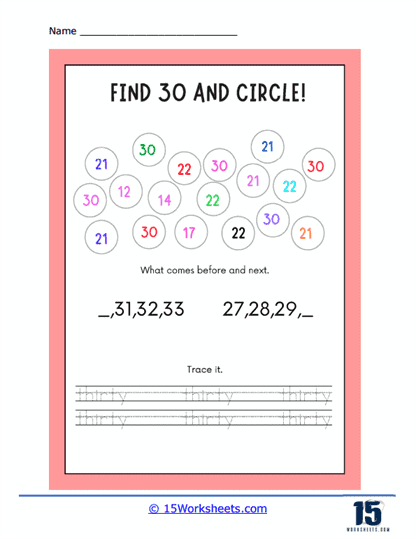
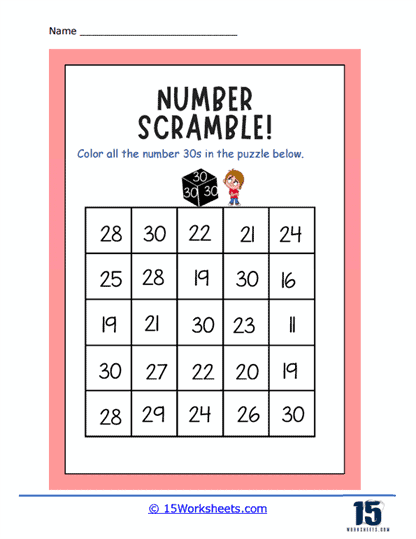
Simple but satisfying: children hunt for the number 30 hidden among a jumble of numerals and circle every one they spot. It turns recognition into a fun seek-and-find puzzle. Their attention to detail sharpens as they scan the page. It’s a great exercise for boosting visual discrimination and confidence.
30s In There
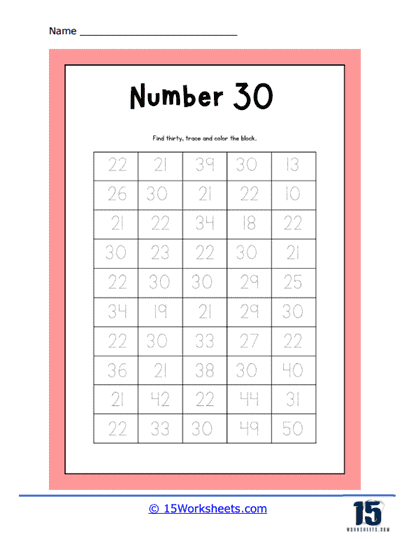
Similar to “Find and Circle,” but this one might layer in patterns or sequences, like “which numbers around here are 30?” The challenge pushes kids to not just spot 30, but recognize where it belongs in context. It deepens their understanding of number placement. It’s perfect for reinforcing counting order as well.
Seashell Numbers
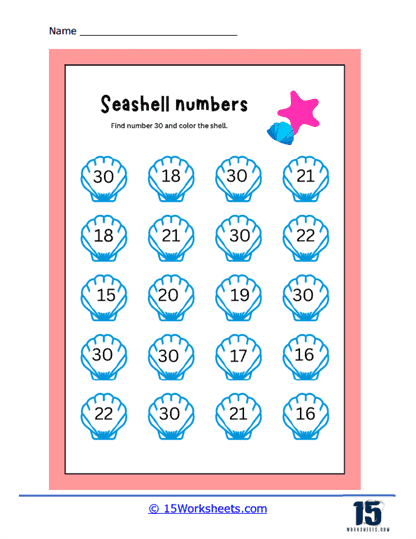
Imagine seashells-with numbers inside-scattered across the beach of a worksheet. Children search for the shell labeled “30” and might even count shells to get there. It taps into a tactile, beachy feeling that makes counting feel more like play. It supports number identification with a summery twist.
30 Spot Egg
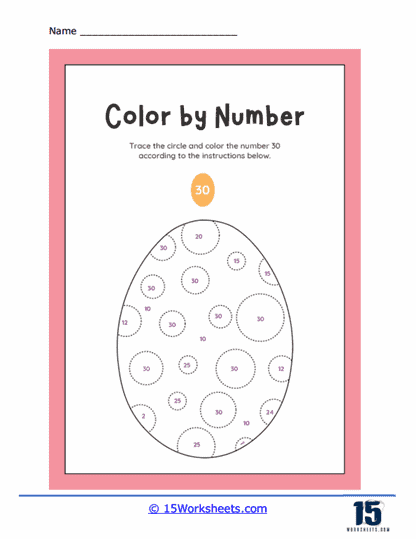
Like an Easter egg hunt on paper, students find “30” hidden among other eggs and mark it. The “egg hunt” vibe turns number practice into an adventure. It’s visually engaging and encourages careful searching. Plus, it strengthens number recognition in a festive, thematic way.
30s Puzzle
This might be a jigsaw-style grid or sequence puzzle where a piece of the puzzle featuring “30” completes the picture. It blends fine motor puzzle solving with number awareness. Figuring out where “30” fits gives a sense of accomplishment. It also subtly promotes number sequencing skills.
Missing Clouds
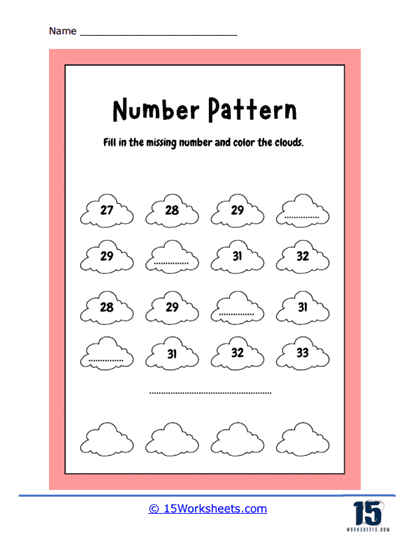
Students might see a row of clouds numbered in sequence with one blank-just where “30” should go. They fill in the missing cloud with “30,” completing the sky’s sequence. It builds a strong sense of order and pattern. And it gives them sky-high pride when they finish it.
Reviewing 30
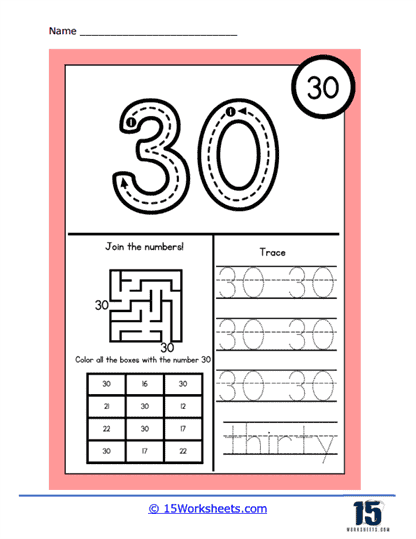
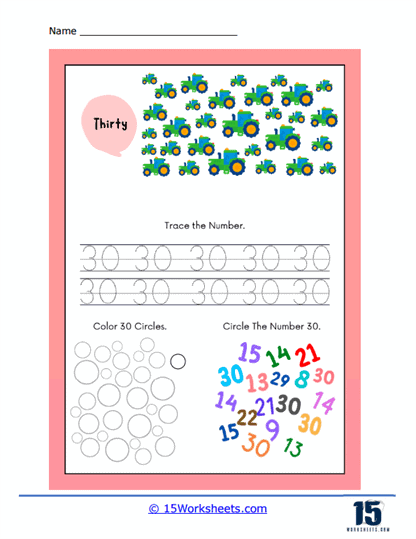
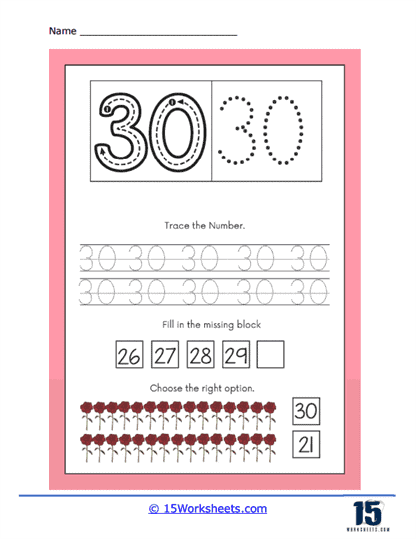
This worksheet likely brings together multiple mini-tasks all about the number 30-from tracing to circling to counting. It’s like a review party highlighting everything they’ve learned. It wraps up recognition, writing, and placement all in one sheet. Perfect for consolidating their learning about this number.
Lots To Do
A bustling worksheet! Students might encounter a variety of quick activities-coloring, number matching, writing-that all use “30” in different ways. It’s a lively, multi-task sheet that keeps little minds busy and engaged. Practical, varied, and great for reinforcing number fluency.
My Favorite 30
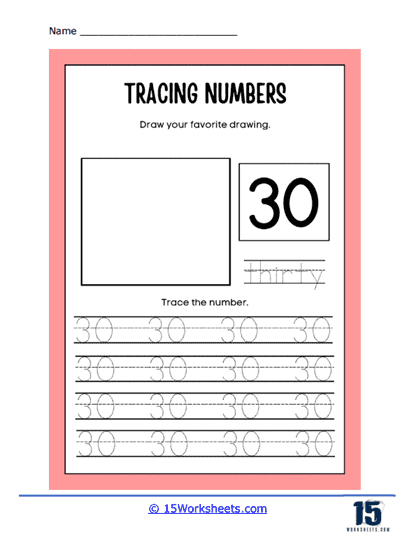
Kids are prompted to draw or write something they love 30 of-like 30 stars, 30 daisies, or 30 smiley faces. It sparks creativity while reinforcing the concept of quantity. Connecting “30” to something personal makes the number stick. It turns math into a mini-story about their world.
20 For 30
Maybe something like “show how to make 30 using 20 plus ___,” or combining 20 with something else to reach 30. It casually introduces addition and decomposition of numbers. Students think, “Okay, 20 plus what equals 30?”-and fill in the blank. It lays the building blocks for number relationships.
Number Fun
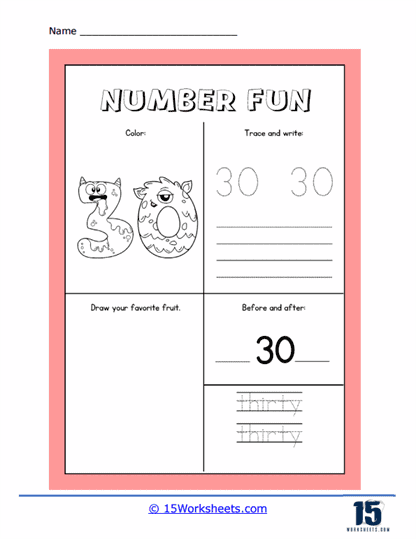
A joyful crash course all about 30-this could include coloring, tracing, or simple games with the number. Bright, playful, and maybe even silly in spots-perfect for keeping interest high. It reinforces the idea that “math can be fun!” Any step kids take practicing the number counts (pun intended).
Thirty Chairs
Perhaps there are drawings of chairs, and students count until they reach the 30th chair or circle the group of thirty. It’s a visual counting journey right to the number 30. By connecting an object to the number, it deepens understanding of quantity. Sit down and count-that’s math they can “sit” with.
The Right Option
Probably a multiple-choice format-kids pick which picture or number matches “30” out of a few options. It teaches them to evaluate and choose intentionally. It’s great for preparing for tests or digital quizzes. Plus, it reinforces number identification in a judgment-based format.
Number Tracing
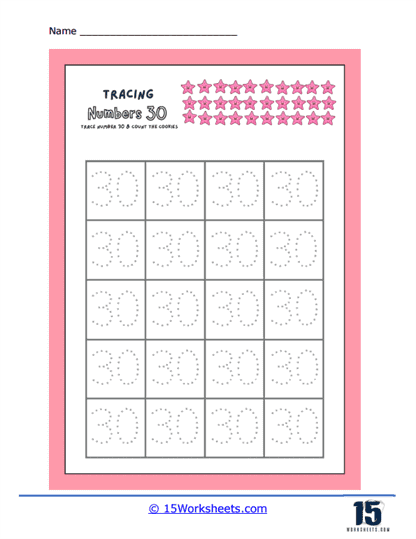
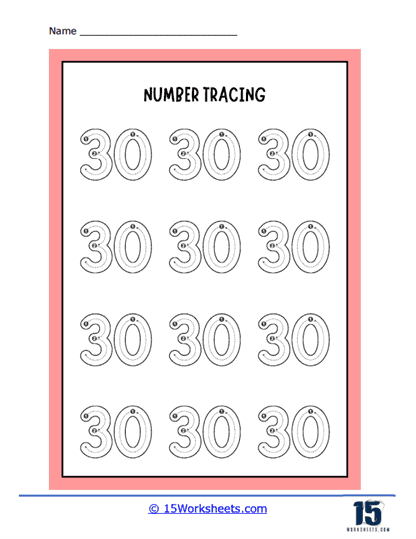
Classic but essential: students trace dotted “30”s to practice forming the digits correctly. It supports fine motor skills and proper shape of numerals. Repetition builds muscle memory for writing “30.” A solid foundation for writing any two-digit number.