
Number 7 Worksheets

About These 15 Worksheets
These worksheets are designed to help children get very comfortable with the number 7, using lots of different angles-tracing, counting, finding, forming, coloring, solving simple tasks. Instead of just writing “7” over and over, the student sees it in groups, within scenes, in mixed numbers, and as both picture and symbol. The variety helps solidify what “7” means: how many, what it looks like, how to make it in different ways.
As students go through this set, they build number sense around 7: recognizing the numeral, counting sets of seven, seeing that 7 can be broken into parts (like 5 + 2), practicing writing it, distinguishing it from other numbers, and using 7 in simple problem-solving. Also, the worksheets gradually increase in challenge so students get both easy wins and some that stretch their thinking.
Knowing the number 7 well helps in everyday life: counting items, telling time (e.g. seven minutes), grouping things (7 days of the week), understanding orders and quantities. These worksheets also help with other skills-fine motor (cutting, drawing, coloring), visual discrimination (finding 7s among others), and following directions.
Have a Look Inside Each Worksheet
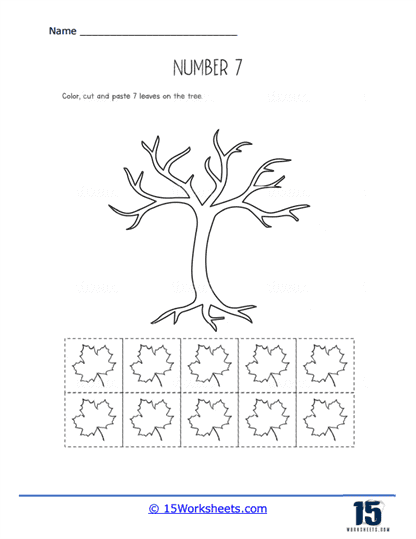
Cutting Leaves
Kids cut out leaves to practice fine motor skills while also working with sets of seven. They’ll count and group leaves into 7s as they go. This blends art and math in a hands-on way.
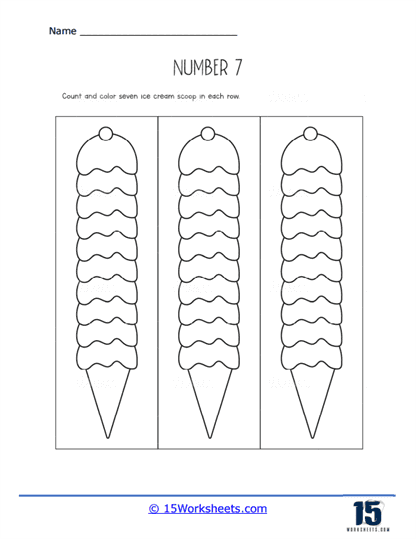
Count Scoops
Students count scoops of ice cream until they reach seven. They practice one-to-one correspondence by matching each scoop to the number. The ice-cream theme keeps the activity sweet and engaging.
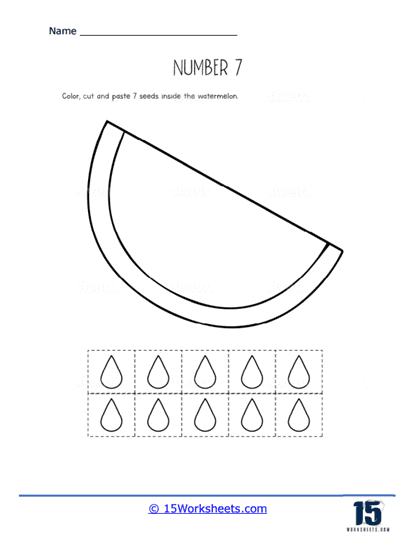
Watermelon Seeds
This worksheet asks kids to count seeds on a watermelon picture. They identify exactly seven seeds and may color or circle them. It’s a fresh, summery way to learn number recognition.
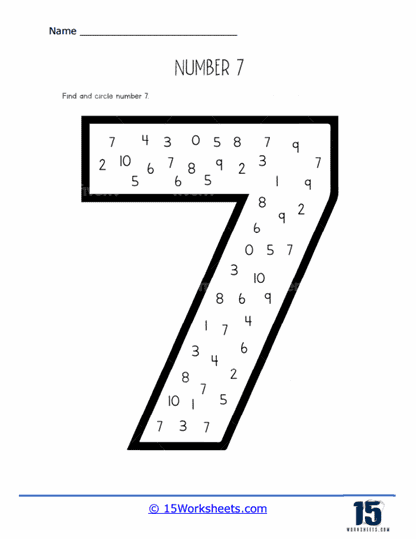
7s Inside
Children search through a page of numbers to find and highlight all the 7s. This builds quick recognition of the numeral in a sea of distractions. It feels like a number “I spy” game.
Bees to Flowers Maze
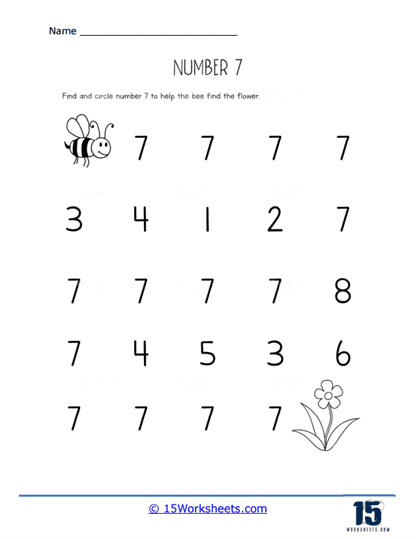
Students guide bees through a maze, often passing through seven steps or objects. They practice problem-solving while keeping the number 7 in focus. The bee theme adds playful charm.
Finding 7s
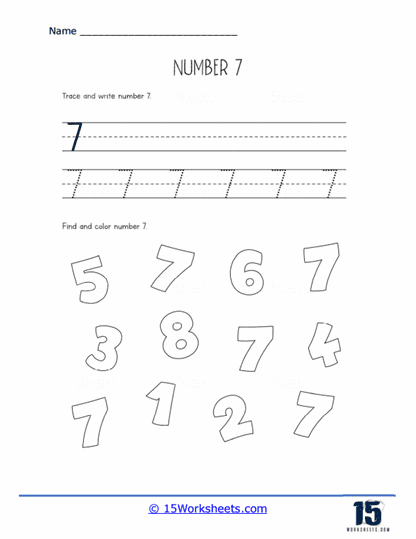
Learners scan groups of numbers or pictures to spot which ones show the number 7. This activity reinforces both quantity and symbol recognition. It challenges kids to stay alert and detail-oriented.
Round Connection
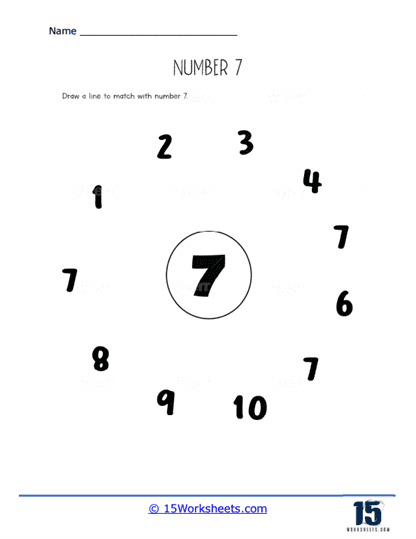
Students connect circles or shapes to make sets of seven. It blends tracing, linking, and counting skills in one exercise. The activity builds visual connections between the symbol “7” and real sets.
Color 7 Balloons
Kids color exactly seven balloons on the page. They count carefully and follow directions to reinforce quantity. It’s a cheerful way to master the number 7.
7 Jelly Beans
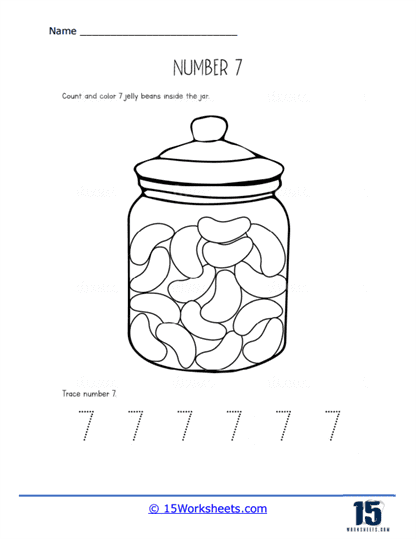
Students count jelly beans and highlight groups of seven. They might color them or circle them for practice. The candy theme makes learning tasty and fun.
Forming 7
This worksheet introduces ways to make 7 by combining smaller numbers. Kids might solve simple equations like 5 + 2 or 4 + 3. It’s an early step toward addition skills.
Drawing Gumballs
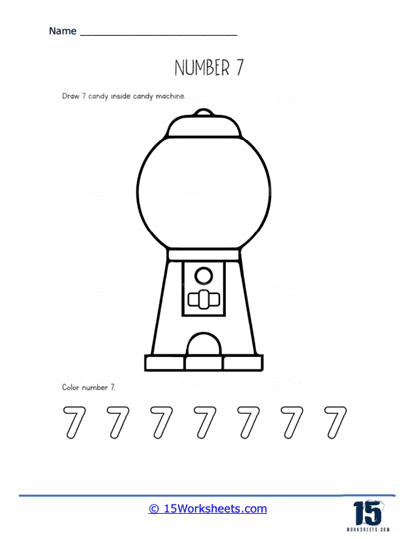
Children draw gumballs to fill a machine with exactly seven. They combine creativity with counting. It turns number practice into a playful art project.
Filling In
Students complete missing numbers in sequences up to seven. This strengthens their understanding of number order. It also shows how 7 fits in the bigger counting picture.
Hard 7
A more challenging sheet with trickier problems about 7. It might mix in word problems, grouping, or higher-level counting. This one stretches kids beyond the basics.
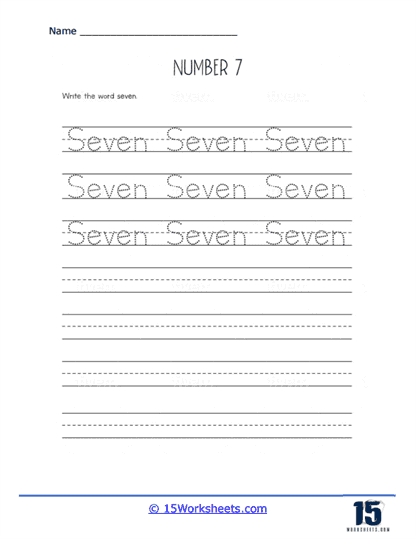
Handwriting Practice
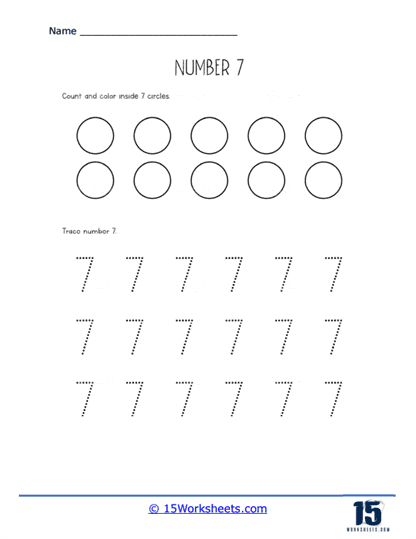
Students trace and write the number 7 repeatedly. This builds confidence in forming the numeral correctly. Good handwriting supports both math and literacy skills.
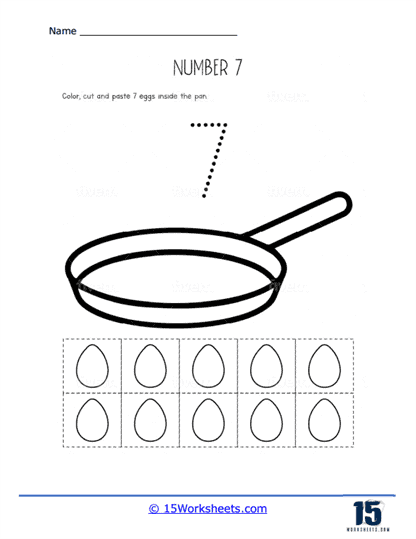
Eggs in the Pan
Kids count eggs in a frying pan and make sure there are seven. They may color or circle the right number. The kitchen theme ties math to everyday life.