
Ust Word Family Worksheets
About Our Ust Word Family Worksheets
Learning word families is one of the easiest ways to help young readers feel successful right away. When students recognize a familiar ending like -ust, they can quickly read and understand many words without starting from scratch each time. These worksheets turn that idea into fun, hands-on practice that helps patterns really stick.
This collection of Ust Word Family Worksheets gives students lots of different ways to explore and practice the -ust sound. From coloring and matching to writing and word searches, each activity builds confidence step by step. The variety keeps learners engaged while reinforcing the same important phonics pattern in fresh and exciting ways.
These worksheets also help connect reading to real-life vocabulary through pictures, puzzles, and meaningful examples. Students see how words like dust, bust, and gust show up in everyday language. That connection helps make reading feel more useful, more understandable, and a lot more fun.
About Each Worksheet
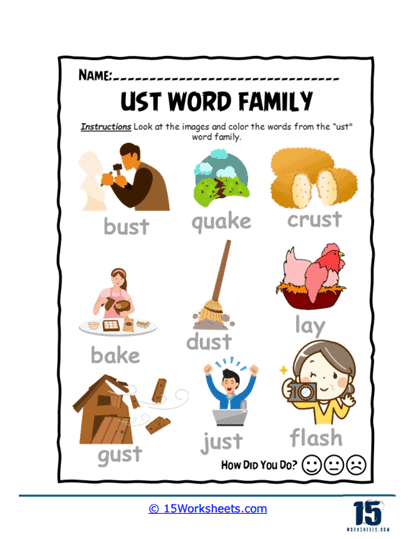
Word Family Coloring
Students look at pictures and words to figure out which ones belong to the -ust word family. They color only the correct matches, turning the activity into a fun visual sorting game. This helps learners notice patterns while connecting words to images. It is a great option for early readers or a calm literacy center. For a bonus, students can say each word out loud as they color.
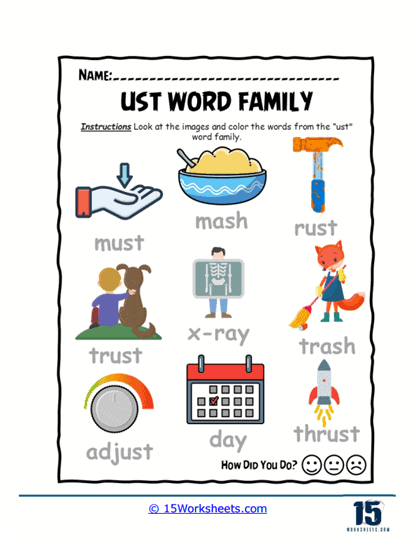
Picture Word Sorting
Learners study pictures and words to decide which ones fit the -ust pattern. The visual clues make it easier to understand new vocabulary while practicing phonics. Students color the correct answers and skip the tricky distractors. This keeps them thinking carefully about each choice. A fun extra idea is to have students explain why a word does or does not belong.
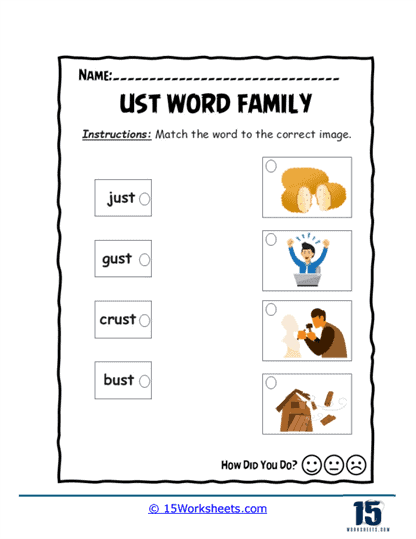
Picture Match Lines
Students draw lines to match -ust words with the correct pictures. This encourages them to think about both spelling and meaning at the same time. The activity builds strong connections between written words and visual clues. It works well for independent practice or small group work. As a bonus, students can create their own matching pair.
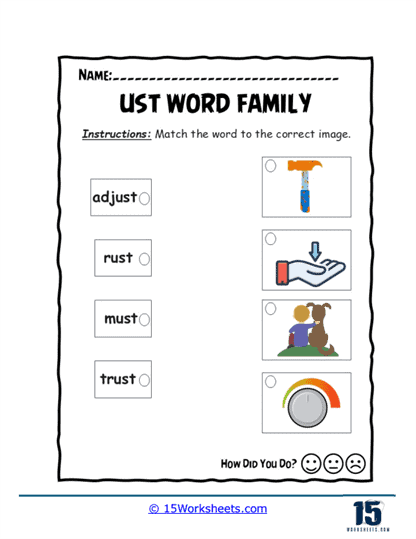
Image Pair Practice
This worksheet gives students another chance to match -ust words with pictures. Each image acts as a helpful hint for solving the word puzzle. Learners strengthen recognition of spelling patterns through repeated practice. The activity keeps things simple but effective. For a fun twist, students can act out one of the words.
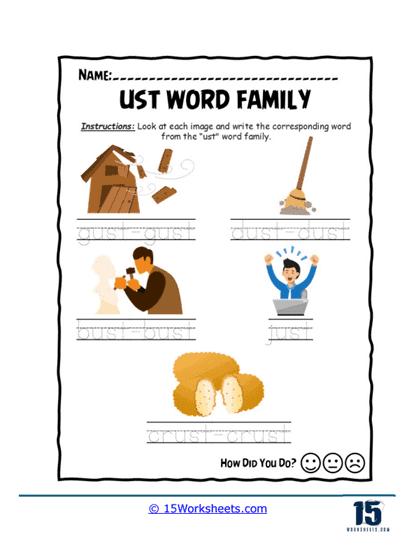
Picture Word Writing
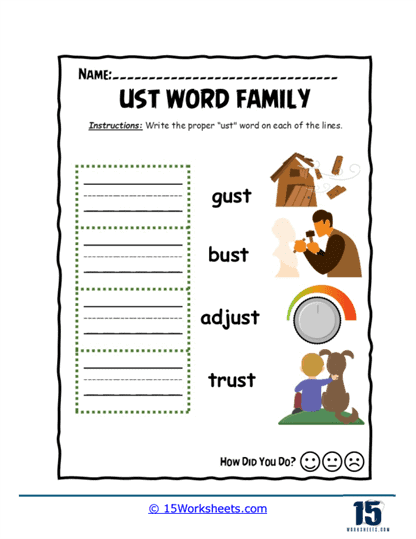
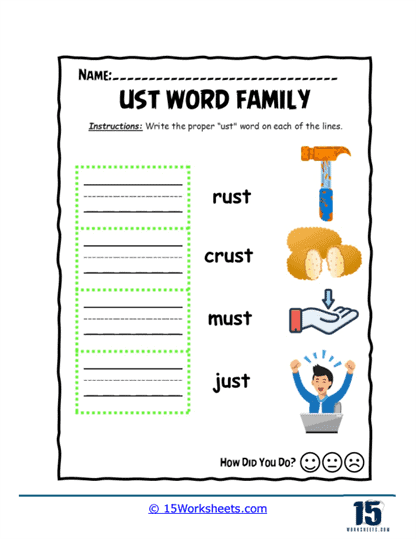
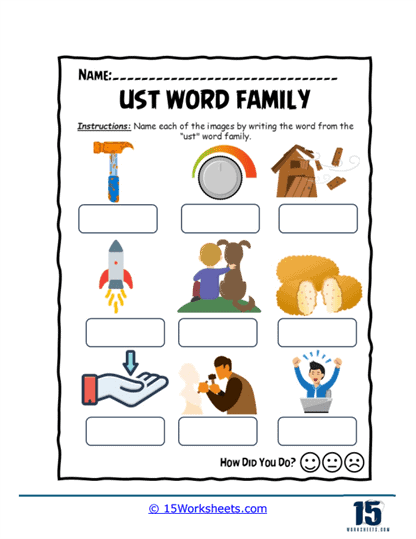
Students look at pictures and write the matching -ust word. The tracing guides help them form letters correctly while spelling each word. This blends phonics, vocabulary, and handwriting practice all in one activity. It is perfect for early writing development. As a bonus, students can draw their own picture for a new word.
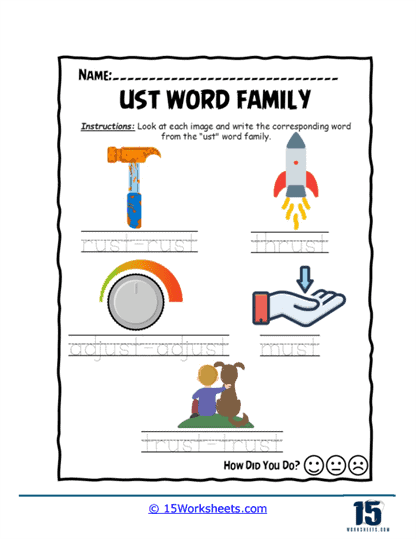
Word Writing Practice
Learners write -ust words based on picture clues. This encourages them to connect meaning with spelling patterns. Writing the words helps build confidence and memory. The activity is great for reinforcing both reading and writing skills. A fun extension is to have students use one word in a sentence.
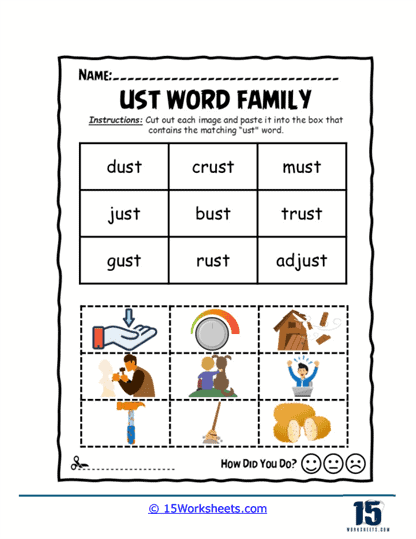
Cut and Paste Match
Students cut out pictures and match them to the correct -ust words. This hands-on activity adds movement and creativity to learning. It also helps build fine motor skills while reinforcing phonics patterns. Learners must think carefully before placing each piece. For a bonus, students can explain their matches to a partner.
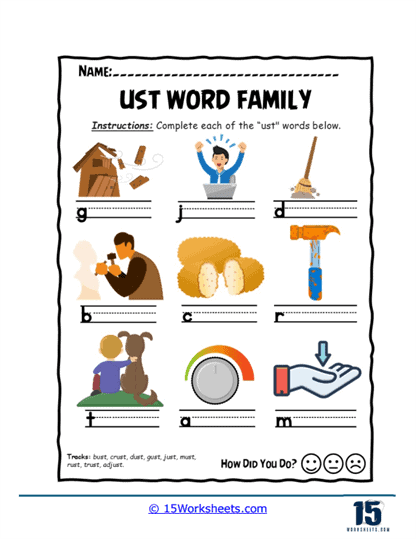
Word Completion Practice
Students complete -ust words by filling in missing letters. The pictures and first letters give helpful clues. This encourages learners to think about how words are built. It strengthens decoding and spelling skills in a simple way. As a fun twist, students can make up a silly -ust word of their own.
Word Copy Lines
Students copy -ust words several times to practice spelling and handwriting. The repetition helps the pattern stick in their memory. Each word is paired with a picture for extra support. This makes the activity both visual and hands-on. For a bonus, students can circle their neatest word.
Handwriting Word Practice
Learners copy another set of -ust words while using pictures as guides. This reinforces spelling patterns and improves writing skills. The steady repetition builds confidence with letter formation. It is a great quiet activity for independent work. As an extra idea, students can color-code vowels and consonants.
Hidden Word Explorer
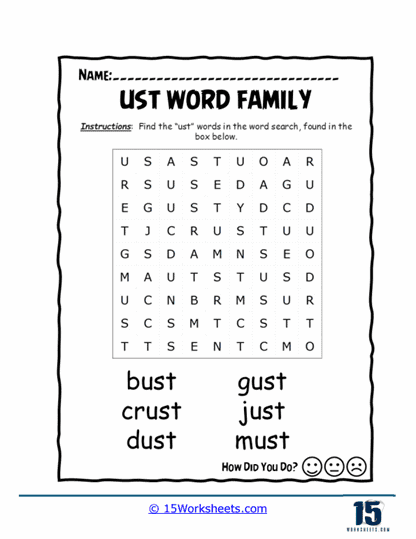
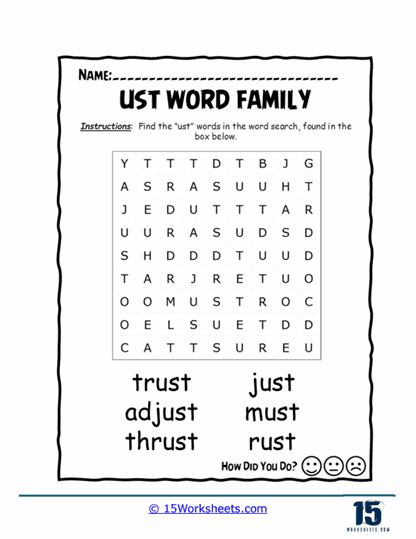
Students search for -ust words hidden in a letter grid. This turns learning into a fun puzzle challenge. It strengthens visual scanning and attention to detail. The word list helps guide their search. For a bonus, students can highlight words in different colors.
Letter Grid Challenge
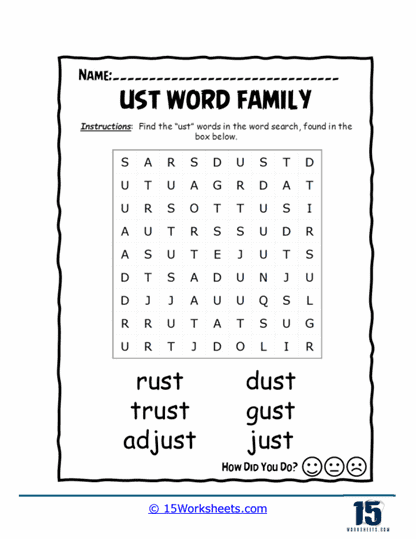
This worksheet offers another word search filled with -ust vocabulary. Students carefully scan rows and columns to find each word. It builds concentration while reinforcing spelling patterns. The puzzle format keeps learners engaged. A fun twist is to time how quickly they can find all the words.
Word Grid Quest
Students complete a word search puzzle focused on -ust words. The repeated exposure helps strengthen recognition of the word family. It also builds confidence as students find familiar patterns. The activity is both relaxing and educational. For a bonus, students can make their own mini word search.
Picture Word Identification
Students look at pictures and write the matching -ust words. The images help guide them toward the correct answers. This reinforces vocabulary and spelling at the same time. It is a great mix of visual and written learning. As a fun extension, students can draw and label their own word.
Tracing Word Lines
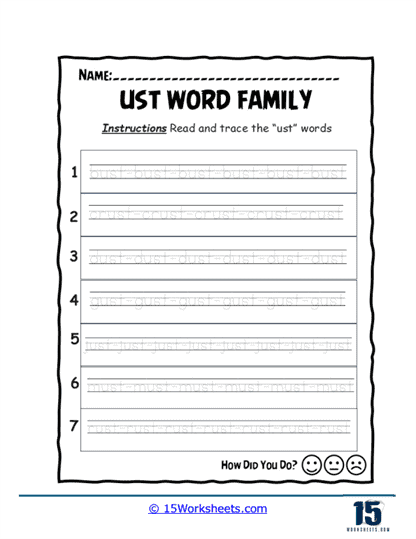
Students trace -ust words to practice handwriting and spelling. The guided lines help with letter formation and control. Repetition makes the word pattern easier to remember. This is especially helpful for early learners building writing skills. For a bonus, students can trace the word and then write it on their own.
What is the Ust Word Family?
The -ust word family is a group of words that all share the same ending sound, like dust, must, gust, and trust. When students learn one of these words, they can often read others in the same family much more easily. It is like learning a shortcut for reading lots of words at once. That makes reading feel faster and more fun.
Word families matter because they help students notice patterns in language. Instead of memorizing every word, learners begin to recognize chunks that repeat again and again. This supports better decoding, spelling, and overall reading confidence. It also helps students become more independent when they see new words.
In everyday reading and writing, word families act like building blocks for language. They help students connect sounds, letters, and meanings in a clear way. This makes reading smoother and writing easier. Over time, these small patterns lead to big improvements in literacy skills.