
Measuring Liquids Worksheets
About These 15 Worksheets
Pour, mix, and measure-these worksheets are basically math with a splash of kitchen science. Instead of just staring at numbers, kids get to imagine jugs, cups, and bottles filled to the brim (or maybe just half full). It’s like practicing math while pretending to run a lemonade stand or fill up water balloons. Learning about volume this way makes measuring feel useful, real, and way less intimidating than a boring old ruler.
These worksheets ease kids into both customary and metric liquid units-cups, pints, quarts, liters, and milliliters. By shading, comparing, and adding up containers, they see how liquid measures connect to each other. Suddenly, “1 liter” isn’t just an abstract number, it’s a jug you can picture in your mind. That little mental picture makes conversions and comparisons stick so much better.
And here’s the best part: liquid measurement is everywhere in the real world. Cooking, science experiments, even filling up the family pet’s water bowl-volume is a life skill, not just a math skill. With these worksheets, kids practice the math side while secretly preparing for the next time they help bake cookies or pour juice at a picnic. Learning + life skills = a win-win.
Have a Look Inside Each Worksheet
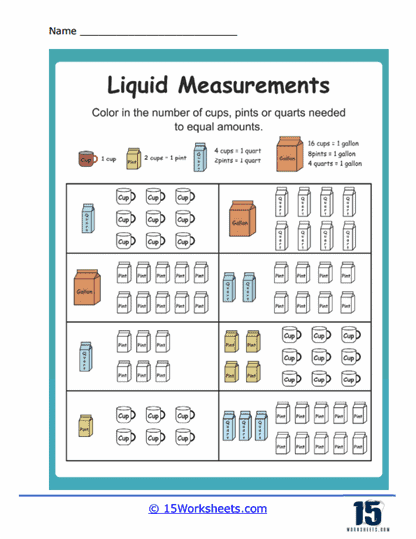
Cups, Pints, and Quarts
Students get to dip into the world of measuring liquids using those household go-tos-cups, pints, and quarts. It’s like playing with measuring jugs in a pretend kitchen, learning how much fits into each one. This hands-on vibe builds comfort with real-life units and kitchen math. By the end, they’ll know that three cups are like a pint, and four pints are one quart-just like mini chefs!
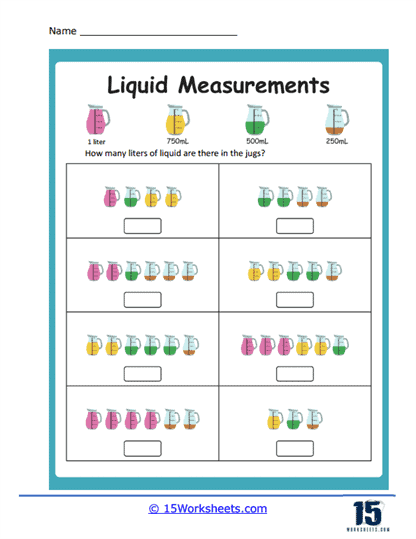
Collective Jugs
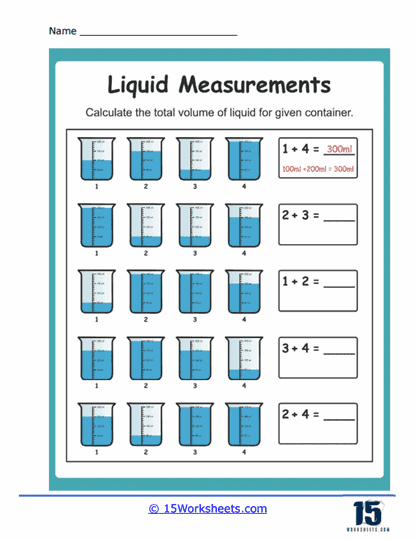
Ever wished measuring could be a team effort? It can be! Kids combine liquid amounts from different jugs-maybe jug A has a bit here, jug B there-and figure out the total. Mixing it up like this helps them practice addition with volume in a cool, practical way. It’s volume math meets cooperative play.
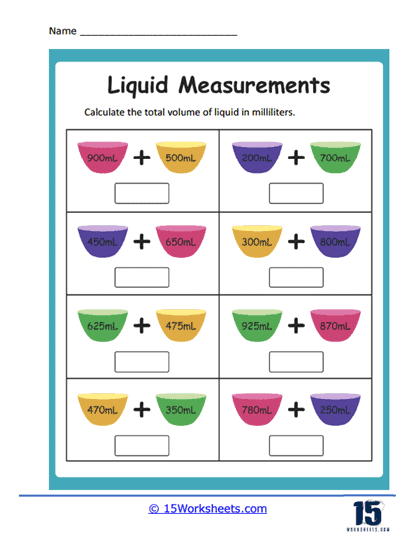
Sum of Liquids
Shake things up with problems that ask students to calculate totals-mixing, adding, maybe even “pouring” imaginary liquids together. It’s part math puzzle, part magic trick: watch volumes grow, add correctly, and tada-you’ve got your sum. It builds volume sense and confidence in one go.
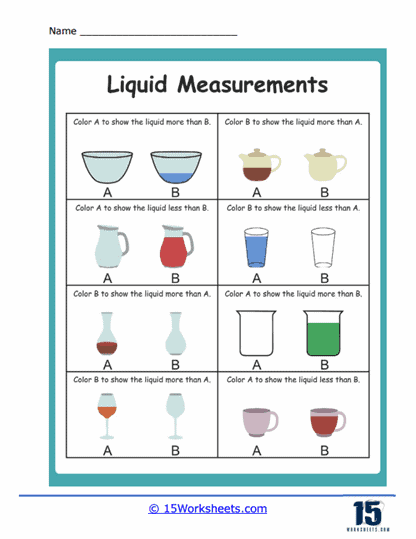
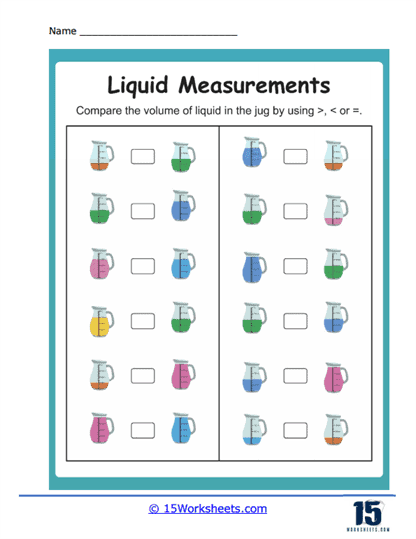
More or Less Liquid
Time to turn detective! Students compare two containers: which one has more or less liquid? It’s a visual showdown-maybe one jug looks deceptively full, or another is almost empty. They practice comparison language (“more,” “less,” “same”) in a fun, observational way.
Total Volume
This one asks students to inspect a picture of multiple containers and figure out the total amount of liquid across them all. Kind of like tallying up scores after a pretend pouring contest. It’s all about addition, visualization, and a little bit of playful brain-bending.
Converting Liquid Measures
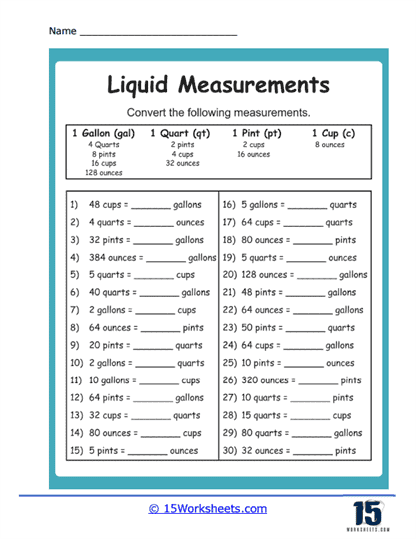
Here, kids become little unit translators-converting between cups, pints, quarts, liters, milliliters, and gallons. It’s like switching from English to Metric in the world of liquids. They’ll flex their conversion skills and feel pretty proud of it, too.
A Liter or More
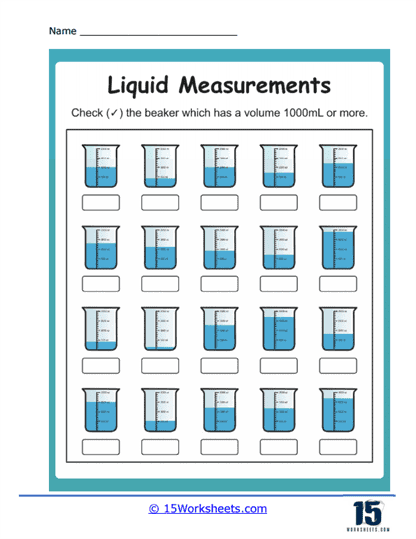
Is it a liter of water, or more? Or less? Students tackle problems that challenge their sense of metric volume. Using liters and milliliters, they’ll figure out if that beaker is packing a full liter-or something shy of it. Metric mastery begins here.
Least to Greatest
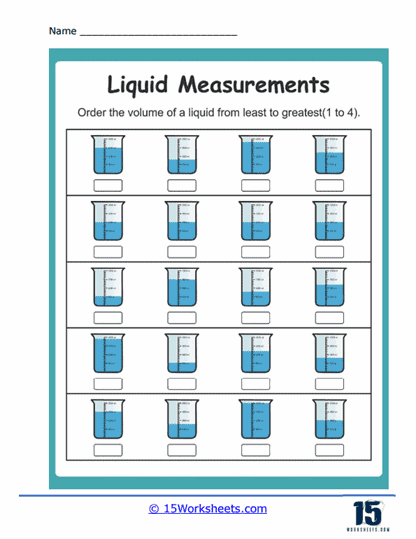
Line ’em up! Kids order various liquid volumes from the tiniest to the tallest. It’s like arranging a game of “who’s the shortest?” but with cups and jugs. This reinforces their ranking skills and gives them a visual way to compare liquid amounts.
Comparing Volumes
Side-by-side volume comparisons make a simple game of “which is bigger?” or “which is smaller?”-perfect for building intuition on container sizes. Add a dash of visuals and students see the difference without even grabbing a jug.
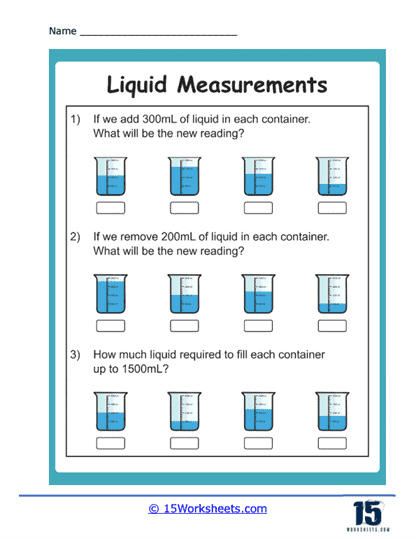
If We Add More
What happens if we pour more into the container? Students predict new liquid levels, which means eyeballing graduations or imagining labeled jugs. It’s a clever mix of volume sense and forecasting-and it gets brains bubbling.
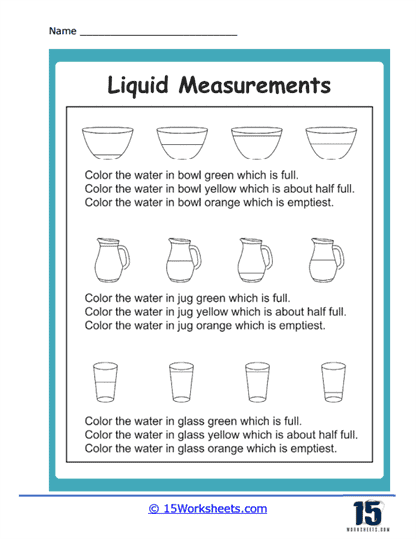
Full, Half, Empty
Classic and adorable-students identify whether containers are full, half-full, or empty. Simple visuals, big learning! This builds early concepts of fraction and quantity awareness in a super accessible way.
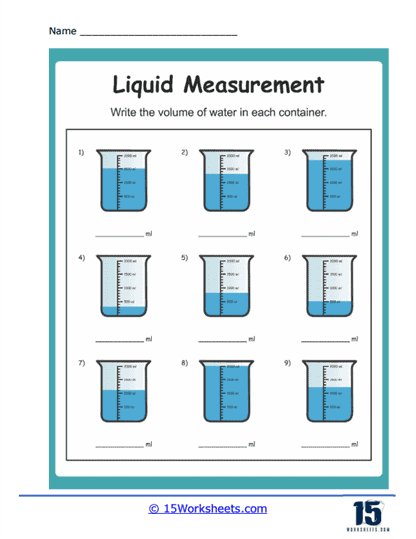
Measure the Volume
Time to measure-students read the volume shown and record it. This might involve matching labels or writing numbers, honing their ability to interpret measurement tools and visuals.
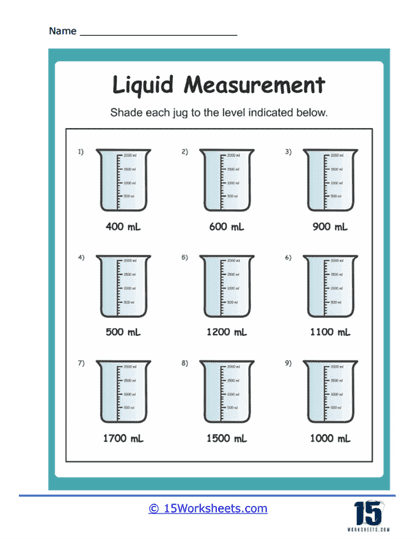
Shading Levels
Grab a pencil and shade up to the correct level to match the given measurement. Kids practice estimating and connecting visual parts of a container to actual volumes. It’s like color-by-numbers-but with liquid!
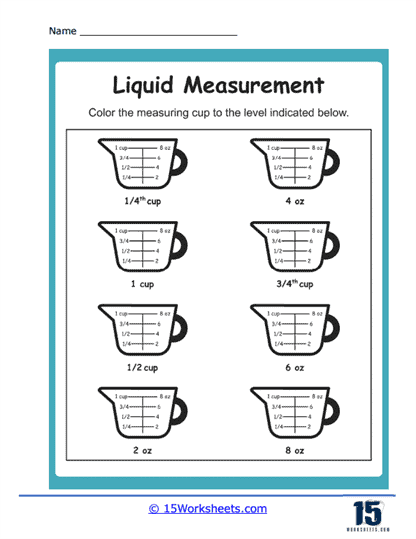
Coloring Measuring Cups
Let’s bring some color into the mix! Students color segments of measuring cups to reflect specific volumes. It’s creative, educational, and reinforces unit awareness in a playful, visual way.
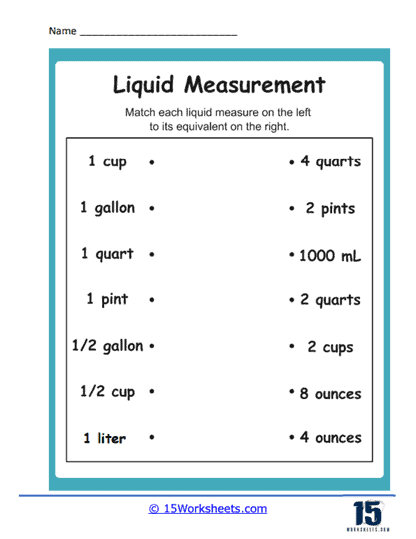
Matching Measures
Match the written measurement (like “1 pint” or “250 mL”) to the correct picture or container. This pairing game builds recognition and fluency with liquid-volume vocabulary.
Measuring Beyond the Page
Worksheets are a fantastic start, but the magic of measurement really comes alive when kids get to practice in the real world. The good news? Measuring opportunities are everywhere once you start looking. Cooking dinner? Hand them the measuring cups and let them pour the flour or water. Playing outside? Grab a stick and measure how many “sticks tall” the slide is. Even setting the table can turn into a fun lesson by comparing the lengths of spoons or the height of glasses.
The key is making measurement feel like a game, not a chore. Give kids challenges like, “How many steps long is the living room?” or “Can you find something that’s taller than you but shorter than the door?” By connecting abstract units to their own bodies, toys, or food, kids start to develop strong intuition for size, length, and volume.
And don’t forget to celebrate those “aha!” moments. When a child shouts, “This bottle is three blocks tall!” they’re not just playing-they’re showing you they understand the big idea behind measurement. Whether it’s in the kitchen, backyard, or classroom, every small, playful encounter with measuring builds confidence. Worksheets give them the foundation, but life is the lab where those skills truly stick.