
Measuring Inches Worksheets


About These 15 Worksheets
Measuring with inches may seem like a small skill (pun totally intended), but it’s one of those foundational math abilities that opens the door to all kinds of real-world problem-solving. This collection of worksheets takes rulers from being mysterious strips of numbers to being trusty little tools of discovery. Whether it’s objects lined up neatly on the page or a cheeky “not to scale” drawing meant to trip kids up, each sheet builds measuring muscles in a slightly different way. Students get variety, challenge, and a little fun as they practice everything from estimating to recording accurate data.
The beauty of these worksheets is that they ease students into the world of precision without making it feel intimidating. First, kids learn to measure whole inches, then they start rounding, and before long, they’re handling quarters of an inch like pros. It’s all about layering skills so the ruler starts to feel like an extension of their hand. And with familiar objects like paintbrushes or everyday household items, the measuring practice doesn’t feel abstract or boring.
Beyond just “getting the numbers right,” these worksheets help kids appreciate why we measure in the first place. Inches aren’t just numbers on paper-they’re a shared system that lets everyone agree on how long, tall, or wide something really is. Whether a child dreams of painting, building, sewing, or just hanging a picture straight, measurement will be part of their future. These pages sneak in that life skill in a way that’s fun, approachable, and totally useful.
Have a Look Inside Each Worksheet
Length of Objects on Rulers
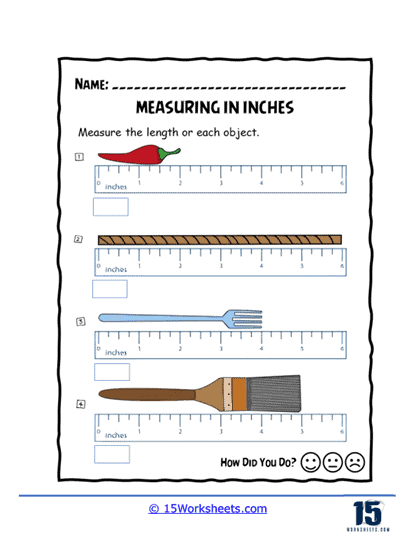
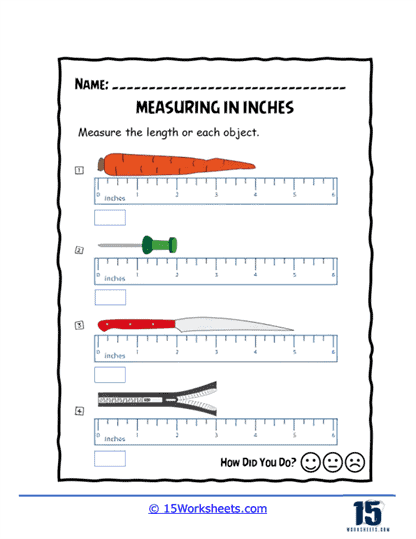
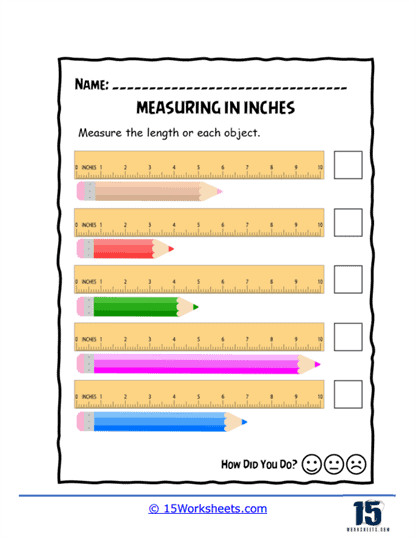
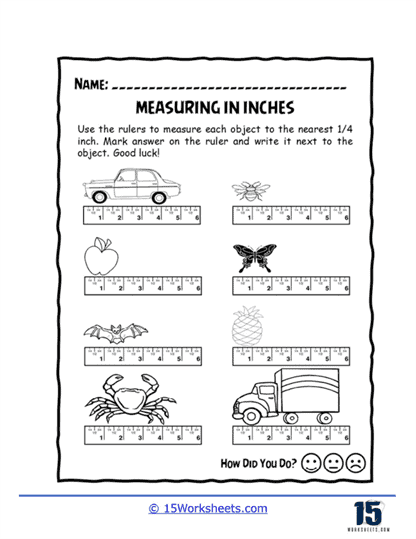
Students get to practice measuring simple objects that are already lined up against a ruler. Each item is drawn to scale, so kids can read the markings and write down the lengths. It’s a hands-on way to help children see how inches line up with real-world items. This builds accuracy and confidence when using a ruler for everyday measuring.
Nearest Quarter Inch
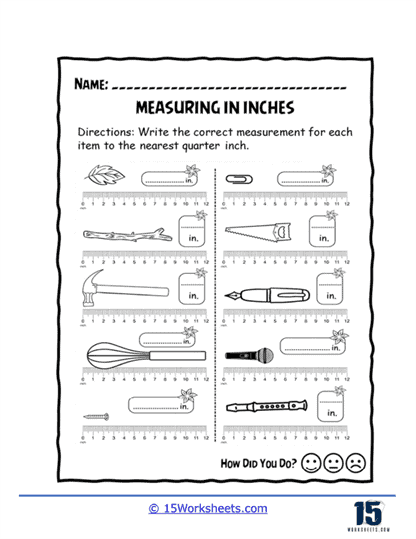
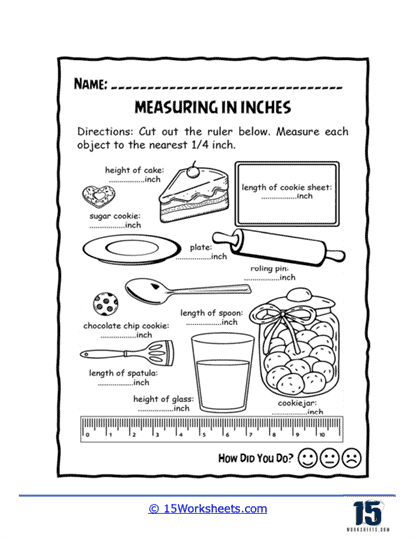
This worksheet focuses on rounding measurements to the nearest quarter inch. Kids will measure and then decide whether the object is closest to ¼, ½, ¾, or a full inch. It’s a neat step up from whole-number measuring, sharpening their precision skills. This is great prep for real-life tasks where exactness matters, like sewing or woodworking.
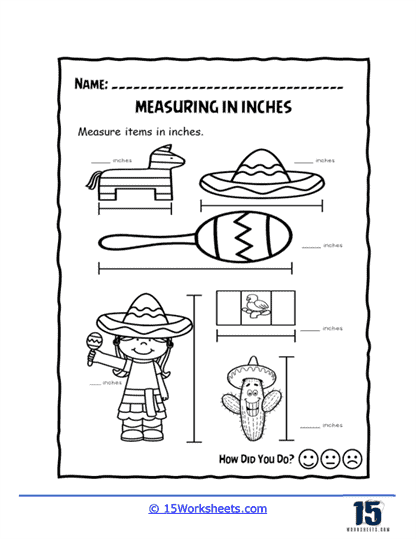
Measuring Inches
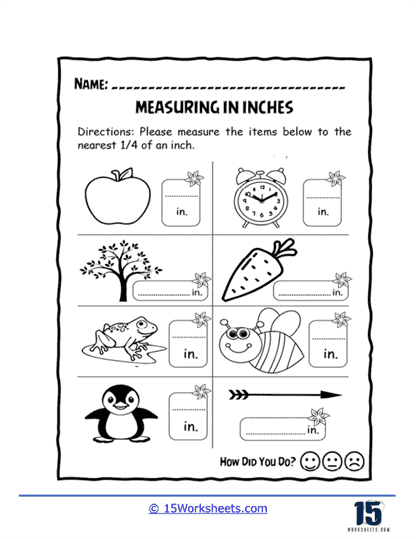
A simple, straight-to-the-point sheet where students measure everyday items by inches. The objects are lined up with a ruler so children can practice reading the marks. This activity strengthens the basics of using a standard measuring tool. It’s a must-do for getting comfortable with rulers and units of length.
Record Lengths
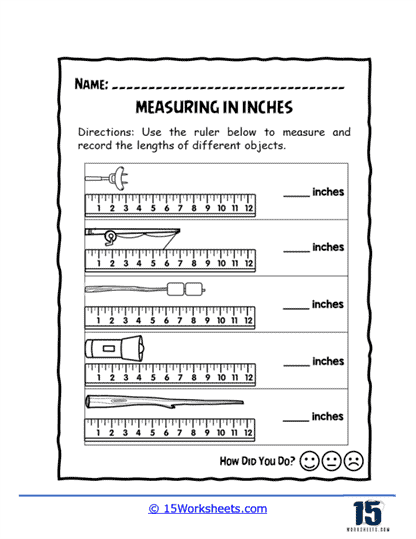
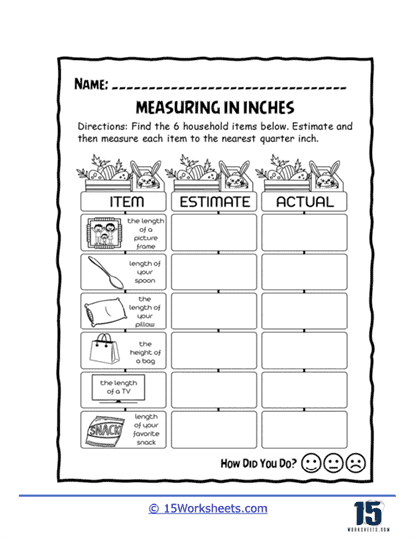
Here, students measure a variety of objects and then record the results in a chart. This makes the task part math, part organization-combining measuring and data keeping. It encourages neatness while reinforcing the idea that measurements are useful information. Kids will start to see the connection between measuring and recording data, just like scientists do.
Object Length
This worksheet zooms in on measuring single items, one at a time. Kids work on accuracy, making sure they line up the ruler correctly and read the right number. By slowing things down, it helps students build careful habits. It’s perfect for learners who need extra practice with the fundamentals of measuring.
Measuring Objects
A variety of objects are placed at different starting points, so students can’t just count from the end of the ruler. They must line up measurements carefully, which teaches that rulers can measure from anywhere. It’s a clever twist that sharpens focus and accuracy. This skill makes kids flexible measurers in real-world situations.
Nearest Inch
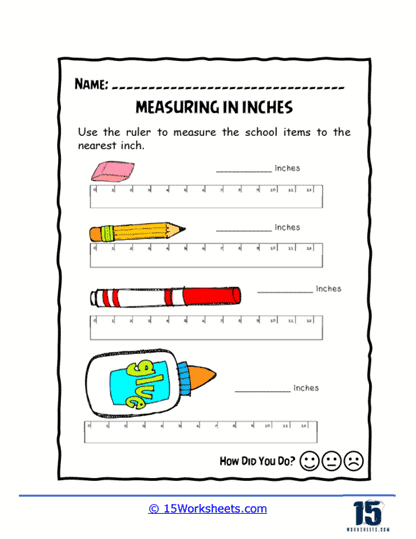
Children learn to measure objects and then round the lengths to the nearest inch. It strips away the smaller markings and helps them focus on bigger benchmarks. This worksheet makes rounding practical and visual, which supports number sense. It’s an easy step between beginner measuring and more precise fractions.
Paintbrush Lengths
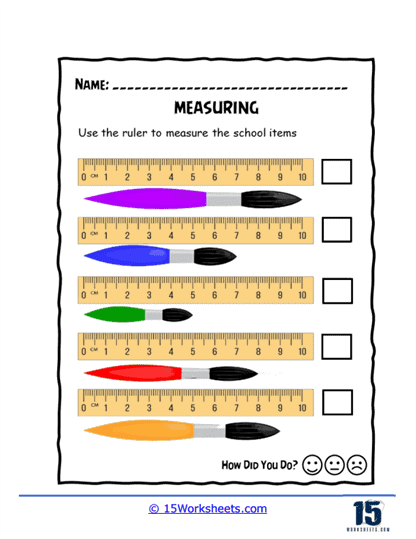
Paintbrushes of various sizes are drawn on the page for kids to measure. Each brush gives students a slightly different challenge, so they practice reading both full and partial inches. It’s a playful way to make measurement less abstract, since paintbrushes are real items they’ve probably seen. Kids will love connecting math to art tools.
Not To Scale
This one throws a curveball: objects are drawn not to scale, so students must think differently. Instead of just laying the ruler on the picture, they learn that sometimes drawings are misleading. It’s a fun way to remind kids that real-world measuring is best done with actual tools. This worksheet teaches critical thinking about when and how to measure.
Use Your Ruler
Instead of having rulers printed on the page, this worksheet asks kids to grab their own ruler. They’ll place it on the paper and measure the objects themselves. It’s a bridge from practice sheets to real-world measuring. The activity helps kids gain independence and a sense of responsibility for their tools.
Using a Standard
Students practice understanding what a “standard unit” is and why inches matter. The worksheet shows how using a shared measuring system helps everyone understand the same information. Activities might include comparing measurements to highlight consistency. It gives kids the “why” behind the inch, not just the “how.”
1/4 Inch Measures
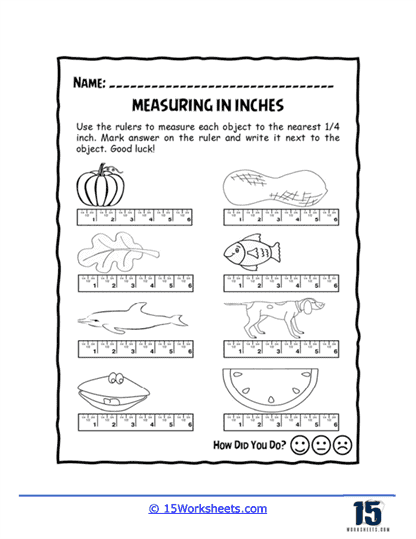
This sheet takes accuracy to the next level with lots of quarter-inch markings. Students measure items that land neatly or almost-neatly on ¼-inch points. It’s a precise workout for their ruler-reading skills. Mastering this skill makes later work with fractions and decimals much easier.
Estimate vs. Actual
Students first guess how long they think an object is, then measure it for real. This helps sharpen their sense of length and spatial awareness. They quickly see where their guesses match up-and where they don’t. It’s a fun way to turn measuring into a little game of prediction.
Horizontal and Vertical Measures
Here, kids measure items both lying across the page and standing tall. Measuring in different directions helps them think spatially and apply skills in varied contexts. It also introduces the idea that rulers work the same way no matter the orientation. This adds flexibility and confidence to their measuring toolkit.
My Guess
In this playful activity, students make guesses about object lengths before checking with their ruler. They’ll compare predictions to the real answers and reflect on the difference. This strengthens number sense while also keeping things lighthearted. Kids will enjoy the mix of estimation and discovery.
What Is Measuring Inches?
Measuring inches is basically figuring out “how big is this thing?” in a way that makes sense to everyone else. An inch is one of the standard units we use in the United States to keep our measuring consistent. Without it, we’d all be saying things like “this stick is about as long as a banana” or “my desk is three shoe-lengths wide,” and that can get confusing very quickly. By using inches, we all speak the same language of size.
Inches matter more than we think because they sneak into daily life all the time. From checking your shoe size to hanging a frame so it isn’t crooked, to making sure a recipe’s baking pan is the right one-measurements keep things working smoothly. They help us compare, build, create, and share our world with accuracy. The inch, small as it is, packs a big punch when it comes to making sense of objects and space.
These worksheets make the inch feel friendly instead of fussy. They give kids chances to estimate, test, and practice until those ruler marks make perfect sense. Bit by bit, learners discover that measuring isn’t just a math skill-it’s a life skill. And once they’ve worked through these pages, they’ll carry that confidence with them, ready to measure up to just about anything.