
Juneteenth Worksheets
All About These 15 Worksheets
Juneteenth is a celebration of freedom, perseverance, and community – and this worksheet collection helps students understand why that matters. Each activity brings history to life through age-appropriate lessons that blend reading, writing, art, and reflection. From exploring the Emancipation Proclamation to understanding the Flag Symbolism and writing their own thoughts in What It Means to Me, students discover how Juneteenth represents both a historic event and a continuing journey toward equality. Teachers can use these worksheets to build knowledge, spark empathy, and inspire pride in the story of freedom.
The collection includes resources for a wide range of learners. Younger students can color, trace, and create in Trace and Draw or Flag Recreation, while older students dive into analysis and reflection in Analyze and Contemplate or History Through Poetry. Cross-curricular connections abound: literacy meets social studies, creativity meets comprehension, and emotion meets understanding. Whether students are learning vocabulary in Unscramble and Write or designing their own Freedom Collage, every worksheet reinforces the themes of unity, resilience, and celebration.
What makes these Juneteenth worksheets so special is how they bridge history and heart. Students not only learn what happened on June 19th, 1865-they also explore why that moment continues to shape the American story today. Each page encourages critical thinking and cultural appreciation, making this collection an essential classroom resource for teaching about justice, freedom, and hope.
Have a Look Inside Each Worksheet
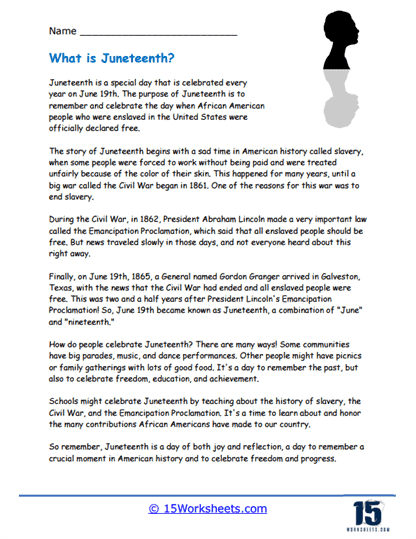
What is Juneteenth?
This foundational worksheet introduces students to the meaning and history of Juneteenth. They’ll read a short passage explaining when and why the holiday began, then answer comprehension questions to check understanding. It encourages awareness of freedom, justice, and equality. A thoughtful way to begin any Juneteenth lesson.
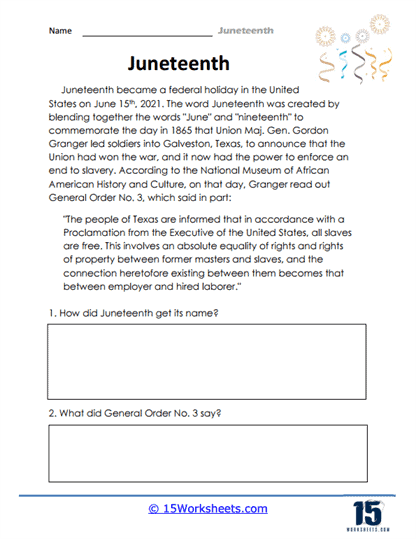
Behind The Name
Students explore the origin of the word “Juneteenth” and learn how it connects to June 19th, 1865-the day enslaved people in Texas learned of their freedom. Through vocabulary and timeline activities, they connect language to history. It’s an engaging way to show how a single word can carry powerful meaning. Perfect for middle and upper elementary students.
What It Means To Me
This reflective worksheet invites students to express what Juneteenth represents to them personally or to society as a whole. Prompts encourage writing about freedom, equality, and celebration. It builds empathy and critical thinking through emotional reflection. A heartfelt addition to classroom discussions on diversity and justice.
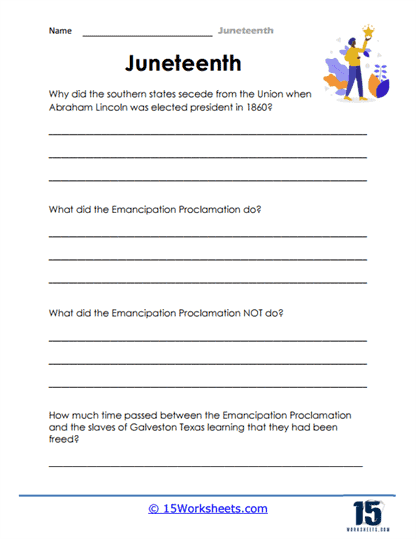
Emancipation Proclamation
Students read an excerpt or summary of the Emancipation Proclamation and analyze its impact on American history. They’ll answer comprehension and interpretation questions that connect directly to Juneteenth’s roots. It’s an excellent blend of reading comprehension and history education. A powerful way to link law, leadership, and liberty.
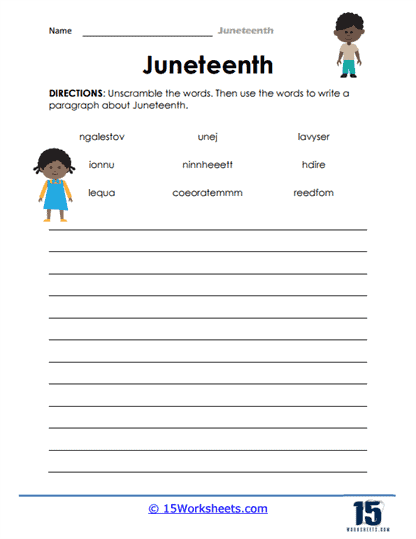
Unscramble And Write
Students rearrange jumbled letters to form Juneteenth-related vocabulary words, like “freedom,” “equality,” and “celebration.” Afterward, they write each term in a sentence to show understanding. This activity strengthens spelling, vocabulary, and contextual usage. A fun and focused literacy challenge.
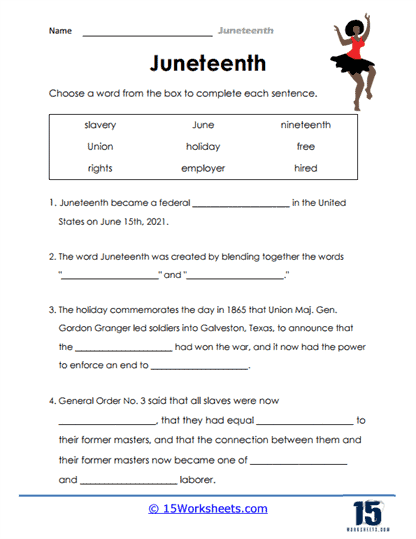
Word Box Challenge
In this worksheet, students use a word bank of Juneteenth terms to fill in blanks within meaningful sentences. It reinforces vocabulary comprehension while introducing important concepts like “emancipation” and “heritage.” The structure supports learners of all levels. A great activity for reading centers or morning work.
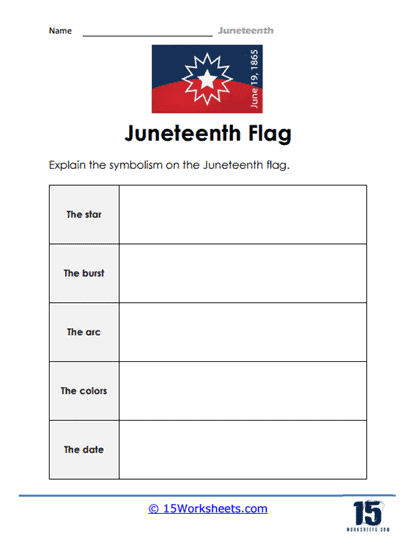
Flag Symbolism
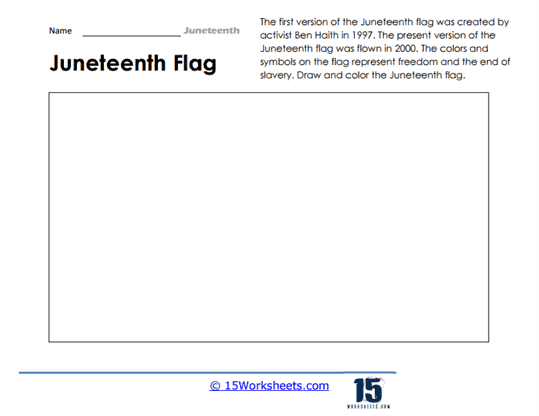
Students study the Juneteenth flag and learn what its colors, star, and shapes represent. They’ll write or draw about each symbol’s meaning, connecting visual literacy with cultural understanding. This worksheet blends art, history, and interpretation skills. A vivid way to teach the power of symbols in storytelling and identity.
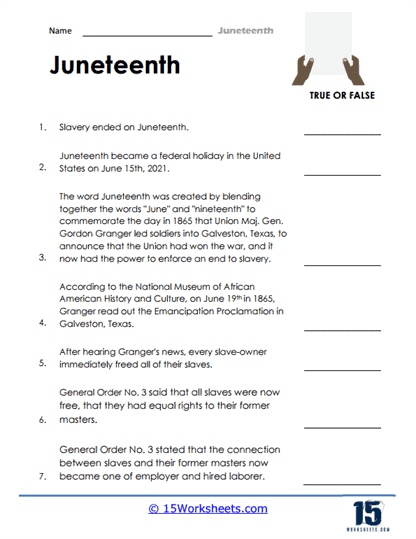
True Or False
This quick activity helps students test their understanding of Juneteenth facts and myths. They’ll determine which statements are accurate and which need correction, promoting fact-checking and comprehension. It’s perfect for review, group games, or bell-ringer warm-ups. A lively, interactive approach to history learning.
How I Will Celebrate
Students brainstorm and write about meaningful ways to celebrate Juneteenth-such as community service, learning about African American history, or attending local events. The worksheet encourages reflection and cultural appreciation. It’s a perfect bridge between classroom learning and real-world action.
Three, Two, One
This graphic-organizer-style worksheet helps students summarize their learning by listing three facts, two questions, and one takeaway about Juneteenth. It’s a structured yet creative way to check comprehension and reflection. Teachers love using it at the end of a lesson or unit. A simple but powerful closure activity.
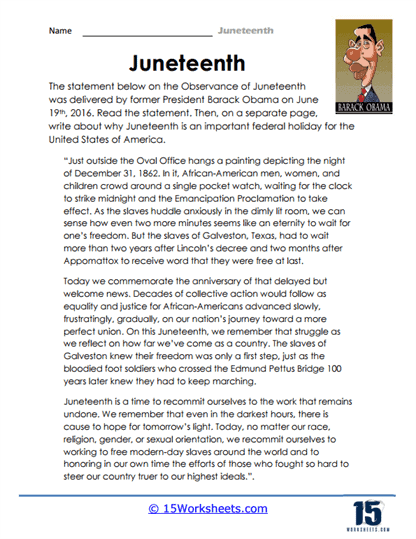
Analyze And Contemplate
Students examine short quotes or historical excerpts about freedom and equality, then write their interpretations. The worksheet encourages deep thinking, personal reflection, and writing fluency. It’s ideal for older students who are ready to connect history to modern social themes. A sophisticated addition to critical-thinking lessons.
Freedom Collage
This hands-on activity lets students create a “Freedom Collage” of words, pictures, and phrases representing what Juneteenth means to them. It combines art, creativity, and emotional expression. Students can use drawings or magazine cutouts to illustrate freedom and unity. A colorful, visual celebration of learning and pride.
Flag Recreation
Students draw and color their own version of the Juneteenth flag after learning about its symbolism. The worksheet provides space to label or describe their design choices. It promotes fine-motor skills and artistic creativity while reinforcing cultural understanding. A great companion to Flag Symbolism for younger learners.
A Historical Reenactment
This imaginative worksheet invites students to script or act out the historic moment when news of freedom reached Texas. They’ll summarize events, write dialogue, and reflect on how people may have felt. It’s a creative, interactive way to bring history to life. Students gain empathy and a deeper emotional grasp of the day’s importance.
History Through Poetry
Students explore freedom and justice through poetry writing inspired by Juneteenth. They can compose acrostic, free verse, or rhyming poems celebrating liberation and equality. This worksheet strengthens creativity, emotional expression, and writing skills. A beautiful, artistic way to honor the spirit of the holiday.
Trace And Draw
Young learners trace key words and simple Juneteenth images-like stars, flags, and the number 19-to build familiarity and motor control. It’s a joyful introduction to the holiday’s meaning for early grades. This worksheet develops handwriting, focus, and awareness. A perfect hands-on way for little learners to join the celebration.
What is Juneteenth?
Juneteenth, also known as Freedom Day, Jubilee Day, or Emancipation Day, is an annual holiday commemorating the end of slavery in the United States. It is celebrated on June 19th, marking the day in 1865 when Union General Gordon Granger arrived in Galveston, Texas, and announced that all enslaved African Americans in the state were free. This announcement came more than two years after President Abraham Lincoln issued the Emancipation Proclamation on January 1, 1863, which declared that slaves in Confederate states were to be set free.
The news of the Emancipation Proclamation had not reached Texas until General Granger’s arrival, partly due to the ongoing Civil War and limited communication infrastructure at the time. Upon hearing the news, the formerly enslaved people in Texas began to celebrate their freedom, and the tradition of Juneteenth was born.
Today, Juneteenth is a day to celebrate African American freedom, culture, and achievements. It is observed with various events and activities, such as parades, festivals, educational programs, music and dance performances, and community gatherings. These events provide an opportunity to reflect on the struggles and progress made by African Americans throughout history and to continue advocating for racial equality and social justice.
On June 17, 2021, President Joe Biden signed a bill making Juneteenth a federal holiday, recognizing the significance of this day in American history and honoring the contributions of African Americans to the nation’s progress.