
Valentine's Day Worksheets
All About These 15 Worksheets
Valentine’s Day isn’t just about cards and candy hearts-it’s a perfect excuse to blend love and learning! This collection of Valentine’s Day worksheets introduces students to reading, writing, phonics, and social-emotional lessons in the sweetest way possible. From counting syllables to decoding Cupid’s arrows, every page adds a little heart-shaped spark to skill-building. Teachers and parents will love how easily these activities mix academic practice with creativity and kindness.
Each worksheet is designed to make the classroom (or home learning space) feel festive while still focusing on core literacy and language skills. Younger learners get hands-on fun with cutting, tracing, and coloring, while older students dive into vocabulary, writing prompts, and comprehension challenges. Even the trickiest grammar and phonics rules seem easier when wrapped in Valentine themes! These activities also inspire empathy, friendship, and gratitude-skills that last far beyond February 14th.
And best of all, this collection reminds kids that learning can be joyful, expressive, and personal. Valentine’s Day becomes not just a holiday to celebrate, but an opportunity to talk about love in all its forms-family love, friendship, kindness, and care for others. Through reading passages, creative prompts, and playful games, students explore how simple acts of love and appreciation can brighten the world around them.
Have a Look Inside Each Worksheet
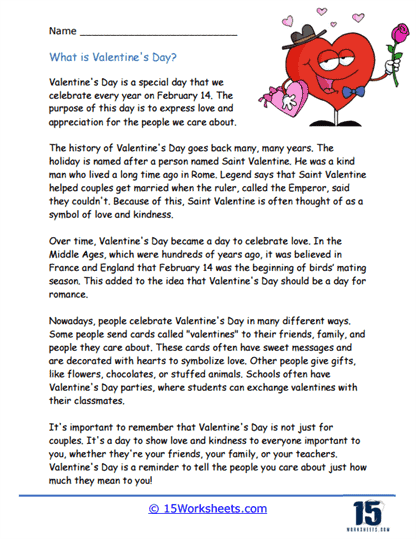
What is Valentine’s Day?
This worksheet introduces students to the origins and traditions of Valentine’s Day in a fun, story-style reading passage. Learners explore how people around the world celebrate love and friendship on this special day. The activity includes comprehension questions to test understanding and spark classroom discussions. It’s a great way to combine reading skills with cultural learning about Valentine’s Day.
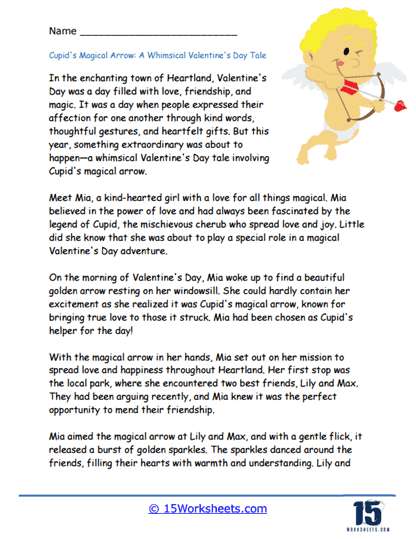
Cupid’s Magical Arrow
Students will enjoy following Cupid’s adventures as they solve themed puzzles and reading challenges. This worksheet encourages creativity while reinforcing vocabulary related to love, kindness, and emotions. Kids might match words, fill in missing phrases, or write short responses inspired by Cupid’s story. It’s both charming and educational-perfect for Valentine’s week fun.
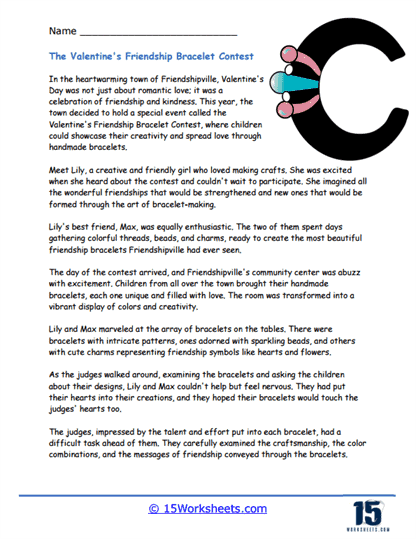
Friendship Bracelet Contest
Learners get to imagine designing their own friendship bracelets while practicing sequencing, writing, or pattern recognition skills. They might describe the colors, shapes, and special meanings behind their designs. This activity builds social-emotional learning by focusing on friendship and appreciation. Plus, it gives students a creative outlet to express care for others.
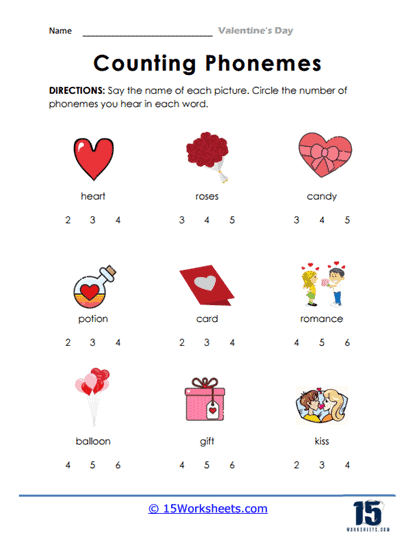
Counting Phonemes
This Valentine-themed phonics worksheet helps students strengthen early reading foundations. They’ll count the sounds in Valentine-related words like “heart,” “card,” or “gift.” By segmenting and identifying phonemes, learners boost their spelling and pronunciation skills. It’s a sweet way to mix literacy practice with festive fun.
Learn The History
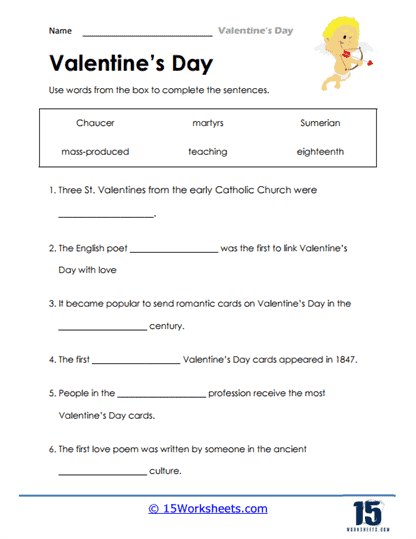
Students take a closer look at the origins of Valentine’s Day-from Saint Valentine to modern traditions. This worksheet blends reading comprehension with history, helping students connect the holiday’s story to present-day customs. They’ll answer questions and reflect on how love and kindness are celebrated today. It’s a perfect cross-curricular blend of literacy and social studies.
Red Adjectives, Purple Adverbs
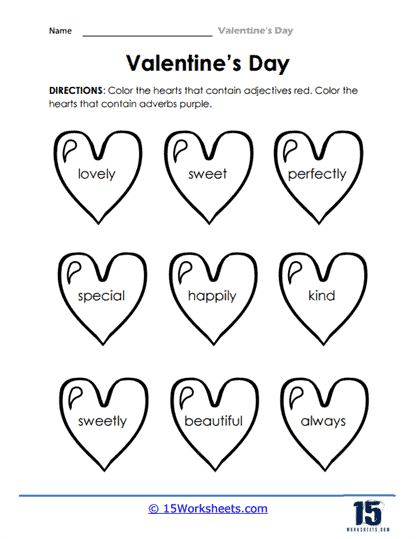
In this colorful grammar activity, students sort and identify adjectives and adverbs using Valentine-themed words. They’ll color-code and categorize words based on function, making grammar practice visual and engaging. This helps solidify parts of speech understanding in a memorable way. It’s both heartwarming and helpful for building strong writing skills.
Count The Syllables
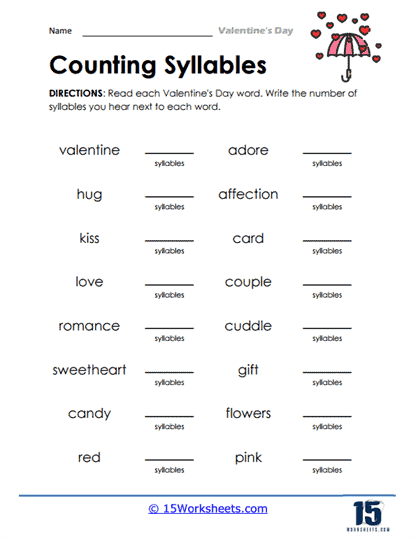
This worksheet turns syllable practice into a festive counting challenge. Students will clap, tap, or mark syllables in sweet holiday words. It’s great for early readers developing phonological awareness and word rhythm recognition. Valentine vocabulary makes it feel like a celebration instead of a drill!
Scrambled Words
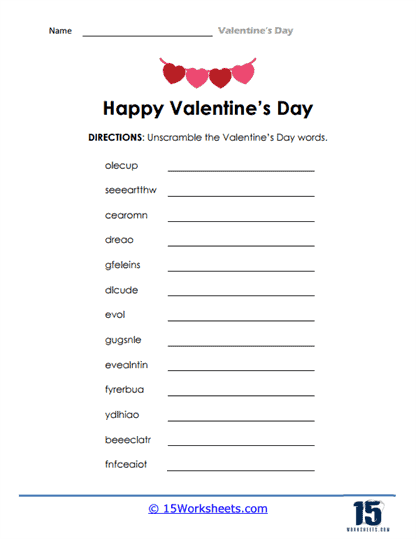
Learners unscramble mixed-up Valentine’s Day vocabulary in this brain-teasing activity. It builds spelling and problem-solving skills while reinforcing themed words. Students can work independently or in pairs to race for the fastest completion time. This one’s perfect for a fun, low-prep classroom warm-up.
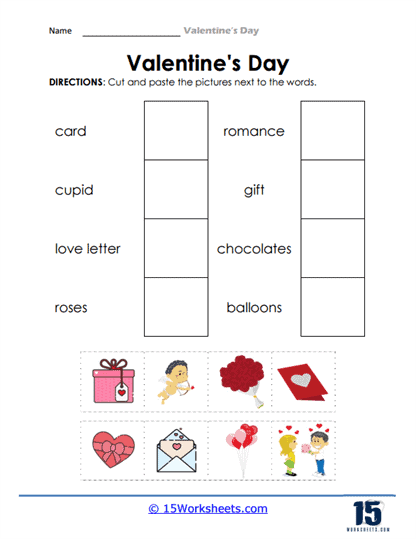
Cut And Paste Matching
A hands-on activity where kids match Valentine-themed pictures with their corresponding words. Cutting and pasting builds fine motor skills while reinforcing vocabulary and reading comprehension. It’s ideal for younger students who love interactive learning. Plus, the holiday visuals make it extra engaging and adorable.
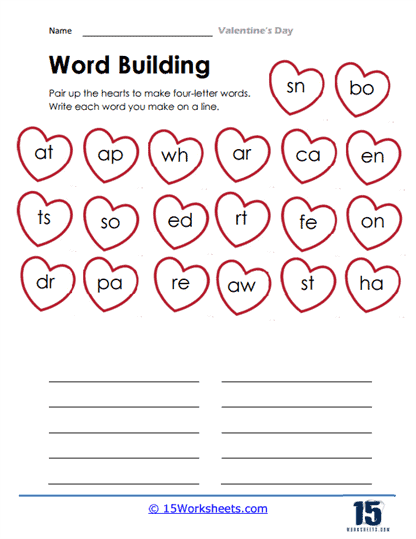
Word Building Activity
Students use a base word-like “love” or “heart”-to form as many new words as possible. This worksheet sharpens spelling, vocabulary, and creativity. It encourages flexible thinking as learners explore how letters can create different meanings. Valentine-themed word play has never been more fun!
Vocabulary Challenge
A quiz-style worksheet that introduces students to key Valentine’s Day terms and their meanings. Learners complete definitions, fill in blanks, or choose the right words in context. It’s perfect for boosting reading comprehension and thematic vocabulary. The mix of challenge and festivity keeps learners motivated.
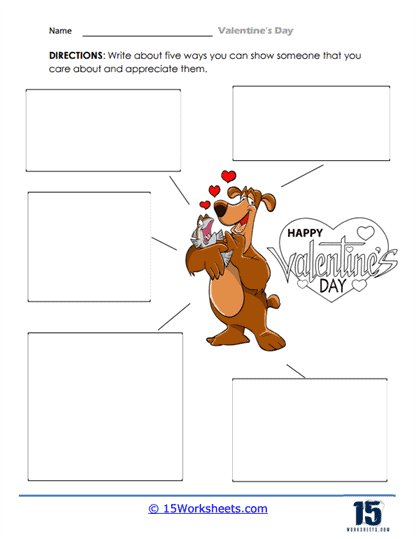
Ways To Show You Care
Students brainstorm and write thoughtful ways to express kindness and love in everyday life. This worksheet builds empathy and emotional intelligence through reflective writing. It encourages gratitude, friendship, and acts of service-all wrapped in Valentine’s Day spirit. It’s perfect for character education lessons.
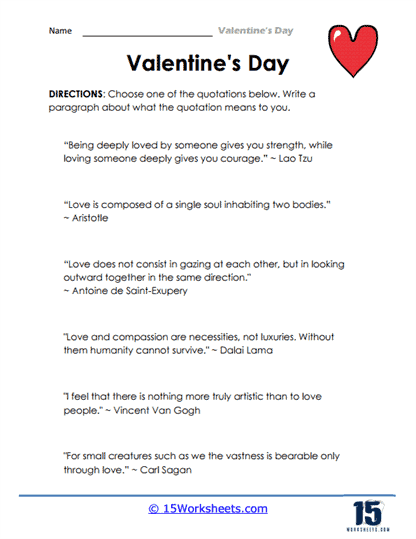
Quotations And Meanings
This activity introduces famous quotes about love and kindness, asking students to interpret and discuss their meanings. It strengthens reading comprehension and critical thinking while encouraging thoughtful conversation. Students may even create their own inspirational quote at the end. It’s a lovely mix of literacy and life lessons.
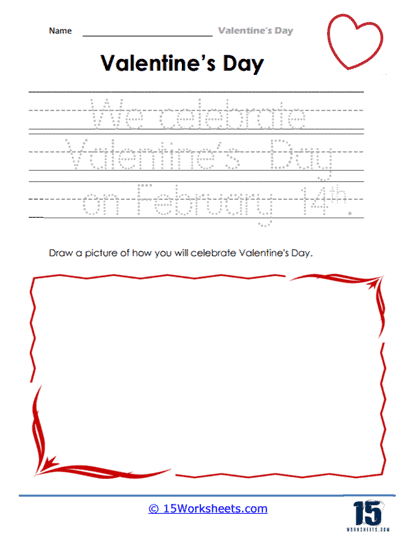
Draw How You Celebrate
Learners draw a picture showing how they celebrate Valentine’s Day with family, friends, or classmates. This creative exercise supports fine motor skills and personal expression. Teachers can encourage students to label their drawings or write short captions. It’s a heartwarming way to connect art and storytelling.
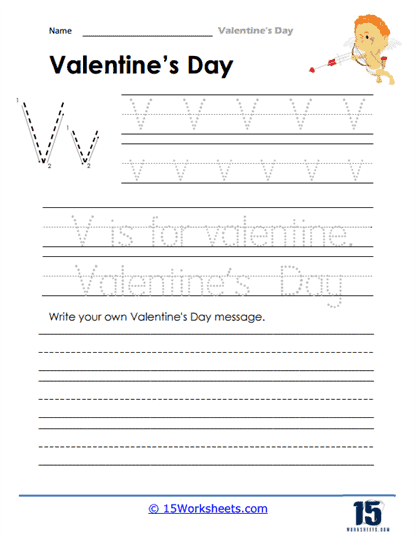
V Is For Valentine
This early literacy worksheet helps children recognize and write the letter “V.” They’ll trace, color, and identify words beginning with the “V” sound. It builds handwriting and phonics skills in a cheerful, holiday-themed context. A simple yet effective way to celebrate learning and love.
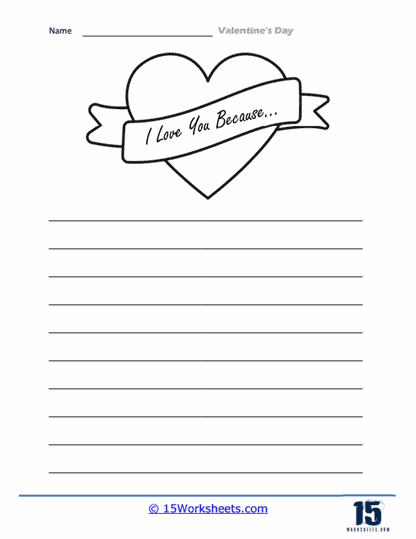
I Love You Because…
A sweet writing prompt where students complete the sentence “I love you because…” for someone special. It helps learners express emotions and practice sentence structure. Teachers can display the finished work as a Valentine bulletin board. It’s both touching and academically purposeful.
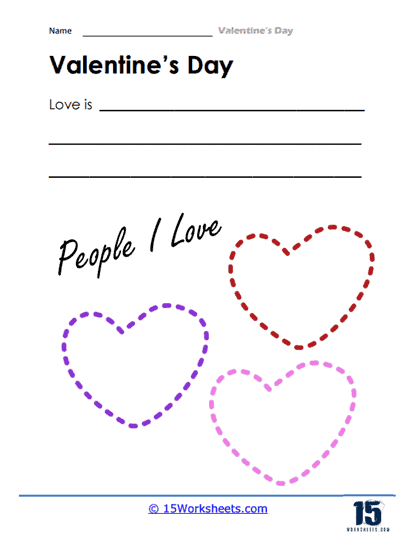
The People I Love
Students list and describe people who are important to them, focusing on why they value those relationships. This activity nurtures gratitude and descriptive writing skills. It’s a beautiful way for kids to reflect on their connections with family and friends. The emotional tie-in makes it perfect for Valentine’s week journaling.
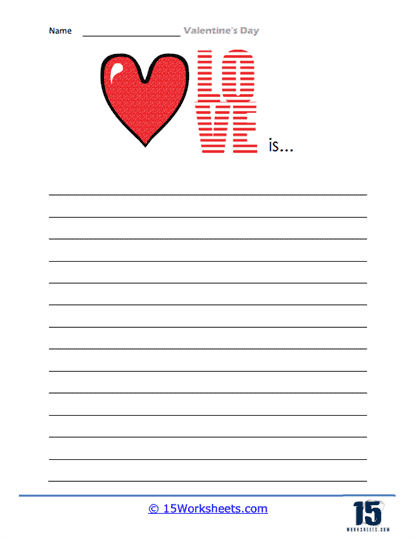
What Is Love?
In this thoughtful worksheet, students explore the meaning of love through writing, discussion, or drawing. They’ll share ideas about kindness, friendship, and care. It builds emotional vocabulary and critical thinking while connecting to the holiday’s theme. A perfect closer for the Valentine’s Day collection.
What is Valentine’s Day?
Valentine’s Day, also known as Saint Valentine’s Day or the Feast of Saint Valentine, is a holiday celebrated annually on February 14th. It is a day dedicated to the expression of love and affection between intimate companions, as well as a time to show appreciation for friends and family members. The holiday has both religious and cultural significance, with roots in the ancient Roman festival of Lupercalia and the honoring of Saint Valentine, a Christian martyr.
The celebration of Valentine’s Day as a day for romance and love can be traced back to the writings of Geoffrey Chaucer in the 14th century, when the tradition of courtly love flourished. Over time, the holiday evolved and became associated with the exchange of love notes, known as “valentines,” and the giving of gifts, such as flowers, chocolates, and jewelry.
Today, Valentine’s Day is widely celebrated in many countries around the world, with various customs and traditions. Common practices include sending greeting cards or love notes, giving flowers (particularly roses), and exchanging chocolates or other gifts with loved ones. Romantic dinners, marriage proposals, and other special gestures are also popular ways to express love and affection on Valentine’s Day.
While Valentine’s Day is primarily associated with romantic love, it has also become an occasion to celebrate and express appreciation for all forms of love, including friendships and familial relationships. The holiday serves as a reminder of the importance of love, affection, and emotional connections in our lives.
How to Incorporate Valentine’s Day in Your Class
Incorporating Valentine’s Day into your classroom can provide opportunities for students to learn about history, culture, and social-emotional skills while celebrating love and friendship. Here are some ideas for incorporating Valentine’s Day across various subjects:
History and Social Studies
Teach the history of Valentine’s Day, including the story of Saint Valentine, the ancient Roman festival of Lupercalia, and the evolution of the holiday’s traditions.
Discuss different Valentine’s Day customs and celebrations around the world, encouraging students to share their own family or cultural traditions.
Language Arts
Encourage creative writing with Valentine’s Day-themed prompts, such as writing love poems, short stories, or letters to a loved one.
Read age-appropriate books, articles, or essays about love and friendship, and engage in discussions or writing assignments to analyze and reflect on the texts.
Teach students about various forms of poetry, such as sonnets or haikus, and have them create their own love or friendship-themed poems.
Art and Crafts
Organize Valentine’s Day-themed art projects, such as creating handmade cards, heart-shaped crafts, or decorations for the classroom.
Encourage students to express their creativity through drawing, painting, or collaging images related to love and friendship.
Teach students about famous works of art inspired by love and discuss the artists’ techniques and intentions.
Math
Incorporate Valentine’s Day-themed word problems and math activities that involve counting, sorting, or graphing with heart-shaped objects or images.
Use Valentine’s Day-related items, such as candies or cards, to teach concepts of measurement, estimation, and probability.
Science
Discuss the science of attraction, exploring topics such as pheromones, hormones, and the psychology of love and friendship.
Teach students about the life cycle and anatomy of flowers, focusing on roses or other flowers commonly associated with Valentine’s Day.
Social-Emotional Learning
Encourage students to reflect on and express their appreciation for friends, family members, and other important people in their lives, through activities such as writing gratitude notes or sharing kind words with each other.
Engage students in discussions about empathy, kindness, and the importance of maintaining healthy relationships, both romantic and platonic.
Organize classroom activities that promote teamwork, communication, and trust, such as cooperative games or group projects.
By incorporating these ideas into your lesson plans, you can create engaging and educational Valentine’s Day-themed activities that foster learning, cultural awareness, and an appreciation for the importance of love and friendship in our lives.